You hear it before you see it—the soft cough of the fridge seal releasing, the little rush of cool air against your face. The light pops on, casting a pale glow over jars and cartons and half-forgotten leftovers. Your hand reaches, almost on autopilot, for that familiar place: the door shelf. Milk, eggs, juice, maybe a bit of mayo leaning lazily in the corner. It’s a quiet, unremarkable moment in the day. But tucked into that humdrum scene is a mistake so common, it hides in plain sight. A mistake that can quietly turn your food into something a little more sinister than stale.
The Most Convenient Place… and the Worst One
The fridge door feels like the “front porch” of your refrigerator: casual, easy, always open to visitors. It’s where rushed mornings and late‑night snack raids collide. You park what you use the most right there, within a single swing of the door—milk, eggs, orange juice, last night’s sauce, that one bottle of salad dressing you pretend makes the whole meal healthier.
But under the hum and glow, there’s a quiet, physical truth your senses can’t see: the fridge door is a temperature roller coaster. Every time you open it, warm kitchen air rushes in and hits the things perched there first. The compressor groans to life, cold air swirls, and then the temperature drops again. Up. Down. Up. Down. Over and over, dozens of times a day.
Food doesn’t like drama. Microbes like it even less—or rather, they like it far too much when things warm up just enough for them to party. That cozy little rack on the door, the one smiling back at you with its orderly rows of bottles and cartons, is often the most unstable, least reliably cold spot in the entire fridge. And there’s one particular slot on that door where the risk quietly spikes from “not ideal” to “borderline dangerous.”
The Slot That Shouldn’t Exist
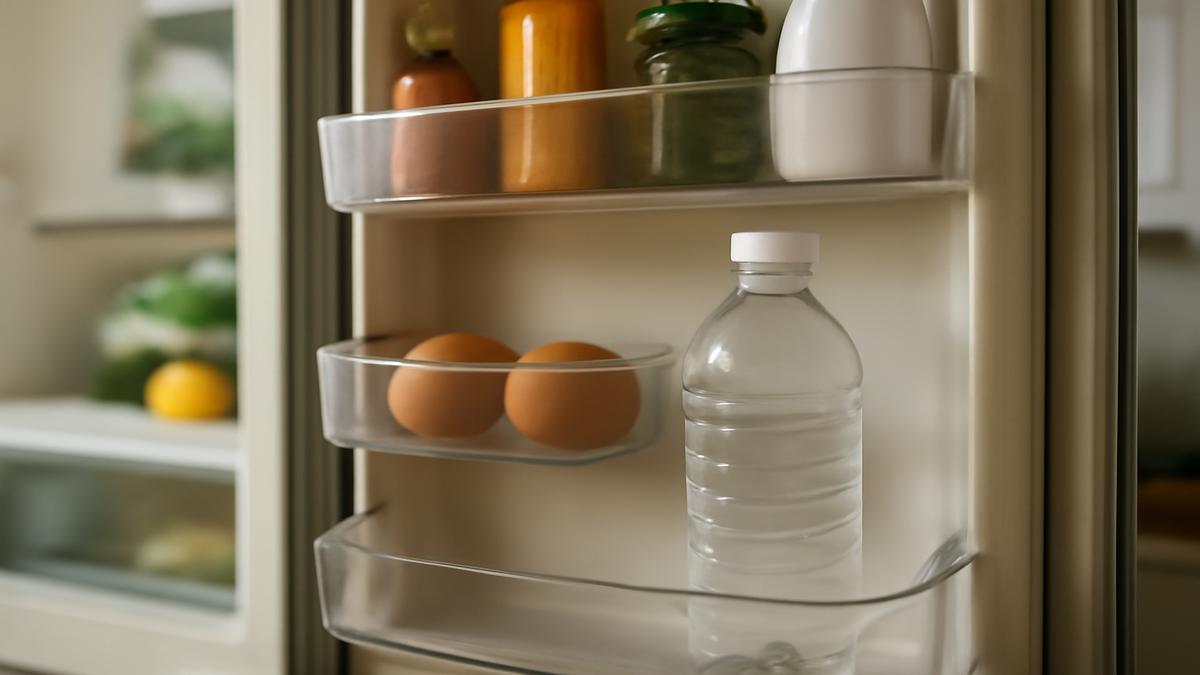
If you look closely at your fridge door, you’ll probably find a very particular nook—a molded row of rounded indentations, or a shallow little bin with a cheap plastic cover. It’s the “egg shelf,” specifically designed, it seems, to cradle fragile shells with care. Some fridges still come with a built‑in egg tray, celebration of convenience and tidy aesthetics. The message is simple and seductive: eggs belong here.
Except they really, really don’t.
This door egg shelf is the slot you should never use.
On paper, it makes a sort of sense. Eggs feel like a morning essential; why not keep them where they’re easiest to grab? But the door shelf, and especially that upper, front‑facing egg nook, sits in the crosshairs of every temperature swing. Each time the door opens, the eggs get a direct hit of ambient room air. They warm slightly, then cool again when the door closes. Tiny changes, barely perceptible. But inside the shell, particularly if the egg has any micro‑crack or if it was washed before packing, these shifts can give bacteria the green light to multiply.
And bacteria, unlike you, don’t need coffee to wake up. They just need the right temperature window—a range that your egg shelf hits surprisingly often if you open the fridge frequently, live in a warm climate, or have kids who treat the fridge like a revolving door.
Why the Door Is a False Friend
The main body of your fridge is designed like a quiet valley of cold, especially the back and lower shelves, where temperatures stay more even. The door, by contrast, is the sun‑blasted slope. Every swing lets warmth creep in. Studies of domestic refrigerators consistently show that door compartments run warmer and fluctuate more than interior shelves. It’s a design compromise between practicality and physics—and physics always wins.
Eggs—and a lot of other foods—hate that kind of thermal drama. The safety margin you think you have when you buy them shrinks with each little temperature wobble. This isn’t about paranoia or sterile perfection; it’s about how much invisible stress you’re putting on something that already has a biological clock ticking.
How a Chilly Shell Turns Rogue
Imagine one simple, everyday scene. It’s Saturday. You’ve come back from the farmers’ market with a dozen eggs, still a bit dusty, resting in their cardboard cradle. You slide them into the door egg tray because that’s how your parents did it, how your grandparents did it, and how your fridge practically begs you to do it. The kitchen is warm from baking or late morning sun. Over the next few days the door opens and closes—making breakfast, rummaging for a snack, grabbing ingredients for dinner. Each time, the eggs warm by a degree or two, then cool. Warm. Cool. Warm. Cool.
Inside the egg, if any bacteria are present—from the shell surface, from a hairline crack, from the farm, from handling—they’re experiencing the microbial equivalent of springtime, over and over again. Most will remain harmlessly dormant, but given the right conditions, some—like certain strains of Salmonella—can take advantage of those micro‑opportunities.
Now take one of those eggs out to make runny scrambled eggs, a soft‑boiled yolk, homemade mayonnaise, or a mousse that never quite sees “piping hot” temperatures. The risk is still small, but it’s quietly, measurably higher than it would have been if those eggs had lived on a stable, colder shelf deeper inside the fridge.
The unsettling part? Nothing looks wrong. The shell is intact, the yolk golden, the white clear. Food safety failures don’t come with a neon warning sign; they arrive as a mild stomach ache you blame on “something I ate,” or, in more serious—but thankfully rarer—cases, a full‑blown bout of food poisoning that seems to strike from nowhere.
It’s Not Just Eggs Paying the Price
Eggs are the poster child for what not to stash in the door, but they’re far from alone. A surprising number of foods people routinely slide into those flip‑out shelves or skinny door bins are quietly paying for that choice in freshness, flavor, and safety.
| Food | Typical Door Mistake | Better Place |
|---|---|---|
| Eggs | Stored in built‑in door egg tray | Middle shelf, in original carton, away from door |
| Fresh milk & cream | Parked in tall bottle slot on door | Back of lower or middle shelf, where it’s coldest |
| Yogurt & fresh cheese | Stacked in door bins for easy reach | Main shelves, not against the door edge |
| Leftover sauces & stocks | Cooled then moved to door to “save space” | Central shelves where temperatures stay steady |
| Cut fruit & veg | Stored in open containers on door | Sealed containers in drawers or inner shelves |
The door is meant for the strong and stable: condiments, pickles, jams, some hard cheeses—foods that don’t panic when the temperature drifts a little. Even so, those repeated swings slowly gnaw away at quality. Your mayonnaise might separate faster, your mustard dull a bit sooner, your hot sauce grow tired, your jam grow watery at the edges.
The Invisible Geography of Your Fridge
Step back and imagine your fridge not as a box, but as a tiny weather system. Cold air sinks and pools at the bottom. The back wall, especially near the vent, is like a snowfield. The door shelves, by contrast, are the borderlands where outside weather slams in every time you reach for something. Once you see it that way, your food choices inside the fridge start to look less random and more like mapmaking.
The Coldest and Safest Neighborhoods
Most fridges have similar “climate zones,” even if the exact temperatures vary. Roughly speaking:
- Back of the lower shelves: Consistently cold, often the best place for raw meat, fresh milk, and eggs.
- Middle shelves: Good for general leftovers and cooked dishes that need stable cold.
- Upper shelves: Slightly warmer, ideal for ready‑to‑eat foods that you’ll consume quickly.
- Crisper drawers: More humid, designed for vegetables and sometimes fruit, depending on the setting.
- Door shelves: The warmest and most variable; best reserved for sturdy items.
Once you start treating the fridge door as the “outer ring” of your little cold planet, things fall into place. Anything delicate, animal‑based, rich in protein, or eaten without thorough reheating should live well inside that protected inner climate. That means eggs, raw dairy, fresh meat, some soft cheeses, and most leftovers. The door becomes what it should have been all along: a buffer zone for items tough enough to ride out the daily temperature storms.
Breaking Up with the Egg Shelf
There’s a strange satisfaction in small acts of rebellion against bad design. That door egg tray has been sold to you for years as a convenience, almost like a built‑in promise that someone has already thought through what belongs where. Removing it—or at least refusing to use it for eggs—feels like a tiny act of reclaiming your kitchen from lazy assumptions.
A 10‑Minute Door Detox
Reorganizing doesn’t have to be a massive project. In under ten minutes, you can turn your fridge door from quietly sabotage‑prone to quietly sensible:
- Evict the eggs: Take them—carton and all—off the door. Place them on a middle shelf, ideally closer to the back. The carton protects them from absorbing odors and reduces temperature shocks.
- Relocate milk and cream: Move tall bottles off the door and onto the lower or middle inner shelves. Yes, it’s slightly less convenient. No, your future self won’t mind when the milk lasts longer.
- Audit what’s left: Anything that is animal‑based, fresh, or would make you very sick if it went bad—ask if it belongs in the door at all. Shift what you can inside.
- Designate door zones: Top bins for light condiments; middle bins for jars of pickles, olives, sturdy sauces; bottom bin for drinks that aren’t too sensitive (like juice, soda, or pasteurized plant milk).
- Repurpose the egg slot: Use it to store wrapped butter you use often, packets of yeast, or small condiment bottles. Or remove it entirely, if the design allows.
The next time you open the fridge, you’ll feel it: a subtle sense of order, of quiet correction. The eggs are no longer riding the wave of every kitchen mood swing. They’re tucked away, not in exile, but in the climate they deserved all along.
When Tradition and Safety Collide
In some parts of the world, people don’t refrigerate eggs at all. They sit in baskets on counters, tucked into pantry shelves, stacked in ceramic holders by the stove. If that image makes your food‑safety alarm bells ring, it’s worth knowing that the story is a bit more nuanced than “room temperature is bad, cold is good.”
In certain regions, eggs are processed differently before they reach the store. They may not be washed in the same way, leaving a natural protective coating intact. Storage norms, farm‑to‑table timelines, and ambient temperatures all play a role. In those systems, room‑temperature egg storage can be reasonably safe when everything is aligned.
But most modern urban lives don’t align that neatly. Eggs might travel farther, sit longer, and be handled by more invisible hands. For many households, refrigeration is the safer baseline—if it’s done thoughtfully. That’s the catch. An egg moved from a stable, cool shelf to a door rack that sees 20, 30, 40 openings a day isn’t enjoying a calm, protective environment. It’s enduring minor stress after minor stress, the kind that never makes a sound, never leaves a mark, but gradually chips away at its safety margin.
This isn’t about living in fear of your breakfast. It’s about understanding that the fridge is not a magic box that freezes time. It’s a dynamic landscape, with safer and riskier zones, and you are—like it or not—the quiet weather‑maker every time your hand finds the handle.
Listening to the Quiet Messages in Your Kitchen
Now that you know about the egg shelf, you might start noticing other small contradictions whispering from corners of your kitchen. The drawer where you always toss vegetables that silently liquefy. The way you stash leftovers in towering, opaque containers you never see again. The jar at the back growing a fuzzy ecosystem of its own, long after the label’s promise expired.
Your fridge door is just one character in this story, but it’s a telling one. The way it’s designed nudges you into habits that look tidy and convenient, while quietly undermining the very thing the fridge exists for: keeping food safe, fresh, and worth eating. Reclaiming that door shelf isn’t just about eggs or milk. It’s about paying attention to the small, physical truths that shape how you eat, what you waste, and how well your body is treated by the everyday rituals you barely notice.
The next time you open the fridge and feel that gust of cold air on your skin, pause for half a heartbeat. Look at the door—the jars, the bottles, the little molded egg cradles empty or repurposed. Look inward, deeper into the fridge, where your eggs now sit in quiet, stable cold. Nothing dramatic has happened. No alarm rang, no warning light flashed. And yet, something has shifted.
You’ve quietly taken back a tiny patch of territory from habit and design. You’ve reduced the chance that tonight’s omelet, tomorrow’s custard, or next week’s quiche will hide an invisible threat. You’ve turned a slot that was quietly poisoning your food’s safety and quality into something harmless, or even useful.
It’s a small act, almost invisible. But the safest kitchens, like the wildest forests, are built not from grand gestures, but from a thousand small, attentive choices. And sometimes, it all starts with refusing to use the one slot your fridge has been insisting on all along.
Frequently Asked Questions
Is it really unsafe to keep eggs in the fridge door?
It’s not instantly dangerous, but it’s riskier than storing them on an inner shelf. The door has higher and more frequent temperature fluctuations, which can encourage bacterial growth over time, especially if eggs are older or cracked.
Where exactly should I store eggs in the fridge?
Keep eggs in their original carton on a middle or lower shelf, closer to the back of the fridge. This area tends to be colder and more stable in temperature than the door or front edges.
Can I keep milk and cream in the fridge door?
You can, but you’ll shorten their safe shelf life. Milk, cream, and similar dairy products last longer and stay safer when stored on the inner shelves, especially toward the back where it’s coldest.
What foods are safest to keep in the fridge door?
Sturdy items that tolerate small temperature swings: condiments (ketchup, mustard, soy sauce), pickles, jams, some hard cheeses, and pasteurized drinks like juice or soda. Even then, check dates and use your senses.
Do all fridges have the same warm spots?
No, designs vary, but most fridges share the same general pattern: the door is warmest and most variable, the back of lower shelves is coldest, and drawers are more humid. A simple appliance thermometer can help you learn your fridge’s specific “weather map.”
Is it okay to put hot food directly into the fridge?
Very hot food can briefly warm the surrounding area. It’s better to let it cool slightly at room temperature, then cover and refrigerate within about two hours (less if your kitchen is very warm) to limit bacterial growth.
How often should I reorganize or check my fridge?
A quick check once a week works well—move sensitive foods off the door, toss spoiled items, and rotate older food to the front. A deeper clean and reorganization every month or two helps keep your “fridge geography” working in your favor.

Hello, I’m Mathew, and I write articles about useful Home Tricks: simple solutions, saving time and useful for every day.