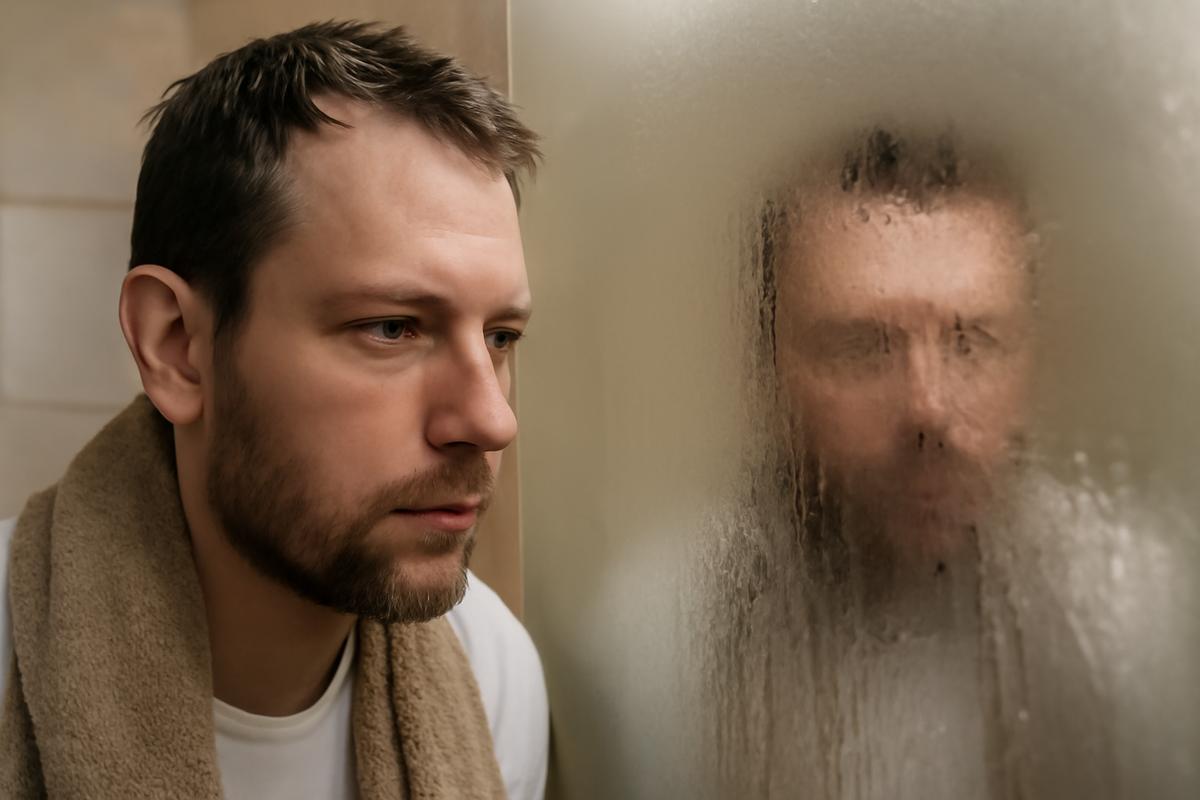
The first time you notice it, you’re half-awake, hair a little wild, feet chilled by the bathroom tiles. You step out of a hot shower into the cool, bright light of a winter morning, reach for your reflection—and instead, your hand meets a milky blur of glass. The mirror has vanished into a soft gray cloud. You swipe a palm across it, leaving streaks that fade almost as quickly as they appear, and for a second you feel like you’ve touched a ghost. It happens every cold season, and somehow it still feels a tiny bit magical, a private weather system born in your own bathroom.
The Little Cloud in Your Bathroom
Let’s linger in that moment a bit longer: the air still humming with warmth from the shower, the sharp scent of soap hanging like mist, the door closed against the hush of the rest of the house. You can feel the coolness pressing from the hallway, a thin invisible wall beyond the handle. Inside, beads of water cling to tile and metal, to the folds of a towel, to the glass face watching you from above the sink—and then hiding from you.
This fog, these tiny droplets that steal your reflection, are not random. In winter, they arrive faster and thicker, sometimes even before you’ve turned off the water. It’s as if the colder months lend them a deeper conviction, a stronger will to exist. The mirror that in summer might stay almost clear, or fog only faintly, is suddenly an eager canvas for winter’s breath.
Your bathroom is playing out the simplest, most intimate version of a grand atmospheric story—the same play that makes clouds float across a December sky, that coats your windows with breathy frost, that dusts a forest with snow. The stage is small, the cast is limited, but the physics is exactly the same. Winter is not only outside; it’s written in the thin film on your mirror every time you turn the tap to hot.
When Warm Breath Meets Cold Glass
To understand why your mirror fogs more in winter, imagine two worlds colliding in slow motion. One world is the hot, damp air circling your body in the shower: swirling, rising, crowded with invisible water vapor. The other is the cool, often quite cold glass of the mirror, pressed against a wall that may share its chill with the outdoors.
Warm air can cradle more water vapor than cold air, like a generous set of hands that can hold a brimming bowl without spilling a drop. Cold air, on the other hand, has smaller hands. It can only carry so much before the extra has to go somewhere else. That “somewhere” is often onto surfaces as liquid water.
When that moist, warm air from your shower drifts across the bathroom and brushes against the face of the mirror, it meets a surface that is much colder than the air itself—especially in winter. The air touching the glass is suddenly cooled. Its generous hands shrink. The invisible vapor it was carrying is now too much to hold. The excess condenses—turns from gas back into liquid—and settles onto the mirror in countless microscopic droplets. Together, those droplets scatter light like a million tiny prisms, and just like that, your reflection disappears behind a gray, misty veil.
The reason this happens more intensely in winter is simple, though it feels poetic when you experience it: the temperature contrast is sharper. Outside, the world is colder. Your bathroom walls, your pipes, your mirror itself all begin the day closer to that outdoor chill. When you fill the room with steam from a hot shower, you’re creating a sudden, dramatic collision between warmth and cold. The glass responds by becoming, in effect, a miniature cloud-maker.
The Secret Life of Dew Point
There’s a quiet character in this story, always present, rarely noticed: the dew point. It’s the temperature at which air becomes so full of water vapor that it can’t hold any more, and the surplus spills out as liquid. Picture a sponge soaked to the edge of dripping; cooling the air is like squeezing that sponge just enough for the water to leak out.
In winter, you often heat your home, but the surfaces near exterior walls—bathroom mirrors included—tend to stay relatively cool. When the warm, humid post-shower air meets that colder glass, the temperature at the surface of the mirror can easily fall below the dew point. That’s the tipping point. Below it, condensation appears. Above it, your reflection survives.
Winter exaggerates this dance. The colder it is outside, the cooler your interior surfaces become, especially if the mirror sits on an exterior wall or above a vanity backed by uninsulated space. Your shower’s warmth has to cross a much deeper thermal canyon to reach equilibrium. On the far side of that canyon sits your mirror, quietly waiting for the moment they meet in the middle—and fog blooms.
Winter Air: Dry, Yet Somehow Wetter Where It Counts
There’s a paradox hiding in your bathroom. You might have heard that winter air is dry, that your skin and lips complain, that static clings to your clothes. All of that is true. Cold outside air holds far less water vapor than summer air does, which is one reason heating season can feel so parching. So how is it that in this dry time of year, your mirror seems to fog more, not less?
The answer lies in the boundary between the outdoor world and the little pocket of environment you create each morning. Winter air coming into your house starts out extremely dry. But when you heat that air and then add a concentrated burst of moisture—from a shower, a bath, a boiling kettle, or a simmering pot of soup—you temporarily push the local humidity skyward.
In summer, with warmer walls and glass, that burst of humidity is often absorbed more gently. Warm surfaces mean the dew point and the surface temperature are closer, so there’s less dramatic condensation. In winter, the background dryness makes your warm, steamy shower air feel like an intense, localized weather event. The rest of the house may still be thirsty and dry, but in that small tiled room the humidity can spike quickly, rushing past the mirror’s chilled surface like a cloud bank meeting a mountainside.
Here is where the numbers tell their own quiet story:
| Scenario | Typical Air Temp | Surface Temp of Mirror | Fog Likelihood |
|---|---|---|---|
| Summer, mild shower | 24–26°C (75–79°F) | 22–24°C (72–75°F) | Low to moderate |
| Summer, very hot shower | 26–28°C (79–82°F) | 23–25°C (73–77°F) | Moderate, short-lived |
| Winter, heated bathroom | 20–22°C (68–72°F) | 14–18°C (57–64°F) | High |
| Winter, cool bathroom | 18–20°C (64–68°F) | 10–15°C (50–59°F) | Very high and persistent |
Those few degrees between the air and the glass make a world of difference. When the mirror’s surface temperature is well below the dew point of the steamy bathroom air, fog is almost guaranteed. And winter, with its colder walls and window-adjacent mirrors, sets the stage perfectly.
Your Bathroom as a Tiny Weather System
Once you start seeing it this way, your bathroom becomes a pocket-sized lecture in meteorology. Turn on the shower and you’re adding energy and moisture, like sun-warmed ocean water feeding a developing cloud. Close the door and you’re trapping that moisture in a confined space. The cold mirror is like a mountain slope where clouds are forced to rise, cool, and condense into rain—or in your case, into a gleaming film of droplets on glass.
You might even notice “rain” forming on the mirror: under certain conditions, droplets join and streak downward, leaving clear trails between foggy regions. That’s a miniature version of runoff on a hillside. The more humid and warm the air, and the colder the glass, the more dramatic the effect. The bathroom fan, if you switch it on, becomes a wind current, sweeping away moisture-laden air and replacing it with drier air from the rest of the house.
As in the natural world, everything is a balance: temperature, humidity, airflow, and surfaces that either warm quickly or cling to the cold. The quiet drama on your mirror each winter morning is just the most visible evidence of this unfolding, invisible story.
Why That Same Mirror Behaves Differently in July
Think back to a summer morning. The tiles are warm underfoot, sunlight spills through the window, and even before you shower the bathroom feels softer, fuller somehow. You might take just as hot a shower in July as you do in January—but your mirror doesn’t always respond with the same dramatic vanishing act.
In the heat of summer, the entire house usually sits closer to the temperature of your shower air. The walls are warmer, the mirror starts the day much less chilled, and the difference between the temperature of the bathroom air and the mirror’s surface is smaller. Even if the air becomes humid, it might not cool at the glass enough to reach its dew point. Or if it does, the condensation may be thinner, patchier, and more short-lived.
It’s like comparing a meeting between two people who are already good friends with one where strangers collide. In summer, warm air meets warm glass: there’s less shock, fewer sparks. In winter, your mirror is the stoic, cold stranger; the shower air, a rushing, enthusiastic guest. The condensation between them is what happens when they finally meet in the middle.
The Role of Heating, Insulation, and Habit
There’s another layer to this seasonal difference: the way you live in your home when it’s cold outside. In winter, you may close doors more often to keep warmth in. You might open windows less. The bathroom fan might go unused because you don’t want to lose the heat you’ve paid to create. All of these habits trap humidity more effectively in that small room.
At the same time, some bathroom mirrors are mounted on walls that share their back side with the outdoors or with unheated spaces like attics. Poorly insulated walls can make the mirror a kind of heat sink, losing warmth to the cold air beyond. The front of the glass stays cooler, even if the room itself feels comfortable.
The result is a kind of winter amplification. The way you seal yourself in against the season, combined with the building’s structure and the path heat takes through walls and glass, sets your mirror up as a perfect stage for condensation. It’s not just nature at work; it’s architecture and habit, too—your house and your routines teaming up to draw fog on the glass in front of you.
Living With the Fog (and Playing Weather Maker)
Once you recognize your mirror as a tiny weather map, you can start experimenting. Every winter morning becomes a test of what happens when you change the ingredients. Open the door a crack during your shower and you invite in drier, cooler air from the hallway, lowering humidity and reducing fog. Turn on the bathroom fan and you pull moisture out faster than it can gather on the glass.
Some people warm the mirror itself: leaving a light on above it for a while before showering, or directing warm air from a vent across its surface. A slightly warmer mirror means less temperature difference, which means less condensation. Anti-fog sprays and coatings work by changing the way water behaves on the glass—encouraging it to spread into a thin, more transparent film rather than bead into light-scattering droplets. Even something simple like smearing a bit of soap and buffing it clear can create a temporary hydrophilic layer, altering how the “cloud” takes shape.
In a way, these are the same strategies used in the wider world: adjust airflow, change surface temperatures, alter how water behaves when it meets those surfaces. Ski resorts seed clouds to encourage snow; you tweak the conditions in your bathroom to keep your reflection from disappearing completely.
Finding a Quiet Appreciation in the Blur
Yet there’s something to be said for not fighting it, too. The fog on your winter mirror is a reminder that your home is not sealed away from the seasons after all. The cold outside and the warmth inside are still talking to each other, through walls and pipes, through glass and air. They leave their signatures in small ways: a draft under a door, a humming radiator, and the delicate, shifting patterns of mist that rise and fade on your bathroom mirror.
If you pause for an extra breath before wiping it away with your hand or towel, you might notice the way it first appears—how it blooms from the edges inward, or from the center outward, depending on where the mirror is coldest. You might watch your own breath add a second layer of haze, a soft oval on the glass. For a moment, you and the season and your house all share a common language: warmth meeting cold, water shifting phase, light breaking and bending through tiny droplets.
By the time you’ve brushed your teeth, the fog is already receding. The mirror clears, the ghostly cloud dissolves, and the world resumes its crisp outlines. But somewhere behind the glass, the memory of that temperature contrast lingers, waiting for the next time you turn the tap to hot on a frosty morning.
FAQs: Why Your Mirror Fogs More in Winter
Why does my mirror fog faster in winter than in summer?
Because the mirror is colder in winter. When warm, humid shower air touches the cold glass, the air cools quickly and reaches its dew point. The excess water vapor condenses into tiny droplets, creating fog. In summer, the mirror surface is warmer, so that temperature difference is smaller and less condensation forms.
Is winter air more humid or more dry?
Outdoor winter air is usually much drier in terms of how much moisture it can hold. But when you heat that air indoors and add steam from showers or cooking, local humidity can spike in small spaces like bathrooms, leading to intense, short-lived condensation on cold surfaces such as mirrors.
What exactly is the dew point in this context?
The dew point is the temperature at which air becomes saturated with water vapor and can’t hold any more. If air at that humidity is cooled to the dew point or below, the extra moisture condenses as liquid water. On your mirror, the surface is often below the dew point of the steamy bathroom air, so fog forms.
Can I prevent my mirror from fogging in winter?
You can reduce fog but rarely eliminate it completely. Helpful steps include running the bathroom fan during and after showers, opening the door slightly, warming the mirror with a light or vent, or using anti-fog coatings. All of these either lower humidity, increase mirror temperature, or change how water behaves on the glass.
Does heavy fog on my mirror mean my bathroom has a moisture problem?
Not necessarily. Brief fogging after a hot shower in winter is normal. It becomes a concern if the room stays humid for long periods: signs include peeling paint, persistent mold, or damp smells. In that case, improving ventilation and reducing moisture buildup is important for both comfort and the health of your home.

Hello, I’m Mathew, and I write articles about useful Home Tricks: simple solutions, saving time and useful for every day.