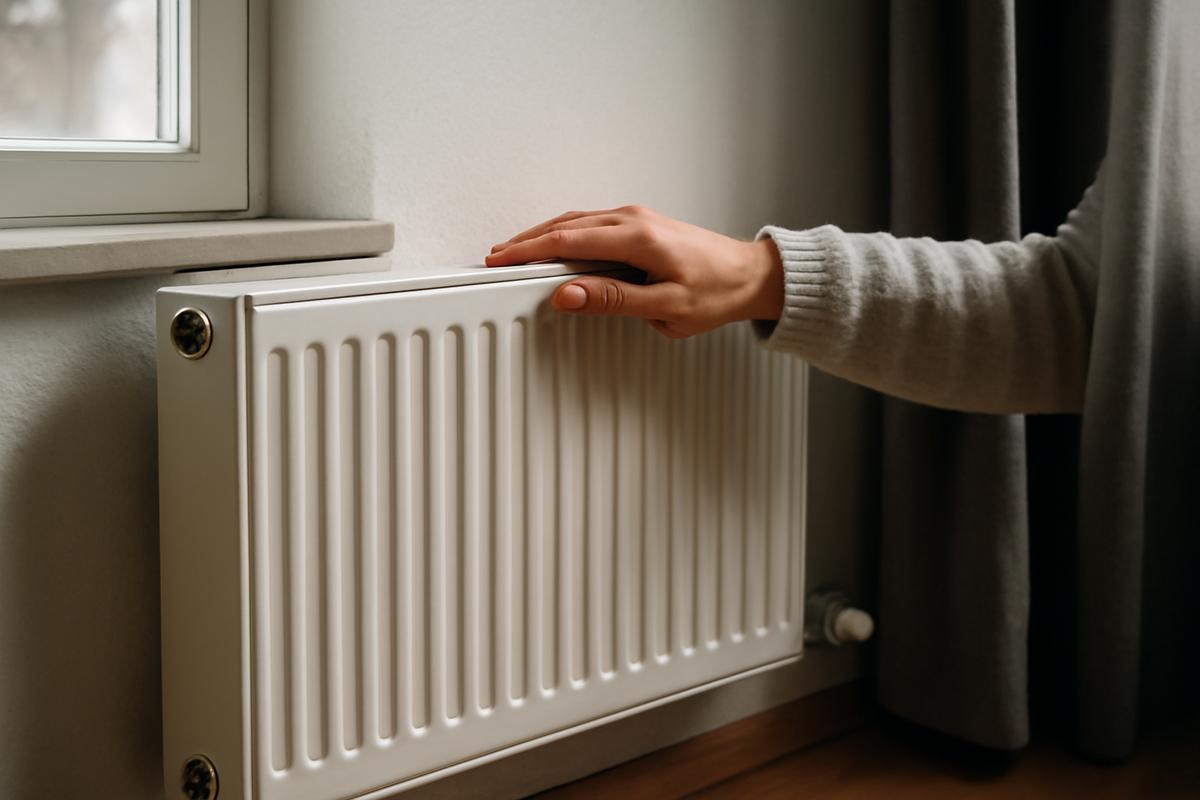
The heater hums softly in the corner, a small sun in a square metal box. You reach your hand out and feel it: undeniable warmth, almost too hot to touch. For a moment, you’re reassured. But when you lean back, the air nipping at your cheeks tells a different story. Your toes are still cold inside your socks. The room feels as if winter is pressed right against the windows, refusing to leave. How can the heater be warm—really, properly warm—while the rest of the room remains stubbornly cold?
The Strange Magic of “I Can Feel It, But I Can’t Feel It”
It’s a weird kind of betrayal, isn’t it? You stand in front of the heater, and the world shrinks to a circle of comfort. Your hands thaw, your knees loosen, your shoulders drop. Just a step away, though, the cold waits. You can almost trace the invisible boundary where the warmth ends and the chill begins, as if someone has drawn a ring around you.
This is your first clue: the heater might be working, but it’s working only for you—right there, right now. Your body is enjoying radiant heat, the kind that feels like sun on your skin. But the rest of the room depends on something else entirely: air that actually gets warmer and stays that way.
Most rooms don’t feel cozy just because there’s a warm object somewhere inside them. They feel cozy when the entire volume of air—ceiling to floor, corner to corner—reaches a certain balance. That’s where things so often go wrong.
The Hidden Enemies Inside a “Cold” Room
Imagine your room from above, as if you’re a bird looking down through a transparent ceiling. You’d see warm air rising from your heater, floating upward like a pale ghost. Then you’d see it drift away… losing heat against cold walls, cold glass, tiny drafts that snake under doors and around window frames.
The physics behind your uncomfortable living room are simple in one sense and maddeningly complex in another. Heat doesn’t just appear and stay put; it’s in constant motion, trying to equalize with everything around it. The warmth from your heater has to fight an uphill battle against three main forces: cold surfaces, escaping air, and simple mismatches of size and power.
Cold Surfaces: The Silent Heat Thieves
Your walls and windows may look harmless, but they’re like giant, chilly sponges soaking up warmth. Stand near a single-pane or poorly insulated window on a winter night and you can almost feel it pulling heat from your body. Even if your heater is blowing warm air, that air is steadily losing energy to every cold, solid surface it touches—or even gets near.
Your skin is sensitive to this battle. That’s why a room with the same air temperature can feel cozy in summer and icy in winter: in winter, your body is radiating heat toward cold walls and glass, and you feel that loss as a kind of chill, even if the thermometer insists the room is “fine.”
Drafts and Leaks: The Invisible Highway Out
Air is always on the move. Under doors, along window frames, through outlets on outside walls, around chimneys, through tiny cracks you’d never notice. Warm air inside your room wants to escape to the colder outdoors, and the cold air outside eagerly slips in to take its place.
You might feel this when you sit near a door or window and sense a thin, persistent stream of cold air across your ankles. But even when you don’t feel a dramatic draft, tiny air leaks can add up to a slow, relentless bleeding of heat. Your heater warms the air, that air drifts out, and the system starts all over again. You feel like you’re heating the whole neighborhood.
A Heater That’s Just Too Small for the Job
Sometimes the story is more straightforward: your heater simply isn’t strong enough. Every room has a sort of “calorie count”—how much heat it needs per hour to stay comfortable. That depends on how big the room is, how high the ceiling reaches, how much insulation lines the walls, how many windows stare out into the cold, and how harsh the outdoor temperatures get.
If your heater doesn’t produce enough heat to match that loss, it can run constantly and still never quite catch up. You’ll feel warmth when you’re near it—because it really is hot—but the rest of the room never gets enough overall energy to tip into coziness. It’s like trying to fill a leaking bathtub with a drinking straw.
When Warmth Doesn’t Spread: Airflow and Stratification
There’s another puzzle piece, and it’s surprisingly visual if you imagine it: layers of temperature stacked like invisible blankets in your room. Hot air rises; cold air sinks. That cliché lives rent-free in every ceiling and floor you’ve ever walked under.
Picture a column of air in front of your heater. As the heater warms that air, it climbs upward, drifting across the ceiling like a gentle tide. The cold air huddles low, near the floor, right where your feet and ankles live. If nothing stirs this arrangement, you can end up in a room where the upper half is reasonably warm while the lower half feels like a walk-in fridge.
Still Air, Cold Feet
You notice this most on those evenings when your head feels fine—maybe even a bit too warm—but your fingertips and toes are still chilled. Or when you climb a stepladder or reach toward a high shelf and realize, with surprise, that it’s actually warmer up near the ceiling.
Many heaters—especially smaller, portable ones—don’t move enough air to disrupt this layering. They heat the air near them, but they don’t have the muscle to push that warmth around the room. Without circulation, the room becomes a patchwork: warm islands, cold seas.
The Role of Fans and Furniture
Even simple things like furniture placement can sabotage your comfort. A couch pressed in front of a radiator, a curtain draped across a vent, a bed blocking a wall heater—each one can trap warmth in a small pocket, keeping it from reaching the rest of the room.
On the flip side, a small fan—especially one running on low and aimed strategically—can transform the way heat moves. It doesn’t need to blast like a summer cooling fan. Just a gentle push is often enough to break up stagnant pockets of air and mix the warm with the cold until the whole space feels more even, more human.
Understanding How Different Heaters “Feel”
Not all heaters share the same personality. Some blast air at you like a hair dryer. Others sit quietly, warming the objects and surfaces around them. Some hum through ductwork, fading into the architecture of your home. The sensations they create can trick you into thinking they’re doing more—or less—than they really are.
Radiant vs. Convection: Two Flavors of Warmth
When you stand in front of a glowing panel or ceramic heater and feel that satisfying, sun-like warmth on your skin, you’re experiencing radiant heat. It’s direct. It doesn’t care much about the air in between. It heats you, your clothes, the chair you’re sitting in. It feels amazing, even in a cold room.
Convection heat, on the other hand, warms the air itself. Baseboard heaters, oil-filled radiators, and many central systems do most of their work this way. They might not feel dramatic when you stand a few feet away, but over time they can shift the entire room’s temperature… if they’re powerful enough and the space isn’t leaking heat too quickly.
In a leaky, poorly insulated room, radiant heaters can feel like heroes: step into their beam and you’re good. But they may never truly “fix” the room’s climate; they bypass the fundamental problem. Convection-based heaters might, in theory, solve the temperature imbalance—but only if the rest of the room’s weaknesses don’t overwhelm them first.
Portable Heaters and False Confidence
Many small electric heaters are designed to deliver a strong, comforting sense of warmth right where you are. They do this very well. The challenge is that it can give you a false sense of how effective they are for the entire space. You touch them, you feel how hot the grille is, and you assume the room will follow.
But heat needs time and cooperation: closed doors, sealed drafts, decent insulation, enough wattage or BTUs to replace what the room loses. A warm heater in a cold, leaky room is like a candle in a windy field—beautiful, brave, and constantly on the edge of being overwhelmed.
Reading the Room: Simple Clues and Quiet Experiments
If you’re stuck in the loop of “warm heater, cold room,” you can become a quiet detective in your own home. You don’t need fancy tools to understand what’s really going on—just a bit of patience and a willingness to notice small sensations.
Feel for Drafts and Cold Surfaces
Walk slowly around the room on a cold day with your heater running. Move your hand near window frames, baseboards, electrical outlets, and under doors. Do you feel a faint current of cold air? That’s heat leaving.
Next, rest your palm lightly on interior and exterior walls, then on windows. Do they feel significantly colder than the air? Those surfaces are stealing heat, silently, hour after hour. Heavy curtains, draft stoppers, and even rugs can help slow that theft.
Try the Thermometer Experiment
Place a simple room thermometer near the floor and another higher up—on a shelf or taped to the wall at shoulder height. After the heater has been running for a while, compare the readings. If there’s a big difference, your room is stratified: warm up high, cold down low.
Turn on a small fan at low speed, aiming it across the room instead of directly at you, and let it run. Check the thermometers again later. Often, the numbers start to even out, and the room feels more consistent to your body—even if the overall temperature hasn’t changed much on paper.
Match Heater Strength to Room Needs
Some heaters will list their ideal room size. Others will only give wattage or BTU numbers. As a rough idea, a typical moderately insulated small bedroom might feel okay with about 1000–1500 watts of electric space heating, while a big, drafty living room might need considerably more.
To think about it visually, here’s a simplified table to give you a sense of proportion—not exact formulas, just a guiding picture for how heater power, room size, and insulation interact:
| Room Situation | Typical Room Size | Heater Power That Often Feels “Enough” | What You Might Notice If It’s Underpowered |
|---|---|---|---|
| Small, well-insulated bedroom | 8–10 m² (85–110 ft²) | 750–1000 W | Heater feels hot, room warms slowly but does get cozy |
| Medium room, average insulation | 12–16 m² (130–170 ft²) | 1200–1800 W | Warm zone near heater, cool corners, chilly floor |
| Large living room, high ceilings | 18–25 m²+ (190–270 ft²+) | 2000 W or more | Heater always hot, air lukewarm, room never quite comfortable |
| Drafty or poorly insulated room | Any size | Higher than “normal” for size | Heat disappears quickly once heater turns off, constant chill |
If your setup fits that last row—drafty, underpowered, or both—it’s not your imagination. Your heater isn’t lying to you; it’s just outnumbered.
Small Changes That Make a Cold Room Feel Human
You don’t always need a renovation or a brand-new system to change how a room feels. Sometimes, comfort comes from small, almost homey adjustments—like rearranging furniture, adding weight to a curtain, or choosing how you run the heat.
Encourage the Warmth to Move
- Add a gentle fan: Place it on low, pointing across the room or slightly upward, not blasting at your face. The aim is circulation, not wind.
- Unblock the heater: Move furniture, plants, or storage that’s crowding radiators or vents. Let the warm air flow freely into the room.
- Use ceiling fans wisely: If you have one, switch it to winter mode (usually a reverse direction) on low speed, so it pushes warm air down the walls without creating a draft.
Slow the Heat From Escaping
- Seal the edges: Draft stoppers at doors, foam weatherstripping around windows, and outlet gaskets on exterior walls can noticeably calm the room.
- Soften the cold surfaces: Thick curtains at night, rugs on bare floors, even a bookshelf against an outside wall help buffer the cold.
- Close what you’re not using: If you’re heating one room, keep interior doors closed so your small heater isn’t trying to warm the whole house.
Work With the Kind of Heat You Have
- With radiant heaters: Aim them toward where you sit or work. Accept that they’re personal suns, best for spot-warming you rather than transforming the entire space.
- With convection heaters: Give them time and let them run long enough to warm the air. Pair them with draft-sealing and circulation to help that warmth spread.
- With central heating: Check that vents are open and not blocked, bleed radiators if needed, and pay attention to rooms that lag behind—they may point to insulation or duct issues.
Living With Winter, Instead of Fighting It Blindly
In the end, that unsettling feeling—warm heater, cold room—is less a mystery and more a conversation between your home and the season outside. Your heater is only one voice in that conversation. The walls, windows, floors, furniture, and air currents all chime in, shaping how the room feels on your skin.
The moment you understand that, something shifts. You stop asking, “Why is my heater failing me?” and start asking, “Where is the warmth going?” You begin to notice the cold tongue of a draft under a door, the way the window seems to radiate its own quiet frost, the stillness of the air above your carpeting compared with the faint movement near the ceiling.
Your heater can be blazing hot and still lose the larger battle if you ask it to heat a space that leaks, stratifies, or simply demands more energy than it can offer. But with a few simple changes—circulating the air, softening the cold surfaces, blocking the sneaky drafts—you shift the odds in its favor. Suddenly, the warmth you already have starts to stick around, to spread outward from that solitary metal box and settle into the room like an invisible blanket.
On some future winter night, you might notice the difference not in a dramatic way, but in a quiet one: your toes no longer tense inside your socks; your shoulders don’t hunch against a background chill. The heater still hums in the corner, warm to the touch, but now the warmth has a chance to belong to the whole room, not just the space right in front of it.
FAQ
Why does my heater feel hot but the room temperature barely changes?
Often the heater is too small for the room, or the room is losing heat quickly through drafts, thin windows, or poor insulation. The heater can get very hot itself while still not adding enough total energy to warm the entire volume of air.
Why are my feet cold even though the room is being heated?
Warm air rises and cold air settles near the floor. If the air isn’t being mixed—by fans, movement, or good airflow—you can get a warm upper layer and a cold lower layer. Your feet live in that colder zone.
Is a radiant heater better than a fan heater for a cold room?
Radiant heaters are great for warming people and objects directly, especially in leaky or hard-to-heat spaces. Fan (convection) heaters are better at warming the air in the whole room. The “best” depends on whether you want spot comfort or a more evenly warm space.
Can a small portable heater heat my whole living room?
It depends on the size and insulation of the room. In many average or large living rooms—especially with high ceilings or drafts—a small heater will mostly create a warm zone nearby while leaving distant corners and floors cold.
What’s the simplest thing I can do to make my heater feel more effective?
Start by blocking obvious drafts and running a small fan on low to gently circulate the air. Together, those two changes often make the existing heater feel dramatically more effective without adding any extra heat source.

Hello, I’m Mathew, and I write articles about useful Home Tricks: simple solutions, saving time and useful for every day.