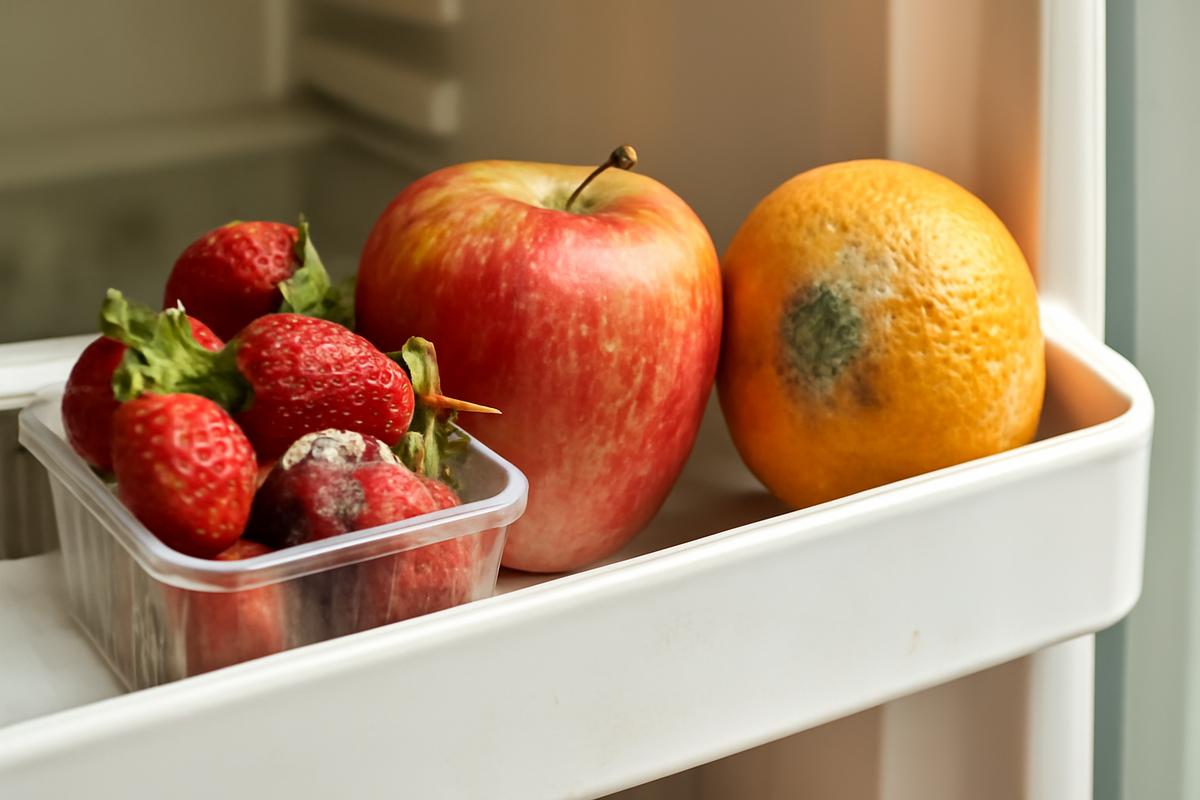
The sound is small but unmistakable: a soft thud as the fridge door closes, followed by the quiet hum of the compressor kicking in. You don’t think twice about it. The berries you bought yesterday, the grapes your kid half-finished, the limes you swear you’re going to use this time—they’re all tucked neatly into that gleaming, convenient shelf on the door. It feels organized, domestic, almost virtuous. And then, just a few days later, you open the fridge to a different kind of sound: the sticky peel of a moldy strawberry lifting off the plastic container, the squish of a grape that has turned from firm to mush. The bright promise of fresh fruit dimmed by bruises, brown spots, and that unmistakable sour-sweet tang of rot.
The Hidden Drama in Your Fridge Door
Your fridge door looks harmless. In most kitchens, it’s the friendliest, most inviting part of the refrigerator—the first place your hand goes when you’re half-thinking about a snack. It swings open like a stage curtain, revealing rows of tidy compartments and gleaming plastic bins. It also feels like the perfect place for delicate little things you want to see often: berries waiting for breakfast, plums meant for a mid-afternoon treat, lemon wedges ready for iced water.
But tucked into that door is a quiet, invisible drama of physics and biology that decides how long those fruits will live. It’s not that you’re careless, or that the fruit suddenly “went bad for no reason.” There is a reason, and it lives in the way cold air moves, the way you live in your kitchen, and the way fruit, even after harvest, is still alive and breathing.
Open. Close. Open. Close. Every time you reach for the milk or the mustard or that one jar of jam that’s been there since last summer, a gust of warmer room air sweeps into the fridge. It doesn’t flood all the way to the back, not right away. It rushes to the easiest place it can reach: the front shelves and, most of all, the door. And your fruits, tucked into those easy-access compartments, get caught in a constant tide of temperature change. Warm, then cool. Cool, then warm. Again and again and again.
Fruits are sensitive. They are small packets of water, sugar, and intricate cellular structures that react quickly to stress. For us, the fridge door is just convenient storage. For them, it’s turbulence.
What Your Fruit Feels: Tiny Temperature Storms
Imagine you’re a strawberry. You were picked in the morning chill, shipped in a refrigerated truck, displayed under bright grocery-store lights, and now you live in a plastic box on the inside of a fridge door. The air around you feels cool, but not always the same kind of cool. Every time the door opens, a wave of room-temperature air brushes your surface. Your skin warms a little; your cells respond. Then the door closes, and cold air washes in from the vents again.
We like to think of the refrigerator as a fixed-temperature box, but that’s not how it behaves in daily life. Inside, there are microclimates. The back of the middle shelf is often the coldest, while the vegetable crisper holds moisture differently from the rest of the fridge. The door, forever swinging open and shut, is one of the warmest and most unstable places.
Those small shifts—from, say, 2°C to 7°C and back again—may not matter much to your bottle of ketchup. But to living tissues like fruit, they’re a kind of low-grade environmental stress. Cells expand and contract with the temperature changes, delicate membranes weaken, and tiny injuries form in the flesh. These micro-wounds are invisible at first, but to microbes and enzymes already present on the skin or inside the fruit, they’re invitations.
As the fruit warms, its respiration rate increases—it uses oxygen, gives off carbon dioxide, and burns through stored sugars faster. It’s like a heart beating more quickly when you’re anxious. The chemistry speeds up. So do the processes of ripening and, eventually, decay.
The Science of Rot: Why the Door Speeds Everything Up
The story of fruit rotting is really the story of life continuing. Fruit isn’t “dead” when it’s harvested; it’s in a slow, controlled unraveling of the plant’s investment in sweetness, color, and aroma. The refrigerator is our attempt to pause that unraveling, to put the brakes on nature long enough for us to enjoy it at our convenience. But the brake works best where conditions are steady. The fridge door, with its constant shifts, is more like tapping the brakes on a downhill slope: jerky, uneven, and not nearly as protective as you think.
Here are a few invisible forces at work in that innocent-looking door compartment:
- Temperature fluctuations: Warm air rushing in when the door opens, cold air surging back when it closes. These swings accelerate ripening and cell damage.
- Condensation cycles: Warmer air introduces moisture; when the air cools again, tiny droplets form on surfaces—including fruit skins and packaging. Those droplets are perfect homes for mold spores.
- Microbial opportunities: Bacteria and fungi thrive on damaged tissues and moist surfaces. Each small injury or softened spot on the fruit becomes a doorway.
- Ethylene gas dynamics: Some fruits emit ethylene, a natural plant hormone that promotes ripening. In cramped door shelves, ethylene can build up around sensitive fruits, speeding up spoilage further.
The door doesn’t cause mold out of thin air; it simply creates conditions where the mold and bacteria that were already there can move faster, grow faster, and feast more eagerly on your carefully chosen produce.
Moisture, Light, and the Quiet Invitation to Mold
Next time you open your fridge, take a second and feel with your fingertips inside the door shelf where you usually keep fruit. It may be slightly cooler than room temperature, sure—but is it consistently cold? Does it feel a bit humid, especially if someone has just been rummaging for snacks?
When warm kitchen air meets the chilled surfaces of the fridge door, a dance of condensation begins. Tiny droplets form on plastic, on glass jars, and yes, on the skins of your grapes and plums. When you close the door, those droplets don’t instantly vanish; instead, they cling, creating tiny puddles of moisture in crevices and against fruit. Add a bit of sugar from a bruised spot, and it’s a feast for mold spores floating invisibly in your kitchen air or already resting on the fruit from the farm, the store, or your own hands.
Then there’s light. Fridge doors, especially the transparent bins, often get more direct exposure to the interior light when you open the door. Light doesn’t directly rot fruit, but it can nudge certain reactions—particularly in delicate berries—just a bit further along. Light means a touch more warmth, a little more activity in pigments and enzymes. Combined with fluctuating temperature and high moisture, it’s one more small shove toward over-ripeness.
None of this is dramatic. You won’t see it at the moment. You’ll just notice, sooner than you expected, that familiar fuzz raising its filaments on the corner of a strawberry or the gray bloom spreading quietly across a cherry that looked perfect just yesterday.
Why the Door Was Never Meant for Fruit
There’s an unspoken rule in refrigerator design: the door is not the prime real estate. It’s the hallway, not the living room. Engineers know this; they design it accordingly. The cold air outlets usually feed toward the interior shelves and drawers, where the temperature remains more constant. The door, by its very nature, is exposed, mobile, and vulnerable.
Yet modern life has turned that hallway into an attractive display area. Clear bins, labeled compartments, chic organizers—the door promises visibility and easy access. So naturally, we place what we want to see and use often right there. And fruit, with its colors and delicacy, feels like it belongs in the spotlight.
But if your fridge had a voice, it would probably whisper: “Not there. Not them.” The door is perfect for items that don’t mind a bit of chaos—condiments loaded with preservatives, juice that gets drunk quickly, butter that benefits from being a little softer. Fruit is different. It’s closer to a wild thing: tender, responsive, evolved for a world of soil, sun, and slow cooling nights, not artificial gusts of air from a kitchen lit at midnight.
Once you begin to see the fridge not as a blank cold box but as a landscape with warmer cliffs and cooler valleys, the logic sharpens. The back of the middle shelf becomes like a quiet forest glade—shaded, stable, calm. The crisper drawer is a damp canyon, excellent for some species and disastrous for others. The door is the cliff edge where winds constantly change. That’s not where ripe fruit wants to live.
Where Your Fruit Actually Wants to Be
Your fruit doesn’t care about convenience. It cares about stability and the gentle slowing of time. The best place for it depends on what fruit you’re talking about and what stage of ripeness it’s in. Some fruits are happiest at room temperature until they are ripe, then cooled only briefly before eating. Others prefer consistent cold from the moment they’re harvested.
| Fruit | Best Storage Spot | Fridge Door? |
|---|---|---|
| Strawberries, raspberries, blueberries | Main shelf, back or middle, in breathable container | Avoid – very sensitive to temperature swings |
| Grapes, cherries | Main shelf or high-quality crisper set to low humidity | Not ideal – rot and mold appear faster |
| Citrus fruits (lemons, limes, oranges) | Main shelf or crisper in loose bag | Tolerable, but they last longer in stable cold |
| Apples, pears | Crisper drawer away from delicate berries | Avoid – ethylene and temperature swings speed softening |
| Stone fruits (peaches, plums, nectarines) | Ripen on counter, then main shelf when soft-fragrant | No – bruising and uneven chill encourage rot |
Seen this way, the idea of tucking a punnet of strawberries into the door becomes less like “neat organization” and more like leaving a bouquet of wildflowers on a sunny windowsill in midsummer. It will be beautiful—for a moment. Then the petals curl.
Little Rituals That Let Your Fruit Live Longer
Changing where you store your fruit is less about strict rules and more about new, gentle rituals: small habits that respect the fruit’s living nature. The good news is, you don’t need fancy gadgets to make a meaningful difference. You just need attention and, perhaps, a willingness to rethink your idea of convenience.
Start with this simple shift: reserve the fridge door for the tough stuff—condiments, pickles, jams, hard cheeses, juice, and drinks. Pretend, if it helps, that the door shelves don’t even exist for fruit.
Then consider the rest of your fridge as neighborhoods of different climates:
- The back middle shelf: A calm, stable cold. Ideal for berries, cut fruit in sealed containers, and delicate grapes.
- The high humidity crisper: Good for leafy greens and some fruits that like moisture but not standing water, such as apples or pears in a breathable bag.
- The lower humidity drawer (if you have it): Useful for fruits that don’t like too much condensation, including some stone fruits once they’re ripe.
Think of containers as clothing for your fruit. Too tight and sealed, and moisture has nowhere to go, creating a sweaty little greenhouse. Too open, and the fruit dries out or absorbs odors. A breathable, partially vented container or a loosely closed box lined with a paper towel can make a surprising difference.
Finally, there’s the ritual of checking. Once a day—perhaps when you’re making coffee or cleaning up after dinner—open the fruit containers and take a quick look. One soft berry? Remove it immediately, like pulling a weak thread before it unravels a whole sweater. The earlier you catch a failing piece of fruit, the more fruit you save.
Living With Your Fruit, Not Just Storing It
There’s something subtly powerful in the decision to stop treating fruit as an inert object and start treating it as a companion whose needs you understand. It nudges you toward a slower kind of attention: noticing ripeness not just by the calendar but by fragrance, weight, and color; planning meals not around what’s abstractly “healthy” but around what is quietly asking to be eaten today.
When your fruit is tucked into the heart of the fridge instead of exiled to the door, you might worry that you’ll forget it. But memory can be trained. A simple habit—checking the same shelf every morning—becomes its own tiny pleasure. The green of the grapes, the bloom on the plums, the deepening red of strawberries all start to register as a soft daily story instead of a surprise ending when you discover them gone too soon.
In this gentler choreography, you eat the berries at their peak, the stone fruits when their perfume is just right, the apples before their crispness fades. The trash bin and compost pail receive less of your budget and hope. You begin to see your fridge not as a place where food slowly dies but as a cool, protective pause in the life of things that once grew in sun and soil.
And the door—still swinging open and shut, still rattling with jars and bottles—gets to be what it was meant to be: the bustling outer corridor, the noisy threshold between kitchen and cold interior. A place for mustard, not for strawberries.
FaQ
Why do fruits rot faster in the fridge door compared to the main shelves?
The fridge door experiences frequent temperature changes every time you open and close it. These swings cause fruit cells to weaken and create tiny injuries that speed up ripening and invite mold and bacteria. The main shelves, especially toward the back, stay colder and more stable, which slows these processes down.
Is it ever okay to store any fruit in the fridge door?
Sturdier fruits like whole lemons and limes can tolerate the door better than delicate berries, but even they generally last longer on a stable main shelf or in a crisper. If your only option is the door, use it for fruit you plan to eat within a few days, not for long-term storage.
Why do berries seem to mold so quickly in the fridge?
Berries have thin skins, high moisture, and lots of tiny crevices where mold spores can settle. In the fluctuating, slightly warmer conditions of the fridge door, condensation forms easily and creates ideal mold-growing conditions. That’s why they do best on a cold, stable shelf in a breathable container.
Should I wash fruit before storing it in the fridge?
For most fruits, it’s better to wash them right before eating, not before storing. Washing adds surface moisture that can encourage mold, especially if the fruit isn’t dried well. If you prefer pre-washing berries, dry them very thoroughly and store them in a ventilated container lined with a paper towel.
What’s the best place in the fridge to store fruit for maximum freshness?
For most fruits, the back or middle of a main shelf works best, where the temperature is cold and steady. Use the crisper drawers for fruits that like higher humidity, such as apples and pears, but keep very delicate fruits like berries in stable, non-door areas where the temperature doesn’t swing every time the fridge opens.

Hello, I’m Mathew, and I write articles about useful Home Tricks: simple solutions, saving time and useful for every day.