Why your fingers stiffen in the morning
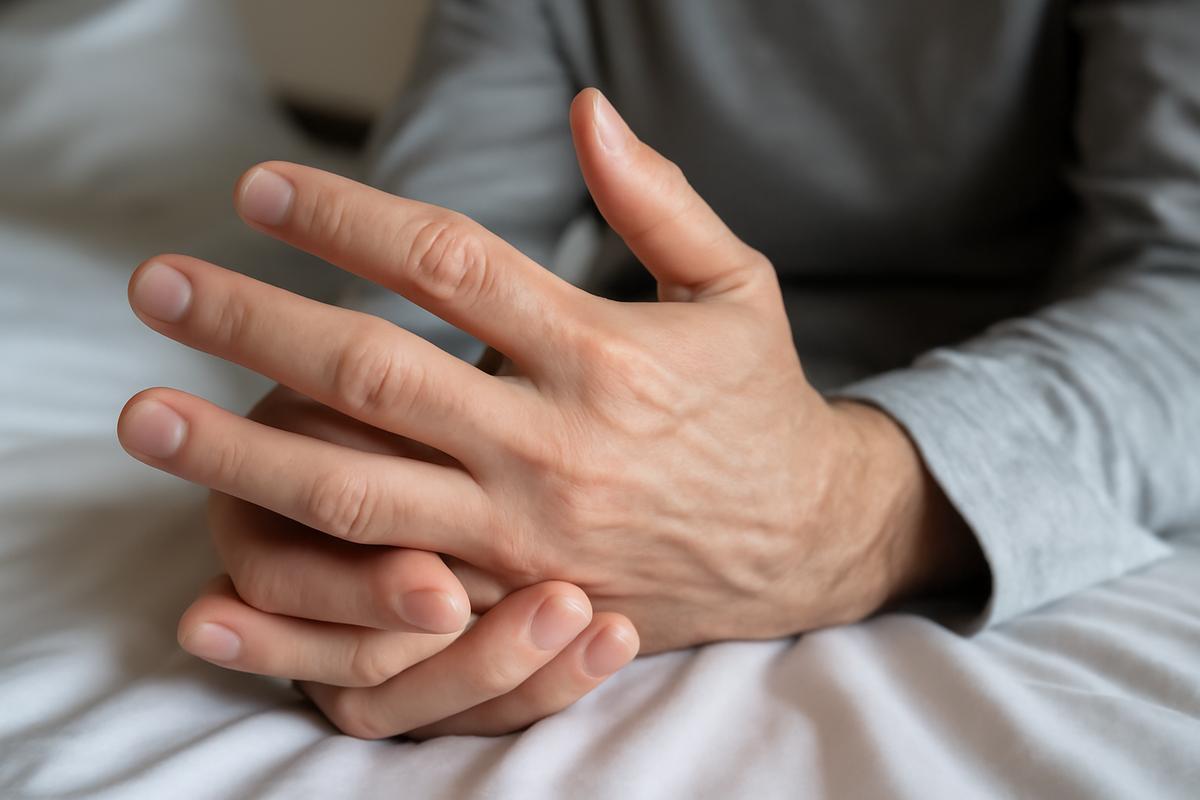
The light comes in thin and gray, spilling over the windowsill and pooling on the floorboards. Your alarm has already done its worst, but it’s not the sound that wakes you fully; it’s the small, quiet resistance between you and the day. You reach for your phone, or the glass of water on the nightstand, and it happens again—that slow, creaky protest in your fingers. Not pain, exactly. Not yet. But a stubborn stiffness, as if your hands have forgotten how to be yours overnight.
The Quiet Mornings Your Hands Remember
Morning has a way of magnifying small truths. The grain of the wooden dresser looks sharper. The air feels cooler on the skin. And your fingers—well, they don’t lie either. Each joint carries its own quiet history: the sports you played, the emails you typed, the jars you twisted open, the cold you braved without gloves, the years that have quietly stacked behind you.
You flex your hand in the soft half-light. The fingers don’t quite obey. They curl in slow motion, like branches thawing from frost. Sometimes they crackle, sometimes they don’t. Sometimes there’s a pulse of ache in the knuckles, as if a tiny weather front has settled inside them. Why always in the morning? Why this daily negotiation between you and your own hands?
The answer begins in the hours when you know the least about yourself: when you are asleep, still, heavy-limbed, and unaware of the work your body is quietly doing—or not doing.
What Your Hands Are Doing While You Sleep
In the dark, after you’ve rolled over and chased the last thoughts from your mind, your body enters its secret life. Your heart slows. Your breathing deepens. Muscles finally loosen their grip on the day. You sink into the mattress, a quiet weight. But your hands, those busy ambassadors that spend all day reaching, grasping, typing, texting, holding, can finally go still.
Stillness is a gift, but it comes with a price. When you sleep, your circulation shifts. Blood moves differently through the long corridors of your limbs. Your joints settle into positions they may hold for hours at a time. Small spaces inside your hands—those narrow channels where nerves and tendons pass through—can narrow a bit more when your wrists are bent or tucked under a pillow. For many people, fluid pools just a little extra in the soft tissues while they rest.
Inside every joint of your fingers is a subtle but incredible landscape: cartilage as smooth as glass, synovial fluid that works like a private oiling system, delicate ligaments that tether bone to bone with the perfect tension. At night, with gravity pressing evenly and movement paused, that lubricating fluid may not circulate as freely. The cartilage, deprived of the gentle pumping motion that comes with movement, can feel a touch less “glidy” in the morning. You wake to find that your fingers move like hinges that haven’t been opened in a while.
For most people, that first clumsy stretch of the hands is just the body rebooting. The “grease” is still there; it just needs a moment to warm and spread. But when there’s more going on beneath the skin—age, inflammation, nerve compression, years of hard use—that gentle sleep-borne stiffness can whisper of deeper stories.
The Slow Weather of Age and Time
Think of your joints as little weather systems. Over time, they change, almost imperceptibly, like a coastline being nibbled away by tides you can’t see. The cartilage in your finger joints, so polished and quiet in youth, gradually thins. The body, ever improvising, grows small bony edges at joint margins called osteophytes—bone spurs, though they rarely feel sharp from the outside. Inside, they subtly alter how surfaces meet and move.
This is one language of osteoarthritis, the slow, common version of joint aging. It doesn’t always hurt. Early on, it often just feels…stiff. Especially in the mornings or after long stretches of stillness. It’s why your grandmother may have talked about needing to “get her joints moving” before she felt like herself. If you watch your own hands over months and years, you might notice gradual changes too: a knuckle widening a bit, a finger bending ever so slightly sideways, a ring needing to move to a different finger.
During the night, with your hands silent on the sheets, the joint fluid doesn’t get stirred and refreshed as often by motion. The already-altered surfaces press against each other without the frequent gliding they enjoyed in younger years. By morning, they’ve settled into a kind of awkward camaraderie that needs a few minutes of gentle movement to renegotiate.
Once you start to move—curl, stretch, clench, open—something almost magical happens at a microscopic level. The synovial fluid begins to circulate more evenly, like oil returning to all the corners of an engine. The cartilage swells slightly with that fluid, softening the friction. Within minutes, the unfamiliarity eases, and your hands slip almost seamlessly back into the background of your awareness.
When Stiffness Is a Messenger, Not Just a Mood
Not all morning stiffness is created equal. Sometimes, it’s just your body wiping the sleep from its joints. Other times, it’s a messenger knocking on the door a little louder, asking you not to ignore it.
Imagine your immune system as a protective forest fire crew, designed to rush in where there’s danger. Only sometimes, it misreads the map and sets up camp inside your own joints. That’s one way to picture inflammatory conditions like rheumatoid arthritis and related diseases. Overnight, while you sleep, your immune cells may become especially active in certain joints, pouring out chemicals that subtly irritate the lining.
By the time you wake, the inside of the joint may be a little swollen, the lining a bit thickened and tender. Your fingers don’t just feel stiff; they feel like someone replaced the small, efficient joints with tight, overstuffed versions—hot, sore, puffy. And unlike the ordinary stiffness of a slightly aging joint, this stiffness lingers. Not ten minutes or fifteen, but an hour or more. Sometimes half the morning.
This is one of the hallmarks of inflammatory joint disease: prolonged morning stiffness that slowly melts away as the day goes on. It’s not dramatic, like a broken bone or a sudden sprain. It’s more like a slow sunrise of discomfort that shows up every day and refuses to be ignored. The fingers may look swollen, the knuckles rounded in a way that feels new. Gripping the coffee mug, turning a key, opening a door—those small rituals become more loaded, each one a reminder that something is brewing beneath the surface.
These conditions can arrive at any age, but they often catch people in the middle chapters of life, just when they’re used to feeling invincible. The good news: this kind of stiffness has become far less of a life sentence than it once was. There are ways to cool that unseen fire, from medications to lifestyle changes, and the earlier it’s recognized, the more power you have over the story your hands will tell in the years ahead.
The Hidden Geography of Nerves and Tunnels
Your fingers don’t move alone. Every wiggle and curl depends on tendons and nerves that travel down from your forearm, threading through narrow passageways in your wrist like travelers through a canyon. One of the most famous of these canyons is the carpal tunnel, a small but crowded space where the median nerve and flexor tendons share tight real estate beneath a tough band of tissue.
At night, especially if you sleep with your wrists bent or your hands tucked under your head or body, pressure inside this narrow tunnel can rise. Fluid may pool a bit in the soft tissues, adding subtle bulk. The median nerve, sensitive and essential, doesn’t love this squeeze. It complains in its own language: tingling in the thumb, index, and middle finger. Numbness that makes buttons harder to handle. A strange sense that your hands are both too present and not present enough.
Morning can be prime time for these sensations. That first moment you try to hold your phone or turn off the alarm can feel clumsy. You may need to shake out your hands, like a pianist about to start a difficult piece. Over time, untreated compression can lead not just to stiffness, but to weakness—gripping objects becomes hard work, and fine motor tasks, like threading a needle or fastening a small clasp, can suddenly feel like a test.
Carpal tunnel isn’t the only player here. Other nerve routes can be compressed higher up, near the elbow or even the neck, but they all share that same early-morning spotlight. While you rested, the pathways narrowed, and the nerves quietly protested. When you wake, their message is clear: something about the nightly stillness and your sleeping posture isn’t working well for them.
What Morning Teaches You About the Day Ahead
Whether your stiff fingers are hinting at arthritis, nerve compression, or simply the normal wear of years and use, your hands are giving you a kind of weather report. You can ignore it, sure—many people do. They shake their hands out, mutter something about “getting older,” and get on with it. But if you listen closely, your morning fingers can be surprisingly instructive.
Some patterns are worth noticing:
- How long does the stiffness last once you start moving?
- Does warmth help—like a hot shower or holding a warm mug?
- Are some fingers worse than others, or both hands equally affected?
- Do certain evening habits—like long hours at the keyboard, heavy lifting, or late-night crafting—make mornings worse?
- Is there swelling, redness, or visible change to the shape of the joints?
These quiet observations can turn you into a better witness of your own body’s story. They also give health professionals valuable clues, should you choose to bring your hands into a doctor’s office someday and say, “Here. These have something to tell us.”
In the meantime, there are ways to greet your fingers each morning that feel less like a battle and more like a conversation.
Mornings as a Gentle Ritual Instead of a Test
Before you even sit up, you can begin to wake your hands gradually. Think of it like easing open a door that’s been painted shut, not forcing it:
- Start by simply opening and closing your hands slowly, like sea anemones responding to a tide. Ten gentle flexes—not clenching, just moving.
- Draw each finger toward the palm one by one, then stretch them long, as if you’re trying to make space between each knuckle.
- Circle your wrists in small, slow loops, both directions, like you’re swirling water in a glass.
- If you keep a soft towel on the nightstand, you can wrap your hands in it for a moment of warmth, or hold a warm (not scalding) mug once you’re up.
Movement acts like a pump, sending fresh blood and fluid through those small joint spaces that feel forgotten during sleep. Warmth soothes the tissues, convinces tendons to glide more easily, tells nerves they are safe. These small gestures can turn those first few minutes of stiffness into something gentler, like a quiet stretch instead of a jolt.
Even the way you sleep can make a difference. A neutral wrist position—straight, not bent forward or back—can reduce pressure in the carpal tunnel. Some people find that soft wrist splints at night transform their mornings, making numbness and stiffness less dramatic. Others learn to keep their hands out from under their body or pillow, giving their nerves and vessels just a bit more breathing room.
A Tiny Table of Morning Clues
Here’s a simple way to think about what your morning finger stiffness might be trying to say. This isn’t a diagnosis chart; it’s more like a translation guide for common patterns.
| Morning Experience | What It Might Suggest | Worth Paying Attention To |
|---|---|---|
| Stiff for a few minutes, then fine after moving | Mild joint aging, overnight stillness, normal wear | General hand use, posture, gentle morning stretches |
| Stiffness lasting an hour or more, with swelling | Possible inflammatory arthritis (like rheumatoid arthritis) | Joint shape changes, fatigue, family history, see a clinician |
| Tingling or numbness in thumb/index/middle fingers | Possible nerve compression (often carpal tunnel) | Nighttime wrist position, dropping objects, weakness in grip |
| Pain at finger tips or base of thumb with use | Osteoarthritis, repetitive strain | Tasks that aggravate it, relief from rest or warmth |
| Sudden, severe pain, red, hot joint | Possible acute arthritis flare, gout, or infection | Urgent evaluation, especially with fever or feeling unwell |
Living in a Body That Changes—And Responds
Our culture likes to whisper that every new stiffness is a failure: of youth, of fitness, of willpower. But the truth is quieter and more forgiving. Your body is not failing when your fingers feel stiff in the morning; it’s speaking. It’s telling you that you are alive inside a living system, not a static machine. Joints that work, work. They also wear. Tissues that heal leave behind tiny edits. Nerves that complain are asking for space, time, attention.
When you notice that your fingers resist the day at first, you are catching a glimpse of the complex negotiations happening beneath your skin. It’s an invitation: to stretch, to warm, to question, to maybe seek clarity if the pattern suggests something more serious. To adjust the way you work, the way you hold your phone, the way you spend your evenings, the way you sleep.
There is also a strange kind of tenderness in it. Those hands have carried groceries, cradled faces, written notes, fixed hinges, held steering wheels on long, lonely drives. They have done far more than you remember, every day of your life. Morning stiffness is sometimes just the echo of all that loyalty. A reminder that these incredible instruments of touch and work and expression deserve—not just use—but care.
So tomorrow, when the light spills thin and gray across the sheets and your fingers answer the morning with a slow, stubborn curl, pause for a moment. Feel the texture of the stiffness, the way it eases as you move. You are watching your own body awaken, bearing its history but still, wonderfully, ready for another day.
Frequently Asked Questions
Is it normal for fingers to be stiff every morning?
Many people experience mild morning stiffness, especially with age or after a day of heavy hand use. If it eases within about 10–15 minutes of gentle movement and isn’t very painful, it’s often a normal response to overnight stillness. If it lasts longer, is quite painful, or is getting progressively worse, it’s worth discussing with a healthcare professional.
How do I know if my morning stiffness is arthritis?
Arthritis-related stiffness often lasts longer than simple “sleep stiffness.” If your fingers are stiff for an hour or more, joints look swollen or feel warm, or you notice changes in joint shape over time, these can be signs. Osteoarthritis tends to cause bony enlargement and pain with use, while inflammatory arthritis often brings prolonged morning stiffness and sometimes fatigue or other systemic symptoms.
Can sleeping position really affect my hands in the morning?
Yes. Sleeping with your wrists bent, hands under your head, or body can increase pressure on nerves and tendons, especially in the carpal tunnel. This can lead to tingling, numbness, and stiffness on waking. Keeping wrists in a more neutral (straight) position and avoiding prolonged pressure on the hands can help.
What can I do at home to ease morning finger stiffness?
Gentle hand and wrist stretches in bed, warm showers, or holding a warm mug can help. Avoiding very tight grips in daily tasks, taking breaks from repetitive hand work, and using ergonomic tools or keyboards may also reduce strain. If symptoms persist, structured exercises from a physical or occupational therapist can be helpful.
When should I see a doctor about stiff fingers in the morning?
You should seek medical advice if:
- Stiffness lasts more than an hour most mornings.
- You notice ongoing swelling, redness, or warmth in the joints.
- Pain wakes you at night or interferes with daily activities.
- You have tingling, numbness, or weakness that doesn’t improve after shaking or moving your hands.
- A joint suddenly becomes very painful, red, and hot, especially if you feel unwell or have a fever.
These signs suggest there may be more than simple overnight stiffness going on, and early evaluation can make a big difference in how your hands feel in the years ahead.

Hello, I’m Mathew, and I write articles about useful Home Tricks: simple solutions, saving time and useful for every day.