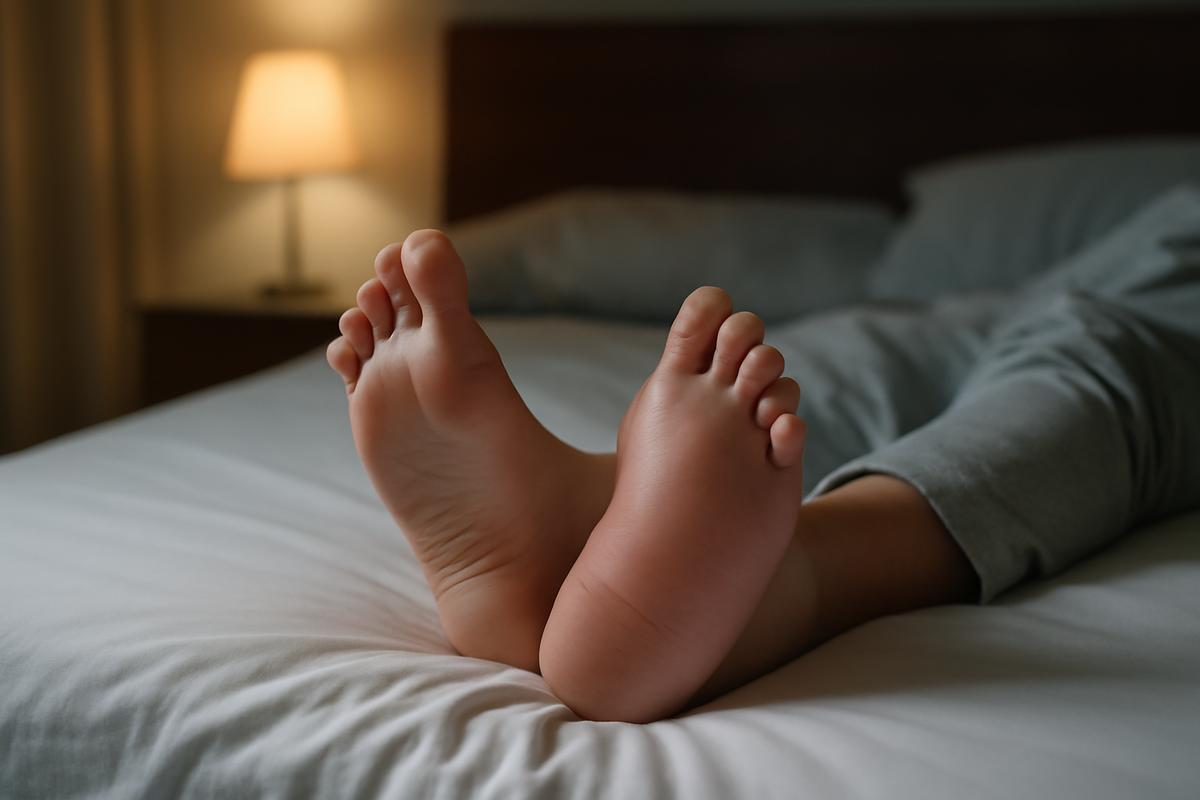
By the time the sky blushes into evening and the day finally loosens its grip, you notice it again. That faint, aching puffiness around your ankles. The impression of your sock line, etched like a shoreline in soft sand. Your shoes, which felt perfectly fine in the morning, now feel like they’ve shrunk half a size. You kick them off with a small sigh of relief and flex your toes, watching as the skin stretches tight over the top of your feet. They look… bigger. Heavier. Swollen. And somewhere between curiosity and concern, a quiet question rises: why do my feet always swell more at night?
The Slow Tide in Your Ankles
Think of your body as a planet with its own complex weather. Blood is the wind, lymph is the rain, and gravity is the unspoken pull that shapes everything. Your feet live in the lowlands of this landscape—the valleys where fluid naturally wants to gather.
All day long, as you sit at a desk, stand in a shop, or weave through city streets, gravity has your feet in its steady grip. Every heartbeat pushes blood down the arteries into your legs and feet, full of oxygen and nutrients. But getting that blood—and the extra fluid it leaks into the tissues—back up toward your heart is a slower, more complicated journey.
Your veins are the return roads. They’re equipped with tiny one-way valves, like little doors, that keep blood from slipping back down. Your muscles, meanwhile, serve as the pumps. Every step, every calf flex, every bend of the ankle squeezes the veins and pushes blood upward, bit by bit, against gravity’s pull. It’s a beautiful, quiet choreography that carries on without your noticing.
Until it doesn’t quite keep up.
When you’ve been on your feet for hours or sitting so long your knees feel like locked hinges, that pump system works less efficiently. Your veins get a little more sluggish. Fluid—some in the veins, some in the surrounding tissues—begins to collect in the lowest place it can go. Your ankles. The tops of your feet. The tiny spaces between each toe. This is edema, and by evening, it’s had all day to rise like a tide.
Gravity, Stillness, and the Evening Swell
The difference between how your feet feel at sunrise and how they feel at sundown has less to do with time and more to do with position and motion—or the lack of both.
When Sitting Is Its Own Kind of Weight
Imagine hours at a desk with your hips at a right angle, knees bent, feet planted flat on the floor. It sounds harmless, but your veins are working extra hard in that configuration. Blood returning from your feet must move through bent joints, where it can be slightly pinched or slowed. Your calf muscles are surprisingly still. The “muscle pump” that normally helps push fluid back toward your heart is dozing.
In that stillness, fluid seeps gently from the tiny blood vessels into nearby tissues, like mist slipping through a screen. It’s not dramatic. You don’t feel it minute by minute. But by nightfall, your shoes fit tighter, your ankles wear red rings from your socks, and your skin feels heavier over the bones.
When Standing Has Its Own Gravity
On the other side, maybe you spend your days on your feet—working in a hospital, guiding tours, teaching in a classroom, serving coffee across a counter. Standing sounds more active than sitting, but if your legs stay fairly straight and still, gravity has nearly uninterrupted access to your blood and tissue fluids.
Your feet become the end of a long, vertical column of liquid. Every beat of your heart sends more blood downward. Every hour, a little more fluid collects in the tissues. You feel it as a throbbing tightness, an ache in your arches, a sluggishness in your steps. When you finally sit down at the end of the day and peel off your shoes, your feet bloom outward slightly, claiming the extra space.
The Hidden Currents: Veins, Salt, and Hormones
Even in the most ordinary life, your veins and tissues are constantly negotiating the balance of fluid. But certain things quietly tip the scales, especially by nighttime, when all the day’s choices and rhythms add up.
How Your Veins Shape the Evening
Some people are simply more prone to swollen feet because their veins are a little more stretched, more relaxed, or more worn than others. With age, those one-way valves in your veins can weaken. Blood that’s supposed to move upwards toward your heart begins to slip backward with each pause and pool in the lower legs. Varicose veins are a visible sign of this, bulging and blue, but you can have valve problems even without the dramatic surface map.
During the day, each extra moment of standing or sitting still allows more of that downward seep. By night, your feet feel the story of your veins. For some, especially those with chronic venous insufficiency, evening swelling becomes a familiar companion—annoying, sometimes uncomfortable, sometimes painful, yet strangely predictable.
There’s a quiet irony here: you might feel most aware of your feet when you finally stop using them. You notice the swelling precisely when you’re still enough to look down and see it.
Salt, Sugar, and the Soft Flood of Fluid
Your feet don’t just show you where blood has traveled; they also reveal what you’ve been eating and drinking. Salt, in particular, is a master of water retention. Your body keeps a careful balance of sodium in the blood, and when you eat more of it—through fast food, packaged snacks, takeout, or even a heavy-handed sprinkle at dinner—your body hangs on to more water to keep the concentration stable.
That extra water doesn’t stay evenly distributed. It gravitates toward places where pressure is greatest and where gravity has the longest lever arm: your lower legs and feet. By evening, after a day’s worth of meals and snacks, that subtle retention can swell the soft tissues around your ankles.
Hormones quietly participate, too. In many women, the days before a period bring a slight shift in fluid balance. Estrogen and progesterone influence how much water the body holds onto, and this can show up in rings that feel tight, faces that look puffier, and yes—feet that swell by nightfall.
Why Night Makes Everything More Noticeable
There’s another layer to this nightly foot drama: your attention. Old aches, subtle discomforts, gentle swells—these are easier to ignore when the day is in full spin. When emails fly, voices call your name, and your mind is darting between tasks, you live from the neck up.
Then evening arrives. The light softens. You sit down on the sofa or at the foot of your bed. Your body begins to speak louder simply because the world has gone quieter.
You look down and study your feet, perhaps for the first time all day. They are flushed, or a little shiny, or the skin dimples for a moment when you press a thumb into the side of your ankle. Maybe your veins are more prominent. Perhaps your sandals have left pale crosshatched marks on your skin.
Part of the “why” of evening swelling is objective—gravity, veins, salt, hormones. But part of it is experienced in this quiet noticing, in the simple act of finally paying attention to the two small, loyal, often overlooked structures that carry you through every hour.
The Gentle Art of Keeping the Tide in Check
There’s a kind of intimacy in caring for swollen feet. It’s a way of acknowledging that you live in a body shaped by forces you can’t see, but can learn to work with. None of this is about quick fixes or perfection. It’s about small shifts in how you treat your legs and feet as the day unfolds.
Movement as Medicine
Circulation thrives on motion. Every time your calf contracts, it’s like squeezing a sponge, helping blood and fluid move upward. If your day keeps you mostly in one position—sitting or standing—your feet will likely feel it by nightfall.
Little rituals can soften that impact:
- Take short “circulation breaks” every hour if you can—walk down the hall, rise on your toes a few times, bend and straighten your knees.
- When sitting, circle your ankles, flex and point your toes, and avoid tucking your feet under your chair for too long.
- If you stand all day, shift your weight from heel to toe, bend your knees occasionally, or step in place while talking or waiting.
These don’t feel like exercise in the traditional sense; they’re small waves that keep the inner tide from going still.
Elevation and the Sweet Relief of Letting Go
At the end of a long day, one of the simplest and most effective ways to calm swollen feet is to give gravity a new direction. When you lie down and prop your feet on a pillow, or rest your calves on the arm of the sofa, the fluid that has been pooling in your ankles now has a clear, downhill path back toward your core.
Stay there for a few quiet minutes. Feel the subtle easing—the tightness in your skin gentling, the pressure lifting. This is not just a mechanical trick; it’s a small, private tea ceremony with your own body. A recognition that you’ve asked much of your feet, and now you’re allowing them a moment of grace.
If swelling is a regular visitor, wearing compression socks or stockings during the day can support your veins, gently squeezing the legs to prevent fluid from collecting. They’re not glamorous, but they are quietly powerful—like scaffolding for your circulation.
When Swollen Feet Are Whispering Something More
Most of the time, evening foot swelling is an understandable byproduct of your daily posture, activity level, salt intake, and the slow wear of time on your veins. But sometimes, like the sudden rise of a river, it can be a signal of something deeper going on beneath the surface.
If your feet or ankles swell suddenly and dramatically, especially if only on one side, it can be a red flag for a blood clot in a leg vein. If swelling comes with shortness of breath, chest pain, or a feeling that you can’t catch your breath, it can be a sign your heart is struggling to pump effectively. Kidney and liver problems can also reveal themselves as swelling in the feet, a quiet overflow of fluid that the body can no longer balance the way it once did.
In those cases, your feet are not just tired; they are telling a story that needs to be heard by a doctor. Patterns matter. Is the swelling new, or is it an old companion? Is it symmetrical, or does it favor one side? Does it come with pain, heat, redness, or changes in skin color? Those details are clues, threads that help unravel whether this is everyday gravity at work or something more serious asking for attention.
| Pattern You Notice | What It May Suggest | What You Can Do |
|---|---|---|
| Mild swelling by evening on both feet, better by morning | Common effect of gravity, long sitting/standing, mild venous slowing | Move more during the day, elevate legs, reduce salt, consider compression socks |
| Swelling with visible varicose veins and leg heaviness | Chronic venous insufficiency (weakened vein valves) | Talk to a clinician, use compression, elevate regularly, avoid prolonged stillness |
| One-sided swelling, painful, warm, or red | Possible blood clot (deep vein thrombosis) | Seek urgent medical care; do not massage or ignore |
| Swelling plus shortness of breath or chest discomfort | Possible heart or lung issue; fluid overload | Call emergency services or see a doctor immediately |
| Gradual swelling with weight gain and fatigue | Possible heart, kidney, or liver problem | Schedule a medical evaluation and mention swelling pattern |
Listening to the Landscape of Your Body
By night, your feet bear the handwriting of your day: every hour you sat unmoving, every step you took, every salt-heavy meal, every small decision you made without thinking of them at all. They tell the story in a language of puffiness and pressure, of rings left by socks, of the relief that comes when you finally let them rest above the level of your heart.
Your feet swell more at night not because they are failing you, but because they are faithfully reflecting the physics you live inside—the pull of gravity, the design of your veins, the chemistry of your blood, the rhythms of your hormones and heart. The day is a long descent toward evening, and your lower limbs are always the end of that slope.
So when you feel that familiar end-of-day fullness, you might meet it with a bit more tenderness. Slip off your shoes. Stretch your toes. Lift your heels against a wall or rest your calves on a stack of pillows. Drink some water, let your breath slow, and think of your blood quietly finding its way back home.
This isn’t just about solving a nuisance. It’s about living a little more in conversation with your body, noticing the ways it responds to what you do and how you move. Your feet, those often overlooked storytellers at the bottom of everything, are simply asking you to listen.
Frequently Asked Questions
Is it normal for feet to swell more in the evening?
Yes, mild swelling by the end of the day is common, especially if you’ve been sitting or standing for long periods. Gravity pulls fluid downward, and your veins and muscles can get a bit less efficient over the course of the day. As long as the swelling is mild, affects both feet, and improves overnight, it’s usually considered normal.
When should I worry about swollen feet at night?
You should seek medical advice if the swelling:
- Comes on suddenly or is severe
- Affects only one leg and is painful, red, or warm
- Is accompanied by shortness of breath, chest pain, or difficulty breathing
- Does not improve overnight or gets progressively worse
- Comes with other symptoms like fatigue, abdominal swelling, or unexpected weight gain
Can drinking more water help with evening foot swelling?
Staying well hydrated can help your body balance fluids more effectively, especially if your swelling is made worse by high salt intake. However, simply drinking large amounts of water won’t solve swelling on its own and can even worsen things in people with certain heart, kidney, or liver problems. Balance is key: moderate water intake, less salt, and more movement together are more helpful.
Do compression socks really make a difference?
For many people, yes. Compression socks or stockings apply gentle pressure to your legs, supporting the veins and helping prevent fluid from pooling in the lower legs and feet. They can reduce evening swelling, leg heaviness, and discomfort, especially if you stand or sit a lot. It’s best to use the correct size and, if you have health conditions, to ask a clinician which type is right for you.
Can changing my diet reduce foot swelling at night?
Diet can definitely influence swelling. Reducing salty foods—like processed snacks, fast food, canned soups, and heavily seasoned takeout—can lessen how much water your body retains. Eating more fruits and vegetables, staying moderately hydrated, and limiting alcohol can also support better fluid balance. While diet alone may not eliminate swelling, it’s an important piece of the overall picture.

Hello, I’m Mathew, and I write articles about useful Home Tricks: simple solutions, saving time and useful for every day.