Why your carpet holds more dust in winter
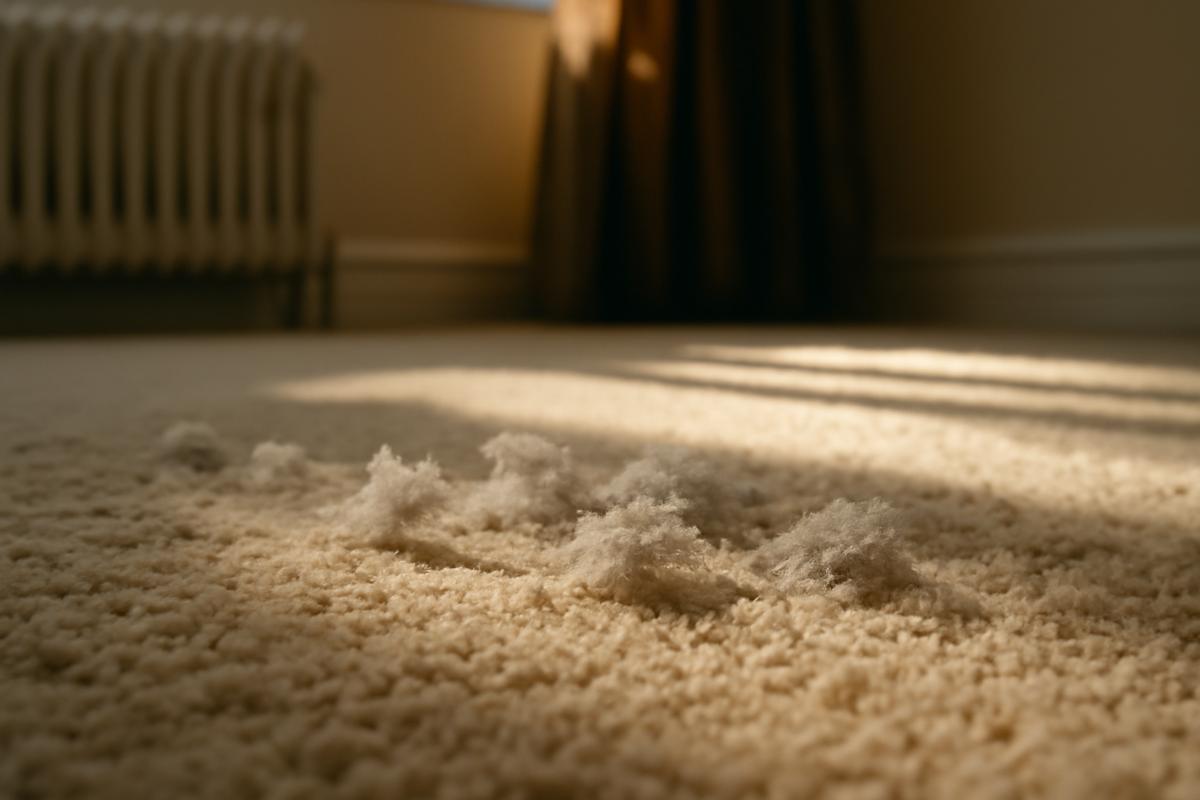
The first time you notice it, it’s probably not dramatic. Maybe it’s the faint tickle in your nose when you sink your bare feet into the living room rug. Or the way a beam of cold winter sunlight slants through the window and suddenly the air above the carpet is full of tiny, drifting specks. You pause, mid-step, with that small jolt of realization: how much of that is living down there, in the soft fibers you thought were clean? Winter has a way of revealing things—not just bare trees and frozen soil, but the secret life of dust beneath our feet.
The Winter Carpet Mystery
In summer, the house feels more open. Windows are cracked, the back door is barely shut, and air moves through with lazy confidence. But winter pulls everything inward. Windows stay sealed. Doors click shut fast. We wrap ourselves in layers, pad around in slippers, pile on blankets, drag heavier rugs into the rooms that feel cold. The home becomes a shell against the world outside—and inside that shell, your carpet quietly becomes a dust magnet.
It sneaks up gradually. You might notice you’re vacuuming more often, yet the air feels stuffier. Maybe your allergies whisper back to life just when you expect them to go dormant. There’s no grass pollen, no blooming trees, no fluffy seeds drifting by. Still, your nose feels prickly while you’re watching a movie on the floor. It’s confusing, and a little unfair. Shouldn’t winter at least give you a break from dust?
The truth is, winter doesn’t reduce the dust. It simply rearranges the stage so that your carpet becomes a starring character. Every soft fiber under your feet, every plush step across the room, becomes a landing strip for tiny pieces of the season: skin flakes, dry soil tracked in on boots, wood smoke residue, pet dander, fabric fibers, and the microscopic leftovers of life lived indoors.
Walk across that carpet in wool socks on a dry winter day, and you can feel the faint crackle of static, the rush of unseen particles lifting and resettling. It’s not your imagination. Something is really different about winter.
What Actually Changes in Winter?
To understand why your carpet seems dustier when the world outside is locked in frost, you have to zoom in on the subtle shifts happening in your home the moment temperatures drop. None of them feel dramatic when you’re simply trying to stay warm, but together they turn your floor into a quiet dust collector.
We Live Closer to the Floor
Think about how you move through your home in July versus January. In the warmer months, you’re in and out. Your steps are lighter, you’re barefoot or in sandals, and you spend evenings on the porch or by an open window. In winter, you sink into your home like a burrow. You watch movies on the rug. Kids build pillow forts that spill across the floor. Pets curl up in tight loops wherever the carpet is thickest and warmest.
The floor becomes more than a surface; it becomes a habitat. And wherever we spend the most time, we shed the most. Human skin flakes, loose hair, stray threads from sweaters, pet fur—all of it drifts downward, and your carpet is waiting with open arms, each fiber a tiny hook ready to catch and cradle whatever floats past.
Dry Air, Dusty World
Winter air is drier by nature, and when you heat that cold air indoors, its capacity to hold moisture increases, but the humidity itself often stays low. Your skin cracks, your lips chap, your hair gets brittle—and every one of those signs has a dusty companion: flaking skin, broken hair, tiny fibers freed from sweaters and blankets.
This is where the sensory part is hard to ignore. Imagine rubbing the cuff of your wool sweater between your fingers on a frosty morning. You can almost feel the fibers loosening, the air just dry enough to tug threads loose with the faintest friction. Those fibers don’t vanish. They float, settle, and gather in the softest places: your carpet, your rugs, that thick runner in the hallway.
Even the objects inside your house dry out. Paper becomes more fragile, books release tiny bits of fiber, upholstery threads loosen. It’s like the entire indoor ecosystem is quietly crumbling into a fine, invisible snowstorm of particles, and the floor is the final resting place.
Closed Windows Mean Trapped Particles
In mild seasons, you’ll sometimes open the windows and let the breeze do an honest day’s work. Dust that gets stirred up might drift outward. Air circulates without much effort. But winter is a closed-loop system. You cook, breathe, move, shed, heat, and repeat—all inside a sealed box of walls and windows.
No draft comes along to carry away the particles. HVAC systems move air in circles, pulling dust from one room and fanning it out in another. When the air slows down, gravity quietly takes over and lets everything fall. And where does it land? On vertical surfaces, some of it. But the thickest layer tends to drift down to the carpets, where dust finds structure and shelter among the fibers.
The Strange Relationship Between Carpets, Heat, and Static
There’s a certain sound winter makes when you walk across a synthetic carpet in socks: the light crackle of static, followed by the tiny lightning-bolt kiss of a doorknob. Static is one of the most overlooked characters in this winter story, and it has a surprising relationship with dust.
Static electricity happens more easily in dry air. Moisture normally helps dissipate electrical charges on surfaces and in fabrics, but winter air doesn’t do you that favor. As you walk across the carpet, your body and the carpet fibers trade electrons. A small imbalance builds up, and you carry that charge with you, like a private little storm cloud.
Dust particles, too, can carry or be attracted to static charges. Your carpet fibers, your clothes, and the dust swirling between them participate in this tiny electrical dance. Charged fibers cling more strongly to the nearest small particles. Dust that might have slid off a smoother surface—like hardwood or tile—tends to get tugged into carpets instead, held loosely like a nest of spiderwebs cupping pollen in the wind.
Now add heat. When your furnace kicks on, it pushes warm air across cold floors, lifting dust that had quietly settled. That dust rides the furnace breeze, then sinks back when the air stills, often falling right back into the same soft surfaces—your carpet and rugs. Over and over: up, drift, down, repeat. Layers build in slow-motion snowfall.
What’s Actually in All That Winter Dust?
If you could shrink down and climb inside a cluster of carpet fibers on a January afternoon, you wouldn’t be stepping into “just dust.” You’d be walking through a tiny archive of the season. Each speck is a piece of a story, and together they tell you what winter really looks like indoors.
Here’s a closer look at what often ends up in your carpet when the cold months roll in:
| Dust Component | Where It Comes From in Winter | How It Ends Up in Your Carpet |
|---|---|---|
| Skin flakes & hair | Dry indoor air, more time indoors, heavy clothing layers | Shed constantly, drift downward, get trapped in fibers |
| Fabric fibers | Sweaters, blankets, socks, fleece, scarves | Friction from daily use breaks them loose onto the floor |
| Soil & grit | Muddy boots, salty sidewalks, frozen yard paths | Tracked in, dries out, crumbles into fine particles |
| Pet dander & fur | Pets staying indoors more, thicker winter coats | Shed into the air, settle in the warmest, softest spots |
| Combustion particles | Wood stoves, fireplaces, candles, gas heating | Fine soot and residues drift through air, cling to carpet |
This is why your carpet doesn’t just look dusty in winter—it sometimes smells different too. The faint mix of smoke from last night’s fire, the warm scent of wet dog, the ghost of last week’s chili dinner: all of it can cling to airborne particles that eventually bed down in your rug.
Why Carpets Hold More Dust Than Hard Floors
If you’ve ever swept a hardwood or tile floor in winter, you know dust collects there too. But there’s something uniquely clingy about carpets. They don’t just collect dust; they harbor it.
Think about the structure. A flat floor is like a calm pond: what lands there is easy to see and easy to move. The slightest breeze or a casual sweep, and particles skitter away. Carpet, on the other hand, is like a dense forest of fibers. Dust doesn’t simply rest on top; it slides down between strands, snagged on the way like leaves caught in underbrush.
When you walk across a hard floor, you tend to kick dust into visible little drifts—those familiar gray lines under furniture or along baseboards. You can see where the broom should go. On carpet, the movement is more hidden. Your footsteps push particles deeper instead of sideways. They shift, settle, and compress down toward the backing of the carpet, layer after layer, like a sedimentary record of every winter spent in that room.
In summer, some of these particles might have drifted out through an open window, or been diluted by more frequent airflow. In winter, they persist. Your vacuum may pull up the top layers, but older dust can remain buried below, waiting for the next great disturbance: a deep-cleaning day, a move, or a remodel that suddenly shakes everything loose.
How Your Winter Habits Feed the Carpet
Beyond climate and physics, there’s a quieter, more personal reason your carpet traps more dust in the cold: the thousand small choices you make to feel warm and comfortable. These aren’t mistakes; they’re human. But each one gives your carpet a little more to hold onto.
You drag an extra rug into the drafty hallway. You unroll a thick runner in the bedroom where your toes complain about morning chill. You add layered textiles everywhere: throw blankets, cushions, sheepskins, woven poufs. Each new soft surface is both a comfort and a dust trap, and almost all of them share the same gravitational destination—the floor.
You might also vacuum a bit less energetically if the days feel short and your energy matches the light outside. Maybe you tell yourself you’ll do a “real clean” on the weekend, or when the days get longer. Meanwhile, dust settles with no resistance. The gaps between cleaning sessions are exactly where it thrives.
And then there’s the front door. In winter, it becomes a gateway between radically different worlds: the slushy, salted pavement outside and the warm, dry nest inside. Even if you’re careful, boots carry microscopic traces of everything. Ice melt crystals grind into tiny mineral pellets, mud dries into powder, sand used for traction disintegrates into grit. Take three steps into the house and the path is already outlined in invisible particles, waiting for the next socked foot to press them into the carpeted hallway.
Making Peace with Winter Dust
Once you know how and why your carpet holds more dust in winter, it’s tempting to feel a little defeated. But the point of understanding the story isn’t to panic; it’s to reclaim some quiet control.
Start with the senses. Feel the air in your home. If your lips are cracking and your hands feel like paper, your humidity is probably low. A modest rise in indoor humidity—not to the point of condensation, but enough to ease static—can slow the constant flaking of skin and fabric, and reduce the static cling that helps dust stick to your carpet. It also softens that sharp, dry feeling in your nose and throat when you wake up.
Next, pay attention to how you arrive home. A sturdy doormat outside and another inside, a habit of pulling off outdoor shoes at the door, and a small place to stash boots can dramatically cut the soil and salt that make their way into your rugs. You’re not being fussy. You’re just interrupting the story before it reaches the fibers.
Then, consider the rhythm of your cleaning. In winter, when the home is sealed and life is closer to the floor, your carpet benefits from a slightly more frequent touch—even if each session is short. Slow, deliberate vacuuming with a good beater bar or brush roll helps dislodge deeper dust. Passing quickly over the surface is like skimming a book; you’ll miss the details. Move slowly, almost like you’re combing the carpet, letting the vacuum do the quiet work of lifting out what gravity and time have hidden.
You might also choose one or two rugs as “sacrificial surfaces”—the ones that take the brunt of winter’s dust. These are rugs you’ll happily beat, shake outside on cold sunny days, or even wash if they’re machine-safe. They sit by doors, in play areas, under the dining table. They bear the season’s weight so that the wall-to-wall carpet doesn’t have to shoulder it alone.
Most of all, remember that dust in winter is not a sign of failure. It’s a reflection of life lived fully indoors: meals shared, pets sprawled belly-up in warm spots, kids sprawled over board games on the floor, you wrapped in a blanket on a Sunday afternoon. The very things that make winter bearable are the same things that give your carpet its secret load of particles and stories.
FAQs
Does winter really create more dust, or just make it more noticeable?
Winter doesn’t necessarily create more dust from nowhere, but it changes how and where it accumulates. Because we spend more time indoors with closed windows, the dust that would normally disperse or escape instead stays trapped and settles more heavily into carpets and other soft surfaces.
Why does my carpet smell musty or “stale” in winter?
Lower ventilation, higher indoor humidity in some homes, and a buildup of dust, dander, and cooking residues can all contribute to that musty note. The carpet absorbs and slowly releases odors attached to dust particles, especially when the room is warm but the air is not moving much.
Can winter dust in carpets make allergies worse?
Yes. Dust in carpets often holds allergens like pet dander, dust mite droppings, and mold spores. In winter, when you’re indoors for longer stretches and the dust isn’t ventilated away, your exposure can increase, triggering sneezing, congestion, or itchy eyes in sensitive people.
Is carpet always worse than hard flooring for dust?
Carpet holds more dust, but that can be both bad and good. It traps particles so they don’t stay as airborne, which may reduce what you breathe in at any given moment. However, if the carpet isn’t cleaned well and often, that trapped dust builds up over time. Hard floors hold less but let dust move and resettle more easily.
How often should I vacuum my carpet in winter?
For most households, vacuuming high-traffic areas at least twice a week and other areas once a week is a solid winter rhythm. Homes with pets, wood stoves, or many occupants may benefit from even more frequent, slow, deliberate vacuuming to stay ahead of the seasonal buildup.

Hello, I’m Mathew, and I write articles about useful Home Tricks: simple solutions, saving time and useful for every day.