Why tea tastes weaker after reheating
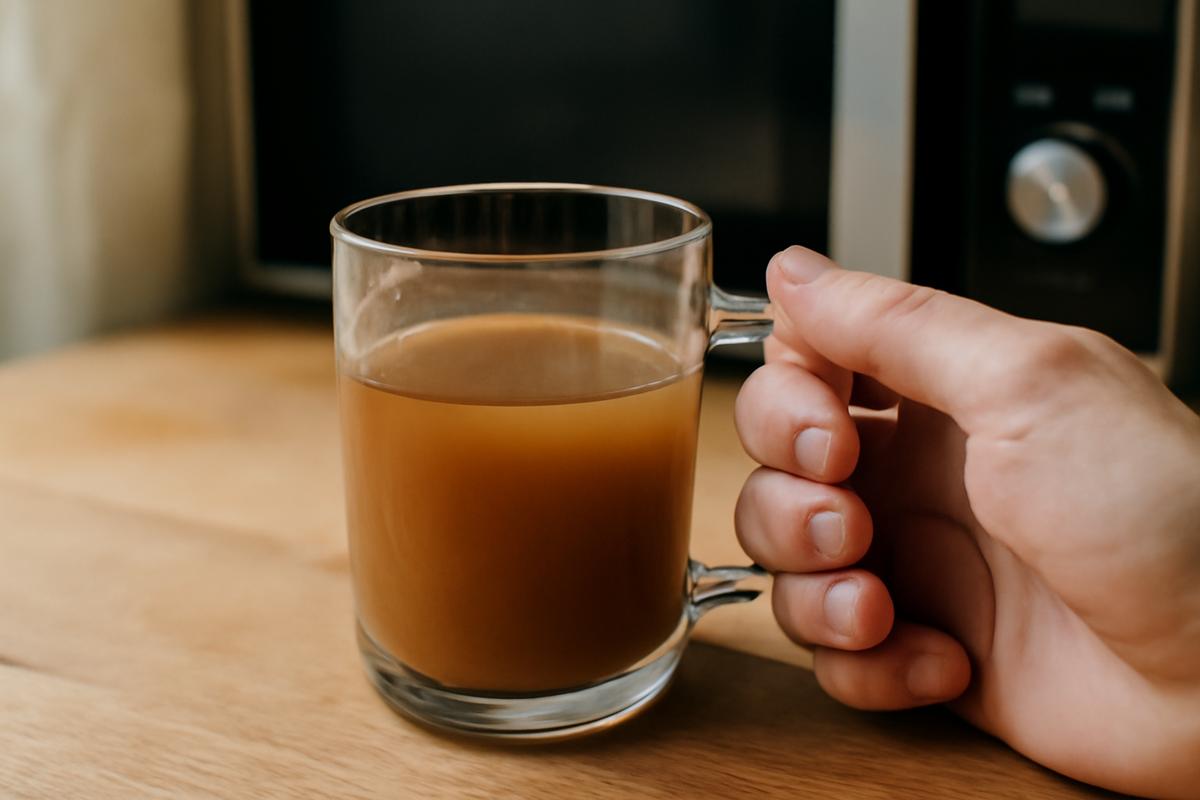
The second time you lift the mug, it feels like a small betrayal. The steam is there, rising in familiar ribbons. The ceramic is warm in your palms. But when you sip, that first bold promise of flavor is gone. The tea tastes thinner, flatter, like a memory of itself. You stare into the cup as if it might answer back. It doesn’t, of course. It just sits there, a lukewarm mystery in shades of amber, and you wonder: why does tea taste weaker after reheating?
The cup you meant to drink
Every cup of tea begins with an intention. You boil the water, feeling the kitchen fill with that soft, misty warmth. Leaves tumble into the infuser—green curls, dark twists, tiny fragments that smell of fields and forests. You pour the water and watch as color blooms: pale straw, copper, garnet, in slow swirling clouds.
That first steep is a small choreography of chemistry and time. Aromatic molecules leap into the water, tannins unfurl, sugars and acids dissolve. You take a first sip, and the flavor is whole, alive: floral edges, malty depths, maybe a hint of smoke or citrus. This is the tea as it was meant to be.
But life is not built around perfect cups. The phone rings. An email lands with the dull thud of urgency. A child calls from another room. Your tea cools on the table, its warmth slowly escaping into the air. By the time you return, the surface is barely trembling with heat. You hesitate for a second, then reach for the nearest solution: the microwave.
Moments later, the mug is hot again. The tea almost looks right. Then you take a sip, and the disappointment arrives—thin, bitter in strange places, somehow both dull and harsh. The question hangs between your taste buds and your brain: what went wrong in that brief, invisible process of reheating?
The fragile architecture of flavor
Tea is not just “brown water,” no matter what the unconverted might say. It is an intricate web of hundreds of compounds, all balanced for a brief, shimmering moment when the leaves meet hot water. To understand why reheating weakens your cup, you have to imagine that web starting to fray.
Inside those leaves—whether they’re delicate green, rugged black, oolong’s twisted intermediates, or a fragrant tisane—are volatile aromatic compounds. These are the bright, fleeting molecules that make tea smell like spring rain, roasted nuts, seaweed, orchard fruit, or honey. “Volatile” is the key word: they love to escape. Heat is their accomplice.
When you first brew tea, you’re at the sweet spot: enough heat to coax them out of the leaf, not so much that you destroy them all at once. The first minutes of steeping create a concentrated wave of aroma and flavor. But those volatiles don’t necessarily stay put as your tea sits. They drift off in the steam, quietly leaving your cup even while you’re not looking.
By the time you return to your cooled mug, some of that aromatic chorus has already slipped away. The tea hasn’t just cooled—it has aged, very quickly, in miniature. The surface has lost some brightness, the aroma has dulled, even before you’ve hit “start” on the microwave.
What reheating actually does to your tea
Reheating is not simply “warming it back up.” It’s subjecting what’s left in the cup to a second round of rough handling. Picture those flavor compounds as a delicate sculpture made of ice. The first brewing carved out the shape. Reheating is like leaving it in the sun—what remains starts to sag, melt, and pool.
When you reheat tea, especially in a microwave, several things happen at once:
- Aromatics are driven off even faster. As the liquid heats again, volatile compounds are pushed back toward the surface and into the air, but now there are fewer of them to begin with. Each reheating is like opening a window in a scented room—the fragrance rushes out, but it doesn’t come back.
- Bitter and astringent notes keep building. Tannins and certain polyphenols—those mouth-drying, puckering compounds—continue to interact with water and oxygen over time. Heat gives these reactions more energy. The result is not stronger flavor in a pleasant sense, but an increase in harshness, which paradoxically makes the tea seem thinner, because the more subtle notes are overshadowed.
- Sweet and delicate flavors degrade. Some of the gentler compounds, including those offering sweetness or floral nuances, break down with extended exposure to heat or oxygen. They flatten, leaving behind a simpler, more one-note profile.
- Oxygen keeps working even when the cup is sitting still. Every minute the tea sits in contact with air, oxidation continues. Reheating doesn’t reset that clock; it just speeds up the chemical chatter already happening in the cup.
The cup that returns from the microwave, then, is not your original tea warmed up. It’s a chemically older tea, pushed further along a path of aroma loss and flavor imbalance. It looks familiar. It is not the same.
The temperature trap
There’s another twist. When you sip hot liquid, your sense of taste is more easily overwhelmed by heat. That warmth can briefly blur the edges of what you’re tasting. With freshly brewed tea, the heat is backed by intensity: lots of aromatic compounds, layered flavor, complexity. Your brain reads it as rich and full.
With reheated tea, the heat returns, but much of the complexity does not. Your brain expects a replay of that first experience. Instead, it gets a flatter set of signals carried on the same warmth. The contrast—the memory of that first sip—makes the second version feel especially hollow.
Time: the quiet thief in your mug
Reheating is only half of the story. Time itself is the other culprit. Every moment tea spends fully brewed, it is slowly changing, even at room temperature. Not all of those changes favor flavor.
At first, while your tea cools from just-off-boiling to pleasantly drinkable, there’s a brief window where it may even taste better: the heat is less aggressive, the aromas feel more open, textures soften. But pass that window and something else begins.
Polyphenols continue to infuse into the liquid from any remaining leaf fragments or tea dust. Oxygen keeps winding its invisible fingers through the brew, oxidizing some compounds into new forms. These new molecules don’t necessarily taste like anything you would call “tea” at all: sometimes they’re metallic, sometimes stale, sometimes simply muted.
Certain teas reveal this more dramatically. A bright green tea that started out tasting like fresh-cut grass and sweet peas can turn swampy and bitter a half-hour later. A floral oolong can drift into something like slightly soggy cardboard if left in the pot too long. Black teas, more robust and fully oxidized to begin with, can sometimes hold their ground longer, but even they eventually slide into dullness.
Reheating doesn’t erase those twenty, thirty, or sixty minutes of quiet change. It just delivers the altered result to your senses: warmed, but worn out.
Different teas, different fates
Not all teas collapse in the same way, or at the same speed, once reheated. Here’s a simplified look at how different styles tend to behave:
| Type of Tea | Fresh Brew Character | After Reheating |
|---|---|---|
| Green Tea | Delicate, grassy, sweet, slightly nutty or vegetal | Quick loss of aroma, more bitterness, “seaweed” or stale vegetable notes |
| Black Tea | Malty, robust, brisk, sometimes fruity or smoky | Flatter, slightly more astringent, less aroma, “watery” taste even if darker |
| Oolong | Floral, creamy, toasty, or fruity depending on style | Fragrance fades noticeably, nuanced notes disappear, leaving generic “tea” flavor |
| Herbal/Tisane | Varies widely; often bright, minty, fruity, or floral | Citrus and mint fade fast; some roots (ginger, licorice) withstand reheating better |
In general, the more your tea relies on delicate aromatics—think jasmine, first-flush Darjeeling, sencha—the more it suffers from time and reheating. Heartier blends and strongly flavored teas can tolerate a bit more roughness, though they too eventually cross the threshold from vivid to vague.
Brewing choices that echo in the reheat
There’s another, quieter variable that shapes how much your reheated tea disappoints: the way you brewed it in the first place. Your tea’s “second life” begins right at the moment you first pour water over the leaves.
If the tea was oversteeped from the start—too long, too hot, too much leaf—the initial cup might have tasted strong, but it carried that strength like a weight. More bitterness and astringency were already built in. When you let that cup sit and later reheat it, those harsher notes push even further forward while the fleeting aromatics continue to drift away. The imbalance grows.
On the other hand, a carefully brewed cup, where water temperature and timing matched the tea’s needs, starts with a more balanced profile. When it cools and is reheated, the change is still noticeable, but the slide from vivid to muted is gentler. You may still feel something is missing, but the tea won’t feel as aggressively tired.
The reheating method matters—just not as much as you hope
Many tea drinkers blame everything on the microwave, seeing it as a flavor-destroying villain. It’s true that a microwave heats unevenly. Some pockets of tea grow very hot while others lag behind. This can encourage faster breakdown of sensitive compounds in the hotter zones. Reheating on the stove or with a gentle tea warmer can be kinder, offering a more uniform, controlled temperature rise.
But the deeper issue is not the machine; it’s the second journey through heat itself. Whether your tea returns to drinking temperature by microwave, stovetop, or a double boiler, you’re still pushing a brew that has already aged through another chemical nudge. A gentler method might make the result slightly better, but it can’t restore what time and steam have already taken.
When “weaker” isn’t just about taste
That sense of weakness you feel in reheated tea is not only in the flavor; it’s also in the mouthfeel. Freshly brewed tea, especially when well made, has a certain body to it, almost a softness or roundness on the tongue. That sensation comes from a mix of dissolved solids, including amino acids, sugars, polyphenols, and minerals all intertwined.
Over time and with reheating, this structure starts to loosen. Some components continue to react and form new compounds that don’t contribute the same pleasant weight. Others cling more to the sides of your cup or interact with microscopic particles in the tea, changing how they’re perceived by your tongue. The result is a liquid that may technically hold similar amounts of dissolved matter, but feels somehow more hollow—like a broth that has been stretched with too much water.
Your sense of smell reinforces this impression. Aroma is responsible for a large portion of what we call “flavor.” When aroma fades but a hint of bitterness remains, the brain stitches together a story: this drink is thin, lacking, not what it promised to be. The color in the cup may look just as strong, but the experience has lost its depth.
Can you ever safely reheat tea?
Despite all this, life happens. Cups are forgotten. Pots are brewed in good faith and abandoned halfway through a frantic morning. Is it ever acceptable to reheat tea? From a strict flavor perspective, the best answer is still: it’s never ideal. But that doesn’t mean it’s always terrible or forbidden.
If the tea is relatively robust—a hearty breakfast blend, a spiced chai, a strong herbal infusion heavy on roots or spices—it may tolerate reheating reasonably well, especially if it hasn’t sat for hours. In those cases, you’re more likely to notice a drop in aroma than a complete collapse of flavor, and adding a bit of milk, honey, or lemon can camouflage some of the loss.
More delicate teas, particularly high-grade greens and oolongs, almost always suffer visibly from reheating. With these, it can be kinder to drink them lukewarm—or accept the loss and brew a fresh cup—than to try to chase back the warmth they once had.
Inviting a different relationship with your cup
There is an oddly modern tragedy in the story of reheated tea: we brew with intention but drink with distraction. The cup that starts out as a quiet ritual becomes another background object, cooling unnoticed as we juggle tasks and screens. Then we try to reclaim it with a quick blast of heat, as if flavor were as simple as temperature.
But if tea teaches anything, it is that time cannot be rewound, only met. The very leaves in your infuser are the product of patient processes: growth through seasons, careful plucking, withering, rolling, firing, aging. Their best minutes in water are brief by comparison—tiny, shimmering windows in which they offer what they have stored.
Knowing why reheated tea tastes weaker doesn’t just provide an answer; it offers an invitation. To brew a little less at a time, so you can drink it while it is still close to its peak. To step away from the impulse to resurrect every abandoned cup, and sometimes allow yourself the quiet luxury of starting again. To make peace with the fact that a good cup of tea is, by nature, fleeting.
Perhaps the next time you find a lukewarm mug on your desk, you’ll pause. You’ll remember those delicate volatile compounds, already half gone. You’ll think of tannins and time, of oxygen slipping silently into the brew. Maybe you’ll still tap the microwave button and accept the softer, ghostlike version of the tea as “good enough” for the moment. Or maybe you’ll empty the mug, rinse it clean, and begin again—fresh kettle, fresh leaves, a short, intentional pause in the day.
Either way, you’ll know that the weakness you taste in reheated tea is not a failure of your palate or your memory. It’s chemistry, time, and the quiet nature of things that cannot be warmed back to what they once were.
FAQ
Does reheating tea make it unsafe to drink?
Reheating tea is usually safe within a few hours of brewing, as long as it has been kept reasonably clean and covered. However, leaving tea at room temperature for many hours or overnight can allow bacteria to grow, especially if milk or sweeteners are added. Safety concerns are more about time and storage conditions than reheating itself.
Why does my reheated tea taste more bitter, not just weaker?
Over time, tannins and other polyphenols continue to influence the brew, and reheating accelerates some of these changes. This can increase bitterness and astringency, even as the more delicate aromatic notes fade. The result is a cup that feels both harsher and less flavorful overall.
Is it better to reheat tea on the stove than in the microwave?
Gently reheating tea on the stove can produce slightly better results because the heat is more even and controllable. Microwaves often create hot spots, which may damage some flavor compounds faster. Still, any reheating will further dull the tea compared with a fresh brew.
Can I brew tea extra strong so it tastes okay after reheating?
Brewing extra strong rarely solves the problem. Oversteeping to build “insurance” against reheating usually just increases bitterness and astringency from the start. When that tea is later reheated, the imbalance intensifies, often creating a cup that is strong but unpleasant rather than satisfyingly flavorful.
What’s the best way to avoid weak-tasting reheated tea?
Brew smaller amounts you can drink while hot, or use an insulated mug or thermos to keep tea warm longer without repeatedly reheating it. For delicate teas, it’s better to prepare fresh infusions rather than relying on reheating. Accepting that tea is at its best in a narrow window—and planning around that—will give you far more satisfying cups.

Hello, I’m Mathew, and I write articles about useful Home Tricks: simple solutions, saving time and useful for every day.