Why leftover rice hardens overnight

The bowl sits quiet in the fridge, pushed to the back behind the milk and the jar of pickles. Just last night, the rice in it was pillowy and fragrant, steaming as it soaked up curry on your plate. Now, as you crack open the lid, it looks… different. The grains are firm, almost stubborn. You press a spoon into it and it doesn’t yield with the same easy fluff; it holds its shape, clumped together like it has decided to become something else overnight. You might even wrinkle your nose and think, “It’s gone stale, hasn’t it?”
But that small, cold bowl of leftovers is telling a much larger story than you might imagine—a story about water slipping away in the dark, about starch molecules re-arranging themselves with quiet precision, about how a pot of soft, sticky comfort can turn into something you can almost bounce a fork off of. The mystery of hardened leftover rice isn’t just kitchen trivia; it’s a window into how food transforms while we sleep, into the hidden chemistry shaping every bite we take.
The Night Journey of a Single Grain
Hold a single grain of freshly cooked rice on your fingertip in your mind. It’s warm, softly glistening, almost tender. When rice is just cooked, its starch molecules are swollen with water, like tiny balloons. That water is what gives the grain its softness, its willingness to mash and meld on your tongue.
Now imagine the lights are out, the kitchen quiet, the pot scraped into a container and tucked into the fridge. The rice cools. And as it cools, that single grain begins a journey backward—a slow-motion reversal of what happened in the pot when the water first boiled.
Earlier, the heat drove water into the rice, disrupting the neat, tight order of the starch inside. Those starch granules—mostly amylose and amylopectin—unfurled and loosened, making the rice soft and slightly sticky. It’s a bit like a tightly wound ball of yarn unraveling into a fluffy heap.
But as the temperature sinks, the starch quietly decides it has had enough of being unraveled. It starts to regroup, re-crystallizing into tighter, more ordered structures. This process has a tidy scientific name: starch retrogradation. On the plate, you simply experience it as yesterday’s rice getting oddly firm. Inside each grain, though, molecules are shuffling back into line, locking some of the water out as they do so.
The Quiet Exit of Water
You can’t see it with your eyes, but water is leaving the scene, too. Not rushing away, but drifting—a molecule here, a molecule there. Some of that water that once slipped deep inside the starch structures begins to seep back out, pooling invisibly between grains or evaporating into the cold air of your refrigerator.
The term for this is “syneresis,” a word that feels almost poetic for what it describes: the gentle squeezing out of liquid as a gel-like structure tightens. Rice, in a sense, is a soft, edible gel. As the starch rearranges, it stops holding water as generously. The rice doesn’t necessarily become dry in the sense of all moisture disappearing; instead, the water is no longer where your teeth want it—locked deep within the grain. So your mouth reports back: “Hard. Dry. A little sad.”
The fridge helps this along. Low temperatures encourage this re-crystallization of starch. Ironically, the very act of preserving your rice—chilling it to keep it safe—also nudges it toward that firm, almost chalky feel. Your refrigerator, the guardian of leftovers, is part of the reason your once-tender rice turns unyielding by morning.
The Texture Story: From Pillowy to Firm
Texture is often the first thing you notice when you re-open that container. In your memory, the rice is still soft and faintly sticky, a gentle cushion for sauces and stews. In reality, it has become a landscape of firmer, individually distinct grains. If you pick some up with your fingers, they may clump together like cool, tiny pebbles.
That transformation isn’t necessarily a tragedy. In some kitchens, it is a quiet blessing.
Walk into a street-side wok stall just before lunch in a busy city. The cook isn’t using freshly cooked rice for fried rice. Instead, there’s often a tray of rice that has been cooled and left to rest. Those grains, slightly dried and firmed, fry beautifully. They soak up oil and aromatics without collapsing into a mushy mess.
What feels like a flaw on a Tuesday night—a box of stubborn, hardened rice—is, in the hands of a cook with a hot pan and a bit of garlic, an advantage. The same starch retrogradation that annoys you when you’re craving a soft side dish becomes your ally when you need rice that can stand up to high heat and bold flavors.
A Tale of Different Rices
Not all rice hardens in quite the same way. Line up a bowl of yesterday’s basmati next to old sushi rice, and you’ll feel the difference with a single forkful. Long-grain rice like basmati or jasmine, which is naturally lower in amylopectin and tends to be drier and fluffier, can become especially firm, with sharply distinct grains. Short-grain or medium-grain rices—those plump, clingy varieties used for risotto or sushi—stay a bit more cohesive and dense, like they’re reluctantly letting go of their former tenderness.
The difference lies in the balance of amylose and amylopectin, the starch “characters” inside the grain. Amylose loves to align into firm, crystalline structures as it cools; amylopectin resists that rigidity a bit more. So rice with more amylose tends to harden more distinctly. That is why leftover long-grain rice is often the perfect base for stir-frying, while leftover short-grain rice feels more like it wants to be reborn as rice cakes or arancini.
| Rice Type | Typical Texture When Fresh | How It Feels Next Day | Best Leftover Use |
|---|---|---|---|
| Long-grain (e.g., basmati, jasmine) | Fluffy, separate grains | Firm, drier, very distinct grains | Fried rice, pilaf, stir-fries |
| Medium-grain | Tender, slightly sticky | Dense, cohesive clumps | Rice casseroles, rice salads |
| Short-grain / sticky rice | Very sticky, chewy | Firm, chewy, compact | Rice balls, rice cakes, onigiri |
The Fridge, the Freezer, and Time
Time alone will harden rice, even at room temperature; but the fridge accelerates and intensifies that change. Cold air is drying air. Even in a closed container, the subtle pull of the refrigerator’s low humidity coaxes moisture out of foods. Rice, already in the midst of its starch reshaping, loses more of that surface water. You see the result as grains that feel chalky on the outside, maybe even with faint dryness around the edges.
Temperature, moisture, and time are always negotiating with one another. You are simply witnessing their conversation every time you open yesterday’s leftovers.
Why Freezer Rice Often Feels Different
Freezing rice pauses some of this drama. If you freeze freshly cooked rice relatively quickly, you halt much of the retrogradation in its tracks. Later, when you reheat it, the rice can sometimes emerge surprisingly tender, as if you plucked it from the pot not so long ago.
But freezing is its own kind of trickster. Ice crystals form, and if the rice isn’t well wrapped, those crystals steal moisture when they sublimate. That’s when you get freezer-burned rice: pale, brittle, dulled in flavor. Wrapped tightly and reheated properly, though, frozen rice can stay closer to its original softness than refrigerated rice left to slowly firm up over days.
It’s like choosing between letting a story unwind slowly in the dark—full of small changes and quiet shifts—or hitting pause in the projection booth, freezing the scene mid-frame. The fridge lets the story of rice texture unfold. The freezer suspends it, at least for a while.
Bringing Yesterday’s Rice Back to Life
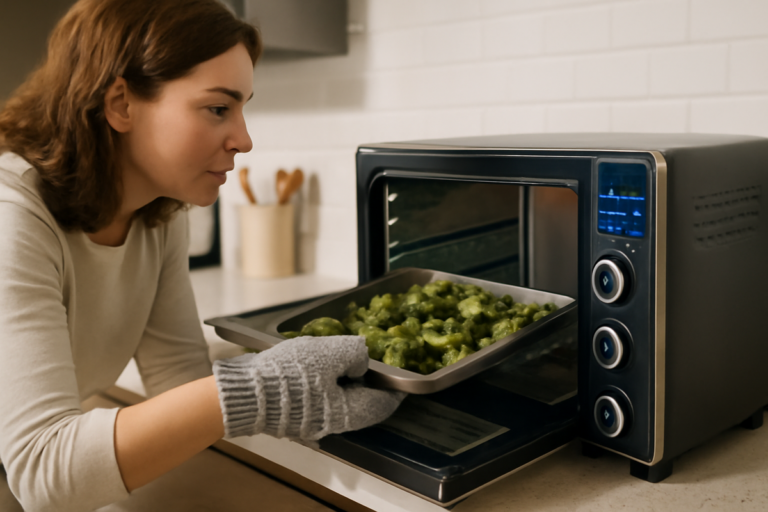
There’s a moment when you stand at the microwave or stovetop, container in hand, and wonder: Is this going to be any good? The rice looks rigid and unpromising, but a small miracle is still possible. With heat and moisture, those starches can loosen again. Not perfectly, not back to Day One glory—but enough to turn toughness into tenderness.
Reheating rice with a little extra water is like gently coaxing the starch to relax. Those re-crystallized structures soften as heat seeps in, and water slides back into some of the spaces they once gave up. Covering the rice while heating traps steam, which is exactly the friend hardened rice needs.
On the stovetop, a spoonful or two of water and a lid over a gentle flame can transform clumpy, stubborn grains into something pleasantly soft again. In the microwave, a damp paper towel or microwave-safe lid captures steam, giving your rice a short but effective spa treatment. The result might not be indistinguishable from fresh, but the gap narrows, and your mouth, in the end, is mostly interested in whether each bite feels welcoming or resistant.
When the Firmness Is a Gift
There is also a different route: instead of fighting the firmness, you can lean into it. Many cooks deliberately cool rice just to get that firmer texture. Day-old rice holds up to stirring, flipping, and tossing with sauces without turning gluey.
Picture garlic sizzling in oil, a handful of chopped scallions scattered into the pan, then a tumble of cold rice, each grain clicking against the metal. You push it around, press it down, listen as it crackles lightly. The very firmness that once made you think “stale” now gives your fried rice its pleasant chew, its confidence in the face of heat.
In other cultures, leftover rice becomes porridge, patties, puddings. The rearranged starch gives these dishes subtle texture—a slight bounce, a quiet chew—that fresh rice alone cannot provide. That overnight hardening, then, isn’t purely a decline; it’s a doorway to different possibilities.
The Invisible Health Twist
While the main drama of hardened rice is about texture, there’s an invisible side note that nutrition scientists pay attention to. When starch in rice retrogrades—when those molecules slip into more rigid, orderly structures—some of it becomes what is called “resistant starch.”
Resistant starch, true to its name, resists digestion in the small intestine. Instead of breaking down quickly into sugars and being absorbed right away, it travels further into the gut, where bacteria can feast on it. In that sense, parts of your leftover rice become more like fiber than fast-burning fuel.
This shift doesn’t turn leftover rice into a magical superfood. But it does mean that, gram for gram, cold or cooled-and-reheated rice can sometimes have a slightly lower impact on blood sugar than a steaming fresh bowl. It’s as if, while your rice hardened overnight, it quietly recalibrated how it would behave inside your body, not just under your fork.
For people watching their blood sugar or simply curious about how cooking and cooling affect food beyond flavor, this subtle transformation is another reminder: the kitchen is a small laboratory. Every reheating and cooling isn’t just a matter of convenience; it’s chemistry in motion.
Seeing Leftover Rice Differently
So, why does leftover rice harden overnight? Because starch remembers. Because water roams. Because cold asks molecules to sit up straight again. The rice in your fridge is not decaying so much as reorganizing, shifting from soft disarray to crystalline order. Your senses experience that as a change from tender to tough, from warm comfort to cool resistance.
Once you know this, that container at the back of the shelf looks a little different. It is no longer just neglected remains of last night’s dinner. It is a snapshot of a process in motion—a food caught between two states, waiting for you to decide its next chapter.
You might sprinkle it with water and tuck it under a lid, letting steam and heat coax some softness back. You might toss it, cold and firm, into a hot pan and turn it into something punchy and new. You might blend it into a batter, fold it into a soup, or reshape it with your hands into balls bound for the skillet.
In the end, the hardening of leftover rice is not a problem to be solved but a phenomenon to understand. The better you grasp what’s happening inside those tiny grains—the migration of water, the reweaving of starch, the influence of time and temperature—the more gracefully you can work with them. The kitchen becomes less a place of small frustrations (“Why is this so hard?”) and more a place of small revelations (“Ah, I know what you’ve been doing overnight”).
Tomorrow, when you open the fridge and find that quiet bowl again, you may still feel the familiar sigh of facing leftovers. But perhaps you’ll also feel a flicker of curiosity, even a little respect for the transformation you’re holding. Inside those firm, cool grains is a story of heat, cold, memory, and change. All you have to do now is decide how you want to tell the next part of it—on your stove, on your plate, in one more meal that knows a little more about itself than it did the night before.
Frequently Asked Questions
Does hardened leftover rice mean it has gone bad?
No. Hardening is mostly about texture changes from cooling and starch retrogradation, not spoilage. However, rice can become unsafe if left at room temperature too long before refrigeration. Always cool it quickly and refrigerate within about two hours of cooking.
Can I safely eat leftover rice the next day?
Yes, if it was cooled quickly, stored in the fridge, and reheated thoroughly until steaming hot. Rice can harbor spores of bacteria, so avoid leaving it out for extended periods and don’t reheat it multiple times.
How can I make hardened rice soft again?
Add a small splash of water, cover the rice, and reheat gently—either in a microwave with a lid or damp paper towel, or on the stovetop with a lid over low heat. The added moisture and steam help relax the starch and soften the grains.
Why is day-old rice better for fried rice?
Because some moisture has left the grains and the starch has firmed up, day-old rice is less sticky and less likely to turn mushy in a hot pan. The distinct, slightly drier grains pick up flavors and fry more cleanly.
Is there any nutritional difference between fresh and leftover rice?
After cooling, some of the starch in rice becomes resistant starch, which behaves a bit like fiber and may have a slightly different effect on blood sugar. The basic nutrients remain similar, but the way your body digests the rice can change modestly after it has cooled and hardened.

Hello, I’m Mathew, and I write articles about useful Home Tricks: simple solutions, saving time and useful for every day.