Why humidity control matters more than heat
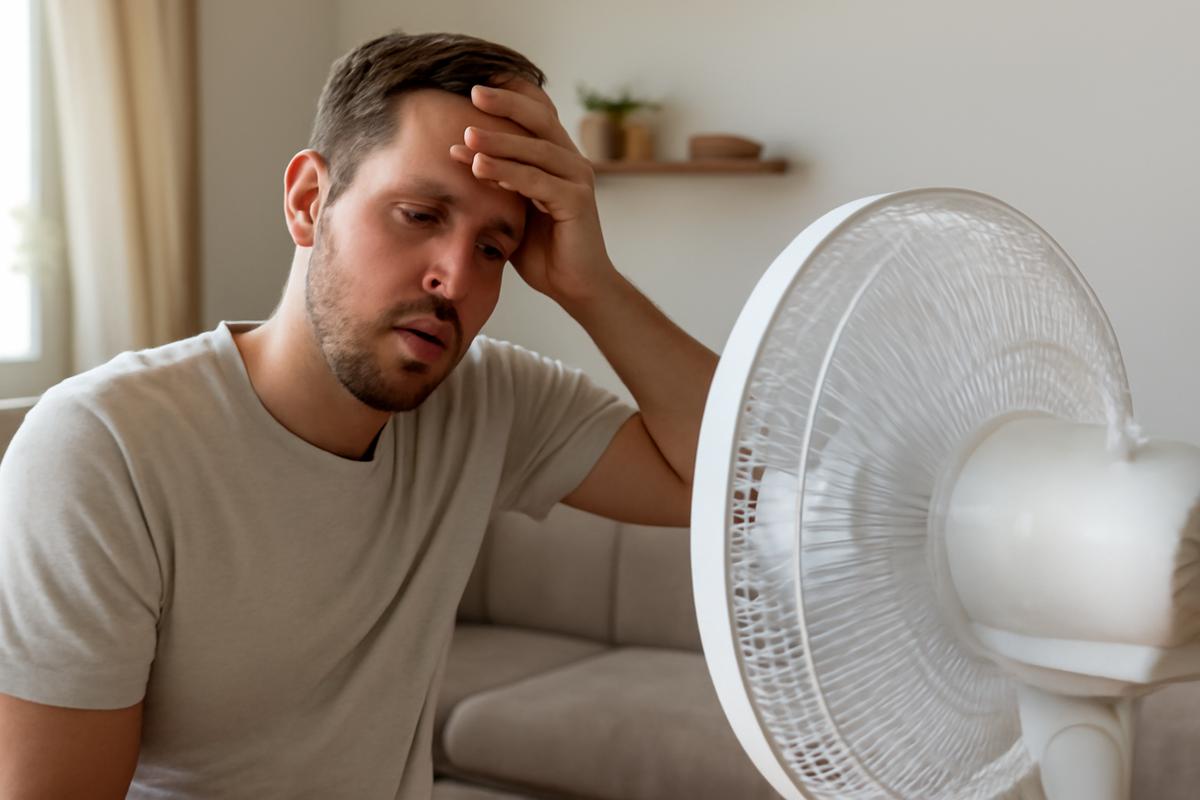
The first thing you notice is not the heat. It’s the way the air clings to you. You step outside and it feels like walking into a warm, invisible soup. Your shirt glues itself to your back. The breeze, if there is one, does nothing. You glance at the thermometer—only 29°C (84°F). “That’s not so bad,” you think. But your skin says otherwise. Your lungs say otherwise. Your mood, your sleep, your patience with other humans—definitely say otherwise. What you’re really wrestling with, in that heavy moment, is not temperature. It’s humidity.
When The Air Turns To Soup
There’s a summer afternoon you probably remember, even if you can’t pin it to a specific year. The kind where the sky is white instead of blue, like someone spread a thin sheet over the sun. You walk down the street and the air sits heavy on your shoulders. It’s not the blazing, sharp heat of a desert day. It’s a slow, smothering kind of warmth that leaves you oddly exhausted, as if you’ve been wading through something denser than air.
Now imagine a different kind of heat. A dry, clear day at the same temperature. You sweat, but the sweat actually goes somewhere. It evaporates. Each bead that leaves your skin takes a little heat with it, like tiny lifeboats carrying warmth away from your body. This is the hidden science of comfort we rarely think about: our built-in cooling system depends less on the number on the thermostat and more on how thirsty the air around us is.
Humidity is simply the amount of water vapor resting in that invisible sea of atmosphere around you. When it’s high, the air is already crowded with moisture, like a sponge that can’t soak up another drop. Your sweat just sits there. You feel sticky, restless, and oddly trapped inside your own skin. It’s no wonder so many people say, “It’s not the heat, it’s the humidity.” They’re not being dramatic. They’re making a precise observation about physics—whether they know it or not.
And yet, we obsess over temperature. We glare at weather apps, tweak thermostats, argue over two degrees on the dial. Meanwhile, humidity glides under the radar, quietly deciding how we actually experience every one of those degrees.
Why Your Body Cares More About Humidity Than The Thermostat
Your body is constantly negotiating with the air around it. You’re doing it now, as you read. It’s a silent, ceaseless conversation made of sweat, breath, and invisible vapor. And in this dialogue, humidity often has more power than temperature.
Our bodies cool themselves mainly through evaporation. Sweat on your skin is meant to vanish, turning from liquid into vapor and stealing heat away as it goes. In dry air, this system works beautifully. That’s why a hot, arid climate can feel bearable at temperatures that would be suffocating in a tropical one. The same 32°C under a blazing sun can feel sharply different depending on how saturated the air is.
Once relative humidity climbs above about 60%, that evaporation engine starts sputtering. At 70%, 80%, 90%, your body is in trouble. You’re still sweating—but the sweat isn’t doing its job. It’s like trying to dry your clothes in a steamy bathroom; they just get wetter, heavier, and more useless. Your heart pumps harder to move blood to your skin, hoping for some cooling relief. Your core temperature inches up. Tasks feel harder, sleep becomes slippery, and your ability to think clearly blurs at the edges.
What’s fascinating is that the reverse can be just as uncomfortable. When indoor air is too dry—often the case in heated homes during winter—your body loses moisture too quickly. Lips crack. Throats sting. Your nose and airways dry out, making you more vulnerable to irritation and infections. You may find yourself waking at night, mouth parched, wondering why 21°C feels strangely harsh instead of cozy.
So, the comfort you feel in your own skin has less to do with “hot” or “cold” and everything to do with how easily your body can trade moisture with the air. That trade is all about humidity.
The Subtle Math Of “Feels Like” Weather
Weather reports sometimes try to capture this invisible reality with the “heat index” or “feels like” temperature. It’s an attempt to bundle temperature and humidity into one number we can feel in our bones. Think of it as a translation, a way of saying: “Yes, the thermometer reads 30°C, but your body is working as if it’s much hotter.”
Here’s a simple way to picture it: humidity and temperature are partners in crime. When humidity goes up, the effective intensity of any given temperature changes. You don’t need to memorize formulas. Your body already knows them. It’s the reason a breezy 26°C afternoon in the mountains feels mild and energizing, while the same 26°C near a swampy coastline feels daunting and weirdly draining.
The Hidden Life Of Your Home’s Air
Step indoors and the story doesn’t end. In fact, it becomes more personal. Your home, your office, your favorite café—each one has its own microclimate, an invisible weather system playing out between walls, windows, and floorboards.
You might describe your house as “drafty” or “stuffy” or “damp” without realizing you’re really describing humidity. The air may be full of trapped moisture from cooking, showers, laundry, and breathing. Or it may be parched by constant heating or air conditioning. Either way, your body and your belongings are quietly reacting.
Think of that one room in the house where the windows always fog in winter. Or the basement that smells faintly of earth after rain. Or the bedroom where you wake up slightly sweaty in summer, even though the thermostat insists it’s not that warm. These are all humidity stories.
Good humidity control doesn’t just make your home more comfortable—it makes it more stable. Wood floors stop swelling and shrinking. Books don’t warp. Guitars stay in tune. Houseplants perk up instead of drooping or crisping at the edges. Even your walls and insulation are relieved, spared from slow, quiet battles with mold and rot.
Where Comfort Really Lives
Scientists, architects, and HVAC engineers like to talk about a “comfort zone,” usually somewhere around 40–60% relative humidity, depending on season and local climate. Within that band, your body’s natural systems tend to work smoothly. Below it, your airways dry and static electricity spikes—those little zaps when you touch a doorknob are humidity’s calling card. Above it, sweat struggles, mold spores wake up, and dust mites throw a microscopic party in your mattress.
We often chase comfort with more heat or more cooling, but what our bodies really crave is balance—air that is neither thirsty for moisture nor oversaturated with it. When humidity is right, you may find that you can live comfortably at slightly lower temperatures in winter and slightly higher ones in summer, using less energy overall.
Health, Sleep, And The Way You Breathe The Night
Humidity doesn’t just influence whether you feel sticky or dry. It reaches into areas that seem, at first glance, unrelated: how deeply you sleep, how easily you catch colds, how your allergies behave, even how you experience your own breath.
On a humid night, your room may not feel oppressively hot, yet your sleep becomes shallow. You toss. You wake lightly sweating. Your body is struggling to regulate its temperature even as you lie still. Deep, restorative sleep—especially the slow-wave kind that repairs and replenishes—is tightly linked to your ability to cool just slightly during the night. Heavy, moist air fights that subtle dip.
On the other end of the spectrum, air that’s too dry irritates your nose and throat. The mucus that lines your airways—a critical first defense against viruses and pollutants—needs a certain level of moisture to function. When the air sucks water out of those delicate surfaces, they can crack or thin, reducing their ability to trap invaders. No wonder winter, with its heated, low-humidity indoor air, so often feels like a season of sore throats.
The Micro-World Of Germs, Dust, And Mold
Many of the organisms that share our spaces with us—some helpful, some not—are deeply dependent on humidity. Viruses that cause respiratory infections, for example, often linger longer in extremely dry air. Mold, on the other hand, loves dampness and quickly colonizes walls, ceilings, and hidden corners when humidity rises and stays high.
Even your allergies have a humidity story. Dust mites, tiny creatures that feed on flakes of human skin, flourish when relative humidity edges above about 50–60%. In drier air their populations shrink. If you wake up with itchy eyes and a stuffy nose, your bedroom humidity might be quietly amplifying what your immune system already dislikes.
The point isn’t to fear moisture or chase it away entirely; water is life, after all. The point is that health finds a kind of sweet spot where the air you breathe is neither desert nor swamp. And that sweet spot is usually easier to find through humidity control than through bigger temperature swings.
Why Your Energy Bills Are Really A Humidity Story
We like simple culprits. When the energy bill arrives and your eyebrows lift in quiet horror, the thermostat is the easiest thing to blame. “We must have used too much heat.” “The AC was running all month.” But behind the scenes, humidity is often the real negotiator of your comfort—and therefore of your energy use.
Consider a home in a sticky summer climate. If the air inside is too humid, 24°C can feel oppressive. The instinct is to drop the thermostat. 23°C. Still uncomfortable. 22°C. You’re now pushing your cooling system harder and harder, not because you need colder air, but because you need drier air. A well-tuned system removes moisture as it cools, but if that moisture problem is large—poor ventilation, constant steam from showers, warm moisture sneaking in through walls and windows—you’re using cold as a bandage for what is essentially a water problem.
In winter it can flip. Over-dry air makes your home feel sharper, harsher. Your skin complains. Your throat feels tight. You bump the thermostat up a degree to feel “cozy,” yet what your body actually wants is not more heat but more humidity. Add moisture, and suddenly 20°C feels comfortable again, and the heater can take a break.
A Simple Comparison Of Comfort
To see how deeply humidity shapes our sense of heat, it helps to compare a few scenarios side by side:
| Scenario | Temperature | Relative Humidity | How It Usually Feels |
|---|---|---|---|
| Dry mountain afternoon | 30°C (86°F) | 25–30% | Warm but tolerable; sweat evaporates quickly, shade feels refreshing. |
| Coastal summer day | 30°C (86°F) | 70–80% | Heavy and sticky; feels several degrees hotter, fatigue sets in faster. |
| Heated winter living room | 21°C (70°F) | 20–25% | Air feels dry and sharp; skin and throat irritation, “never quite cozy.” |
| Balanced indoor climate | 21–23°C (70–73°F) | 40–50% | Comfortable and calm; less need to adjust the thermostat. |
Look at those pairs and notice something subtle: comfort changes long before the temperature does. That shift is humidity at work.
Practical Ways To Tame The Invisible Weather Indoors
Once you start noticing humidity, it’s hard to stop. The fog on a bathroom mirror, the way bread molds faster in some kitchens than others, the feeling of your bedsheets in July versus October—all of these are clues. The good news is that you don’t have to become a climate engineer to bring humidity under control. You only need a bit of awareness and a few simple habits.
It starts with seeing the invisible. A small digital hygrometer—a device that measures relative humidity—is like giving your home a voice. Suddenly “stuffy” becomes 68% and “ouch, my throat” becomes 23%. This language lets you adjust with intention rather than guesswork.
If your numbers run high, especially in summer or in certain rooms, ventilation is your first ally. Kitchen and bathroom fans that actually exhaust to the outside help move moist air out before it settles into walls and fabrics. Shorter, cooler showers, lids on boiling pots, and drying clothes outdoors when possible all reduce the load of water released indoors.
In some climates, particularly humid ones, a dedicated dehumidifier becomes more than a luxury; it’s a quiet guardian. It doesn’t make the air colder; it makes it lighter, easier to inhabit. You may find that once the air is drier, you can raise the thermostat a notch and feel just as comfortable.
On the flip side, if your home is too dry in winter, small shifts can help the air hold a bit more kindness. Humidifiers, used carefully and cleaned regularly, can lift humidity into that 40–50% comfort zone. Even simple acts—like drying clothes on a rack indoors or adding a few well-watered plants—can nudge a bone-dry room toward balance.
Feeling Your Way To Balance
Numbers are helpful, but your senses are just as important. Humidity is something you can learn to feel: the way a room smells after rain, the weight of air on your skin, how quickly your lips dry, the sound of floorboards expanding or contracting. When you start tuning in to these signs, you can often predict what a hygrometer will say before you look.
In time, you may discover an unexpected reward: a kind of quiet satisfaction in knowing that you are no longer hostage to temperature alone. You are adjusting the deeper texture of your air, the invisible climate your body interacts with every moment. And what you’ll often find is that with humidity under control, intense heat feels more honest, sharp cold feels more bearable, and your own body feels just a little more at home in the world.
FAQs About Humidity And Heat
Why does moderate heat feel worse on humid days?
Because your main cooling mechanism—sweat evaporating from your skin—slows down when the air is already full of moisture. Your body keeps working to cool itself, but the heat has nowhere to go, so you feel overheated and sticky even at modest temperatures.
What is the ideal indoor humidity range?
For most homes, a relative humidity between about 40% and 60% is considered comfortable and healthy. Below that, air can feel dry and irritating; above it, you’re more likely to experience stuffiness, mold growth, and dust mite problems.
Can controlling humidity really lower my energy bills?
Yes. In summer, drier indoor air lets you feel comfortable at slightly higher temperatures, so your AC doesn’t need to work as hard. In winter, slightly more humid air feels warmer at the same temperature, so you can often set the thermostat a bit lower.
Is high humidity always bad for health?
Not always. Naturally high outdoor humidity is part of many healthy ecosystems. Problems usually arise indoors when humidity stays high for long periods, encouraging mold, dust mites, and general discomfort. The goal isn’t to eliminate moisture, but to keep it in a balanced range.
How can I tell if my home’s air is too dry or too humid without instruments?
Your body and surroundings provide clues. Too dry: you have static shocks, chapped lips, dry nose or throat, and often cracking wood or shrinking gaps. Too humid: you notice musty smells, foggy windows, clammy sheets, or visible mold in corners. A small hygrometer can confirm what your senses are already telling you.

Hello, I’m Mathew, and I write articles about useful Home Tricks: simple solutions, saving time and useful for every day.