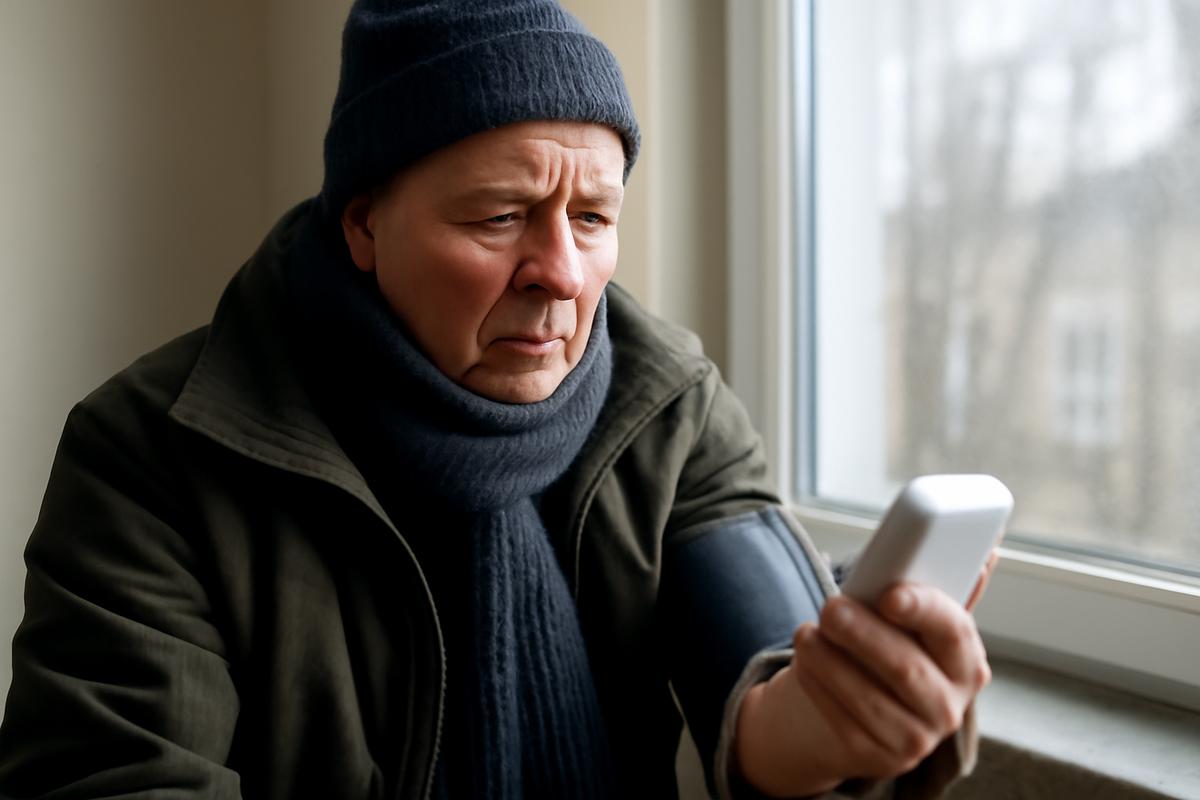
The first snow of the season falls quietly, the way soft secrets do. You open the door and the cold slides in like a living thing — sharp, clean, a little startling. Your breath turns visible, drifting into the air in small clouds as if your insides have stepped outside for a moment. The world looks quieter, padded with frost and pale light, but somewhere beneath your coat, your heart has quietly stepped on the gas. You can’t feel it, not exactly. Maybe your fingers are stiff, your nose tingles, and your shoulders instinctively curl inward. But deep under the layers of wool and skin and bone, your blood pressure is creeping up, as if winter itself has quietly adjusted a hidden dial.
When the Air Turns Cold, Your Body Hears an Alarm
The truth is, your body doesn’t just notice the cold; it reacts to it as if it were a subtle threat. Think about the moment you step outside on a frosty morning. Your skin tightens, your lungs sting a little with the first inhale of icy air, and a kind of bright alertness wakes up inside you. This isn’t just psychological. It’s biology, finely tuned over thousands of winters.
Your body is always trying to keep its core temperature stable, hovering around 37°C (98.6°F). When the air turns cold, especially when it brushes against your bare skin, your nervous system sends out a clear message: conserve heat, protect the core. This is where your blood vessels — especially the small ones near the surface of your skin — become the main characters in a story you don’t even realize is unfolding.
To keep precious warmth from escaping, those vessels tighten and narrow. Imagine a wide, lazy river suddenly squeezed into a narrow channel. The same amount of water is forced through a smaller space, and it rushes faster, harder, pushing against the banks. That’s what happens inside your arteries. The pressure on their walls increases, because your heart has to pump the same volume of blood through a tighter network of pipes.
You might not feel any of this directly, but this quiet clenching — this narrowing called vasoconstriction — is one of the simplest, clearest reasons cold weather pushes blood pressure upward. Even a modest drop in temperature can be enough to nudge the numbers on a blood pressure monitor higher. For some, it’s a small seasonal shift. For others, especially those already standing near the edge of hypertension, winter becomes a long, invisible strain.
The Cold-Squeeze: What Happens Inside Your Blood Vessels
Walk down a winter street and you see hats, scarves, boots, clouds of breath. But what you can’t see is the careful, constant negotiation happening in everyone’s circulatory system. Cold air brushes your cheeks, and tiny sensors in your skin report back to the brain. The command comes almost instantly: tighten up, conserve heat. Blood is redirected away from the skin and extremities, shuttled deeper into the body to keep the vital organs warm.
This elegant response comes with a trade-off. When arteries narrow, resistance rises. Your heart responds the way a determined runner might face a hill: it pushes harder. The force your heart uses to move blood — the “pressure” in blood pressure — inches upward. Over hours, days, and weeks of cold weather, this can become more than a momentary spike.
Inside, there’s a quiet collaboration of hormones and nerve signals helping this process along. The sympathetic nervous system — the same system that kicks in when you’re startled or stressed — gets more active. It releases chemical messengers like norepinephrine, which tell blood vessels to tighten. Your adrenal glands may release more adrenaline, and over time, your body can lean more heavily on something called the renin-angiotensin system, another internal mechanism that raises blood pressure by constricting vessels and helping you hold on to salt and water.
To your conscious mind, though, winter might just feel like a heavier coat, a clearer sky, and a preference for hot drinks. You don’t feel the extra grip inside your arteries. You don’t hear your heart working a little harder when the temperature falls. You might only notice a pattern if a cuff squeezes your arm in a pharmacy kiosk, or a nurse quietly frowns at the reading during a routine visit, right around January.
Cold, Stress, and Stillness: The Winter Triangle
Cold weather doesn’t act alone. It often teams up with two quiet accomplices that nudge blood pressure even higher: stress and stillness.
In many parts of the world, the cold season is also the busy season. Holidays, travel, financial strain, shortened daylight — all of these twist together into a kind of low, constant emotional static. You might hurry through crowds, juggle plans, or just stare out of a window at 4:30 p.m., wondering why it already feels like night. Your body doesn’t differentiate much between emotional stress and physical threat. Stress hormones rise, pushing your heart rate and blood pressure up, just as they do when you’re cold.
At the same time, winter quietly slows us down. Icy sidewalks and bitter wind make long walks less inviting. Early darkness nudges us indoors, closer to screens, couches, and heavy meals. Movement shrinks. Muscles stay idle longer. Blood doesn’t get the regular, rhythmic encouragement that daily activity offers. And as activity shrinks, weight can creep upward, salt may linger in holiday food, and sleep quality often drifts downward.
All of this matters. Less movement means your blood vessels become slightly stiffer, less responsive. Stress without release keeps the sympathetic nervous system humming at a higher setting. Add the direct vessel-tightening effect of cold, and your circulatory system is suddenly being squeezed from several directions at once.
And then there’s the matter of the air itself. Cold air tends to be drier, and indoor heating dries it out even more. You might drink a little less water because you don’t feel as thirsty as you do on summer days. Mild dehydration thickens the blood slightly and can nudge blood pressure higher. It’s rarely dramatic on its own, but layered onto everything else, it adds another thin stone to the winter load your heart carries.
The Subtle Seasonal Shift: What the Numbers Show
Doctors and researchers have noticed this pattern for years. When they track blood pressure across the seasons, they discover that winter readings tend to run higher than summer ones, sometimes by enough to matter for long-term health. Stroke and heart attack rates statistically climb in colder months in many countries, especially in older adults and people already living with high blood pressure.
For most, the changes might look small on paper — five points here, ten points there. But your circulatory system is like a bridge; even a small added load, carried all day, every day, for months, can strain its structure. If your baseline is already borderline high, a winter bump can tip you into dangerous territory, even if only temporarily.
To make this more concrete, imagine two versions of the same person: one in August, one in January. They eat the same food, have the same genetic risk, the same job. But the January version walks less, feels the cold more, wakes up in darkness, and ends the day earlier by artificial light. Their blood vessels are squeezed a little tighter, their stress a little higher, their skin kissed by the cold every time they step out the door. That person’s blood pressure, for those months, doesn’t just belong to them. It belongs to the season.
| Winter Factor | What It Does to Your Body | Effect on Blood Pressure |
|---|---|---|
| Cold air on skin | Triggers blood vessels to tighten and redirect blood to the core | Increases resistance in arteries, raising pressure |
| Reduced movement | Less daily exercise, more sitting indoors | Leads to stiffer vessels and higher resting BP |
| Seasonal stress | Holidays, work, money, and shorter days increase tension | Boosts stress hormones that elevate BP |
| Dry, heated air | Encourages mild dehydration, alters breathing | Can slightly thicken blood and add to pressure |
| Weight and diet changes | Heavier foods, more salt, and sweet treats | Raises blood volume and long-term BP levels |
Who Feels Winter’s Grip the Most?
Not everyone’s body responds to cold in the same way. For some, the change is barely a whisper. For others, it’s a full-throated chorus. Age is one of the most reliable predictors. As arteries grow older, they tend to become stiffer, less elastic. That means when cold air cues them to tighten, they can’t soften and rebound as easily. The result is a steeper rise in blood pressure, and a more stubborn one.
People who already live with hypertension walk into winter carrying more risk. Their vessels may already be under strain, their hearts already pushing against a higher resistance. Cold weather turns up the pressure on a system already running hot. The same is true for those with heart disease, previous strokes, diabetes, or kidney problems. In these bodies, the seasonal rise in blood pressure isn’t just an interesting fact; it’s a potential tipping point.
Geography plays a role, too. Someone in a mild coastal climate may experience only gentle shifts, while those living where winter is long, dark, and raw feel deeper fluctuations. Sudden cold snaps — a sharp, overnight plunge in the thermometer — can shock the system more dramatically than a slow, predictable cooling.
Even sex and body size can influence the response. Some research suggests that people with smaller body frames lose heat more quickly and may experience more intense vasoconstriction in the cold. Others point to how hormones interact with vessel flexibility and blood volume. What ties all of these differences together is a simple truth: the colder the body feels, and the harder it must work to preserve warmth, the more likely blood pressure is to rise.
Yet there’s another, subtler group affected by winter’s grip: those who don’t know they have high blood pressure at all. Hypertension is often called the “silent killer” because it usually comes with no pain, no dizziness, nothing obvious. For these people, cold weather can be the moment an invisible problem becomes dangerous, even before a diagnosis appears on paper.
Listening to Your Body’s Winter Story
It’s easy to think of blood pressure as a number, a pair of figures delivered in a clinical tone: 120 over 80, 140 over 90. But those numbers are really a story about how your body is meeting the world. In the winter chapters of that story, everything becomes a little more intense.
Picture a typical cold day. You wake up before sunrise, the window a pale gray, the air in your bedroom just a little sharper than you expected. Perhaps you hesitate before climbing out from under the blankets. Your body feels heavier, your steps slower. By the time you’ve made it to your car or the bus stop, icy air has already brushed your face and slipped under your cuffs. Inside your chest, your heart notes the chill and presses a little harder.
Later, you’re indoors under bright artificial light, maybe in an office or at a kitchen table. A radiated warmth settles on your skin, but not quite in your bones. You sit longer than usual. A snack appears. Maybe something salty, maybe something sweet. Your shoulders tilt forward over a screen. Outside, light fades even though the afternoon feels young. You tell yourself you’ll move more tomorrow, when it’s not so raw, not so windy.
All of these small scenes collect inside you. They become a pattern. When you place your arm in a blood pressure cuff, you’re not just measuring this moment; you’re reading the echoes of days and weeks — the cold mornings, the skipped walks, the holiday feasts, the restless nights. Winter is written into that number.
But stories can be edited. They can be guided. And part of understanding why cold weather increases blood pressure is realizing that once you see the shape of the story, you gain a little more power to reshape it.
Warming the System from the Inside Out
The goal is not to fear winter — it’s to move through it more consciously. One of the simplest, and often underappreciated, strategies is warmth itself. Dressing in layers, protecting hands, feet, and head, and limiting direct exposure of skin to freezing air helps reduce the intensity of the body’s vasoconstriction response. When your skin doesn’t feel brutally cold, your vessels don’t need to clamp down quite so hard.
Movement, even in short, regular bursts, acts like a gentle thaw for your circulatory system. A brisk walk down a hallway, climbing stairs at home, or a ten-minute living-room stretching routine all encourage blood vessels to stay more flexible. They gently train your heart to handle pressure changes more smoothly. You don’t need a gym or perfect weather to do this — only a willingness to move within the limits of your comfort and safety.
Indoor rituals can shift, too. Reaching more often for warm teas or water, even when you don’t feel classic summer thirst, helps keep your system well hydrated. Choosing a little less salt, a little more color on your plate — a handful of winter fruits, dark leafy greens, roasted vegetables — keeps your blood less burdened by excess sodium. Lighting a candle, dimming screens earlier, and protecting your sleep with quiet, consistent habits may not feel like cardiovascular actions, but your blood vessels will disagree.
Then there is the quiet power of monitoring. For those with hypertension, or at higher risk, keeping a home blood pressure monitor becomes a way of listening actively to your body’s winter story. Patterns that once hid in the background become visible: higher readings on the coldest days, or on the days you barely moved, or after late-night stress. With that awareness, tiny course corrections become easier — a warmer coat tomorrow, a walk after lunch, a quieter evening ritual.
FAQs About Cold Weather and Blood Pressure
Does cold weather always raise blood pressure for everyone?
No, not everyone experiences the same rise, but many people show at least a small increase in blood pressure during colder months. The effect tends to be stronger in older adults, those with existing hypertension, or people living in very cold climates.
Can a sudden cold shock be dangerous for my heart?
Yes, sudden exposure to very cold air — like jumping into icy water or shoveling snow after sitting indoors — can be stressful for the heart. The rapid vessel constriction and abrupt physical effort may trigger heart attacks or rhythm problems in vulnerable individuals.
Why do my hands and feet feel cold while my blood pressure is higher?
When your body tries to conserve heat, it narrows blood vessels near the skin and in the extremities. That reduces blood flow to your hands and feet, making them feel cold, even though overall pressure in your arteries is higher.
Is high blood pressure in winter temporary, or should I be worried long term?
Seasonal increases can be temporary, but they still matter. Repeated yearly spikes put extra strain on your heart and vessels. If you already have or suspect high blood pressure, winter changes are a sign to take monitoring and lifestyle adjustments seriously.
What can I do at home to help control winter blood pressure?
Stay warm with layers, keep moving indoors, drink enough water, limit salty and heavily processed foods, and protect your sleep. If you have hypertension or other heart conditions, talk with a healthcare professional about whether your medications or monitoring schedule should be adjusted in colder months.

Hello, I’m Mathew, and I write articles about useful Home Tricks: simple solutions, saving time and useful for every day.