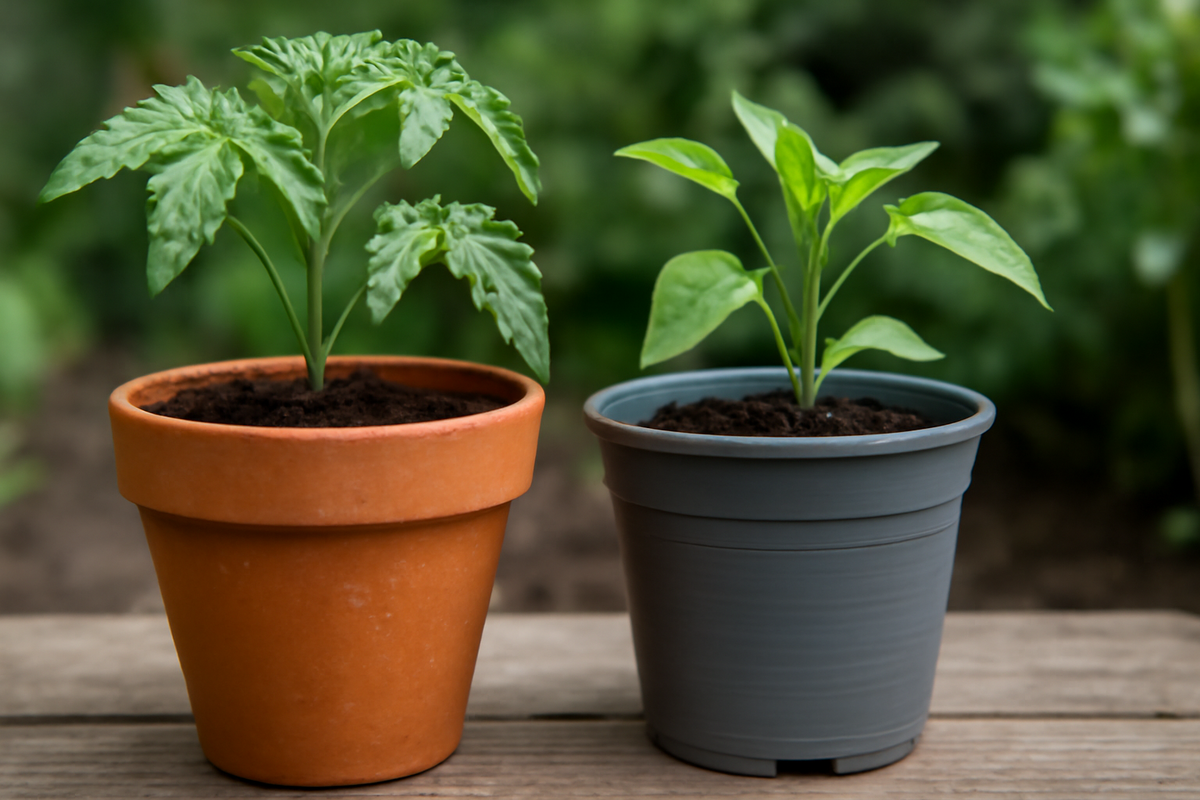
The old clay pot was the color of baked bread and warm dust. Its rim was chipped, its sides faintly white with the memory of minerals and water long evaporated. Someone had set it behind a plastic tray of shiny new nursery pots, and it sat there, quietly, almost shyly, as if it knew it no longer looked the part. But when the wind picked up and the afternoon light slanted through the greenhouse, that humble clay pot told another kind of story—because tucked inside it, the roots of a young basil plant were doing something that the plants in plastic nearby simply weren’t.
The Breath You Can’t See: How Clay Changes the Air Around Roots
Touch a clay pot after you’ve just watered it. Your palm feels that cool dampness, the subtle grit, the way it almost exhales as the water wicks through its walls. Now press your hand against a plastic pot in the same moment—cold, yes, but sealed, glossy, unyielding. The difference you’re feeling right there, in your fingers, is a quiet revolution in the life of your plant’s roots.
Clay is porous. Millions of microscopic channels and gaps weave through its fired body like tunnels in a hidden underground city. When you fill a clay pot with soil and water it, some of that water seeps outward, moving through the pot wall and slowly evaporating into the surrounding air. This steady outward drift does something critical: it pulls fresh air into the soil from above and the sides, refreshing the hidden world where roots live.
Roots breathe. That might sound poetic, but it’s literally true. They take in oxygen and release carbon dioxide, using respiration to convert sugars into usable energy so that the plant can grow, heal, and explore the soil. In a badly aerated pot, roots are like people in a crowded room with the windows shut, slowly using up available air. Plastic pots, especially without generous drainage or coarse soil mixes, can easily become those stuffy rooms—wet for too long, starved of oxygen, heavy and sour.
Clay, on the other hand, acts like a window cracked open. As moisture moves outward, air is drawn inward. The soil stays better balanced: not bone-dry (unless you neglect it), but not endlessly soaked either. For many plants—Mediterranean herbs, succulents, houseplants that hate “wet feet”—this gentle breathing is the difference between roots that suffocate and roots that stretch, divide, and thicken with quiet confidence.
Stand in a greenhouse on a warm day and you can observe this invisible exchange: the clay pots aren’t just containers; they’re participating in the climate of that little world, cooling themselves through evaporation and creating subtle air currents. Plastic pots sit like sealed bottles, holding everything in. For certain situations that’s useful. But for root health? That clay pot, with its chipped rim and mineral bloom, is usually the better listener.
The Secret Life of Roots: Microclimates, Microbes, and Clay Walls
Tip a healthy plant gently out of a well-used clay pot, and look closely at the story written on its root ball. The soil will often hold together in a firm, crumbly structure, not soggy, not dusty, just solid enough to handle. The outer roots may be fine, branching nets rather than thick, coiled loops. There might be a faint earthy smell, rich and clean, the scent of soil that’s alive.
Inside any pot, the root zone is its own small ecosystem—a microclimate where temperature, moisture, air, fungi, and bacteria all dance together. Clay, with its porous body, gives this ecosystem a dynamic edge. Water doesn’t just sit; it moves. Air doesn’t just hover above; it penetrates sideways. Temperature doesn’t swing quite so sharply either, because moisture escaping through the clay cools the pot, especially in hot weather.
That cooling is subtle, but to roots, it can mean resilience. On a blazing summer afternoon, a dark plastic pot can heat up frighteningly fast, especially on a balcony or patio. The soil near the edges warms, sometimes to levels that can stress or damage delicate feeder roots. Clay, lighter in color and constantly exchanging moisture, tends to stay closer to the ambient air temperature. It’s like the difference between standing barefoot on sun‑baked asphalt versus warm stone shaded by a cloud.
This gentler environment invites beneficial life. Many helpful soil microbes—those tiny allies that break down organic matter, release nutrients, and form symbiotic relationships with roots—prefer soils that cycle between moist and slightly dry, never waterlogged, never burning hot. Clay pots, by allowing excess moisture to escape and air to move in, support that rhythm. Roots in these conditions can develop finer, more exploratory growth, rather than simply trying to survive in pockets of oxygen or flee zones of chronic dampness.
In contrast, a plastic pot without excellent drainage and a coarse, airy soil mix can become a place of extremes: saturated one day, parched the next, hot along the sides, cold at the bottom. Microbes struggle to adapt. Anaerobic (low‑oxygen) zones can form, and with them come the sour smells of rot and the stealthy creep of root‑rotting fungi. The plant might wilt from “too little water” and “too much water” in the same week, because the top dries quickly while the bottom remains stubbornly soggy.
Clay doesn’t magically fix poor watering or bad soil, but it softens the edges of those mistakes. It gives the root zone a bit more forgiveness, a bit more wiggle room. And for living roots, that margin of error can mean the difference between thriving and merely hanging on.
Root Architecture: Why Clay Often Grows Better, Finer Root Systems
If you could shrink down and walk along the outer edge of a root ball, you’d see an architecture every bit as intricate as a forest canopy. Fine roots branch and rebranch, each tip a tiny explorer seeking water and minerals. The health of this architecture decides how well your plant can recover from storm damage, drought, transplanting, and pruning.
Clay pots, by constantly balancing moisture with evaporation, encourage roots to grow in layers, exploring the full volume of the pot instead of racing in tight circles along the smooth inner wall. The porous surface lets just a little air in, gently discouraging that dense spiral of roots that so often happens in plastic. While true “air-pruning” is more associated with specialized fabric or slotted pots, regular terracotta still contributes to a milder version of this effect. Roots that reach that drier, more aerated boundary often branch rather than endlessly coil.
It’s the difference between a plant locked into a root-bound knot and one that has a broad, fibrous network ready to leap into action when you repot or plant it out in the garden. Finer, well-branched roots absorb water and nutrients more efficiently. They also regrow faster after disturbance. When you transplant a plant raised in clay, you often find it recovers more quickly, leafing out and flowering sooner than its plastic-potted twin.
In plastic, especially smooth-sided nursery containers, roots love to race around the edge where moisture lingers, creating a looping maze of thick strands. It looks impressive at first—so many roots!—but that circling habit can eventually strangle the plant. Once planted out, these loops sometimes never truly untangle, restricting the plant’s ability to anchor and expand. Clay, with its rougher, breathing surface, doesn’t invite that endless race in quite the same way.
Over time, this quiet difference shows up above the soil line. Plants in clay may grow more slowly at first while they build that thoughtful root network, but they often stand stronger in the long run—less prone to collapsing after a missed watering, less shocked by a sudden heat wave, less needful of constant fussing.
Clay vs. Plastic at a Glance: What’s Happening Below the Soil
| Feature | Clay Pots | Plastic Pots |
|---|---|---|
| Aeration | Porous walls allow gentle air exchange, improving root oxygen. | Non‑porous; relies entirely on drainage holes and soil structure. |
| Moisture Behavior | Wicks excess moisture out through the sides; soil dries more evenly. | Holds water longer; can create soggy bottoms and dry tops. |
| Temperature | Evaporation cools the pot; less risk of overheating roots. | Can heat up quickly in sun, especially dark colors. |
| Root Pattern | Encourages finer, more branched root systems. | Roots often spiral and become root-bound along smooth sides. |
| Microbial Life | Supports a stable, airy, microbially rich root zone. | More prone to anaerobic spots if overwatered. |
When Clay Wins… and When Plastic Really Does Make Sense
None of this means plastic pots are villains. They’re light, nearly unbreakable, cheap to ship, and for certain plants and climates, they actually solve problems that clay might create. To understand why clay so often helps plants grow better, it’s worth noticing the edge cases where plastic steps into its own.
Picture a balcony gardener in a scorching, windy climate. Their biggest enemy is not soggy soil, but water that vanishes the moment it’s poured. In this landscape, clay can dry too quickly. The very breathability that encourages root health might also demand more frequent watering than a busy life allows. For them, a deep plastic pot filled with a gritty, well-draining mix might keep moisture around just long enough to be practical, while still giving roots some air through good soil structure.
Now imagine the opposite: a small urban apartment with dim light and a careful plant parent who waters “just in case.” Here, clay becomes a gentle teacher. Overwatering is easier to forgive when extra moisture has an escape route. The pot itself helps you out, subtly balancing your enthusiasm with its ability to breathe. Many common houseplants—snake plants, pothos, philodendrons—benefit from this safety net, especially when grown in indoor conditions where evaporation is slow.
There’s also the matter of weight and scale. A big terracotta pot full of moist soil is heavy. On a high-rise balcony or a rented space where floors and backs must be considered, plastic offers real advantages. But that doesn’t mean you have to sacrifice root health entirely. You can mimic some of clay’s aeration benefits by choosing well-draining, chunky soil mixes; drilling extra side holes in plastic grow pots; or even nesting a plastic pot inside a larger decorative container filled with airy material to moderate temperature swings.
Ultimately, clay’s great gift is how it smooths the daily rise and fall of water and air around the roots. It’s a naturally self-correcting system, within reason. Plastic’s gift is flexibility and moisture retention. The magic happens when you match the container not just to the plant, but to your habits and your environment. The reason clay pots so often win in the “my plants just look happier” contest is that they align easily with root biology: they let roots breathe, stay cooler, and avoid the drown‑then‑dry roller coaster that stresses plants into stunted, brittle lives.
Listening to the Pot: Practical Signs Your Plant Wants Clay
Step into your growing space—balcony, backyard, windowsill, or bedroom jungle—and look closely at your plants. Their leaves and stems whisper clues about what’s happening in the soil you can’t see, and in the pot that frames their underground world.
Do you find yourself constantly rescuing plants from mysterious decline in plastic pots? Yellowing lower leaves, blackened stems at the base, potting mix that smells a little swampy when you water—these are classic signs of chronically stressed roots, often from too little oxygen and too much moisture. Moving such a plant into clay, with a fresh, airy soil mix, is like opening a window in a stuffy room. Many plants respond with new growth, richer color, and more resilient posture within weeks.
Think about how you water. If you love the ritual—touching the soil, lifting the pot to feel its weight, kneeling to smell the damp earth—clay will fit that rhythm beautifully. It rewards observation. The pot itself tells you when it’s time: its color lightens as it dries, its coolness fades, the mineral ring near the bottom grows faint. In a way, you’re not just caring for the plant; you’re in conversation with the vessel that holds it.
If, on the other hand, your watering is more of a rushed chore done every few days on autopilot, plastic may still serve you, but clay can nudge you toward greater attentiveness. When plants in clay start drooping between your routine watering days, it’s a gentle sign to adjust—maybe a deeper soak, maybe a different soil mix, maybe a slightly larger pot. Clay doesn’t hide your mistakes; it reveals them sooner, often in ways that roots can still forgive.
Notice your environment, too. If you live where air is humid and cool for much of the year, clay’s drying effect is a blessing. If you’re in a desert climate with bone-dry air, full terracotta may mean watering twice as often, but it can also mean plants that sail through heatwaves because their root systems stayed cooler and better aerated all along.
Some plants almost beg for clay. Mediterranean herbs like rosemary, thyme, and lavender; many cacti and succulents; certain figs and olives; and a long list of indoor favorites that hate standing water—these species trace their lineage to rocky, well-drained soils where roots were never expected to sit in a sealed bucket of moisture. Giving them clay pots is like returning them to a dialect of earth they instinctively understand.
Clay as a Partner, Not Just a Container
Hold a terracotta pot in your hands and you’re holding more than fired mud. You’re holding a quiet technology that gardeners have trusted for centuries precisely because it works with plant biology rather than against it. Its beauty isn’t just in its warm color or old‑world charm; it’s in the invisible partnerships it fosters between air, water, and root.
When you choose clay over plastic, you’re making a small, practical decision that ripples through the entire life of your plant. You’re inviting a steadier rhythm of moisture, a safer place for microbes, a gentler landscape for fragile root tips. You might water a little more often, or lift a little more weight, but in return you often get plants that are sturdier, more forgiving, and more expressive in their growth.
Back in that greenhouse, the shiny plastic pots still have their role, lined up in efficient rows, easy to stack, easy to ship. But the old clay pot with the basil plant tells another story. Its sides bear the pale rings of past waterings, its base crumbles softly where it sits on the soil. Inside, the roots are bright, white, and branching, exploring every pocket of earth with confidence.
Root health is mostly unseen. Yet it’s where every lush leaf, every flower, every fruit truly begins. Clay doesn’t just hold those roots; it collaborates with them. And that, more than any nostalgic charm, is why clay pots so often help plants grow better than plastic: they give roots what they’ve always needed—room to breathe, to reach, and to quietly, steadily, come alive.
Frequently Asked Questions
Do clay pots always make plants grow better than plastic?
No. Clay often improves root health because it breathes and dries more evenly, but there are cases where plastic works better—especially in very hot, dry climates or for plants that need constant moisture. The “best” pot depends on the plant, environment, and your watering habits.
Why do my plants in clay pots dry out so quickly?
Clay is porous and allows water to evaporate through the pot walls as well as the soil surface. In dry, sunny, or windy conditions, this can mean you need to water more frequently. Using a slightly larger pot, adding organic matter to your soil mix, or moving pots to partial shade can help.
Can I use clay pots for all types of plants?
Most plants do well in clay, especially those that dislike sitting in wet soil. Succulents, herbs, many houseplants, and woody shrubs typically benefit. Very thirsty, shallow‑rooted plants or water‑loving species may prefer plastic or glazed clay that holds moisture longer.
Do I still need drainage holes if I use a clay pot?
Yes. Clay’s porosity helps, but drainage holes are essential to prevent water from pooling at the bottom. A clay pot without drainage can still cause root rot if water has nowhere to escape.
How can I get some of clay’s benefits if I have to use plastic?
Use a chunky, well-draining soil mix with ingredients like perlite, bark, or pumice; ensure generous drainage holes; avoid overpotting; and protect dark plastic pots from direct, intense sun. These steps improve aeration and reduce temperature extremes for healthier roots.

Hello, I’m Mathew, and I write articles about useful Home Tricks: simple solutions, saving time and useful for every day.