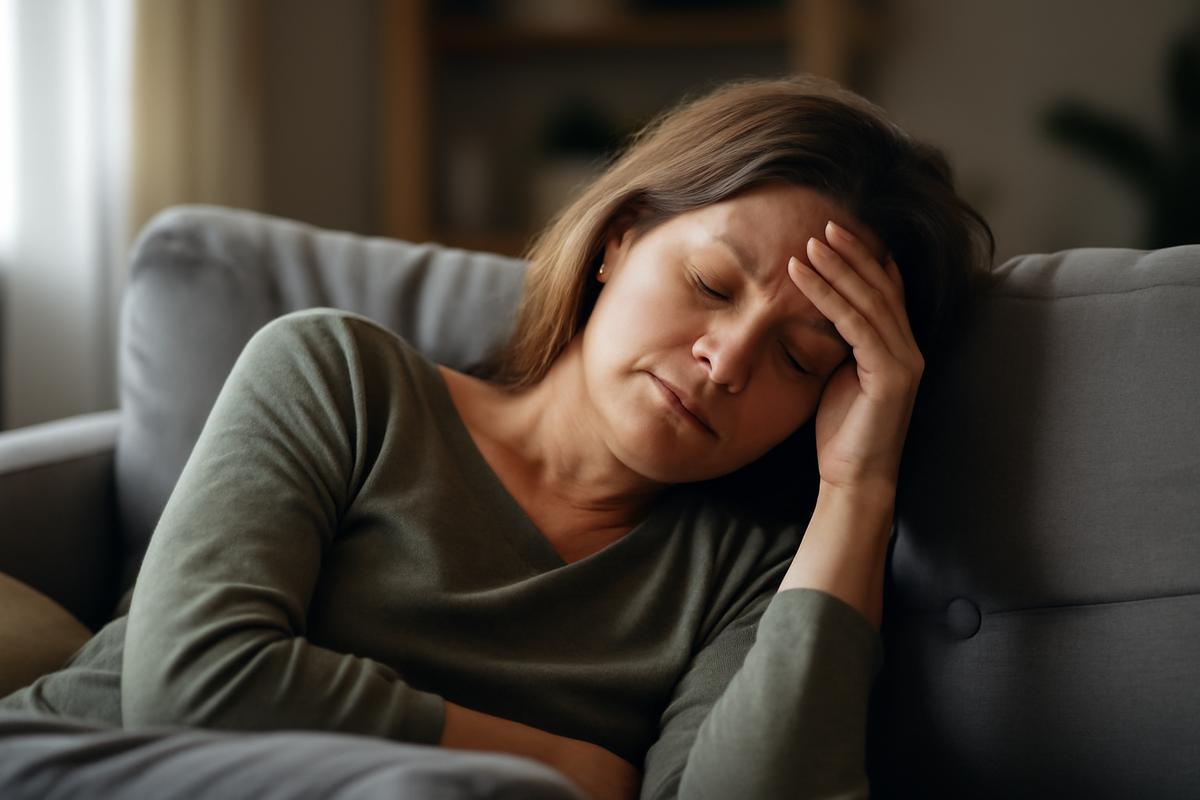
The first time you notice it, you’re almost offended. You’ve done everything right, you think. You listened to the wellness podcasts, skimmed the sleep books, scrolled through yet another thread about the “power of the 20-minute nap.” So one hazy afternoon you finally surrender. You pull the curtains halfway closed, silence your phone, and lie down for what you tell yourself will be a quick reset. But when you wake up, your tongue feels like cotton, your limbs are made of wet sand, and the room has that strange, too-bright, late-afternoon glow. You wanted a reboot; instead you feel like you’ve been dragged backward through sleep. You’re not refreshed—you’re wrecked. Why on earth does a nap, that little slice of stolen daytime sleep, sometimes make you more tired instead of less?
The Quiet Physics of Falling Asleep
The story starts long before you close your eyes. In the late afternoon, when the sunlight softens and the shadows lengthen, your body is busy running a quiet experiment with gravity and time. Your internal clock—the circadian rhythm—has been pulsing away since dawn, nudging hormones up and down, guiding your energy in arcs and dips.
By early afternoon, your alertness naturally slumps. Blood sugar rolls gently downhill, your body temperature dips a fraction, and that subtle fog creeps in. It is perfectly natural to feel sleepy then; in many cultures, the siesta is not a lazy invention but a partnership with biology. Yet your nap, this simple act of lying down, doesn’t drop you into a single thing called “sleep.” It pushes you onto a moving train already in motion: the sleep cycle.
Sleep is not a flat ocean; it’s a layered lake with depths. In the first minutes, you skim the surface in light non-REM sleep: your muscles relax, your thoughts twist into strange little half-dreams, sounds fade into the wallpaper. If you wake during this stage, you can bounce back quickly. But if you stay too long, you sink. And when you sink into deeper sleep and are then yanked out before you’re ready, you get that swampy, disoriented feeling that can hang on for half an hour or more. This is the quiet physics of falling asleep: where you land in the cycle determines how you feel when you climb back out.
The Murky Swamp of Sleep Inertia
There is a name for that heavy-headed, groggy feeling after a nap: sleep inertia. It sounds clinical, but if you’ve ever tried to answer a phone call seconds after waking from a dense afternoon sleep, you know the sensation in your bones. Words don’t quite line up. Your body feels slightly miscalibrated, like your joints belong to somebody taller.
Sleep inertia happens because your brain is not a light switch. When you’re jolted out of deeper stages of sleep—slow-wave sleep, the kind that’s supposed to dominate your night—parts of the brain stay in low gear for a while. Your prefrontal cortex, the area responsible for decision-making and attention, lags behind. The deeper the sleep and the more abruptly you’re pulled out of it, the more intense and longer-lasting that inertia can be.
Afternoon naps are perfect traps for sleep inertia when they’re too long or badly timed. If you nap 40, 60, 90 minutes in the mid to late afternoon, there’s a good chance you’ve slipped into slow-wave sleep just as your alarm slices through. Your brain blinks in confusion. It’s like hitting pause mid-sentence of a dream your body thought would have another hour to finish.
In those first minutes, your reaction time is slowed, your memory is slightly scrambled, and even your mood can tilt toward irritability. You wanted clarity; you got cotton wool. And then comes the second punch: the way that nap might boomerang into your night, reducing sleep pressure—your brain’s built-up craving for rest—and making it harder to fall asleep later.
The Secret Role of Sleep Pressure and Circadian Timing
There’s another invisible player in this story: adenosine. All day long, as you think, move, work, scroll, and worry, adenosine builds up in the brain, like microscopic sand piling in an hourglass. The more it accumulates, the heavier your eyelids feel. This is sleep pressure, the “need” for sleep. When you finally drift off, your brain flushes that adenosine away, gradually lowering the pressure until you wake again.
A nap, even a short one, takes a small broom to that pile of sand. It doesn’t clean the room, but it sweeps enough away that your brain briefly feels lighter, less desperate for sleep. Done right—and early enough in the day—this is good. Done late, or too long, and you’ve stolen some of the fuel that would have powered you into easy night sleep.
Your circadian rhythm, on the other hand, is not about the pressure building up, but about timing: signals from your brain and body that say, “Hey, it’s time to be awake” or “Let’s start dimming the lights in here.” In the afternoon, your rhythm dips, then begins to rise again in the early evening. Napping right as that curve is ready to rebound can confuse the system. You lie down at the tail end of your natural slump; your body starts winding up for its next round of alertness. Then you wake up smack in the middle of that awkward overlap: the nap has partially reset your sleep pressure, but your circadian drive is still climbing. The result can feel like jet lag without the travel.
Put simply: if your nap is too long, too late, or too deep, you are fighting two quiet but powerful forces—sleep pressure and circadian timing—and they usually win.
The Nap Length Sweet Spot
Somewhere between “barely closed my eyes” and “lost an entire afternoon,” there’s a narrow band that tends to work for most people. Researchers often talk about the power nap—around 10–20 minutes. That’s long enough to skim the light stages of sleep, reduce adenosine a little, and lower fatigue, but short enough that you don’t sink into slow-wave sleep. You wake up before inertia has a chance to wrap its arms around you.
Then there are what some people call “full-cycle naps”—about 90 minutes, theoretically allowing a complete journey through light sleep, deep sleep, and REM, landing you back near the surface. In theory, waking at the end of a cycle feels better than being jerked out of the middle. But this requires good timing, a relatively stable sleep schedule, and some luck. Many people don’t slip into a neat 90-minute pattern in the middle of the day. Instead, they wake confused, with the day half gone and their nighttime sleep now in jeopardy.
For those who stumble out of longer naps feeling worse, the solution is usually counterintuitive: make the nap shorter. Not “nap harder,” but “nap lighter.” Enough to taste sleep, not dive into it. And pair that light nap with timing that respects your body’s clock—early to midafternoon, not close to dusk, when your evening hormones are already whispering about the night ahead.
When Afternoon Naps Collide with Real Life
Of course, biology doesn’t unfold in a quiet lab. It plays out in cramped offices, on kitchen couches, between shifts, in the front seats of parked cars. Your nap is not happening in a sterile world of perfect timing. It’s often stitched into a day that’s already frayed: a too-late bedtime, an early alarm, a skipped breakfast, a heavy lunch, fluorescent lights, constant email.
By the time you finally surrender to an afternoon nap, you may already be sleep-deprived. In that state, your body lunges for deep sleep the moment it can. Instead of drifting through light stages, you may plunge straight toward slow-wave sleep, making it far more likely that your alarm will slice through the deepest, most restorative layer. No wonder you wake up feeling like you’ve sunk to the bottom of a well and then been hauled up too soon.
And then there are the environmental details. The room is too warm. Or too bright. A leaf blower roars to life next door, a delivery truck rattles down the street. You drift off, jolt awake, drift again. Your nervous system never quite trusts the quiet. Fragmented naps like these can leave you feeling oddly more frazzled, as if you borrowed rest on a high-interest loan.
There’s another, quieter collision: the anxiety that often coils itself around sleep. If you nap with a mind full of “I have to feel better after this; I have to be productive,” you’re asking your brain to relax under pressure. Sometimes you lie there half-awake, half-asleep, sliding in and out of shallow, restless states. You call it a nap. Your body calls it limbo.
Sensations, Stories, and the Strange Texture of Grogginess
Waking from a heavy afternoon nap is an experience made of sensations as much as science. The air feels thicker. Your pillow has the shape of your skull imprinted into it like a fossil. Light slants differently through the curtains, and for a second or two, you’re not entirely sure what day it is. Your heart may be beating faster; your mouth dry; your skin flushed with abnormal warmth. You sit up and the room tilts, just slightly.
There is a particular loneliness to that moment. The world has continued without you. Somewhere, emails arrived, messages chimed, the sun inched across the sky. Your body, still half-dreaming, has to clamber back into the timeline. No wonder many people meet that moment with a kind of resentment: “See, naps never work for me.”
Yet the fascinating twist is that sometimes, even when you feel worse immediately after waking, the nap still helps you later. Studies show that even groggy nappers may perform better on tasks, remember more, or feel less drained an hour or two afterward. The brain silently thanks you for the extra sleep, even if your conscious mind complains at first.
So part of the story is timing and length. Another part is expectation—our belief that waking from sleep should always feel like bursting through a finish line banner, sharp and clear. In reality, the transition from sleep to wakefulness is meant to be gradual. We’re just asking it to happen in 15 seconds because our alarm says so.
Designing a Nap That Doesn’t Betray You
If you’ve reached the point of swearing off naps altogether, it may help to treat them not as guilty indulgences or emergency crash landings but as small, deliberate rituals. A well-designed nap is less about luxury and more about respecting your biology.
Think of three levers you can adjust: timing, length, and environment.
- Timing: Aim for the early to midafternoon, roughly 6–8 hours after you normally wake. Too close to evening and you’ll start stealing from nighttime sleep; too soon after waking and your sleep pressure hasn’t built enough to make the nap restorative.
- Length: Experiment with 10–20 minutes. Set a timer for about 25 minutes to give yourself a little time to fall asleep. If you find yourself consistently waking in a haze, shorten it rather than lengthen it.
- Environment: Cool, quiet, and dim are your allies. You don’t need full blackout darkness—this is daytime sleep, after all—but softening the light helps your nervous system ease up on its guard.
Some people even pair a brief nap with a small dose of caffeine—a coffee or tea right before lying down. Because caffeine takes roughly 20 minutes to kick in, you may wake as it begins to nudge your alertness upward, blunting some of the heavy fog. It’s a strange hybrid: the “coffee nap.” For some, it’s magic; for others, a jittery miss. Biology is personal. Your ideal nap may not look like someone else’s viral productivity hack.
| Nap Type | Duration | Pros | Cons |
|---|---|---|---|
| Micro-nap | 5–10 minutes | Quick mental reset, easy to fit into busy days | May feel too short for some; not always enough for severe fatigue |
| Power nap | 10–20 minutes | Boosts alertness with minimal grogginess; easy wake-up | Requires discipline to avoid oversleeping |
| Long nap | 45–60 minutes | Allows deeper rest; may aid memory | High risk of sleep inertia; can disrupt nighttime sleep |
| Full-cycle nap | 80–90 minutes | Includes deep and REM sleep; can feel very restorative if timed well | Harder to fit into day; may interfere with falling asleep at night |
When Tiredness After Naps Is a Clue
Sometimes, that bone-deep exhaustion after a nap is not just a quirk of timing—it’s a message. If you’re consistently so sleepy in the afternoon that you can’t stay awake without collapsing into long naps, your body may be asking for more than a scheduling tweak.
Chronic sleep deprivation, sleep apnea, restless legs, depression, certain medications, and other medical conditions can all shape how you experience naps. People with fragmented or poor-quality night sleep often crash hard during the day, falling rapidly into deep sleep whenever they lie down. Waking from those naps can feel brutal, but the underlying problem isn’t the nap; it’s the night.
If afternoon naps leave you not just briefly groggy but persistently drained, foggy, or headachy—especially if you also snore heavily, wake frequently at night, or feel exhausted no matter how much you sleep—consider that your nap might be a symptom, not the disease. In those cases, the most useful nap theory isn’t about length or timing; it’s about asking why your body is so desperate for extra sleep in the first place.
Reframing the Nap: Not Enemy, Not Hero
The temptation is always to turn naps into villains or saviors. “Naps are bad for you.” “Naps are the ultimate performance tool.” The truth, as usual, coils somewhere in the middle. Afternoon naps are like small campfires on the landscape of your day: built thoughtfully, they warm you, light your path a little, let you rest your legs. Built carelessly, they can send smoke into your eyes and scorch the edges of your nighttime sleep.
That heavy, sandbag tiredness after a nap has a reason. It’s your brain telling you, in its slow, biochemical language, that you woke from the wrong depth at the wrong time. It’s not a moral failure, not laziness, not proof that you “can’t nap.” It’s a misalignment.
So instead of banishing naps altogether, you might approach them like you’d approach stepping into a lake. Don’t dive headfirst without checking the depth. Wade in. Notice how your body responds. Experiment with earlier times, with shorter windows, with cooler rooms and softer alarms. Give your brain a few quiet minutes to come back online before demanding full-speed focus.
And when you do wake up in that syrupy, post-nap haze, remember: your body is not betraying you. It is trying, in its clumsy, ancient way, to heal, to repair, to catch up. The trick is learning to meet it halfway—so that your afternoon rest becomes what you wanted in the first place: not an escape from the day, but a gentle, well-timed pause inside it.
FAQ
Why do I feel worse after a 1-hour nap?
Around 45–60 minutes, you’re likely entering deep slow-wave sleep. Waking from that stage produces strong sleep inertia—grogginess, confusion, and heavy fatigue. Shorten your nap to 10–20 minutes or extend it to a full 80–90 minutes only if it doesn’t disrupt your nighttime sleep.
What is the best time of day to nap?
For most people, the ideal window is early to midafternoon, roughly 1–3 p.m. That’s when your circadian rhythm naturally dips and sleep pressure is high enough to help you doze without cutting too deeply into your nighttime sleep drive.
How can I reduce grogginess after a nap?
Keep naps short (10–20 minutes), nap earlier in the day, create a cool and dim environment, and give yourself a gentle “ramp-up” period—5–10 minutes of quiet stretching or light movement before returning to demanding tasks. Some people also benefit from a small coffee before a brief nap.
Are naps bad for nighttime sleep?
They can be, if they’re long or late in the day. Short, early-afternoon naps typically don’t interfere much with nighttime sleep for most people. Longer naps, especially after 3–4 p.m., can reduce sleep pressure and make it harder to fall asleep at your usual bedtime.
Should I avoid naps if I have insomnia?
If you struggle to fall asleep or stay asleep at night, regular daytime naps can keep the cycle going by reducing your sleep pressure. Many sleep specialists recommend limiting or avoiding naps while you’re working on resetting nighttime sleep—at least until your nights are more stable.
Is it normal to need a nap every day?
It can be, especially if your nights are short or your days are mentally demanding. But if you sleep 7–9 hours regularly and still feel an overwhelming need to nap daily, it may be worth talking with a healthcare professional to rule out conditions like sleep apnea or other sleep disorders.
Can a nap replace lost nighttime sleep?
Naps can help reduce sleepiness and improve performance temporarily, but they don’t fully replace consistent, high-quality nighttime sleep. Think of them as spot repairs, not a substitute for building a solid foundation of rest at night.

Hello, I’m Mathew, and I write articles about useful Home Tricks: simple solutions, saving time and useful for every day.