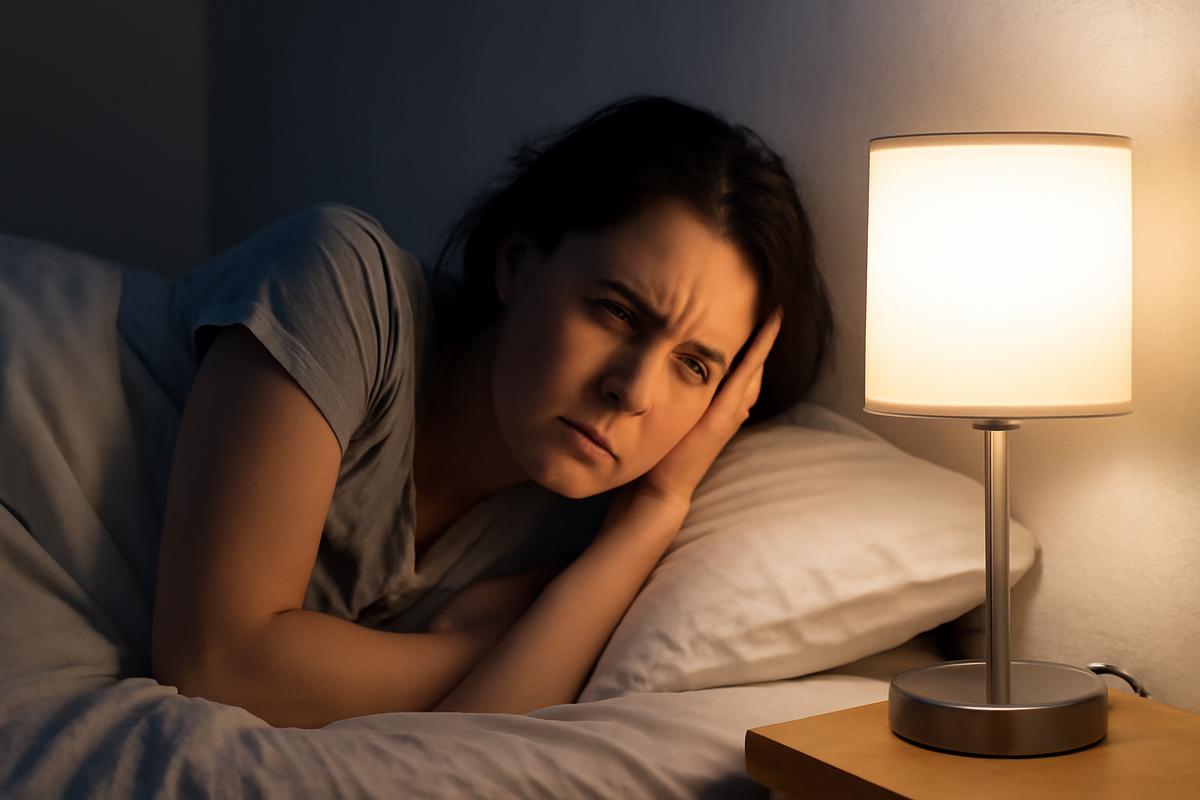
The first time I realized light could bully my sleep, it was 2:13 a.m. The room was dark except for a thin white blade of light carving its way in through the curtain gap, a glowing strip from the streetlamp outside. My eyes, which had been closed just moments earlier, were suddenly wide open, as if someone had flipped on a switch inside my brain. The air felt different—charged, humming. I remember laying there with that heavy, electric awareness of being awake when every cell in my body wanted to be asleep. And in that quiet, restless hour, an unsettling thought floated up: What if I’ve been getting this wrong my whole life—this whole business of light and sleep?
The Quiet Sabotage You Don’t Notice
Most people think sleep is about what happens at night—the softness of the pillow, the darkness of the room, the temperature of the air. We dim the lamps, splash water on our faces, put the phone aside (or pretend we will), and expect our bodies to just … comply. But beneath all that, invisible and stubborn, there’s a different clock quietly ticking, one that doesn’t care about our rituals or our wishes. It only cares about light.
Here’s the sneaky part: the most damaging mistake many of us make for our sleep doesn’t actually start at night. It starts in the morning. In the late morning, to be precise. Or around noon, when we’re still indoors. Or in the afternoon, when we move from screen to screen, light to light—but almost never to daylight.
We’ve been trained to fear blue light at night—and yes, that matters. But the mistake that quietly ruins sleep quality for millions of people is this: not getting enough bright natural light in the first half of the day. It’s like trying to land a plane when you never really took off properly in the first place.
Your brain’s internal clock, your circadian rhythm, is not powered by willpower or caffeine or how many steps you took. It’s set—anchored—by the contrast between bright light in the morning and dim light at night. When that contrast gets blurred, so does your sleep. You feel it in small ways: struggling to fall asleep, waking up groggy, energy crashing mid-afternoon, that dull mental fog that no amount of coffee quite clears.
The Morning Your Brain Has Been Waiting For
Imagine, for a moment, stepping outside just after sunrise. The air has that cool, almost metallic edge. Grass still holds the memory of night in small, cold beads of dew. There’s a softness to the world, and yet the light, even when the sky is grey, is startlingly alive. It hits your eyes differently than the glow of your phone or the overhead bulbs in your kitchen. It feels like something ancient has just been switched on.
Inside your eyes, behind the colors and the shapes, you have tiny cells—photoreceptors—that don’t care what you’re looking at. They care about how much light you’re getting and what kind of light it is. These cells send information straight to your brain’s master clock, a region called the suprachiasmatic nucleus, or SCN, which lives deep in the hypothalamus like a quiet conductor of a very big orchestra.
When you go outside in the morning—ideally within the first hour or two after waking—those cells get a strong, clear message: Day has started. That message is precise. It doesn’t whisper; it sings. Your SCN responds by setting a whole chain of biological timings in motion:
- Your cortisol rises early, as it should, to help you feel alert and focused.
- Your body temperature curve starts its upward climb for the day.
- The countdown begins for your evening melatonin release, roughly 12–14 hours later.
That last point is the key: morning light is what schedules your night-time melatonin. Not your lavender candle. Not the time printed on your calendar. Not even the number of hours since your last espresso. It’s light—particularly bright, outdoor light.
But what happens on the days when you stay indoors, moving from bedroom to bathroom to kitchen to laptop, the only “morning” you experience filtered through windows and screens?
The One Light Mistake That Ripples Through the Whole Day
Let’s track a very common, very modern day.
You sleep with blackout curtains because you’ve heard darkness is essential. Your alarm goes off in the predawn dimness. You reach for your phone. The first light your eyes taste isn’t the softening blue of a waking sky; it’s the sharp, close glare of a screen a few inches from your face. You scroll through emails, maybe the news, social media. The light is artificial but not particularly bright compared to daylight. Your brain receives a confusing, weak version of “daytime.”
You head to the kitchen. Overhead LEDs, maybe a pendant lamp, the fridge glow. Still not the intensity your circadian system evolved to read. You commute—in a car or bus or train—bathed in more indoor or shaded light. You spend the morning indoors at a desk, under fluorescent bulbs, in front of a monitor. The clock moves forward, but your internal clock hasn’t quite locked onto the day.
Then night comes. Only, for your brain, it doesn’t really arrive. The lights stay on, the TV flickers, your phone adds its rectangles of glow. So much of your light exposure is inverted: too little light in the morning and daytime, too much light in the evening and night. Your brain’s clock, trying to read this scrambled signal, shrugs and starts to drift.
That’s the core mistake: your days aren’t bright enough, so your nights never fully become night. Melatonin, the hormone that helps you fall asleep and stay asleep, is released later, in smaller amounts. Your sleep window shifts, narrows, frays at the edges.
And you feel it. Not always as full-blown insomnia—but as fractured sleep. You wake up at odd times. You dream more lightly. You open your eyes in the morning with a strange, cloudy heaviness, as if your body slept, but your brain didn’t fully trust the process.
How Bright Is “Bright Enough”?
Part of the confusion comes from the way we experience light inside. Indoors can feel bright. A sunny café, an open-plan office flooded with light, your own kitchen at noon—all of these can trick your senses. But your circadian system doesn’t judge light the way your conscious mind does. It measures it in lux—units of brightness that your eye’s special cells detect.
| Environment | Approx. Brightness (lux) | Circadian Impact |
|---|---|---|
| Dimly lit bedroom at night | 10–30 | Minimal, but can still delay melatonin if close to eyes. |
| Typical indoor lighting (home/office) | 100–500 | Often too weak to strongly anchor circadian rhythm. |
| Brightly lit store or studio | 500–1,000 | Some effect, still weaker than natural daylight. |
| Outdoor, overcast day | 1,000–10,000 | Very effective for circadian timing. |
| Outdoor, sunny day (shade) | 10,000–20,000 | Strong anchoring of body clock. |
| Outdoor, full sun | 30,000–100,000+ | Powerful signal: “This is daytime.” |
The difference is staggering. What feels “bright” indoors might be 300 lux. Step outside, even on a cloudy morning, and you can jump to 5,000 or more. Your circadian system is tuned to that range. It evolved under open skies, not LED panels.
So when people ask, “Why am I tired all day and wired at night?” the answer often isn’t just caffeine or stress or genes. It’s this mismatch: your brain never got clear daylight in the morning, so it never knew exactly when to start preparing for night.
Rewriting the Script: What Your Days and Nights Actually Need
If your sleep feels fragile or shallow, it’s tempting to focus entirely on what happens in the last hour of the evening—no screens, herbal tea, maybe a magnesium supplement. Those things can help. But the foundation is built much earlier.
Think of your day as a kind of story your body is trying to understand: sunrise, peak, sunset, night. Light is the narrator. When you get that story out of order—or mute key parts of it—the body gets confused about when to fully sink into rest.
1. Morning: Don’t Tiptoe Into the Day—Step Into It
The first 30–120 minutes after waking is prime time. Your goal isn’t perfection; it’s exposure. You don’t have to stare directly at the sun (you shouldn’t). You just need to let daylight soak into your visual field.
Open the curtains wide. Step outside onto a balcony, front step, or sidewalk. Take your coffee to the porch. Walk the dog without sunglasses for the first few minutes if comfortable. Even on a cloudy morning, aim for 10–20 minutes outdoors. If it’s very overcast or you wake later, stretch that to 20–40 minutes.
Your body reads that as a clear “we are awake” declaration. The ripple effects show up 12 hours later, when melatonin begins to rise more reliably and your mind feels less jumpy when you lie down.
2. Midday: Keep the Story of Daytime Consistent
After the morning anchor, the rest of the day still matters. Long stretches in dim environments—windowless rooms, basements, artificial light only—can blur that daytime signal.
Whenever possible, let your eyes meet the world outside:
- Eat lunch near a window or, better, outdoors.
- Take 5–10 minute daylight breaks between long blocks of screen time.
- Shift calls or thinking time to a bench, balcony, or park when you can.
You’re not chasing perfection. You’re building a consistent contrast: bright, dynamic days; soft, quiet nights. Your body loves contrast. It uses it to know what to do and when.
3. Evening: This Is When Light Should Begin to Disappear
Here’s where the second part of the mistake comes in. After spending a whole day indoors, we often feel justified in “relaxing” with bright screens and lights blasting into the late evening. But your brain is keeping score.
About two to three hours before your target sleep time, begin a gentle dimming of your world:
- Lower overhead lights; use smaller lamps, warmer bulbs.
- Turn down screen brightness and, if possible, move devices a bit farther from your face.
- Shift from staring into lit rectangles to more ambient tasks: reading paper, stretching, talking, listening to music.
What you’re trying to do is restore something we’ve lost: the slow fade of dusk. Before electricity, the change from day to night was gradual and visually obvious. The sky dimmed, colors cooled, shadows stretched. Now, our environments can look exactly the same at 10 p.m. as at noon, and our brains pay the price.
4. Night: Let Darkness Do Its Ancient Work
When you finally slide into bed, your room doesn’t need to be a cave, but it should be convincingly night. That means as little direct light in your eyes as you can manage.
If total blackout isn’t practical, aim for this:
- No unshaded bright bulbs in your direct line of sight.
- Cover or dim glowing indicators on chargers, gadgets, or alarm clocks.
- If you must get up in the night, use the least light possible—soft, low, and indirect.
By now, if you’ve given your body daylight in the morning and dimness in the evening, melatonin should be flowing more easily. You may find that sleep—not just the act of falling asleep, but the depth of it—starts to change in subtle but powerful ways. Dreams feel less frantic. Waking up feels less like being yanked out of a pit and more like slowly surfacing from warm water.
What Happens When You Finally Get the Light Right
The transformation rarely looks dramatic from the outside. There’s no cinematic moment where everything changes in a single night. Instead, the shifts are quiet and cumulative, like layers of sediment settling at the bottom of a lake until the water clears.
You notice that you’re nodding off closer to the time you’d hoped to. Your body starts to feel sleepy on its own, without the familiar mental wrestling match. You wake in the middle of the night less often—or if you do, it’s briefer, softer. Morning feels less punishing. The gray, cotton-wrapped fog that used to hang over the first hours of the day begins to thin.
And during the day, a certain sharpness returns. Focus stretches a little longer. Your mood doesn’t swing quite as wildly with the smallest frustrations. The afternoon slump loses some of its teeth. You might even feel, in small flashes, like your body’s timing and your life’s timing are less at war.
This isn’t magic. It’s alignment. Your internal clock, which has spent years or decades trying desperately to guess what time it is from a confused pattern of weak indoor light and late-night screens, finally has something clear to work with. Morning light says, “Here is the anchor.” Evening darkness whispers, “Here comes the descent.” You stop asking your body to improvise every single day.
All of it begins with refusing to make the most common light mistake of the modern world: living in dull, indoor light all day, then flooding your eyes with artificial brightness at night. When you flip that—bright mornings, dim nights—you’re not just improving sleep. You’re restoring an agreement with something very old in you, something that has always moved in time with the rising and setting of the sky.
Frequently Asked Questions
How much morning light do I actually need?
For most people, 10–20 minutes of outdoor light within the first 1–2 hours after waking is a solid target. On very cloudy days, aim for 20–40 minutes. If you wake before sunrise, get outside when the sun is up, not before.
What if I can’t go outside in the morning?
Sitting near a large window is better than nothing, but glass reduces intensity. Try to get as close as possible to the window and stay there a bit longer. Add short outdoor breaks later in the morning or at midday whenever you can.
Do screens in the evening always ruin sleep?
They don’t always “ruin” sleep, but they can delay melatonin and push your sleep time later, especially if they’re bright and close to your eyes. Reducing brightness, increasing distance, and stopping 60–90 minutes before bed can lessen the impact.
Is one bad light day enough to mess up my sleep?
One day won’t destroy your rhythm, but repeated patterns will. Think in terms of averages over the week. The more often you support your clock with bright days and dim nights, the more resilient your sleep becomes.
Can I fix my sleep just by changing light, without changing anything else?
Light is one of the most powerful levers for sleep, but not the only one. Caffeine timing, stress, meals, and movement all play roles. Still, many people notice meaningful improvements in sleep quality just from improving morning daylight exposure and reducing bright evening light.
What if I’m a night owl—will morning light still help?
Yes. In fact, morning light is one of the most effective ways to gently shift a night-owl rhythm earlier over time. It won’t turn you into a dawn enthusiast overnight, but it can make it easier to fall asleep and wake up slightly earlier and feel better doing it.
Does indoor “daylight” lighting work as well as going outside?
Bright artificial lights labeled “daylight” can help somewhat, especially if you’re in a very dark climate, but they usually don’t match the intensity and spectrum of real sky light. When possible, natural outdoor light still gives the clearest signal to your circadian system.

Hello, I’m Mathew, and I write articles about useful Home Tricks: simple solutions, saving time and useful for every day.