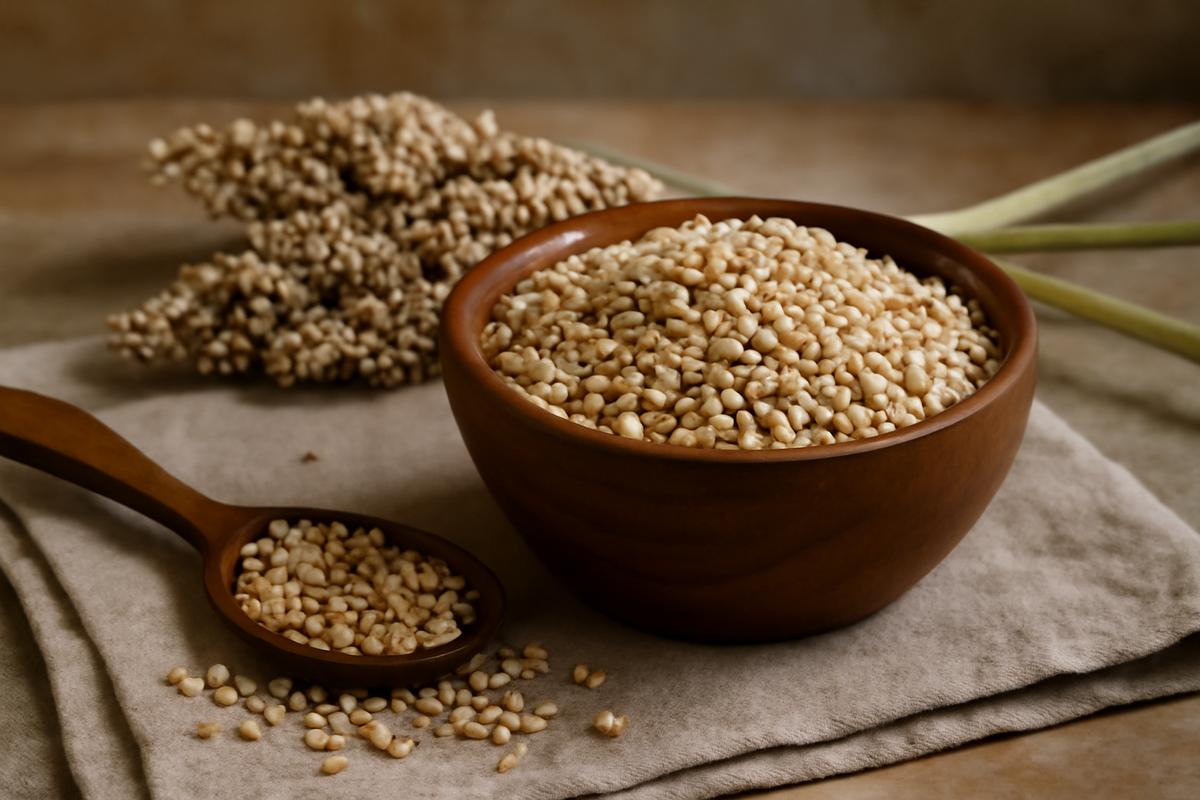
The first time I held a handful of it, I almost dismissed it as birdseed. Tiny, round, the color of pale sand after rain—nothing glamorous, nothing that screamed superfood. It rattled softly in my palm like dried rain on a tin roof. I was standing in a farmer’s field on the outskirts of a dusty town, the air thick with the smell of straw and warm earth, and I had no idea that these unremarkable beads would soon rewrite the way I thought about my own body—particularly the quiet, unseen world inside my gut.
The Grain That Hid in Plain Sight
The farmer called it by a name I’d heard before but never really absorbed: millet. To him, it was ordinary. To the sweeping modern food industry, it was mostly forgotten, overshadowed by wheat, rice, and corn. But to the rumbling ecosystem of microbes in our intestines—those bacteria that quietly help us digest, heal, and even think—this grain is more like a banquet.
Millet used to be a staple. Long before kitchen shelves were lined with sleek bags of imported quinoa and oat milk, people were simmering pots of millet porridge, baking millet breads, and fermenting it into drinks and cakes. It fed farmers, nomads, and entire ancient civilizations. Then came industrial agriculture, new markets, and refined flours that lasted longer on shelves but did less for our bodies. Millet fell out of fashion, a background actor in the cereal aisle, occasionally sold as a gluten-free alternative, more often ending up as chicken feed.
Yet here we are, in an era obsessed with gut health, fiber, and the microbiome, searching for foods that nourish the bacteria that nourish us. And quietly, patiently, millet has been waiting.
A Landscape Inside You: Why Your Microbiome Cares
If you could shrink down and walk through your gut, you’d enter a world more vibrant than any rainforest. Riverbanks of intestinal lining, canyons of folded tissue, and along every surface, billions of tiny, bustling organisms. They jostle, communicate, and compete; they break down food, build molecules your body needs, and whisper chemical messages that affect mood, inflammation, and energy.
This invisible community thrives on what we can’t fully digest ourselves. Fiber, resistant starches, and complex plant compounds pass through your upper digestive tract largely untouched, only to arrive in your colon as a grand delivery of raw material for microbial feasting. When they eat well, they produce substances like short-chain fatty acids—especially butyrate, acetate, and propionate—that support your intestinal lining, help regulate your immune system, and may lower the risk of chronic diseases.
Here’s where millet steps into the story with quiet confidence. While white flour and many processed foods offer quick sugars that are absorbed long before they can nourish your microbiome, millet serves something else: slowly digested carbohydrates, fibers, and a range of micronutrients that reach your gut bacteria like a steady stream instead of a sugar flood.
The Secret Gifts Hidden in Millet
Run your fingers through a bowl of raw millet and you feel a gentle grit, almost like soft sand. Cook it, and it turns into something else entirely: fluffy like couscous if steamed, creamy like porridge if simmered longer. But what your senses can’t see is what your bacteria are getting: soluble and insoluble fiber, prebiotic-like compounds, and slowly digestible starch that feeds them over time.
Studies have begun to show that millet can help support a healthier balance of gut bacteria—more of the types associated with metabolic stability and less of those linked with inflammation and blood sugar spikes. Where refined grains rush through as quick carbohydrates, millet slows down the party, extending digestion and delivering nutrients more gradually.
It isn’t just about the fiber. Millet carries minerals like magnesium, iron, and phosphorus, and plant compounds that may have antioxidant effects. Think of it as a village market of nutrients arriving at your microbial town square, allowing different bacterial species to thrive rather than letting a few sugar-hungry ones dominate.
From Soil to Stomach: A Grain with History and Humility
There’s something disarming about how tough millet is. It grows in poor soils, survives droughts that would wither other crops, and flourishes in climates that test both plants and people. While other grains demand plenty of water and fertile ground, millet shrugs and says, “I’ll manage.”
For centuries, this resilience made millet a lifeline in regions where harvests were never guaranteed. In pockets of Africa, Asia, and parts of Eastern Europe, millet was the daily bread, the humble porridge of farmers rising before dawn, the steaming pot waiting on evening fires. It was never glamorous; it was reliable.
Now, in a world worried about food security and the climate crisis, that resilience matters again. Choosing millet is not only a nod to your microbiome; it’s a small gesture of alliance with crops that need less from the earth yet give much back.
The irony is striking: a grain deemed too rustic, too simple for modern taste is precisely the kind of food our stripped-down guts, reeling from years of ultra-processed diets, desperately need.
How Millet Feels in the Body
Cook millet the first time and you might be surprised at how light you feel after eating it. No heavy crash, no brick sitting in your stomach. Instead, a gentle fullness, like you’ve filled your body with something that understands your pace rather than racing ahead of it.
This isn’t some mystical effect; it’s physiology. Because millet digests more slowly and feeds gut bacteria along the way, your blood sugar rises more gradually. The result can be steadier energy and fewer roller-coaster hunger pangs. People looking to support metabolic health—whether that means stabilizing blood sugar, managing weight, or simply feeling less “wired and tired”—often find that swapping in millet for more refined grains brings a subtle but noticeable shift.
And then there’s what you don’t feel: the silent shifts in your microbial residents, the increase in short-chain fatty acids, the quieter hum of a gut that isn’t constantly provoked by sugar spikes or starved of fiber. You may not sense the microscopic banquets happening after each bite, but your body takes note over time.
Bringing Millet Back to the Kitchen
Despite its long history, millet can feel unfamiliar when it first appears in your kitchen. It doesn’t have the universal culinary fame of rice, nor the trendy mystique of quinoa. Yet it’s one of the most adaptable grains you can cook with, able to morph from breakfast comfort to savory backbone in a single day.
Imagine waking to the soft scent of cinnamon and cardamom from a pot of millet porridge, the grains simmered until they surrender into creaminess. A drizzle of honey or fruit on top, maybe some nuts or seeds, and you’re eating a bowl that your gut bacteria quietly celebrate.
Later, the same grain can arrive at dinner differently: toasted in a dry pan until it smells faintly nutty, then simmered in broth until it turns into something like a cross between couscous and polenta. Tossed with herbs, roasted vegetables, olive oil, and lemon, it becomes a dish where every bite contains a story of soil, sun, and microscopic feasts inside you.
A Quick Glance: Why Your Gut Might Love Millet
Here is a simple look at how millet stacks up in the context of gut and overall health. Values are approximate and can vary by variety, but the pattern is what matters.
| Aspect (per 100 g cooked) | Millet | Typical Refined White Rice |
|---|---|---|
| Dietary Fiber | Higher; supports gut bacteria | Very low |
| Glycemic Impact | Moderate; slower release of glucose | Higher; faster blood sugar spikes |
| Micronutrients | Good source of magnesium, phosphorus, some iron | Lower; many nutrients removed in processing |
| Gluten Content | Naturally gluten-free | Gluten-free, but often paired with gluten foods |
| Support for Microbiome | Better substrate for beneficial gut bacteria | Minimal direct benefit |
Seen through the lens of your microbiome, millet doesn’t just “fill you up”; it helps fill up the microbial pantry with the right kind of fuel.
Cooking Millet So Your Gut—and Tongue—Are Happy
The romance of a gut-friendly grain only goes so far if it doesn’t taste good. Fortunately, millet is a shape-shifter in the kitchen.
Rinse it first under cool water, letting the tiny grains slip through your fingers. If you want a nuttier flavor, toast it in a dry pan until you hear the occasional pop and smell a faint aroma like warm cornflakes. From there, you choose the path: fluffy, creamy, or somewhere in between.
For a fluffier, pilaf-like millet, use about two parts water or broth to one part grain, simmer until the liquid is absorbed, then let it sit off the heat, covered, to finish steaming. For a softer, porridge-like texture, increase the liquid and cook it a bit longer, stirring now and then. The grains slowly relax, releasing starches that turn the pot into something spoonable and soothing.
You can fold cooked millet into salads, press it into patties with beans and spices, or blend it into batters for muffins and breads. In many traditional cuisines, it’s fermented—turned into tangy porridges and drinks that layer live cultures on top of its natural gut-friendly benefits.
The Quiet Art of Repetition
There is no single, magical bowl of millet that transforms your microbiome overnight. Your gut bacteria respond to patterns, not one-off gestures. They adapt to what you repeatedly send their way: the kinds of fibers, the degree of processing, the diversity of plants.
When millet appears regularly alongside vegetables, legumes, and other whole foods, your inner ecosystem begins to shift—subtly at first, then more noticeably. The bacteria that thrive on complex carbohydrates and fibers begin to multiply, crowding out some of the species less associated with healthful outcomes. In the background, levels of beneficial compounds like short-chain fatty acids can rise, quietly supporting your colon cells, calming low-grade inflammation, and even influencing how your immune system behaves.
You might simply notice less bloating, a more comfortable rhythm in digestion, or a feeling of steadier energy across your day. These are the human-scale manifestations of countless microbial negotiations, all partly fueled by grains like millet that modern diets have carelessly sidelined.
A Grain with a Future Written in the Past
Part of millet’s charm is how it bridges ancient and modern concerns. It belongs to an older rhythm of eating: whole grains simmered slowly, meals built from ingredients that came from nearby soil, dishes assembled from what could survive dry seasons and hard years. Yet it also steps cleanly into contemporary preoccupations—gut health, sustainable agriculture, gluten-free options, blood sugar control.
When you cook millet, you’re drawing a thread from centuries of quiet reliance into your own kitchen, reconnecting with a way of eating that trusts simplicity and time. You’re also making room on your plate for a grain that asks less of the planet than many modern staples: less water, fewer ideal conditions, more tolerance for a changing climate.
And within your body, you’re choosing to feed not just yourself, but the bustling, unseen multitude that lives within you. Each serving of millet becomes a small, daily act of hospitality toward these microbial allies, giving them the diversity and complexity of fuel they’re built to use.
The next time you hold a handful of millet—those pale, quiet spheres—you might think of all the worlds they touch. The dry, wind-swept fields where they grew. The kitchens where they once simmered as ordinary fare. The twisty corridors of your intestines where bacteria will welcome them as a long-lost friend. For a “forgotten” grain, millet has a remarkable way of remembering what our bodies actually need.
Frequently Asked Questions
Is millet really good for gut health, or is it just another trend?
Millet isn’t a new trend; it’s an old staple returning to the spotlight. Its combination of fiber, slowly digested starch, and micronutrients makes it genuinely supportive of gut bacteria. While more research is always welcome, current evidence and long historical use both point to millet as a solid choice for microbiome-friendly eating.
Can I eat millet if I’m sensitive to gluten?
Millet is naturally gluten-free, which makes it suitable for most people with gluten intolerance or celiac disease. However, cross-contamination can occur during processing, so if you’re highly sensitive, look for millet clearly labeled as processed in a gluten-free facility.
Will switching to millet help with bloating and digestion?
For many people, gradually adding millet and other high-fiber, whole plant foods can improve digestion over time by feeding beneficial bacteria and supporting regular bowel movements. If your current diet is low in fiber, introduce millet slowly and increase your water intake to give your gut time to adjust.
How often should I eat millet to support my microbiome?
There’s no exact rule, but making millet part of your regular rotation—several times a week, for example—can help. The key is consistency and diversity: millet works best as one of many whole grains and plant foods in your diet, rather than the only star.
Is millet better than rice or wheat for overall health?
“Better” depends on context, but compared with highly refined white rice or white wheat flour, millet typically offers more fiber, more micronutrients, and a gentler effect on blood sugar. As part of a varied diet that includes other whole grains, vegetables, fruits, and legumes, millet can be a particularly gut-friendly choice.

Hello, I’m Mathew, and I write articles about useful Home Tricks: simple solutions, saving time and useful for every day.