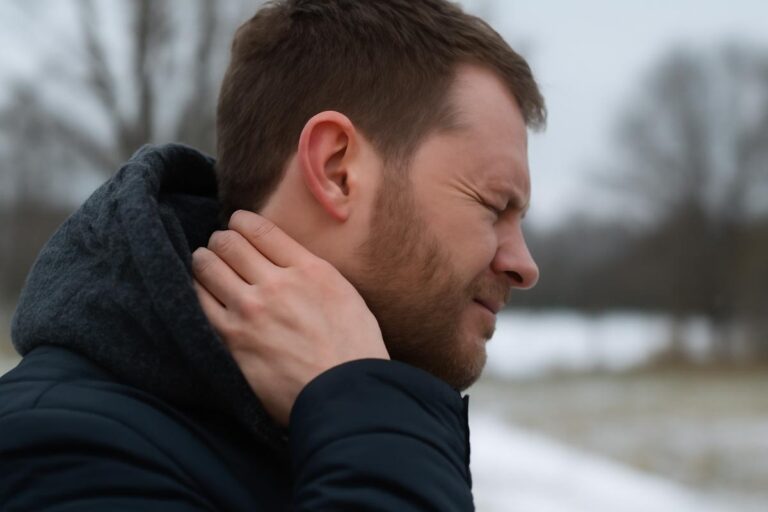
This breathing rhythm calms panic instantly

The first time it happened, you were sure the floor had dropped away. Your heart slammed, palms went slick, and the room tilted just enough to feel unreal. Sounds dulled and sharpened all at once. Your chest pulled tight like someone had cinched an invisible belt. You tried to reason with yourself, to think your way out of it, but thoughts slipped around like fish in dark water. All you knew was that you were terrified, and you had no idea why.
If you know that moment, you know how lonely it is. Panic feels like your body has turned on you, like some secret lever has been pulled and now everything is too much—too loud, too bright, too fast. People might tell you to “just breathe,” as if that were a simple thing, as if breathing hadn’t suddenly become the hardest task in the world.
But there is a way to breathe that doesn’t fight the panic, doesn’t argue with it, doesn’t demand it stop. Instead, it quietly walks alongside it, steady and patient, until your nervous system remembers: you are not in danger. You are alive, and there is more space inside you than fear would have you believe.
The Night the Air Turned Solid
It was a little past midnight when the air first seemed to harden around you. The house was quiet, humming with its low, private sounds—the faint tick of cooling pipes, the distant refrigerator, the wind brushing the window with a soft, dry hand. You were in bed, scrolling your phone, when a small, sharp thought flashed through your mind: What if something’s wrong with my heart?
Nothing unusual, just a passing flicker. But you chased it once—checked your pulse, noticed it was a little fast—and that was all it took. Within seconds, your chest felt hot and heavy. Your heart slammed against your ribs like it wanted out. Your breath rose up into your throat and stuck there, shallow and ragged.
You sat up. Then stood. Then paced. Your body was shaking, humming with an electric dread, as if every cell had suddenly remembered some terrible deadline. You opened a window. No help. You splashed water on your face. No help. The room was still the same quiet room, but it might as well have been a cliff edge.
Your rational brain, the part that writes emails and remembers birthdays, tried to speak up. This is just anxiety. You’re fine. You’re fine. But panic is louder than reason. Your body didn’t care about logic; it cared about survival, and it had chosen to interpret this moment as danger. There was no convincing it otherwise with thought alone.
Somewhere between the third glass of water and the useless walk around the living room, another memory surfaced: a friend talking, months ago, about a strange breathing rhythm that had helped her through her own spiraling moments.
“Four in, seven hold, eight out,” she had said, shrugging like it was no big deal. “I know, it sounds like something off a wellness app. But it works like magic.”
Back then, you’d nodded politely, stored it away under probably nonsense, and moved on. But now, with your heart racing and your thoughts crumbling into static, that rhythm was suddenly all you had.
The Rhythm the Body Understands
You didn’t want poetry or philosophy. You wanted something practical, something that didn’t ask you to become a different person or develop spiritual enlightenment in the next seventeen seconds. You wanted a lever you could actually pull.
What your friend had described is called 4–7–8 breathing, a slow, deliberate pattern you can use almost anywhere. It goes like this:
- Inhale through your nose for a count of 4.
- Hold your breath for a count of 7.
- Exhale gently through your mouth for a count of 8.
That’s it. No candles, no special cushions, no chanting. Just counting and air. But inside your body, this simple rhythm does something remarkably sophisticated. It whispers to your nervous system, that tightly wound network of wires and switches, and tells it to stand down.
Your nervous system has two main modes: the “fight or flight” setting, which panic loves, and the “rest and digest” setting, where your body remembers how to be safe. Panic is what happens when your fight-or-flight system floors the gas pedal and forgets where the brakes are. Your breathing follows suit—fast, shallow, erratic—feeding back into the system and convincing your body the threat is real.
4–7–8 breathing gently cuts that loop. By forcing your exhale to be longer than your inhale, it nudges your body into activating the parasympathetic nervous system—the part responsible for calm, digestion, repair. It’s like speaking a language your muscles and heart and lungs all understand, even when your mind feels like it’s falling apart.
The First Attempt
That night, you sat at the edge of your bed, toes pressed into the rug like you needed proof you were still on solid ground. You placed one hand on your belly, because that’s what the internet said to do, and tried to inhale.
One… two… three… four.
You were shocked by how small your breath felt, as if your lungs had shrunk to the size of a fist. Holding it for seven counts seemed impossible, ridiculous even. But you tried.
One… two… three…
Your chest screamed to release. Your shoulders were somewhere near your ears. A strange buzzing sensation poured down your arms. The temptation to gulp air was overwhelming, but you stuck with the count, imperfect and wobbly as it was.
Then came the exhale.
You parted your lips and let the air slide out slowly, like pouring water from a tilted glass.
One… two… three… four… five… six… seven… eight.
The first round didn’t feel like a miracle. Your heart was still pounding, your skin still prickled with that unnerving aliveness. But there was a sliver of difference—your breath, it seemed, had just a fraction more room inside it. You did it again. And again.
With each cycle, something began to shift, not in a dramatic, cinematic way, but in tiny recalibrations, like a dimmer switch turning the lights down.
- Your jaw unclenched, almost without your permission.
- Your shoulders softened an inch away from your ears.
- Your heartbeat, while still insistent, began to land in a steadier rhythm.
By the fourth round, the room no longer felt like it was speeding away from you. The edges of things softened. Sounds stopped echoing. Your thoughts, which had been racing like startled horses, slowed to a canter. You were still afraid. But you were also breathing—and that was new.
Teaching the Body: A Quiet Kind of Training
The real magic of this rhythm isn’t just what it does in one crisis, but what happens when you return to it again and again, teaching your body that calm is a place it can recognize, not a stranger that sometimes wanders through by accident.
At first, you only remembered 4–7–8 when everything went off the rails. In grocery store lines when your chest suddenly tightened; in the car when your thoughts began to spiral sideways into disaster; in the dark, during those 3 a.m. hours when every worry seems heavier and sharper. Each time, you’d catch yourself halfway into panic and think, Wait. Breathe.
Slowly, the practice started to slip into less dramatic moments, too: in the quiet before a difficult conversation, waiting in a doctor’s office, during the pause right before you opened an important email. You started using the rhythm not as a last resort, but as a tiny ritual of care.
You might begin with just a few rounds at a time. Many people find this structure helpful:
| Step | Action | Count |
|---|---|---|
| 1 | Inhale through nose | 4 seconds |
| 2 | Hold breath gently | 7 seconds |
| 3 | Exhale through mouth | 8 seconds |
| 4 | Repeat cycle | 4–8 rounds |
In the beginning, the numbers might feel too long. That’s okay. Instead of treating them like strict rules, think of them as a gentle direction: shorter inhale, longer exhale. You can even start with 3–4–5 and build up as your lungs and nervous system adjust.
Like Training a Wild Animal
Think of your body in panic as a wild animal in a trap—terrified, certain it’s about to die, unable to hear reason. You don’t calm an animal like that by yelling at it or explaining your intentions. You sit nearby. You soften your voice. You move slowly. You give it time to notice you aren’t trying to hurt it.
4–7–8 breathing is that softened voice. Each slow exhale is you saying, without words, I’m here. I’m listening. We’re safe enough in this moment to slow down just a little.
Your body may not believe you at first. Panic has a way of rewriting what “safe” means. But with each repetition, your nervous system begins to pair this rhythm with the eventual settling that follows. It learns, like a trail forming through tall grass, that breath can be a path out of the tangle.
How It Feels When It Starts Working
When the breathing really begins to take hold, it doesn’t feel like a switch flipping so much as a thawing. Imagine a pond in early spring: the ice doesn’t vanish in one dramatic crack; it softens at the edges, grows thin in the center, encourages small dark pools of water to appear.
Inside you, that thaw looks like this:
- Your vision steadies. The tunnel feeling widens, letting the rest of the room back in.
- Your heart rate drops, not to some perfect calm, but to a pace that feels survivable.
- The knot under your ribs loosens by a fraction. Then a fraction more.
- Thoughts start landing in sentences again instead of smears.
Sometimes you only need four rounds. Sometimes you need twelve. Sometimes, if the panic has its claws in deep, the first few rounds feel pointless. You might notice your brain muttering, This is stupid, it’s not working, I can’t do this, I’m going to lose it.
That’s okay. You’re not trying to win an argument with those thoughts. You’re simply choosing to keep breathing in a particular way while they pass through, like storm clouds over a field. The practice is the point.
The Subtle Power of the Count
Something quiet but profound happens when you introduce counting to your breath: your mind, which has been flinging itself against every terrible possibility, is given a smaller, steadier task. One… two… three… four. It is hard to catastrophize and count at the same time. The counting becomes a narrow bridge across the chaos.
There will be moments when you lose track. You might jump from three to six, or forget where you are altogether. Instead of judging that, treat it as a cue: ah, my mind wandered. Begin again. There is no penalty for starting over, no breath police grading your performance. Each restart is another moment of choosing yourself over the panic.
Letting This Practice Live in Your Day
The beauty of 4–7–8 breathing is that it doesn’t ask you to leave your life to use it. You don’t have to retreat to a mountain cabin or carve out an hour each day. You can tuck it into the quiet corners of what you’re already doing.
You might practice:
- In bed, right before sleep, letting your exhale gently lengthen as the day slips away.
- In your car, parked, hands resting on the steering wheel before stepping into a crowded room.
- In the bathroom at a party, taking a moment to feel your feet on cool tile, breathing slowly until the noise outside feels a little less sharp.
- On a walk, synchronizing your steps to the counts—four steps in, seven steps of gentle hold, eight slow steps out.
Over time, something quiet but astonishing happens: your body starts to arrive at the rhythm more easily. The path you kept walking becomes familiar, a route your nervous system recognizes even when you’re not trying that hard. Panic may still visit, but it no longer feels like an unstoppable force; it begins to feel like weather—intense, but passing.
A Small Ritual of Belonging to Yourself
There’s another, more tender layer to this practice. Every time you pause to breathe in this deliberate way, you’re sending yourself a deeper message: I am worth the time it takes to come back to myself.
For years, maybe, you’ve learned to abandon your own needs in favor of deadlines, expectations, other people’s emergencies. Panic often moves into the spaces where we’ve been unkind to ourselves for too long. This breathing rhythm becomes, in that context, not just a tool for calming, but a small ritual of belonging—a way of saying, I will not leave my body alone in its fear.
The Moment You Notice You’re Okay
It usually sneaks up on you. You’re halfway through your sixth round of 4–7–8 and suddenly realize you aren’t counting out of desperation anymore, but out of habit. The cold rush through your limbs has faded. The shaking has softened. You can feel the texture of your clothes against your skin again, the weight of your own hands resting in your lap.
You look around the room. The chair is still a chair. The wall is still a wall. Nothing external has changed—and yet, everything has. The body that felt like a burning house is now more like a dimly lit room: not perfect, not blissful, but inhabitable.
This is the quiet miracle: your circumstances, the things you were worried about ten minutes ago, might not be any different. The email still needs an answer. The diagnosis is still uncertain. The future is still open, unwritten, edged with mystery. But inside your ribs, there is more space. Inside your skull, there is more sky.
And all you did was breathe in a certain way.
Remember This When Panic Comes Back
Panic will return. That’s not a failure; it’s a feature of being human in a world that asks too much and explains too little. When it does, you may forget everything you’ve learned. You may feel, again, like this is the worst it’s ever been, like you’ve unlearned every coping skill and can’t remember a single tool.
So here is a reminder you can carry with you, small enough to fit in a pocket:
- You don’t have to fix the whole feeling. You only have to get through the next breath.
- You don’t have to stop the panic. You only have to give your body a calmer rhythm to follow.
- You are allowed to do this imperfectly—fast counts, shaky lungs, thoughts shouting in the background.
Four in. Seven hold. Eight out.
The world can keep spinning. The inbox can keep filling. The future can stay unknowable. Right here, in this small territory of your body, you are building a refuge one breath at a time. A place where panic is not the only voice that gets to speak.
One… two… three… four.
Somewhere inside, something listens. Something softens. Something remembers: you’ve been here before, and you made it out. You can make it out again.
FAQ
How often should I practice 4–7–8 breathing?
You can start with one or two sessions a day, doing 4–8 rounds each time. Many people like to practice once in the morning and once before bed. The more you practice when you’re not panicking, the easier it becomes to use during a panic surge.
Can this breathing rhythm really calm panic instantly?
“Instantly” is different for everyone. Some people feel a noticeable easing after just a few rounds; for others, it takes several minutes. What it tends to do quickly is interrupt the runaway stress cycle and give your body a path back toward calm.
What if I can’t hold my breath for 7 seconds?
Adjust the counts so they feel manageable. You might start with 3–4–5 or 4–4–6. The key is keeping the exhale longer than the inhale and moving at a slow, steady pace. You can gradually lengthen the counts over time if it feels comfortable.
Is this safe to do if I have asthma or other breathing issues?
Many people with breathing conditions can still use gentle breathwork, but it’s important to listen to your body. If holding your breath feels uncomfortable or triggers symptoms, shorten the hold or skip it and focus on slow, extended exhales. When in doubt, check with a healthcare provider familiar with your condition.
Will this replace therapy or medication for anxiety?
No. 4–7–8 breathing is a supportive tool, not a replacement for professional care. It can work beautifully alongside therapy, medication, or other treatments by helping you self-regulate in difficult moments. If panic or anxiety is disrupting your life, seeking professional support is still important.
What if I feel more anxious when I focus on my breathing?
This is common, especially if you’re not used to paying attention to your body. Try softening the practice: shorter counts, eyes open, focusing on something neutral in the room while you breathe. You can also place a hand on your chest or belly to anchor the sensation. Over time, the discomfort usually lessens as your body starts to associate the rhythm with relief.
How long should I continue each session?
Most people find 1–3 minutes helpful—that’s about 4–8 full cycles. You can continue longer if it feels soothing, but you don’t need long sessions for it to be effective. Stop if you feel dizzy or strained, and return to your natural breathing.

Hello, I’m Mathew, and I write articles about useful Home Tricks: simple solutions, saving time and useful for every day.