The sleep position that eases lower back
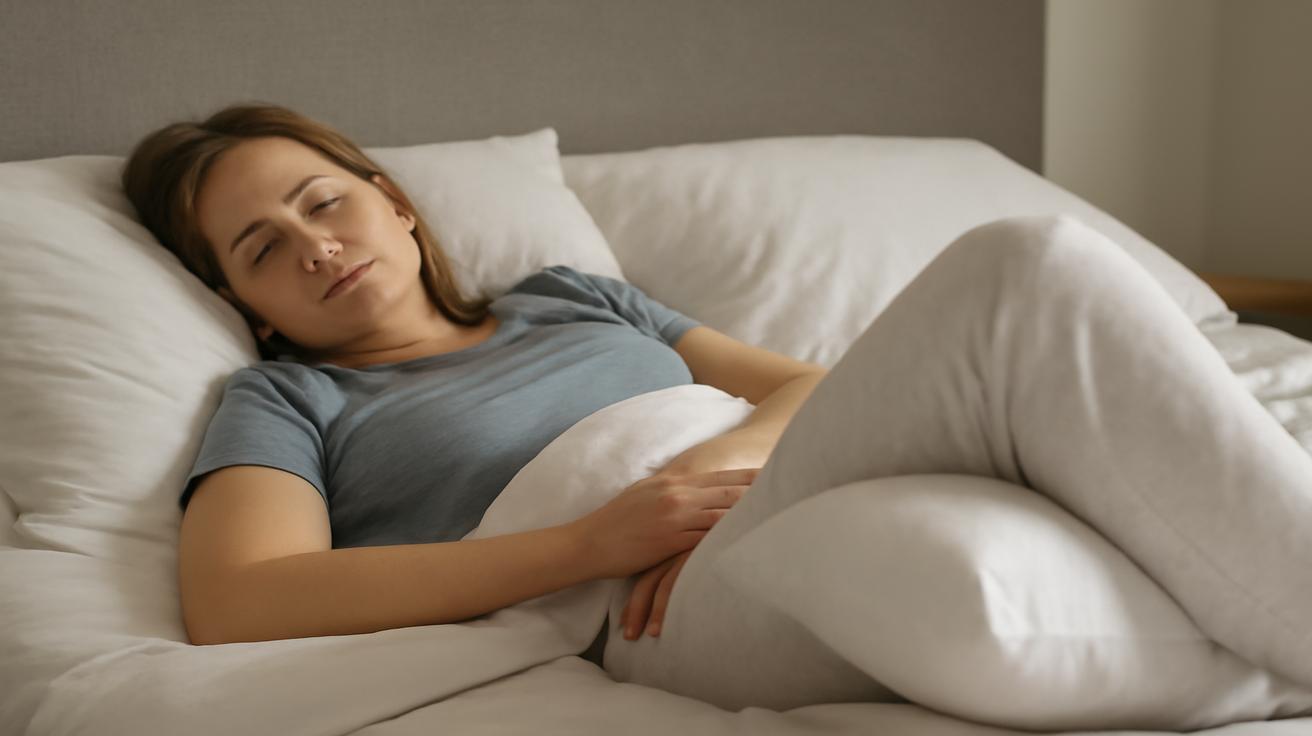
By the time the clock slides past midnight, the house has gone quiet—but your lower back hasn’t gotten the memo. You shift. The mattress sighs. A dull ache blooms across your spine like a slow bruise. You flip your pillow, adjust your blanket, bargain with your own body: Just let me sleep. But the ache answers by tightening, inch by inch, as if your muscles are tiny fists that refuse to unclench. At some point you realize this isn’t just a bad night. This is a pattern. Every morning you wake up feeling older than you are, as though the night is something to survive, not savor.
If that sounds uncomfortably familiar, you’re not alone. Lower back pain now walks into bed with millions of people every night. We tend to blame age, or the long day at the desk, or that time we lifted a box the wrong way three years ago. But often, the quiet saboteur is simpler: the way your body lies in the dark while you sleep. And the surprising twist? You may not need a new mattress, a miracle gadget, or a twelve-step stretching routine. You might need one specific sleep position that helps your spine remember how to relax.
The Night the Floor Taught Me About My Back
It started, for me, on the carpet. A friend who worked in physical therapy listened to me describe my nightly back battles and said, “Try this. Lay flat on the floor. Now bend your knees and put your calves up on the couch, so your hips, knees, and ankles are all at right angles.”
It felt ridiculous. There I was, in the dim light of the living room, staring at the ceiling fan while my legs rested like awkward bridge supports on the edge of the couch. The floor was firm, almost too firm, and my muscles complained for the first few seconds. But then something unexpected happened. My lower back, which usually felt like a clenched jaw, began to ease. My spine seemed to sink. My breath, which I hadn’t realized was shallow, deepened. The ache softened at the edges.
“That,” my friend said from the doorway, “is close to how your spine would love to sleep every night—supported, neutral, not twisted or sagging. You just need to recreate that in bed.”
That night became a small turning point, because it revealed a quiet truth: our backs aren’t asking for luxury. They’re asking for alignment.
The One Sleep Position Your Lower Back Has Been Begging For
There are countless sleep positions, and dozens of minor variations, but when it comes to easing lower back pain, one has earned a quiet reputation as the spine’s favorite: side sleeping with support.
This isn’t the clumsy, curled-up-on-one-side “I fell asleep watching TV” pose. It’s a deliberate, gentle arrangement that turns your bed into a supportive shell instead of a soft trap. Imagine lying on your side, your spine forming a long, relaxed line from the base of your skull to your tailbone. Your shoulders aren’t crushed; your hips aren’t twisted; your lower back is neither sagging toward the mattress nor arching away from it. Everything feels…even.
To get there, three small changes make all the difference:
- Side-lying, not twisted: Your nose, breastbone, and pubic bone stay roughly stacked in a straight line, facing the same direction.
- Knees slightly bent: Not fetal, not straight as a board—just a soft bend, like you’re halfway through a gentle stretch.
- A pillow between your knees: This is the unsung hero: it keeps your top leg from sliding forward and rotating your spine.
Put those together, and you get a sleep position that quietly does three critical things for your lower back:
- It reduces twisting in your lumbar spine.
- It keeps your pelvis from tipping, which often strains the muscles that anchor your lower back.
- It supports the natural curve of your spine instead of forcing it to flatten or over-arch.
Is it magic? No. But it’s astonishing how often people live with chronic night-time back pain simply because their spine spends hours in a twisted, sagging posture. Side sleeping with knee support gives your body a chance to rest in alignment instead of wrestling with gravity all night long.
How to Set Up the “Side Sleep Sanctuary”
Think of your bed as a landscape. Every curve, every dip, every firm or soft zone will affect how your spine settles into it. Instead of dropping into bed and hoping for the best, it helps to choreograph your setup, just a little—like arranging rocks and moss around a woodland stream so the water flows easily, without turbulence.
Here’s a simple, sensory way to build that side-sleep sanctuary, step by step:
1. Start with Your Pillow and Neck
Lie down on your side and pay attention to your head first. If your pillow is too low, your neck will tilt downward; too high, and your head will lean toward the ceiling. Either way, your cervical spine (the neck part) twists—and that tension ripples all the way down to your lower back.
You want your nose to point straight ahead, not down toward the mattress or up toward the ceiling. Ask someone to look at you from behind, or use your phone’s selfie camera propped on a chair. Your neck should look like a clean continuation of your upper back, not a kinked extension.
2. Place the Knee Pillow
Now bend your knees slightly, as if you’re walking slowly uphill. Slide a pillow or a cushy, folded blanket between your knees and ankles so that your legs are stacked, not scissoring forward or backward.
Feel the difference for a moment. Without the pillow, let your top leg drift forward. Notice how your lower back twists, and one side of your waist compresses. Then place the pillow back between your knees and let both legs rest on it. You’ll likely feel a soft unwinding along the muscles beside your spine.
3. Support Your Waist if Needed
If your mattress is on the firmer side and you’re slim or have a noticeable inward curve at your waist, you may feel a little space between your side and the bed. That gap can leave your lower spine hanging, with the area above your hip bones slightly unsupported.
Try tucking a thin, small pillow or folded towel under the side of your waist, just enough to meet the mattress. It shouldn’t push you upward—only fill the hollow, like moss filling a shallow dip in bark. This can be especially comforting if your pain sits right above the pelvis.
4. Hug a Pillow to Relax Your Shoulders
Many people with lower back pain also carry tension in their upper back and shoulders. Hugging a soft pillow to your chest can help your upper body soften into the mattress and keep your shoulders from rounding sharply forward.
Think of it as giving your spine a gentle, front-to-back embrace. Your top arm rests on the pillow instead of pulling your shoulder downward and twisting your torso.
5. Let Your Breath Check Your Alignment
Once you’re in position—neck supported, knees cushioned, waist gently filled, pillow hugged—close your eyes and take three slow breaths.
As you inhale, feel the back of your ribs expand into the mattress. As you exhale, let your weight sink downward, as if your bones are getting heavier and your muscles are melting off them. If any part of your back or hips feels pinched or sharply stretched, micro-adjust: move your knees a bit closer to your chest, or a bit away, until the tension eases.
Comparing Popular Sleep Positions for Lower Back Relief
Not all sleep positions affect your lower back the same way. Some may feel cozy in the moment but ask a price by morning. Here’s a simple comparison to help you see how side sleeping with a knee pillow stacks up against other common positions.
| Sleep Position | Effect on Lower Back | Best Use |
|---|---|---|
| Side sleeping with pillow between knees | Keeps spine and pelvis aligned, reduces twisting and muscle strain; often eases chronic lower back pain. | Excellent for most people with lower back discomfort or stiffness on waking. |
| Side sleeping without knee pillow | Top leg can roll forward, twisting lower back and stressing hip and sacroiliac joints. | Okay short term, better if upgraded with a knee pillow or folded blanket. |
| Back sleeping with pillow under knees | Supports natural spine curve, reduces pull on hamstrings and lower back. | Good alternative for those who can’t sleep on their side or have hip/shoulder pain. |
| Stomach sleeping | Flattens natural lumbar curve and twists neck; often increases lower back strain. | Generally not recommended for back pain; if unavoidable, use a thin pillow or none. |
| Fetal position (tight curl) | Can open space between spinal joints but may over-flex low back and limit deep breathing. | Sometimes soothing during acute flare-ups; better in a gentler, less curled version. |
When Side Sleeping Isn’t Enough: Listening Deeper to Your Body
Even the best sleep position is just one piece of a much larger picture. Lower back pain is often a conversation between tight muscles, overworked joints, old injuries, daily posture, and the way we move—or don’t move—throughout the day.
If you try the side-sleep-with-knee-pillow setup and still wake up stiff or sore, it’s worth asking your body a few gentle questions:
- What did I do with my back today? Long hours sitting, especially slumped forward, can load your spine and leave muscles grumpy by bedtime.
- Do I feel better or worse after walking? If light movement eases the pain, your back may be craving more circulation and gentle motion overall.
- Is the pain sharp, burning, or shooting down a leg? That can signal nerve involvement, like sciatica, rather than just muscle strain.
Side sleeping works best when paired with other simple, spine-friendly habits. Think of it as the night shift in a 24-hour healing cycle. The day shift includes short walking breaks, occasional stretching, and sitting in a way that doesn’t fold your lower back into a question mark. The more you reduce strain during the day, the easier it is for your sleep position to complete the job at night.
Sometimes, persistent or severe pain is your body’s way of saying, “This is bigger than posture alone.” If you notice numbness, weakness, or pain that keeps getting worse instead of better—even with supportive sleep positions—it’s important to talk with a healthcare professional. The goal isn’t just to survive the night. It’s to make sure your back is safe, not silently signaling something serious beneath the ache.
Making Change Stick: Training Your Sleeping Self
Here’s the tricky part: you can carefully arrange your body in the ideal position at 10:30 p.m., but by 2:00 a.m. your unconscious self may have rolled into a tangled heap, clinging to the edge of the bed with one leg flung into the void. Habit is stubborn, especially in sleep.
To gently retrain your sleeping patterns, think in terms of gentle nudges, not harsh rules:
- Set up “roadblocks.” Use extra pillows behind your back and in front of your torso to make rolling fully onto your stomach less likely. Your body will naturally settle back into the most supported groove.
- Start every night the same way. Even if you wake up twisted, always begin in your side-sleep sanctuary position. Over time, your nervous system will learn to associate that setup with safety and rest.
- Adjust slowly. If you’ve been a lifelong stomach sleeper, forcing yourself to stay on your side all night may feel impossible. Give yourself permission to drift, but always return to your aligned position when you notice you’ve moved.
This isn’t about perfect posture policing while you dream. It’s about stacking the odds in your favor so that, more nights than not, your lower back gets the chance to let go.
There’s a quiet, almost secret satisfaction in waking up and realizing you didn’t think about your back at all during the night. No burning ache, no stiff, wooden first steps toward the bathroom. Just a soft, unnoticed absence of pain. That absence is what a good sleep position can offer—not as a miracle, but as a steady, nightly kindness to your spine.
Letting the Night Become a Place of Healing Again
Imagine tonight. The light is low. The day’s noise has thinned out into the softer sounds of your home: the hum of an appliance, a car passing outside, the creak of the settling walls. You pull back the covers and, instead of collapsing into bed, you take ten extra seconds to set yourself up: side-lying, knees bent, pillow between them, neck supported, waist gently cushioned. A quiet architecture of support.
You close your eyes and feel your lower back, that familiar trouble spot. You know it might not change everything at once. But you also know this: you are no longer leaving it to chance. You’ve learned the position that gives your spine space and softness. You’ve turned your bed into more than a place to crash—it’s a place where alignment and comfort can meet.
As your breath evens out and the day lets go of you, your back—so often the silent workhorse of your life—finally gets permission to rest in a way that actually feels like rest. Night after night, that simple choice can become a quiet turning point, where mornings stop beginning with a wince and start, instead, with an easy, unremarkable stretch.
Your lower back may not thank you out loud. But, given time, it might just start speaking in the softest, sweetest language there is: a pain-free morning.
Frequently Asked Questions
Does side sleeping with a knee pillow work for everyone with lower back pain?
Not everyone, but many people find significant relief. If your pain is primarily muscular or related to posture and alignment, this position often helps. If you have severe arthritis, spinal stenosis, or nerve-related pain, it can still be helpful, but you may need medical guidance and a tailored plan.
What kind of pillow should I use between my knees?
Any pillow that keeps your knees and ankles comfortably stacked works. A regular bed pillow, a firm throw pillow, or a folded blanket is fine. The key is that it’s thick enough to keep your top leg from rolling forward, but not so big that it forces your hips apart uncomfortably.
Is it better to sleep on my back or my side for lower back pain?
Both can be good if supported correctly. Side sleeping with a knee pillow and back sleeping with a pillow under your knees are generally the most spine-friendly options. The “best” is the one you can stay in comfortably for long stretches without pain.
Can my mattress be the main cause of my lower back pain at night?
It can contribute, especially if it’s extremely soft and sagging or very hard with no give. But often, the bigger issue is how your body lies on the mattress. Even a decent bed can cause problems if your spine is twisted or unsupported night after night.
How long does it take to notice improvement after changing my sleep position?
Some people feel relief the first night; for others it takes a week or more as muscles and joints adapt. Try the new position consistently for at least 7–10 nights before judging its effect, and combine it with gentle daytime movement and good sitting posture for best results.
Should I stop stomach sleeping completely if I have lower back pain?
If possible, yes. Stomach sleeping tends to flatten your lumbar curve and twist your neck, which can aggravate pain. If you struggle to change, gradually transition by starting on your side each night and using pillows to make rolling onto your stomach less likely.
When should I see a doctor about lower back pain at night?
Seek medical advice if your pain is severe, getting worse, or accompanied by numbness, tingling, leg weakness, loss of bladder or bowel control, fever, unexplained weight loss, or a history of significant trauma. Also check in with a professional if night pain persists despite several weeks of supportive sleep positioning and self-care.

Hello, I’m Mathew, and I write articles about useful Home Tricks: simple solutions, saving time and useful for every day.