The plate size that prevents overeating

The first thing you notice is the sound. Forks and conversation, a low hum of clinking porcelain, a coffee machine exhaling steam in the corner. You slide into your favorite café seat, the one by the window, and you’re already half in love with your meal before it arrives. When it does, it comes on a large, white plate—wide as a steering wheel, rim like a quiet halo around your food. The dish is beautiful, photogenic, generous. And without really thinking about it, you begin to eat.
Half an hour later, you lean back with that familiar mix of satisfaction and heaviness. You weren’t planning to eat that much. You weren’t even that hungry when you arrived. But the plate was full, so you finished it. Somehow, the plate decided for you.
The Invisible Hand Guiding Your Fork
Most of us like to believe we’re in charge of how much we eat. We trust hunger and fullness like traffic lights: green means go, red means stop. But the truth is quieter and stranger. Hidden behind our decisions are tiny cues—the size of our spoon, the color of the bowl, how many options are on the table, and, very often, the size of the plate beneath our food.
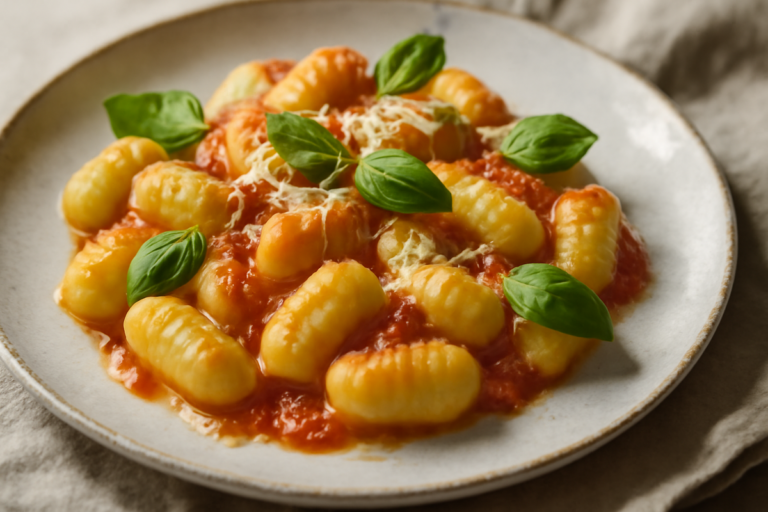
Imagine two dinners: same pasta, same sauce, same number of forkfuls. On a large plate, it looks like a modest, almost shy serving. On a smaller plate, it appears abundant, almost indulgent. Your brain—ancient, literal, and endlessly suggestible—reads those signals and whispers, “This is enough” or “This is not quite enough.”
Scientists have a name for this: the Delboeuf illusion. It’s the same visual trick artists and magicians have played with for generations. When a circle of food is placed inside a bigger circle (your plate), it looks smaller. Place that same circle of food inside a slightly smaller circle and voilà: it suddenly looks larger, more substantial, more satisfying before you’ve even taken a bite.
We think we’re listening to our bodies, but half the time we’re listening to our dishes.
The Secret Life of Plate Size
Modern life has quietly super-sized our dinnerware. Over the last century, the average plate in Western homes has grown by several centimeters in diameter. That doesn’t sound like much, until you realize that a small increase in diameter dramatically increases the surface area—and therefore how much food comfortably “fits” on the plate without looking like a feast.
In many homes, what your grandparents once used as a serving platter has become the everyday dinner plate. Restaurant trends haven’t helped: extra-wide white plates, big blank spaces, small islands of food in the middle framed by empty porcelain. It looks elegant, but it trains the eye to think “more is normal.”
Here’s where it gets interesting: when researchers bring people into a lab and quietly change the size of their plates, people almost always serve themselves more on larger plates, even when they insist they’re just “taking what feels right.” The difference might be 10%, 20%, sometimes more. And the kicker? Most of them don’t notice. They feel just as full on the larger portions as the smaller ones—only they ate more to get there.
Now flip that script. Give someone a slightly smaller plate—not tiny, not toy-like, just a few centimeters smaller—and behavior softens in the opposite direction. People put on less food, eat a bit less, and often leave the table feeling content rather than overfilled. Nothing dramatic. No calorie counting. No mental battle. Just one quiet change to the canvas beneath the meal.
Why Your Eyes Are Louder Than Your Stomach
If you’ve ever felt betrayed by your appetite—“Why did I eat that much?”—you’re not alone. Our internal hunger and fullness signals are surprisingly easy to nudge, especially in a world where visual cues shout louder than our own bodies. Your eyes have learned over years, maybe decades, what a “normal plate” of food looks like. That picture has become your mental template for enough.
When your plate looks sparse, even if the portion is reasonable, your brain often tags it as “not quite there yet.” You may scoop a little extra rice, another spoonful of stew, a few more roasted potatoes, just to reach the image of completeness. But if the plate is smaller, that same portion fills more of the surface, tricking your expectations into leaning back and saying, “Yes, that looks right.”
What’s striking is that this isn’t about discipline or willpower. It’s about design. The size and shape of the plate cue your expectations before your first bite. Once the food is there, the script is partly written.
And yet, design cuts both ways. If a plate can push you toward overeating, it can also quietly guide you back to balance.
So What Is the “Just-Right” Plate Size?
The question sounds oddly specific, the kind of thing you’d expect to find printed on a wellness infographic: “Use this exact plate size to never overeat again.” Reality is a bit softer than that—but patterns do emerge.
Most research and practical experiments converge around similar numbers: for many adults, a dinner plate in the range of about 22–25 centimeters (roughly 9–10 inches) in diameter seems to offer a gentle sweet spot. Large enough that it doesn’t feel like you’re eating from the kids’ table, small enough that “full plate” doesn’t automatically mean “too much.”
Compare that to the 27–30 centimeter (11–12 inch) plates common in many modern sets and restaurants. A modest portion that looks comfortable on a 23 cm plate can look almost apologetic on a 30 cm one, tempting you to “add a little more” here and there.
Of course, we’re not robots. Bodies differ, metabolisms differ, cultural meal styles differ. But if you’ve noticed a pattern of overeating—especially at dinner—and you’re serving your meals on very large plates, downsizing your plate may be one of the simplest environmental tweaks you can make.
To make this more concrete, imagine this small comparison:
| Plate Type | Approx. Diameter | How the Portion Feels Visually |
|---|---|---|
| Modern large dinner plate | 27–30 cm (11–12 in) | Reasonable portions look small; you’re tempted to add more. |
| Moderate dinner plate | 22–25 cm (9–10 in) | Same portions look full and satisfying. |
| Small / side plate | 18–20 cm (7–8 in) | Portions look abundant; best for lighter meals or snacks. |
These numbers aren’t rules, but they give the mind a new reference point. The right plate is often not the biggest one in the cupboard, but the one that lets a thoughtful portion look generous.
The Plate That Fits Your Life, Not Just Your Food
There’s a quiet pleasure in choosing a plate that matches the kind of eater you want to be, not just the amount of storage space in your kitchen. A plate is more than a flat surface; it’s a frame around a moment you repeat three times a day, every day, for years. Change the frame, and you subtly change the story.
If you’re the kind of person who loves variety—little piles of different foods, a scoop of this, a spoonful of that—a moderate plate size still lets you enjoy a full landscape without feeling like you must fill every corner. If you’re someone who eats quickly, almost absentmindedly, a smaller plate can serve as a gentle brake, a visual pause that nudges you to see the moment instead of rushing past it.
Think about your routines: Do you most often overeat at dinner after a long day? That might be the meal where downsizing your plate could have the biggest impact. Do you find weekends are your weak spot? Maybe those lazy brunches and late lunches are where you experiment first.
The plate that prevents overeating is rarely a one-size-fits-all object. It’s the one that fits quietly into your life and helps you feel satisfied with a little less than your “default” would have given you.
How to Quietly Downsize Without Feeling Deprived
Changing plate size may sound laughably simple, but our relationships with food and dishes are emotional, even sentimental. That huge dinner plate might be the one you bought for your first apartment, the set that has seen birthdays and holidays and late-night comfort meals.
So instead of a dramatic swap, think in terms of gentle experiments.
For a week, pick one meal—say, dinner—and serve it on the slightly smaller plates you reserve for lunch or lighter meals. Don’t change what you cook. Don’t weigh or measure. Just plate it as you normally would until it looks right on the smaller plate. Then eat, slowly if you can, noticing how you feel midway through, at the last bite, and half an hour later.
You may find that your body feels no less satisfied than it did with the larger plate. Or you may notice for the first time how automatic second helpings have become. That awareness is powerful: it’s the moment you realize that a lot of your eating habits live outside of hunger.
If a smaller dinner plate still feels like too much of a leap, try this trick: use your large plate as a base, but actually serve your food on a smaller plate or shallow bowl placed on top. You keep the table setting you’re used to while quietly changing the amount of food you see in front of you.
Portions, Colors, and the Illusion of Plenty
Plate size is only one dimension of this visual puzzle. Color and contrast matter too. When there’s high contrast between the food and the plate—say, bright vegetables against a dark plate—it becomes easier for your eyes to gauge how much you’re serving. When the plate and food are similar in color (like creamy pasta on a white plate), you’re more likely to overserve without realizing it.
One simple way to enhance the illusion of abundance without adding more food is to bring more color onto the plate: leafy greens, roasted carrots, red peppers, juicy tomatoes, a sprinkle of herbs. On a modestly sized plate, vivid colors and varying textures make the meal feel rich and generous, even if the portions are gently restrained.
You might think of your plate like a small landscape painting. You’re not aiming to fill an empty field on a giant canvas; you’re choosing a smaller canvas and letting color, texture, and care make it feel complete.
Beyond the Table: What This Small Change Really Does
There is a quiet dignity in eating enough—and enough only. Not punishingly little, not carelessly too much. Just enough to feel present in your body, light enough to move, full enough to feel calm.
When plate size helps you move toward that balance, it touches more than your waistline. It changes how you relate to choice, to attention, to time. You spend a little less of your day negotiating with yourself about what you “should” eat, and a little more simply observing how different environments pull you gently one way or another.
Consider how this extends outward. When children grow up in a home where normal plates are modest, where meals fill those plates comfortably without overflowing, their eyes learn a different default. They inherit a quieter idea of “enough.” Guests at your table feel satisfied, not overwhelmed. Leftovers become intentional instead of accidental.
And beneath all of that, something deeper hums: the feeling that you are no longer in a constant tug-of-war with your own appetite. You’ve placed your hand gently on the scale, not by saying “no” over and over, but by changing the shape of “yes.”
A Small, Daily Act of Self-Respect
There’s a tenderness in noticing what shapes your choices and deciding to shape them back. Picking up a slightly smaller plate isn’t a moral act, a diet plan, or a vow. It’s more like adjusting the lighting in a room so you can see clearly enough to live the way you intended.
Picture this: an evening at home, a simple meal, the weight of the day starting to lift. You open the cupboard and, out of habit, reach for the big, wide plate you’ve used for years. Then you pause. Your hand shifts an inch, finding instead the plate that’s just a bit smaller, a bit more honest. You place it on the table, listening to the soft sound as it meets the wood.
When you sit down to eat, your plate looks full—but you don’t. You feel steady, present, attuned. You take your time. You taste. You stop when the food is gone, not because you emptied a vast white circle, but because your body quietly says, “That was enough.”
In that small decision—the plate you choose—you’ve already tipped the day gently away from overeating and toward balance, without a rule, a restriction, or a single number.
Sometimes, the most powerful changes are not the loud ones. Sometimes, they’re as simple as choosing a plate that tells your body the truth: that what you have is already enough.
Frequently Asked Questions
What plate size is best to help prevent overeating?
For many adults, a dinner plate around 22–25 cm (9–10 inches) in diameter strikes a good balance. It lets reasonable portions look full and satisfying without encouraging “just a bit more” the way very large plates often do.
Will a smaller plate make me feel hungry after meals?
Not necessarily. Many people find they feel just as satisfied with slightly smaller portions when their plate looks visually full. If you eat slowly and pay attention to fullness, your body often adjusts to the new normal without feeling deprived.
Is using a small plate enough to manage my weight?
Plate size is a helpful tool, not a magic fix. It works best alongside other habits like eating mindfully, including plenty of vegetables and whole foods, and noticing emotional eating triggers. But it’s a simple, low-effort change that can gently reduce overeating over time.
Should I use different plate sizes for different meals?
Yes, that can help. Many people use a moderate plate for lunch and dinner, and a smaller plate or bowl for breakfast or snacks. The key is matching the plate to the meal so that what you intend to be “enough” looks abundant on the plate.
Does plate color matter as much as plate size?
Size tends to have a stronger impact, but color plays a role. High contrast between food and plate (like colorful vegetables on a darker plate) can help you better judge portions. When plate and food are similar in color, you may unconsciously overserve.
What if my family prefers large plates?
You don’t have to force a change. You could experiment yourself first, or keep both sizes available and invite others to try the smaller plates as an option. Often, when people see that the smaller plate still looks full, they’re more willing to give it a chance.
Can I still go back for seconds if I use a smaller plate?
Absolutely. The goal is not strict limitation but awareness. Use the smaller plate for your first serving, then pause, check in with how you feel, and only go back for more if you’re genuinely still hungry. Over time, you may notice that second helpings become less automatic.

Hello, I’m Mathew, and I write articles about useful Home Tricks: simple solutions, saving time and useful for every day.