The cooking order that preserves vitamin C
The first sip of broth was a surprise. It tasted brighter than it looked—like someone had managed to trap a slice of afternoon sun in a spoon. Steam curled past my face, carrying the delicate scent of just-cooked vegetables, citrus, and something green and alive. It was winter outside, the kind that leans hard on your windows, but the kitchen felt like a small, warm country where peppers, lemons, and herbs argued cheerfully in the pot. I didn’t know it then, but this bowl of soup was about to teach me something that would quietly change how I cooked forever: the order in which you cook can decide whether your food is simply comforting… or powerfully nourishing.
The Slow Vanishing of an Invisible Nutrient
Vitamin C is a little like a shy guest at a loud party: it shows up with amazing gifts, but it doesn’t stay long if things get too hot, too chaotic, or too drawn-out. You can’t see it, can’t smell it, and you only notice it when it’s gone—through sluggish winter mornings, frequent colds, skin that heals more slowly, or that flat tiredness that clings like fog.
Years ago, I thought eating “healthy” was mostly about what I bought: big bags of bright oranges, green broccoli, piles of spinach, ruby peppers. I assumed that once I’d chosen the right ingredients, the job was done. But vitamin C is notoriously fragile. It’s sensitive to heat, to water, to air, to time—almost as if it were designed to escape the moment we stop paying attention.
It dissolves in water. It breaks down with prolonged heat. It oxidizes when exposed to air. And, in the quiet sabotage we rarely notice, it slips away down the drain with discarded boiling water or overcooked vegetables. Yet this isn’t a story about avoiding cooking—in fact, it’s the opposite. It’s about learning how to cook so that this fleeting little nutrient has the best possible chance to make it all the way from the soil to your plate to your cells.
The Secret is Not Just What You Cook—But When and How
Think of your kitchen as a small ecosystem of choices: when you cut, how you heat, in what order things meet the pan. Most of us pile everything into a pot at once, turn on the stove, and walk away. The result is familiar: soft vegetables, muted colors, and meals that taste “fine” but feel strangely heavy.
But the moment you start asking, “What if order matters?” everything shifts. Imagine two pots of vegetable soup. In one, you toss everything in at the beginning: carrots, potatoes, peppers, greens, herbs, tomatoes. You simmer it for 40 minutes while you wander off to fold laundry or scroll your phone. In the other, you take your time: roots in first, sturdy veg next, fragile foods last—turning the stove off just after the spinach wilts and the lemon juice kisses the surface.
Both pots look like soup. Both steam and smell inviting. But the second one holds more vitamin C—sometimes dramatically more—not because you used better ingredients, but because you respected their thresholds. Vitamin C doesn’t need special gadgets or exotic techniques. It needs a bit of choreography.
The Gentle Science Behind the Cooking Order
Vitamin C lives hugely in foods that feel bright: citrus, bell peppers, broccoli, Brussels sprouts, kale, kiwi, strawberries, tomatoes, fresh herbs, cabbage. Walk through a market and you can almost sense where it’s hiding—the sharp notes, the vivid colors, the crisp textures. But once those foods meet heat and water, the clock begins to tick.
Here’s where order comes into play. In nearly every dish that involves cooking vitamin-C-rich foods, a simple rule can preserve more of it: cook sturdier, lower-vitamin-C ingredients first, then add delicate, vitamin-C-rich ones later, for shorter times and often with gentler methods. It’s like letting the marathon runners start early and calling in the sprinters only for the last hundred meters.
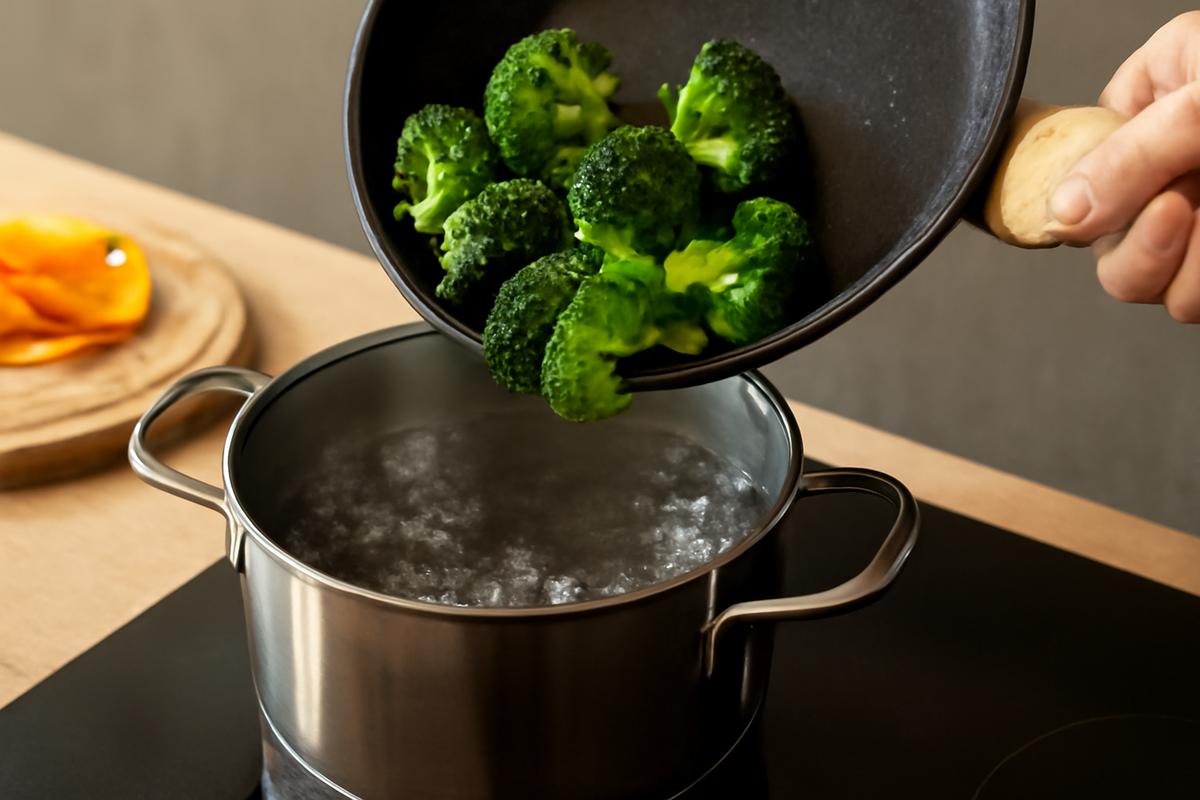
Boiling for long periods is one of vitamin C’s least favorite situations. Steaming is kinder. Stir-frying is quick and respectful. Microwaving, if done briefly with minimal water, can actually be gentler than we imagine. And then there’s the most powerful tool of all: not cooking certain ingredients at all.
Raw additions at the very end—a squeeze of lemon, a handful of chopped parsley, a scattering of diced red pepper, a spoonful of fresh cabbage or radish—can restore brightness and rebuild some of the vitamin C lost in long simmering. The magic isn’t complicated. It’s about deciding who goes into the heat first, who joins later, and who waits until the very end to appear fresh and unchanged on the plate.
| Food | Better Cooking Choice | When to Add |
|---|---|---|
| Bell peppers | Quick stir-fry or brief sauté | Near the end, just until crisp-tender |
| Broccoli | Light steaming | Steam separately, then fold into dishes last |
| Leafy greens (kale, spinach) | Quick wilt in a hot pan or pot | Final minute or two of cooking |
| Cabbage | Raw, lightly sautéed, or briefly steamed | Add toward the end, keep some raw for crunch |
| Citrus juice | Uncooked, added off heat | After turning off the stove, just before serving |
Stoves, Sizzles, and Small Adjustments That Matter
Imagine a simple vegetable stir-fry on a rainy evening. The pan is hot, the oil shimmering like a tiny golden pond. Most people toss everything in at once: onions, carrots, peppers, broccoli, maybe some greens, all landing in the same instant. It’s dramatic. It’s noisy. And it’s a small nutritional tragedy.
Now picture the same dish, but with a quiet, thoughtful order:
- First, the aromatics—onion, garlic, ginger—hitting the oil when the pan is ready, filling the air with that unmistakable scent of “something good is coming.” These don’t bring much vitamin C, but they build flavor.
- Next, the sturdy vegetables: carrot coins, sliced green beans, maybe cauliflower. They’ll take longer to soften, and they aren’t the main vitamin C carriers, so they can afford more time on the heat.
- Then, the stars: strips of red and yellow bell pepper, bright broccoli florets. They join later, so they get just enough heat to turn vivid green and glassy-bright, but not enough to lose their bite—or their vitamin C.
- Last, a handful of thinly sliced cabbage or spinach, tossed in for mere seconds, wilting in the residual heat like leaves meeting afternoon sun.
- After the stove is off, a squeeze of lime or lemon, maybe some chopped fresh parsley or cilantro falling in cool and fragrant at the very end.
The dish takes the same amount of clock time, yet nutritionally it’s an entirely different story. Crisp-tender is not just a texture—it’s a compromise between flavor, pleasure, and vitamin preservation. That slight crunch under your teeth is the sound of vitamin C surviving.
Water is another quiet culprit. Boiling vegetables in a big pot of water and then pouring that water down the sink is like sending some of your nutrients on a fast train out of your life. If you must boil, use as little water as you can, keep cooking time short, and whenever possible use the cooking liquid—turn it into broth, sauce, or part of another dish. Whenever you choose steaming, stir-frying, roasting, or microwaving with just a spoonful of water, you’re giving vitamin C a longer life in your food.
The Art of the Late Addition
In soups and stews, order is even more critical because the cooking time stretches like a lazy afternoon. Root vegetables—the earthy, slow crowd like potatoes, carrots, parsnips—can simmer for ages and not lose much. But the leafy, tender, colorful ones lose vitamin C quickly. So you invite them in late.
Picture a big pot of vegetable soup. You start with onions and garlic. You add your roots and dried beans. You let them relax and soften, simmering quietly. Only when they’re almost done do you call in the broccoli florets, the sliced bell peppers, the shredded cabbage. Spinach? That’s a near-final whisper. It goes in, turns silky, and before it has a chance to fade, the heat goes off.
The very last thing—a squeeze of lemon, a handful of tomatoes, or a scatter of fresh herbs—goes on when the pot is no longer roaring but only murmuring. The soup suddenly shifts from “fine” to “alive.” That brightness isn’t just flavor. It’s chemistry.
Salads, Raw Edges, and the Power of Half-and-Half
Of course, you don’t have to cook everything. Some of the most powerful vitamin C moments live in raw corners of your plate. A salad of shredded cabbage with carrot ribbons, lime, and a pinch of salt. A few slices of raw red pepper on the side of a hot dish. A spoonful of fresh salsa spooned over grilled fish or beans. These aren’t decorative; they’re deliberate.
There’s a beautiful balance available: half-cooked, half-raw. You might roast a tray of vegetables until their edges caramelize and sweeten, but then toss them with raw spinach and a lemony dressing right before serving. Or you simmer lentils in a spiced broth and crown them with a raw tomato-cucumber-pepper mix just before they hit the table.
Half-and-half eating is not about purity—it’s about layers. A warm base that comforts. A cool top that refreshes and restores some of what cooking took away. On the plate, it looks like contrast; in the body, it feels like generosity.
Your Kitchen as a Small Vitamin Lab
When you stand at the cutting board, you’re quietly doing little experiments, whether you realize it or not. A slice held under running water, a vegetable left out on the counter for half an hour before cooking, herbs chopped long before they’re needed. None of this is dramatic, but together it starts to matter.
Vitamin C begins to degrade the moment plant cells are damaged and exposed to air, so chopping and then letting food sit around for a long time isn’t ideal. Better to cut what you need close to cooking or eating. Rinsing is good, but long soaking can leach out water-soluble nutrients. Storing cut fruits and vegetables tightly covered in the fridge slows the damage, but doesn’t halt it completely. It’s like pressing pause instead of stop.
If this sounds fussy, think of it more as attentiveness. You don’t have to be perfect. You just need to nudge your habits.
- Chop just before cooking when you can.
- Use minimal water for washing and cooking.
- Cover pots when steaming or boiling to reduce exposure to air and excess heat.
- Serve soon after cooking, while the food is still fresh and bright.
Over time, these become second nature. You’re no longer “trying to preserve vitamin C.” You’re simply cooking in a way that respects what the food is giving you.
One Day, Three Meals, Many Quiet Choices
Imagine a day built around this kind of gentle awareness. Morning light spills onto the counter as you halve a grapefruit or peel an orange, eating it fresh and unheated, the juice running down your fingers. Maybe you add a handful of berries to your bowl, or tuck a few slices of kiwi beside your toast. That’s vitamin C arriving unchallenged, straight from fruit to you.
At lunch, a warm bean stew meets a sharp, cool slaw—shredded cabbage, carrot, parsley, and lemon. The stew has been simmered slowly, but the slaw is raw and bright, a cold ribbon on top of a hot base. You’ve just built a plate where some nutrients like the heat, and others wait until the last second to join.
Dinner might be a tray of roasted roots—potatoes, carrots, onions—caramelizing in the oven while you stand at the stove. In a separate pan, you quickly toss broccoli and bell pepper in a little oil, adding a spoonful of water and covering it just long enough for steam to rise and colors to intensify. Off the heat, you add lemon zest and a squeeze of juice. You serve the roasted tray with the quick-sautéed greens and peppers piled on top. It feels rustic and simple. Yet in the invisible ledger of nutrients, that cooking order has made all the difference.
None of this is flashy. There are no special supplements, no expensive powders, no extreme methods. Just an ordinary stove, some familiar vegetables, and the choice to let certain things meet the heat later, for less time, and sometimes not at all.
Preserving Vitamin C Without Losing the Joy of Cooking
It’s tempting, when we learn about a delicate nutrient, to become rigid or fearful: to avoid heat, to see every minute of simmering as a loss, to chase perfection. But food is more than its vitamin content. Warmth matters. Comfort matters. The slow bubbling of a pot on a winter afternoon, the smell of roasted vegetables spilling from the oven—that nourishment is real, even if some vitamin C escapes in the process.
The point is not to protect every last milligram. It’s to cook in a way that lets your food keep more of what it already has, without losing the pleasure of the meal. That comes down to rhythm and order, not obsession.
- Start with tougher, less fragile ingredients that can handle long heat.
- Bring in vitamin-C-rich vegetables and greens toward the middle or end.
- Finish with raw elements—herbs, citrus, crunchy vegetables—off the heat.
- Use cooking methods that are quick, gentle, and water-wise whenever you can.
Over time, you’ll find your hand reaching for citrus only after the burner is turned off. You’ll delay the spinach until the soup is practically done. You’ll steam broccoli instead of boiling it, or at least save the cooking water for tomorrow’s broth. These small gestures, repeated over days and weeks and seasons, write themselves into your body as sturdier immune responses, better wound healing, and a subtle, steady energy.
In that winter kitchen years ago, I learned this without knowing its science. The cook who handed me that bright bowl of soup didn’t say a word about vitamin C. I only noticed the way she worked: roots down first, the pot murmuring for a long time, then—only near the end—an armful of chopped greens, a quick stir of red pepper, and finally, when she turned off the heat, a squeeze of lemon and a handful of herbs. The broth shimmered. The vegetables glowed, not collapsed. When I tasted it, I felt that same quiet brightness I only later learned how to name.
Since then, every time I stand by a stove and decide who goes in first and who waits for the final moment, it feels like a small act of care. Not just for the food, but for the person who will eat it. Maybe that’s you, standing now in your own kitchen, knife in hand, pan warming on the burner. Somewhere between the sizzle and the simmer, there’s a way to keep the invisible intact—to let vitamin C survive the journey from earth to plate to you. All it asks is a little attention to order.
Frequently Asked Questions
Does cooking always destroy vitamin C?
No. Cooking reduces vitamin C, but it doesn’t usually erase it completely. Short cooking times, minimal water, and gentler methods like steaming or quick stir-frying can preserve a good portion. Adding some foods raw at the end of cooking is an easy way to keep more vitamin C in your meals.
What is the best way to cook vegetables to keep vitamin C?
Steaming, stir-frying, and microwaving with very little water tend to preserve more vitamin C than long boiling. Whatever method you choose, cook for the shortest time needed and avoid discarding cooking water whenever you can—use it in soups or sauces instead.
When should I add lemon or lime juice to hot dishes?
Add citrus juice at the very end of cooking, ideally after turning off the heat. High heat and long simmering break down vitamin C, so using citrus as a finishing touch keeps more of it alive while also adding fresh flavor.
Are frozen vegetables still good sources of vitamin C?
Yes. Frozen vegetables are usually processed soon after harvest, which helps lock in nutrients, including vitamin C. The key is how you cook them: steam or stir-fry from frozen, avoid overcooking, and skip long boiling when possible.
Do I need to eat everything raw to get enough vitamin C?
No. A mix of raw and cooked foods works well. Raw fruits and some vegetables give you vitamin C untouched by heat, while cooked foods offer other benefits—better digestion of some nutrients and rich flavors. The cooking order, gentle methods, and adding fresh elements at the end help you enjoy both worlds.

Hello, I’m Mathew, and I write articles about useful Home Tricks: simple solutions, saving time and useful for every day.