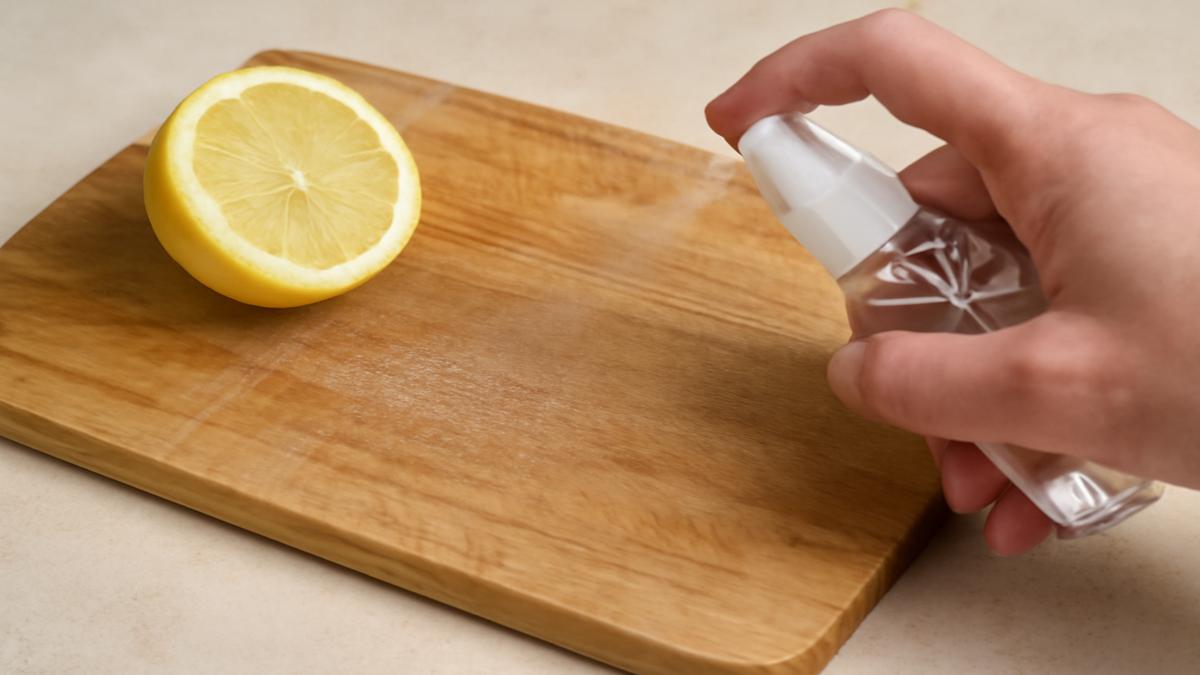
The board looks harmless enough, lying there in the pool of afternoon light. A few pale scars from last night’s onions; a faint, ghostly ring where a tomato once bled out; the clean, sharp smell of wood or plastic, depending on your kitchen loyalties. You rinse it under the tap, drag a lemon half across its surface—because that’s what you’ve always heard, right? Lemon cleans. Lemon disinfects. Lemon is nature’s bleach. You watch the juice bead and run, feel oddly virtuous, and leave the board propped beside the sink to dry.
If you listen closely, you can almost hear them laughing.
Invisible little communities of bacteria linger in the knife grooves and fibers, clinging to the surface with a stubbornness that would impress you if it weren’t so unsettling. They don’t care about your lemony good intentions. They care about survival—and your citrus ritual, as bright and wholesome as it feels, barely fazes them.
In kitchens all over the world, people are lovingly polishing their cutting boards with sliced lemons and Instagram-worthy sprinkles of salt, confident they’re doing something clean and natural. But there’s a quieter, less photogenic hero in this story, one that doesn’t come with a pretty yellow rind or a Pinterest-ready aesthetic. And it’s roughly 300% better at killing the bacteria that lemon leaves behind.
The Mythic Power of Lemon (and Why We Fell for It)
It’s easy to understand why lemon got crowned the unofficial queen of “natural cleaning.” Slice into one and your whole kitchen brightens. The air turns sharp and sunny. Lemon smells like fresh starts, like windows flung open and countertops cleared of crumbs and chaos. It cuts through grease, lifts stains, and makes everything feel clean.
There’s also the marketing story we’ve been sold for decades: lemon-scented dish soaps, lemon floor cleaners, lemon-scented everything, each one signaling purity and hygiene. Somewhere along the way, the leap happened—if lemon scent equals clean, then surely real lemon must be the ultimate cleaner. It’s a small, seductive step from there to rubbing lemon onto a cutting board and imagining we’ve just scrubbed away every trace of raw chicken and week-old garlic.
There is a sliver of truth. Lemon juice is acidic—usually with a pH around 2. It can slow down some bacterial growth and help loosen grime. It can lift odors and break up fats. But that’s where the story starts to fray. What lemon doesn’t do, despite all our faith in it, is consistently kill enough bacteria on a well-used cutting board to make it truly safe.
Those knife marks you see in the right angle of late-day light? They’re not just scars. They’re micro-canyons. Lemon juice runs over the top, but down where it matters—where moisture and microscopic bits of food linger—its reach is limited. Bacteria settle into the grooves like tenants in rent-controlled apartments, barely disturbed by that quick citrus swipe.
The 300% Difference: What Actually Works on Cutting Boards
Here’s where the romance ends and the quiet, unglamorous science begins. Repeated lab tests on common household disinfectants have found something striking: when it comes to cutting boards, certain simple, accessible solutions can kill roughly three times more bacteria than your best lemon-salt scrub.
They don’t smell like a summer in Sicily. They don’t photograph well. But they work.
| Method | How It Feels | Approximate Relative Germ-Killing Power* |
|---|---|---|
| Rubbing with lemon + salt | Smells fresh, looks “natural,” satisfying to do | Baseline (1×) |
| White vinegar soak or spray | Sharp smell, feels old-fashioned and simple | About 2× lemon in many cases |
| Diluted bleach solution (food-safe ratio) | Clinical, no-frills, purely functional | Up to ~3× or more lemon’s effectiveness |
*Relative power is a simplified comparison based on typical lab findings; real-world results vary with contact time, concentration, board material, and how dirty the surface is.
The quietly dramatic part? You don’t need anything exotic or high-tech. Chances are what you need is already sitting under your sink—or could be, for just a few dollars and about thirty seconds of effort.
The Simple Solution Lurking Under Your Sink
Picture your cutting board right after you’ve been trimming raw chicken. A little pool of pale, glossy juices has gathered in the center, and you’ve wiped it away with a sponge that—if you’re honest—should probably have been retired last month. The board looks clean, but you know better than to trust appearances.
This is where a diluted bleach solution, used correctly and sparingly, becomes something like a force field. A tiny amount of unscented, plain household bleach mixed with cool water—often around 1 tablespoon per gallon for food-contact surfaces—is enough to knock down bacterial populations to levels lemon simply can’t touch.
It doesn’t foam or fizz. It doesn’t smell like a citrus grove. But given a minute or two of contact, then a thorough rinse and air dry, it gets into those knife scars and microscopic hollows and ends the party your lemon barely interrupted.
If the word “bleach” makes your shoulders tense, you’re not alone. Many people feel uneasy bringing something with warning labels into the same space where they make dinner. But context matters. Used in a heavily diluted, food-safe way and rinsed well, that humble solution becomes less of a villain and more of a seatbelt: not glamorous, not romantic, but quietly lifesaving.
The Hidden Landscape of Your Cutting Board
Run your fingertips over your favorite board. Feel the slight ridges, the fine crosshatch of cuts, the places where your knife lands every single day. To the naked eye, it’s a used but solid surface. To a bacterium, it’s an elaborate topographical map of shelter and opportunity.
Moisture pools in those micro-grooves. Tiny particles of meat and vegetable get wedged in. Add warmth and time, and you’ve laid out a buffet. Every time you slice something new—an apple for a child, herbs for a salad—you’re dragging those knife edges through a living history of your last several meals.
Now imagine the difference between a dab of lemon juice running across the peaks of that landscape, versus a true disinfectant soaking into the valleys. Lemon is like a light rain on a mountain range: refreshing, cleansing at the surface, but not necessarily altering the geology beneath. Bleach or a stronger disinfecting solution is more like a flood; it reaches deeper, pushing into low places where stubborn residents have been lounging comfortably for days.
This is why you’ll sometimes hear unsettling statistics about bacteria on cutting boards, particularly plastic ones: once the grooves are deep and numerous, even dishwashers can struggle. That doesn’t mean your board is doomed, but it does mean the “nice idea” of cleaning (like lemon wiping) isn’t enough. The stakes are higher than we tend to admit, especially in homes with kids, older adults, pregnant people, or anyone whose immune system is fragile.
The Day the Lemon Ritual Broke
Imagine a small kitchen, late evening. A friend of yours—let’s call her Lena—has always done things “the natural way.” She buys wooden boards, avoids harsh cleaners, and swears by her lemon-and-salt ritual. Her kitchen smells like citrus and toasted bread most days, and no one has ever gotten seriously sick from her food, as far as she knows.
One winter, her niece comes to stay—a whirlwind of crayons and mismatched socks. They make sandwiches and fruit together on the same well-loved board, slices of pear fanned out like pale petals. A few days later, the niece ends up with a wrenching stomach bug. The family writes it off as “something going around” until Lena, in a late-night spiral of worry and research, starts to look up foodborne bacteria.
She learns that pathogens don’t care how gentle your intentions are. She crawls through credible sources, realizing that her lemon could be helping with smells and maybe superficial grime but not doing the deep, germ-killing work she imagined. It hits her quietly: all those years, all that ritual—and the board may never have been truly safe after raw chicken, after ground beef, after sticky packages of supermarket fish.
The next day, she buys a small bottle of unscented bleach, feeling a bit like she’s trading poetry for prose. But the first time she sanitizes that board properly—washes with soap, rinses, then wipes with her diluted solution and lets it sit—she feels something she hadn’t associated with lemon in a long time.
Relief.
When “Natural” Isn’t the Same as “Safe”
There’s a deep, understandable human desire to live in harmony with the natural world, to avoid harsh chemicals, to keep our homes gentle and breathable. But “natural” is a slippery word when it comes to microscopic life.
Bacteria are as natural as lemons. So are salmonella, E. coli, and other pathogens that can turn an ordinary dinner into a dangerous event. The mold creeping along the forgotten cheese in your fridge? Natural. The toxins some bacteria excrete when given time and warmth? Natural too. Nature doesn’t rank things as safe or unsafe for humans. It just exists, relentlessly.
We sometimes mistake “pleasant” for “effective.” The fresh scent of lemon fools us into believing something fundamental has shifted. It has—our mood, our senses. But not always the invisible world that matters most on a cutting board where raw protein once lay.
A diluted bleach solution is not charming. Vinegar, used properly, is only slightly more poetic. But they have one crucial advantage in this story: they’ve been measured. Tested. Quantified. Given numbers in petri dishes that tell us, plainly, how much life they strip away from a contaminated surface.
In those quiet lab reports, we find that familiar line over and over: lemon, even in generous quantities, simply doesn’t compete. It’s not that it does nothing—it can reduce some bacteria—but compared to stronger, well-documented disinfectants, it’s underpowered. Sometimes by a factor big enough to mean the difference between a safe meal and a sick household.
Finding a New Ritual That Actually Protects You
Abandoning lemon on your cutting board doesn’t mean abandoning ritual. It means reshaping it into something both beautiful and honest.
Picture this revised sequence after making dinner:
- You scrape food scraps into the compost or trash, noticing the texture of the board under your hand.
- You wash the board with hot water and a little dish soap, taking an extra moment with the spots where you know the knife lands hardest.
- You rinse and then either run it through the dishwasher (if it’s plastic and labeled dishwasher-safe) or, for wood or plastic, swipe it with your chosen disinfectant: a properly diluted bleach solution, a proven food-safe sanitizer, or a high-heat treatment if your material allows it.
- You let it air dry fully, upright, giving the last traces of moisture nowhere to hide.
Later, if you miss the scent of lemon, you can bring it back—just in a role that fits its strengths. Use it to deodorize, to lift stains, to clean surfaces that don’t touch raw meat, like your wooden dining table or a stained countertop. Let lemon be what it truly is: a bright, sensory joy, a helper with certain kinds of messes, but not the silent guardian between your family and foodborne illness.
There’s a quiet kind of courage in changing course like this. It’s an admission that the stories we’ve been handed—about what’s “clean,” about what’s “chemical-free,” about what’s “traditional”—are sometimes incomplete. It’s a decision to protect the people in your home with tools that work, even if they’re not camera-ready, even if they don’t smell like sunshine.
Let the Lemon Go (At Least Here)
The next time you reach for that lemon half and feel the familiar tug of habit, pause for a breath. Picture the hidden landscape of your cutting board, the bacterial villages clinging to its grooves. Think about what you actually want in that moment: not just a fresh smell, but real safety.
Then, just once, try it differently. Mix the little bit of disinfectant. Give it the minute of contact time. Rinse, dry, and feel the subtle shift in your kitchen’s story. You haven’t betrayed nature. You’ve remembered that you and your loved ones are a part of it—and that sometimes, thriving here means choosing the solution that works, even when it doesn’t come in a bright yellow rind.
The lemon will still be there for you: in your tea, on your fish, in a glass of water on a hot day. Let it shine where it truly belongs. But on your cutting board, where invisible stakes run higher than most of us like to admit, let something quieter, stronger, and about 300% more effective take the lead.
FAQ
Is it ever okay to use lemon on a cutting board?
Yes, but think of lemon as a deodorizer and light cleaner, not a primary disinfectant. It’s fine for removing odors, lifting stains, or giving a board a fresh scent—just don’t rely on it after raw meat, poultry, or seafood.
What’s the safest way to disinfect a plastic cutting board?
First wash with hot water and dish soap, then either run it through a hot dishwasher cycle if it’s labeled dishwasher-safe, or apply a diluted bleach solution, let it sit for about a minute, rinse thoroughly, and air dry upright.
How should I sanitize a wooden cutting board?
Wash with mild dish soap and hot water, rinse, then wipe or spray with a properly diluted disinfectant that’s safe for wood. Let it sit briefly, wipe or rinse if recommended, and air dry completely. Oil the board periodically to prevent cracking.
Is bleach really safe to use where I prepare food?
In the correct dilution and when thoroughly rinsed off, yes. Food-surface-safe bleach ratios are very low. Always follow label instructions, avoid mixing bleach with other cleaners, and rinse your board well afterward.
Can vinegar replace bleach on cutting boards?
Vinegar is more effective than lemon and can reduce many bacteria, but it’s still not as powerful as properly diluted bleach or certified sanitizers, especially after raw meat. It’s a helpful option for everyday freshening, but not the strongest choice for high-risk contamination.

Hello, I’m Mathew, and I write articles about useful Home Tricks: simple solutions, saving time and useful for every day.