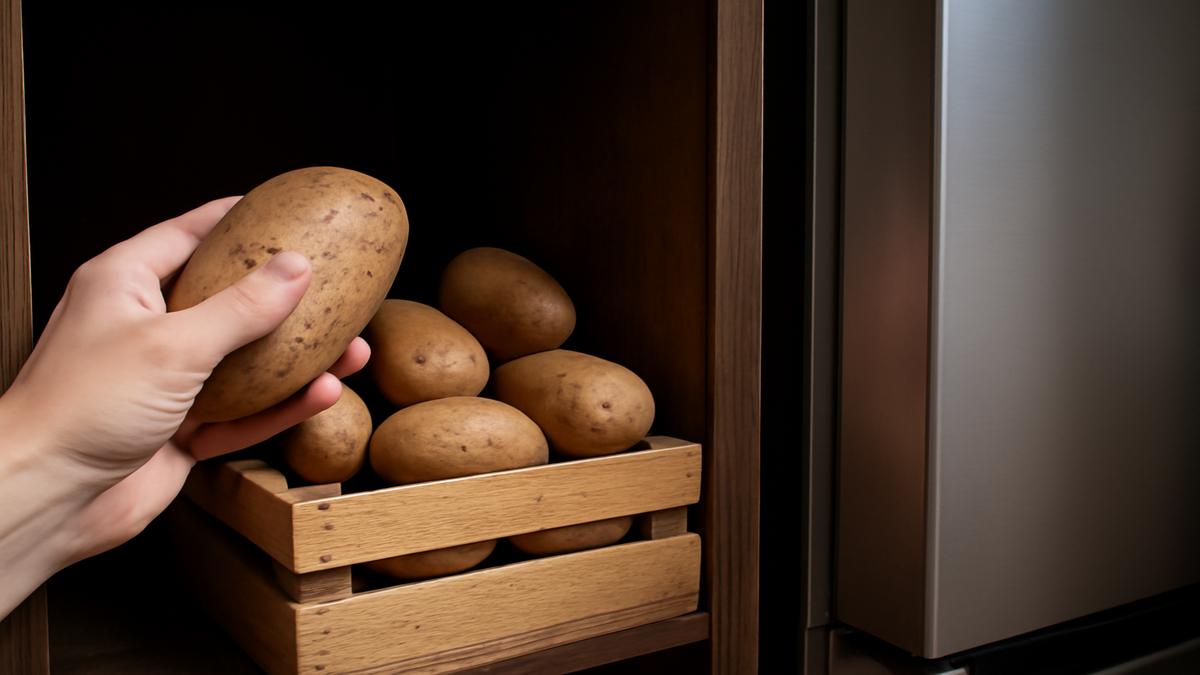
The first time I watched an old farmer store potatoes, I thought he’d lost his mind. It was late autumn, the kind of evening that smells of damp leaves and woodsmoke, and he was in a dim stone pantry at the back of his farmhouse. No bright kitchen lights, no humming refrigerator. Just a cool, quiet room that felt like it had stepped out of another century. He stooped, set down a burlap sack, and with a rough, careful tenderness, began tucking potatoes into a wooden crate as if putting them to bed.
“Not in the fridge?” I asked, hugging my jacket tighter. The air in there was several degrees cooler than the hallway.
He snorted. “That’s the fastest way to ruin them. Potatoes don’t like the cold like that. They’re more like us than you think — they want a winter, not a deep freeze.” He nodded toward the darkest corner of the pantry. “Back there. That’s where they’ll last till spring, easy.”
At the time, I didn’t fully believe him. I had grown up in a world where the refrigerator seemed like a magic box that made everything last longer. Milk, berries, half-eaten dinners, salad greens. Why not potatoes? But over the years — and a few bagfuls of sprouted, sweet, and oddly textured spuds — I discovered he was right. The cold, bright fridge is almost the worst place you can store a potato. The quiet, dark cupboard you’ve been ignoring might be the best.
Why Your Fridge Is Slowly Ruining Your Potatoes
Pull open your fridge door, and you’re hit with a wave of cold air, a glare of white light, and the faint mingled scents of last night’s leftovers. It’s a place of extremes: bright, cold, dry, and constantly disturbed. To a potato, this is chaos.
A potato is not just a “vegetable” in the way we think of it — it’s a living, breathing storage organ, a little underground battery full of energy the plant is saving for the future. Inside, it’s mostly complex starches, water, and a whole orchestra of enzymes and cells quietly ticking along, waiting for the right moment to grow.
When you slide that bag of potatoes into the fridge, two problematic things happen:
- Cold temperatures start converting starch into sugar. Below about 7–8°C (44–46°F), potatoes get stressed. The starches they’ve stored for the plant’s future begin breaking down into simple sugars. That’s why fridge-kept potatoes start to taste oddly sweet and cook differently — they brown too fast, sometimes turning dark when fried or roasted.
- The fridge wakes up their defenses in strange ways. The cold alone won’t kill a potato; it pushes it into a kind of confused survival mode. Over time, the altered chemistry means richer levels of certain compounds can develop or become more noticeable, including ones you don’t want in high levels.
The result: potatoes from the fridge might look fine at first glance, but cut into one and you may notice glassy patches, a too-sweet aroma, or a tendency to char quickly when cooked. They feel tired, as if you’ve taken a creature that evolved for cool earth and thrown it into an artificial winter without darkness, stillness, or rest.
The Dark Cupboard That Triples Their Lifespan
Walk away from the kitchen gadgets, past the polished counters and buzzing machines, and open that old-fashioned cupboard you barely use — the one that smells faintly of spices and wood. Inside, there’s something most homes still have but don’t always appreciate: a still, cool, dark place. To a potato, that’s home.
Potatoes were born underground. In the high Andes where wild potatoes first grew, they nestled in cool, dim soil, shielded from sunlight and temperature swings. Their ideal storage environment copies that hidden world as closely as a modern kitchen can manage:
- Cool, not cold: Around 7–10°C (45–50°F) is perfect — cellar cool, not refrigerator cold.
- Darkness: Potatoes respond to light by turning green and producing bitter compounds near the surface. A dark space keeps them calm and dormant.
- Gentle humidity: Too dry, and they shrivel. Too damp, and they rot. A cupboard or pantry that only feels faintly cool and dry is often just right.
- Stillness: No constant door opening, no shifting temperatures every hour — just quiet, consistent conditions.
Under these conditions, a humble potato can last not just for a week or two, but for months. Compared to a bright kitchen counter where they sprout in days, or a cold fridge where their chemistry warps, a good dark cupboard can often triple their usable lifespan. A bag that would go soft and green in three weeks might still be firm and clean after two months, sometimes longer.
If you’ve ever discovered a forgotten crate of potatoes in a cool basement in midwinter, still firm and earthy, you’ve seen this quiet miracle of dormancy at work. They are not dead; they’re sleeping, waiting.
How to Set Up the Perfect Potato Corner at Home
You don’t need a stone cellar or a fancy root-storage system. With a little attention, many homes already have one perfect spot waiting to be claimed.
1. Find the Right Spot
Look around your home for a place with these qualities:
- Dark: No direct sunlight, minimal ambient light. A closed cupboard, pantry, or under-stairs closet works well.
- Cool: Away from oven heat, dishwasher vents, and radiators. Against an exterior wall and low to the floor is often cooler.
- Dry but not bone-dry: No visible condensation, no musty damp. If the air feels heavy and wet, choose another place.
Common candidates that often work beautifully:
- Lower cupboard in the kitchen away from the stove
- Pantry or larder, especially on the coolest wall
- Dark corner of a hallway cupboard
2. Choose the Right Container
Potatoes are alive; they need to breathe. The container you choose will make a visible difference in how long they last.
| Container Type | Pros | Cons |
|---|---|---|
| Paper bag | Breathable, blocks light, easy to store | Can tear if damp or overfilled |
| Burlap sack | Traditional, breathable, durable | Lets in some light; best kept in full darkness |
| Wooden crate or box | Excellent airflow, stackable, long-lasting | Takes more space; must be kept in a dark area |
| Plastic bag (unperforated) | None for long-term storage | Traps moisture, promotes rot and sprouting |
The rule of thumb: let air in, keep light out. If your potatoes come in a plastic bag, slit it wide open or transfer them to a paper bag or breathable container as soon as you get home.
3. Keep Them Away from “Troublemaker” Produce
Fruits like apples, pears, and bananas release ethylene gas as they ripen — an invisible signal that can nudge potatoes out of their calm dormancy and into sprouting mode. In the quiet of your cupboard, that gas can accumulate, and suddenly your nicely stored potatoes wake up and start sending out pale, searching shoots.
Store potatoes separately from:
- Apples
- Bananas
- Pears
- Avocados
- Onions (which can also share moisture and odor)
Give your potatoes a little personal space, and they’ll reward you with many more weeks of firm, earthy goodness.
Seeing Potatoes as Living Things, Not Just Ingredients
There is something quietly humbling about realizing your pantry isn’t a static shelf of items, but a room full of living systems slowing down, resting, transforming. Potatoes make this especially clear.
Leave a potato on a bright windowsill and you’ll witness its panic: skin turning green, shoots pushing out, the tuber shriveling as it tries to grow a new plant out of nothing. It’s not “going bad” as much as it’s desperately trying to live, wrong place, wrong time.
In a dark cupboard, though, it does what its ancestors in the soil did: it waits. The starch stays starch. The skin stays pale and quiet. Time slows almost to a halt.
Understanding this changes how you move in your kitchen. You don’t just shove a bag of potatoes on top of the fridge or into a harshly lit shelf. You choose a spot with intention, aware that you’re deciding how these living things will experience their last weeks before they become part of your dinner.
And there’s something respectful in that — a small reconnection with the rhythms of the earth, even if you buy your potatoes in a fluorescent-lit supermarket instead of digging them from your own backyard.
How to Tell When a Potato Has Gone Too Far
Even in the best cupboard, potatoes have their limits. Time, temperature, and the invisible chemistry of life all move forward. But stored well, they move more slowly, giving you plenty of warning signs along the way.
When you reach into your dark corner for a handful of potatoes, take a second to feel and look:
- Slight sprouting: Short, pale sprouts are not inherently dangerous. You can snap them off and peel the potato, especially if it’s still firm. But they do mean you’re nearing the end of its prime.
- Wrinkling and softness: A potato that feels like a partially deflated balloon has lost much of its moisture. It’s still technically edible if there’s no rot, but the texture and flavor suffer.
- Green patches: Light exposure triggers chlorophyll (green color) and higher levels of natural defensive compounds near the surface. Trim these green areas generously, or discard the potato if much of it is green.
- Dark, mushy spots or bad smell: That’s your hard stop. If a potato smells off, feels slimy, or has black rot inside when cut, it’s compost material, not food.
A quick weekly check of your potato stash — lifting the bag, feeling for softness, sniffing for any sourness — is the difference between a tidy, long-lived store and a forgotten, smelly disaster. The beauty of a good cupboard is that problems spread more slowly than in sealed, humid plastic or an overpacked fridge.
Cooking the Difference: Cupboard vs. Fridge Potatoes
You can taste proper storage. Put a fridge-kept potato and a well-stored cupboard potato side by side in the pan, and they tell radically different stories.
The cupboard potato, stored in darkness and calm, usually behaves just the way recipes expect: it browns at a normal pace, its interior turns fluffy and tender, and the flavor is rounded, earthy, comforting. Mashed, it breaks down smoothly. Roasted, it crisps on the outside without burning in seconds. Fried, it gives you golden edges, not bitter, over-browned patches.
The fridge potato, on the other hand, often betrays its cold upbringing. It may:
- Brown too quickly when fried or roasted, thanks to those extra sugars
- Taste oddly sweet or slightly off, especially in simple dishes
- Have an uneven, sometimes slightly gummy texture
In comfort foods where potatoes are the quiet heart — a simple potato soup, a tray of roast potatoes with rosemary and garlic, buttery mash alongside a stew — that difference is striking. The better you treat your potatoes before cooking, the less you need to hide them under heavy seasoning or complicated techniques. Good storage is like giving the ingredient enough rest to show up fully for the meal.
Bringing Back the Old Ways in a Modern Kitchen
Somewhere along the line, many of us decided that the refrigerator was the only safe harbor for food — a cold, humming insurance policy against waste. But the old farmer in his stone pantry knew something we’re slowly remembering: not everything thrives in that sterile chill.
Potatoes are a small but vivid reminder that our kitchens once worked in close conversation with the seasons and the structure of our homes. There were cellars and larders, cool corners and wooden crates, little ecosystems tuned to the slow rhythms of stored roots and fruits. When you choose a dark cupboard for your potatoes instead of the fridge, you’re not just optimizing shelf life; you’re quietly reviving that older, slower wisdom.
It starts with one simple habit: when you come back from the market, don’t toss potatoes in the fridge by default. Pause. Find the quietest spot in your kitchen, the one that feels a bit like a shadowy burrow. Slip them into a paper bag or wooden box. Let them rest there, undisturbed, and notice how much longer they stay firm and generous.
Weeks later, when you reach in and find them still smooth, still dense under your fingers, you’ll feel the difference — a tiny victory against waste, against hurry, and in favor of that gentle old truth: some things just want the dark.
FAQ
Can I ever store potatoes in the fridge?
It’s best to avoid it. Very short-term storage in the fridge won’t instantly ruin them, but the colder temperature quickly encourages starch-to-sugar conversion. If you have no other option, use fridge-kept potatoes in dishes where browning and texture matter less, like thick stews or blended soups.
How long can potatoes last in a dark cupboard?
In a cool, dark, well-ventilated cupboard, many potatoes stay in good condition for 4–8 weeks, sometimes longer. Compared to a warm countertop or badly ventilated space, that’s often at least double or triple the usable time.
Is it safe to eat sprouted potatoes?
Small sprouts on otherwise firm, unwrinkled potatoes can be removed, and the potato peeled before cooking. If the potato is heavily sprouted, wrinkled, soft, or has a lot of green, it’s safer and more pleasant to discard it.
Why do potatoes turn green, and can I just cut it off?
Green patches appear when potatoes are exposed to light; they’re areas of chlorophyll and often higher levels of natural bitter compounds. If the green area is small, trim it off generously. If much of the potato is green, it’s better not to eat it.
Should I wash potatoes before storing them?
No. Store potatoes dry and unwashed. Moisture on the surface encourages mold and rot. Brush off loose soil gently, store them in a breathable, dark container, and wash them only just before cooking.

Hello, I’m Mathew, and I write articles about useful Home Tricks: simple solutions, saving time and useful for every day.