The sponge in your sink has a secret life. You can smell it before you see it—that faint swampy tang that hits you when you lean over the dishes. Soft once, now a little rubbery at the edges. Yellow fading to something that looks like old hay. You pick it up, give it a cautious squeeze, and instantly regret it. There it is. That sour kitchen-blob smell that whispers: “Throw me away.” And most of us do. Over and over. Week after week, month after month, we quietly feed landfills with these little rectangles of foam and fiber without thinking twice.
The Day My Sponge Turned on Me
It started, for me, on a gray Tuesday in late autumn. The sky outside my kitchen window was the color of dishwater. A pot of lentils simmered on the stove, ticking softly, while a podcast mumbled in the background. The sink was heaped with plates streaked with tomato sauce, forks welded with cheese, and a pan that looked like it had survived a small explosion. I reached for my sponge—the same sponge I’d bought maybe… two weeks ago? Three?
As soon as my fingers closed around it, the smell rose up, damp and metallic and sour, like a forgotten cloth in a humid tent. I froze halfway between sink and nose. Somewhere in the back of my mind, a line I’d once read surfaced: “Kitchen sponges can harbor more bacteria than your toilet seat.” I remember laughing at that when I first heard it, but there in my hand was Exhibit A, smelling like a science experiment gone wrong.
I did what most people do. I rinsed it. I squeezed it. I poured a little dish soap directly into its pores and mashed it around under hot water, watching suds bloom and then vanish. It helped, a little. But the smell clung. The sponge had crossed that invisible line between “trusted sidekick” and “suspect biohazard.” So I tossed it into the trash, peeled a fresh one from the pack, and got on with my life.
Later that week, staring at an almost-empty roll of trash bags and an overflowing recycling bin, some quiet irritation bubbled up. Why are these things so disposable? Why does this tiny square of foam live only long enough to turn disgusting, then disappear into the landfill with a shrug? It felt both wasteful and weirdly avoidable.
I’d grown up in a house where things were stretched, reused, mended. My grandfather sharpened pencils down to their last inch. My grandmother rinsed plastic bags and clipped them to the clothesline with wooden clothespins. They would have looked at my sponge habit and seen one thing: unnecessary waste.
The Quiet Problem Lurking in Your Sink
Sponges are small, but they live in a perfect little storm for bacterial chaos: moisture, warmth, tiny food particles, and direct contact with nearly everything we consider “dirty.” It’s like building a high-rise condo for microbes and then inviting them to move in rent-free.
Studies that made headlines a few years back found that kitchen sponges can harbor an astonishing number of bacteria. Most of them are harmless, but some are not. And even if they never make you sick, they make your sink smell like an abandoned boat.
The standard advice paints a familiar schedule: replace your sponge every one to two weeks. Shorter if it starts to smell. Longer if you forget and feel guilty later. Multiply that over months and years, and suddenly those soft rectangles start to look like an endless plastic parade headed straight to the dump. Synthetic sponges aren’t exactly nature’s favorite material. They break down slowly—if at all—and along the way can shed tiny microplastic fragments into water systems.
But there’s another, quieter problem: we’ve forgotten that many of the things we throw away can last a lot longer with a tiny bit of care. We treat sponges like disposable napkins, rather than small tools that can be tended, cleaned, and revived.
The truth is, with one simple habit, a single sponge can last you up to six months. Same shape. Same size. Same job. Just significantly less waste, fewer emergency sponge runs, and a whole lot fewer smelly sink moments.
The “Microwave Moment” That Changes Everything
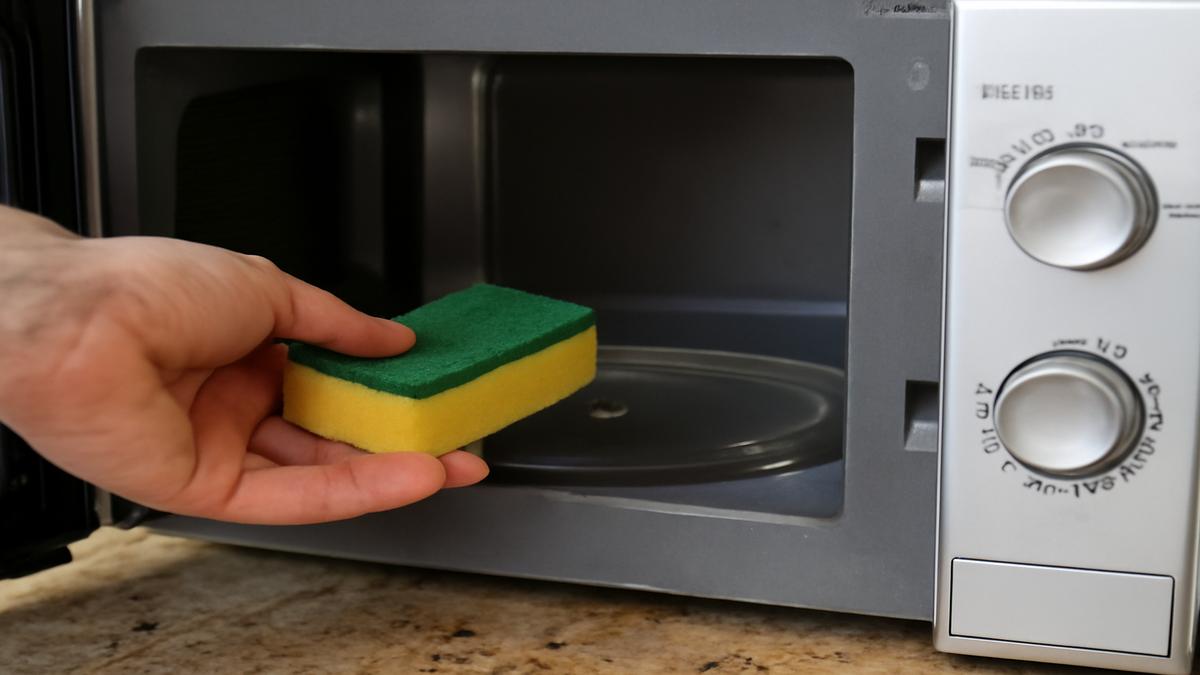
I didn’t discover this trick in some fancy eco-living manual. I found it in a place far more ordinary: the office kitchen. One afternoon, while waiting for my tea water to heat, I watched a colleague walk calmly over to the sink, grab the communal sponge (which, frankly, should have had its own HR file by then), soak it thoroughly under the tap, and then pop it into the microwave.
“What are you doing?” I asked, already bracing for some messy disaster.
“Killing the smell,” she said. “And most of the germs while I’m at it. I do this at home, and my sponges last for months.”
She tapped a few buttons—one minute on high power. The microwave hummed. The smell of warm, clean water and faint dish soap drifted out, like a mild steamy fog. When the timer beeped and she pulled the sponge out (carefully, with a fork), it looked the same, but something had shifted. It smelled like almost nothing. Just heat and a hint of soap. No funk. No lingering rot.
That night, I tried it at home. I soaked my sponge until it dripped, squeezed out just enough water so it wasn’t flooding, then set it in a small bowl with a bit of water in the microwave. One minute at full power. The kitchen filled with the gentle hiss of steam. When I opened the door, a little puff of damp air escaped, almost like a tiny sauna for a piece of foam.
When it cooled, I pressed it between my fingers. It felt fresh in a strange way: warm, pliable, newly reborn. The faint sourness was gone. In its place, there was just a neutral, clean blankness. It felt like resetting a clock.
And then, I just… kept doing it. Every few days. At first, I thought I was just stretching the life of the sponge by a week or two. But it kept going. Weeks turned into months. The edges softened with time, but it did not stink, did not go slimy, did not become a tiny ecological crime scene. One small habit, repeated in the quiet background of everyday life, was quietly rewriting my relationship with this humble tool.
Exactly How to Microwave a Sponge (Without Burning Your House Down)
Here’s the thing: there is a right way to do this. And some very wrong ways. Done correctly, microwaving can dramatically reduce the microbial load on a sponge and reset that dreaded smell. Done casually, you can scorch the sponge or worse.
Think of this as a tiny ritual, like boiling water for tea—simple, but worth doing with care.
- Check the sponge material.
Only microwave:- Plain, traditional cellulose or foam kitchen sponges
- Non-metal scrubby sides that clearly contain no metal fibers
Do not microwave:
- Sponges or scrub pads with any metallic threads
- Steel wool, metal scouring pads, or pads with wire mesh
- Sponges labeled “not microwave safe”
- Soak the sponge completely.
This is non-negotiable. A dry sponge in the microwave is basically kindling. Soak it under warm tap water until it’s fully saturated. Squeeze once or twice so water runs through it, but leave it very wet. - Set it in a small bowl with some water.
Place the sponge in a microwave-safe bowl. Add enough water (about 1/4 to 1/2 cup) so the bottom is covered and the sponge is still visibly wet. The extra water helps regulate the heat and creates steam, which is your real cleaning force. - Microwave on high for 1 minute.
For most household microwaves, 1 minute on high is plenty. For very powerful models (over 1,000 watts), you can start with 45 seconds and test. You’re aiming for steaming hot, not scorched. - Let it sit.
When the timer beeps, leave the sponge in the microwave for another minute with the door closed. This traps the steam, letting the heat work into the sponge. Then, carefully remove the bowl using an oven mitt or towel. The sponge will be very hot. - Cool before use.
Set the sponge in the sink or on a dish rack to cool. Once it’s at room temperature, wring it out lightly and use it as normal.
How Often Should You “Reset” Your Sponge?
Every home has its own rhythm, but a good rule of thumb is:
- Every 2–3 days if you cook and wash dishes daily
- Once a week if you’re a light kitchen user
- Immediately after handling raw meat juices or particularly grimy messes
Pair that with basic sponge care—rinse well after use, squeeze out excess water, and store it where it can dry rather than sit in a puddle—and suddenly your sponge becomes a long-distance partner instead of a short-term fling.
Six Months with the Same Sponge
At first, I didn’t track how long the sponge had been in service. Time in the kitchen passes in its own way, measured in coffee mugs and cutting boards, not in dates. But one moment stands out sharply. Early spring. The windows were open a crack and the first warm air of the year was sliding in. I was wiping crumbs off the counter when it hit me: this was the same sponge I’d been using around New Year’s.
I set it down and actually laughed. I’d replaced “monthly” with “maybe twice a year” without realizing it.
Did the sponge look brand-new? No. Its corners had rounded. The color had gently faded. But it still felt firm in my hand, not deflated. It smelled faintly of dish soap and nothing else. My sink no longer had that vague sense of lurking decay. I realized, with a small surge of satisfaction, that I hadn’t bought a pack of sponges in months.
There was something quietly empowering about that. Not huge, not world-shifting. Just a steady, private satisfaction: I was done with that mindless cycle of “ew, toss it, open another.” I wasn’t standing in the grocery aisle grabbing yet another bag of foam, adding another dozen pointless little rectangles to the march of waste. I was taking care of the one I had.
| Routine | Old Way | Microwave Way |
|---|---|---|
| Sponge lifespan | 1–2 weeks | Up to ~6 months |
| Smell factor | Frequent “swamp” odor | Neutral, reset every few days |
| Waste generated | 20–40 sponges per year | 2–4 sponges per year |
| Effort level | Buy, toss, repeat | 60 seconds in microwave every few days |
Why This Tiny Habit Matters More Than You Think
There’s a certain temptation, when you zoom out to the enormous environmental problems of the world, to roll your eyes at something as small as a sponge. What difference does it really make, stretching one sponge for months instead of weeks?
It’s a fair question. A single sponge is small. But a habit, multiplied across households and time, is not. Most people own microwaves. Most people use sponges. And most of us are already comfortable with little routines—reboiling the kettle, reheating leftovers, softening butter. This is just another tiny ritual, wrapped into the texture of your life.
Every sponge you don’t toss is:
- A little less plastic headed for the landfill
- A little less money out of your pocket
- A little less energy spent manufacturing and transporting another pack
But beyond that, it’s a shift in mindset. It’s you stepping off the default treadmill of “buy, use, toss” for one more object in your home.
And there’s an unexpected emotional reward in this kind of care. When you deliberately maintain something small—wipe it, rinse it, steam it back to life—you’re practicing a craft of attention. You’re saying: I notice this. I choose not to waste it. I have enough power, in this tiny corner of my kitchen, to do it differently.
You start to see the quiet network of objects in your home differently, too. The dishcloth that can be washed instead of thrown away. The jar that can live on as a container instead of a piece of recycling. The old wooden spoon whose surface can be sanded smooth instead of discarded.
Other Ways to Keep Your Sponge Alive and Honest
The microwave trick is the star of the show, but it works best when supported by a few everyday habits that give bacteria fewer invitations to move in and take over.
- Let it breathe.
After using the sponge, rinse it well under hot water, squeeze out as much water as you comfortably can, and leave it somewhere it can dry—on a rack, in a breathable holder, or perched on the edge of the sink. A sponge sitting flat in a puddle is basically a warm bath for microbes. - Give it a salt or vinegar bath now and then.
Once a week (or whenever you remember), soak the sponge in a bowl of hot water with a big spoonful of salt or a generous splash of vinegar. Let it sit for 10–15 minutes, then rinse and microwave. These simple kitchen staples make life a little harder for bacteria. - Use different tools for different jobs.
Keep one sponge or cloth dedicated to dishes, and another for counters. If you’re wiping up raw meat juices, reach for a washable cloth you can immediately rinse and launder rather than asking your sponge to shoulder that burden. - Know when it’s truly done.
Even with microwaving, no sponge lives forever. If it starts to crumble, split, or flatten into a lifeless scrap, you’ve reached the end of its useful arc. At that point, press it into a less glamorous role—like scrubbing muddy boots or plant pots—before saying goodbye.
The Ritual of the Tiny Reset
Now, every few days, microwaving the sponge is just part of the background rhythm of my kitchen. I’ll be clearing the table, feeling that familiar damp weight in my hand, and think, “You’re due.” I soak it, tuck it into its little bowl, close the microwave door, and listen to the low hum and hiss of steam. One minute later, the kitchen smells faintly like clean heat. The sponge sits there, radiating warmth on the counter, as the day continues around it.
There’s something almost ceremonial about it. This quiet, domestic ritual says: this is not a throwaway life, not even at the smallest scale. This is something I can choose to care for instead of replacing. In a world that constantly invites us to buy again, upgrade again, replace again, it feels oddly, beautifully rebellious.
So the next time you pick up your sponge and that faint swampy whisper shocks your nose, pause before you toss it. Fill it with water. Set it gently in a bowl. Let the microwave’s soft roar turn steam into a kind of renewal. One minute of attention, and your sponge can walk back from the edge—again and again—for months.
You don’t need a new pack of sponges. You just need a tiny kitchen ritual, a bowl of water, and the quiet satisfaction of refusing to throw away what you can still revive.
FAQ
Does microwaving a sponge really kill bacteria?
Microwaving a thoroughly wet, microwave-safe sponge can significantly reduce many types of bacteria and microbes living in it. The steam and heat work together to sanitize the sponge. It won’t make it sterile like medical equipment, but it does knock back the bacterial load enough to remove bad smells and extend its useful life.
How often should I microwave my sponge?
For most households, every 2–3 days is ideal if you use the sponge daily. If you cook heavily, deal with a lot of greasy dishes, or notice smells sooner, you can do it even more frequently. Think of it like rinsing your coffee mug: a quick, routine reset.
Can I microwave any sponge?
No. Only microwave sponges that are:
- Free of metal fibers or mesh
- Labeled safe for microwave or not labeled against it
- Made of standard cellulose or foam without metal scrubbing layers
Avoid steel wool, metal-backed scrubbers, or anything with visible metallic threads, as these can spark and damage your microwave.
How wet should the sponge be before microwaving?
Very wet. The sponge must be completely soaked through, and it’s safest to place it in a bowl with a bit of extra water at the bottom. The water is what turns into steam and protects the sponge from scorching. A dry or barely damp sponge can burn or even catch fire.
Is six months really realistic for one sponge?
Yes—if you combine microwaving with decent day-to-day care. Rinse it well after each use, let it dry between uses, and avoid asking it to handle heavy biohazard messes (like raw meat spills) all by itself. Over time, it will still wear out physically, but many people find they can comfortably reach several months of use from a single sponge.
What if my sponge still smells after microwaving?
If the sponge still has a strong odor after being fully soaked and microwaved for about a minute, it may be too far gone. You can try soaking it in hot water with vinegar or baking soda first, then microwaving again. If the smell persists or the sponge feels slimy or degraded, retire it and start fresh.
Is this better than just using cloths instead of sponges?
It depends on your habits. Reusable cloths that you wash in hot water are an excellent alternative and can reduce waste even further. But if you like sponges—their grip, their texture, their familiarity—microwaving them regularly allows you to keep using them while dramatically cutting down on how many you throw away each year.

Hello, I’m Mathew, and I write articles about useful Home Tricks: simple solutions, saving time and useful for every day.