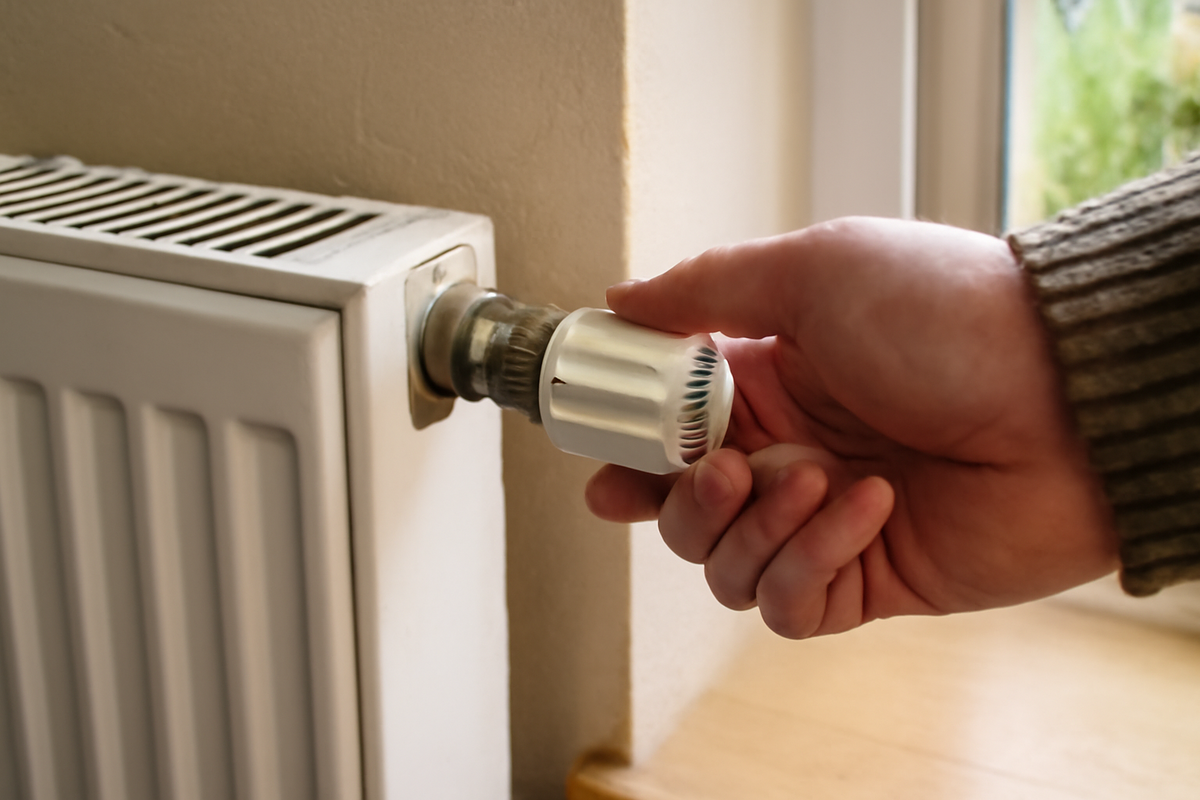
The radiator beneath the window ticked softly as the first cold of October slid under the door. Outside, the sky was the color of old tin, and you could smell the season turning — damp leaves, chimney smoke, that faint metallic promise of frost. Inside, in a small, cluttered living room somewhere that could be yours, someone stood with a hand hovering over the thermostat, eyes narrowed, doing the quiet, familiar winter math.
“Do I switch it off… or just turn it down?”
It sounds like such a small choice. A nudge of a dial, a tap of a button. But in homes across colder countries, that choice has become a kind of seasonal ritual, rehearsed every time the energy bills creep higher and the headlines shout about gas prices and climate targets. It’s a question that seems almost too simple for the weight it carries.
Yet hidden in that little plastic box on the wall is a decision that can shape how much you spend this winter — and how you feel in your own home.
The Quiet Drama of the Thermostat
Let’s start in a place you know very well: the moment you come home on a freezing evening and your house feels like the inside of a stone cave.
You stamp your feet, shake off the cold, maybe blow into your hands. The air in the hallway is still and sharp. The bed upstairs, you know without touching it, will be icy. Your first instinct? Crank the heating up, full blast. It feels logical: if the house is freezing, surely you need more heat, faster.
But heating doesn’t exactly work like a kettle. Radiators don’t “roar.” They hum, they creep, they slowly shift a whole building’s temperature a fraction of a degree at a time. Whether the thermostat is set to 21°C or 25°C, your boiler can only push heat out at a certain maximum power. Turning it up higher doesn’t make it heat faster — it just makes it stop later, often overshooting to a temperature you didn’t even really want.
So the real question isn’t “how high should I turn it?” It’s “how long should I keep it on — and at what level?” That’s where the tipping point between comfort and cost lives. And this is where science, habit, and a bit of plain old common sense all meet in the hallway in front of that thermostat.
Switch Off or Turn Down? What the Physics Whispers
There’s a simple rule at the heart of heating: the warmer your house is compared to the outside, the faster it loses heat. Imagine your home as a big, slightly leaky thermos. The more you heat it above the outdoor temperature, the harder it has to fight to stay there. That fight is what you pay for every month.
So if you keep your home cozy-warm all day and night, your heating system is constantly working to top up the heat that leaks out through walls, windows, the roof, and even the floor. That means more energy, more fuel, more cost.
This is why, in most cases, turning your heating down when you don’t need it — or even off for chunks of time — saves money. The less time your home spends at a toasty high temperature, the less energy it leaks overall.
But that’s only half the story. Because if the house gets too cold, your boiler has to fire up harder and longer to bring everything — the walls, the furniture, the air — back to comfort level. People sometimes imagine this “reheat” phase completely cancels out the savings from letting the house cool. It almost never does. In real homes, in real winters, the net result is usually clear: allowing your house to cool down when you’re asleep or away almost always saves energy compared with keeping it warm constantly.
The key is how far you let it cool, and for how long.
The Sweet Spot: When Turning Down Saves the Most
Picture your daily rhythm for a moment. Mornings — a little rushed, maybe, bleary-eyed and shuffling into the kitchen. Daytime — maybe you’re out at work, or you’re home but spending time in only one or two rooms. Evenings — the heart of home life, when the living room fills with lamplight, TV glow, the smell of cooking. Nights — blankets pulled up, world shrinking to the space between you and the duvet.
Heating doesn’t need to treat all of those moments equally. And if you stop expecting it to, you’re already halfway to lower bills.
Here are the broad patterns that usually save the most money without leaving you shivering:
- Turn it down more than you think at night. If you’re healthy and well-insulated in bed, your body doesn’t need your living room at 21°C. Letting the home drift down to around 15–17°C while you sleep can slice a big chunk off your daily energy use.
- Turn it down or off when nobody’s home. There’s no point heating empty rooms to human-comfort temperature. If your house is reasonably insulated, allowing it to cool to 14–16°C for several hours is usually fine and much cheaper.
- Use a stable, modest comfort setting when you are home. Instead of see-sawing between “off” and “sauna,” many homes save more by picking a steady temperature around 19–20°C and letting the thermostat quietly control things.
This is where nuances creep in. For very well-insulated, airtight homes, the difference between leaving the heat on low all day and turning it off for a few hours is smaller. For old, draughty houses, the savings from turning down when you can may be significant — because those homes lose heat quickly when warm, but also warm up reasonably fast.
In most average homes, the energy balance leans firmly toward: turn it down when you don’t need full warmth, and avoid “always on” comfort.
Times to Turn It Off Completely
There is a particular satisfaction in pressing the “off” button and knowing the meter is slowing, the boiler is resting, the house is quietly coasting on whatever warmth it has left. But when is a full switch-off better than just nudging things down?
When You’re Out for the Day (or Longer)
If you’re going away for a full workday, weekend, or longer, there’s almost always a big win in turning the heating off or dropping it to a very low “frost protection” level (often around 7–10°C). Your house will gently cool, but you’re not there to feel it. When you return, yes, your system will work hard to reheat the place — but only for a while. Over the whole absence, you’ve spent far less energy than holding the house in “living” range the whole time.
In Rooms You Barely Use
The spare bedroom where nobody sleeps. The box room where you store old suitcases and tangled fairy lights. The dining room that only sees daylight twice a year. Those spaces don’t need to be part of your everyday comfort bubble.
Turning off radiators in little-used rooms can reduce how much area your system has to heat. Just be careful not to let them get icy if your home is very cold-prone — a permanent fridge-like space can invite damp or mold, especially in older properties. A gentle, occasional top-up of warmth can keep the worst of that at bay.
On Mild Winter Days
There are those odd winter days when the sky is clear, the sun actually feels warm on your face, and you crack a window when cooking. Those days are an easy win: the house often holds at a comfortable temperature without any help. Switching the heating off for big chunks of time then isn’t just frugality — it’s pointless to pay for heat you don’t actually need.
When Turning Down (Not Off) Works Better
For many people, the most powerful savings don’t come from constantly hitting the off switch, but from mastering the art of the gentle drop. Think of it as teaching your house to breathe with you.
While You Sleep
In a quiet bedroom at night, your senses change. You hear more, move less, and rely on fabric — not central heating — to keep you warm. Most people sleep best in cooler rooms; too much heat can actually make sleep shallow and restless.
Letting the temperature sink to 16–18°C while you’re under the covers is not only fine for most adults, it’s often more comfortable. A thick duvet, warm pyjamas, and maybe a hot-water bottle can make you feel deeply snug even while your radiators sit silent. Meanwhile, the rest of the house — the hallway, the living room, the kitchen — doesn’t need to be fully heated at 2 a.m. A programmed setback temperature instead of a harsh off-switch is the sweet spot here.
For Older or Vulnerable People
For some, especially older adults, very young children, or people with certain health conditions, a house that cools too far can be more than uncomfortable — it can be risky. For them, the “switch off and save” idea needs careful handling.
In those cases, gentle, controlled turning down, rather than fully off, is usually the safest compromise. Instead of letting rooms drop to 14°C, perhaps 18°C is your absolute floor. The bills may be higher than a more aggressive cut-and-boost strategy, but the priority becomes clear: warmth that doesn’t gamble with health.
Comfort and safety always come first. You can still save money by trimming a degree or two, zoning rooms, and avoiding overheating — even if your “off” is someone else’s “low.”
The Power of One Degree: Small Change, Big Impact
Hidden just below the drama of “off or on” is a quieter, almost boring trick — and it’s one of the most effective of all. It’s the idea that dropping your normal temperature by just one single degree can slice as much as 5–10% off your heating use, depending on your home and climate.
You might not feel the difference between 21°C and 20°C much. Your body’s fine-tuned to cope with tiny shifts. But your boiler, your fuel consumption, and your bills absolutely feel it.
Consider how these different strategies roughly compare in everyday life:
| Strategy | Comfort Level | Potential Savings | Best For |
|---|---|---|---|
| Heating always on, high temperature (21–23°C) | Very comfortable, stable | Lowest savings, highest bills | People prioritizing comfort over cost |
| Always on, but lower (18–20°C) | Comfortable for most | Moderate savings (5–20%) | Well-insulated homes, steady routines |
| Turn down at night and when out | Comfort when needed, cooler off-hours | High savings (10–30%) | Most average homes and families |
| Aggressive off when out, low at night | Warmth only when home/awake | Very high savings (up to ~50% in some cases) | Draughty homes, people comfortable with cool periods |
The exact numbers will vary from house to house — insulation, climate, boiler efficiency, and habits all matter — but the pattern is clear. You don’t have to choose between “boiling” or “icy.” The magic happens in the middle ground, where temperatures slide gently with your day instead of staying flat and high.
Could You Really Halve Your Heating Bills?
It sounds bold, almost like a marketing promise: “Halve your bills!” But under the right conditions, big cuts aren’t just fantasy. They come from layering smart choices, not one miracle switch.
Imagine someone who used to:
- Keep the heating on at 21–22°C from early morning to late at night.
- Warm rooms they barely entered.
- Leave the heating on even when they were out “so it stays cosy.”
Then, one winter, they decide the bill pain is too much. They change several things at once:
- Drop their main daytime temperature to 19–20°C.
- Set a timer so the heating comes on only for a couple of short bursts in the morning and evening.
- Turn it right down while they’re at work and at night.
- Shut doors and turn off radiators in unused rooms.
- Add simple draught proofing to leaky windows and doors.
In a typical, average-insulation home, that could genuinely cut their heating use by 30–50%. It’s not the thermostat alone doing the work — it’s the combination of turning down, sometimes turning off, and reducing the hours the house spends at a high temperature.
That’s the secret: if you want really dramatic savings, think in terms of hours and degrees together. Fewer hours at lower temperatures, focused only on the spaces and times you truly need warmth.
Goodbye All-or-Nothing: A Simple Way to Decide
So where does all of this leave that original, stubborn question: switch off or turn down? The answer is quieter and more forgiving than it sounds.
You don’t have to pick a single rule and follow it religiously. Instead, you can use a few simple guidelines that flex with your life and your home:
- Turn down when you’re home but don’t need full comfort (nights, lazy afternoons under a blanket, working at a desk with a warm jumper on).
- Turn off or to frost protection when you’ll be away for several hours or days.
- Lower your “normal” temperature setting by 1–2°C from what you’re used to. Give yourself a week to adapt.
- Zone your home — focus heat where you live, not where you merely store things.
- Watch how your house behaves: Does it cool fast? Take long to warm up? Adjust your timing rather than only your temperature.
The real art is noticing. Noticing that you’re actually comfortable in a slightly cooler room if you’re dressed warmly. Noticing that your house stays warm enough for a surprising amount of time after the boiler switches off. Noticing that sometimes, you’re heating out of habit rather than need.
On a winter evening, the radiator still ticks quietly under the window. Outside, the darkness comes early and thick. But now, when your hand hovers over the thermostat, you’re no longer asking a blunt, anxious question. You’re making a series of gentle, informed choices.
In the end, saving on heating isn’t about punishment or stoicism. It’s about learning the rhythm of your home — and letting warmth be something you use with care, not fear.
Frequently Asked Questions
Does turning the heating off and on use more energy than leaving it on?
No. In almost all real-world homes, letting the house cool down when you don’t need full warmth uses less energy overall than keeping it warm nonstop. The energy needed to reheat is usually smaller than the energy you’d waste maintaining a high temperature the whole time.
Is it better to keep the heating at a constant low temperature?
For most average homes, a constant low temperature is still more expensive than lowering it further at night and when you’re out. The idea that “constant is cheaper” is mostly a myth, except in very well-insulated houses with special systems.
What’s the best temperature to set my thermostat to?
Most people are comfortable at 18–21°C when active and dressed warmly. Try starting at 20°C, then see if you can nudge it down to 19°C after a week. At night or when you’re away, 15–17°C for a typical home is usually fine, with frost protection (around 7–10°C) for longer absences in very cold weather.
Can lowering my thermostat really halve my bill?
Lowering the thermostat alone may not halve your bill, but combined with shorter heating hours, zoning your home, and turning down or off when you’re out or asleep, big savings — sometimes up to 50% — are possible, especially if you started with high temperatures and long heating hours.
Will a colder house cause damp or mold?
It can, if rooms are left very cold and unventilated for long periods, especially in older, poorly insulated homes. The balance is to avoid heating completely unused spaces to living temperature, but not let them stay freezing and humid. Occasional heating, good ventilation, and tackling draughts and cold surfaces all help.
What if I have elderly or vulnerable people at home?
Prioritize health and comfort. Keep living spaces warmer (around 20–22°C if needed) and use gentler setbacks at night and when out, rather than full switch-offs. You can still save money by zoning rooms, reducing overheating, and improving insulation and draught proofing where possible.
How quickly should I expect to feel the savings?
You’ll see changes on your next bill cycle, especially if you adjust for a full month or more. Smart meters or in-home displays can show differences within days, which helps you fine-tune your settings and find your own best balance of comfort and cost.

Hello, I’m Mathew, and I write articles about useful Home Tricks: simple solutions, saving time and useful for every day.