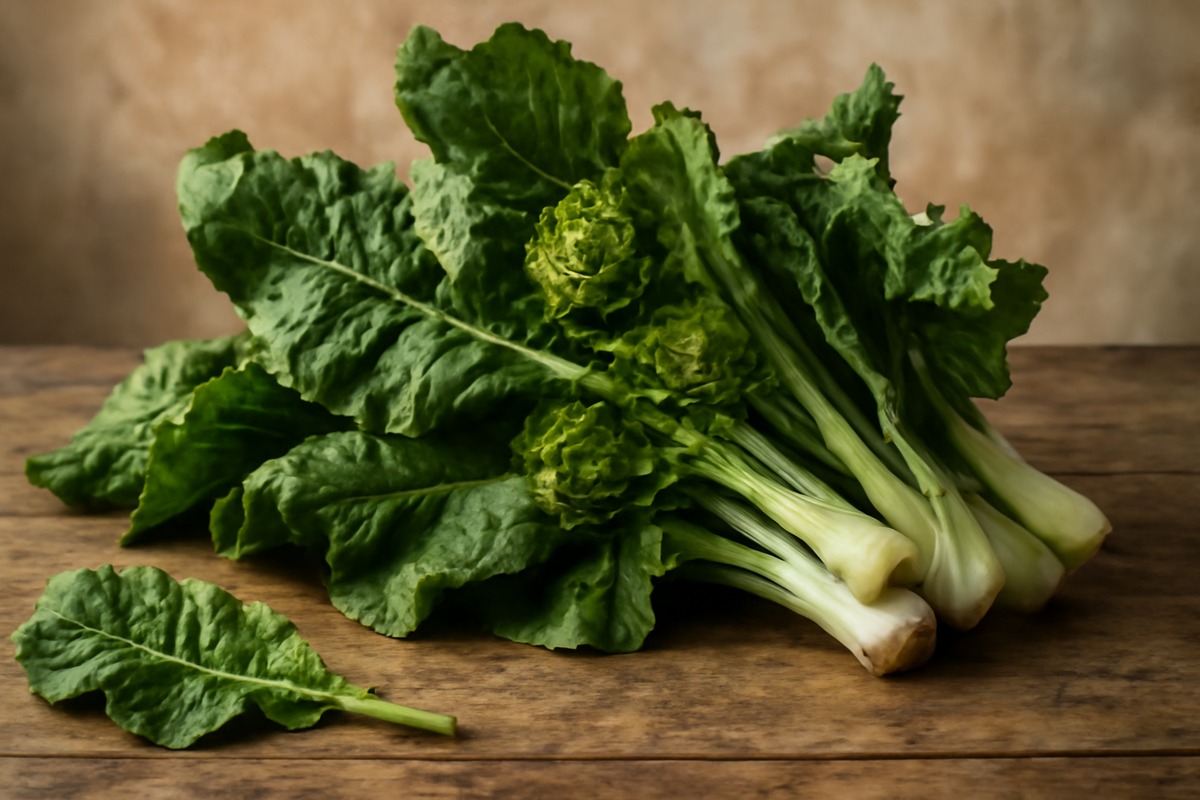
The old woman at the market stall eyes you with amusement. You’ve been hovering in front of her pyramid of greens for a full minute, picking up leaves, sniffing, frowning. They look like a cross between spinach and chard, but not quite. The stems are thick and juicy, pale lime streaked with pink. The leaves are long, almost spear-shaped, with a faint bloom of blue-green at the edges, like they’ve been dusted with sea mist.
“¿Esto… qué es?” you ask at last. What is this?
Her face brightens. “Grelos,” she says, as if that one word explains not just the plant, but the season, the place, the weather and everyone’s mood. She weighs out a generous handful, ties them with twine, and pushes them across the worn wooden counter. “Solo los gallegos los comemos bien,” she adds, winking. Only Galicians know how to eat them properly.
Winter Belongs to the Grelos
Walk through any Galician town in late winter and you’ll see it straight away: bundles of grelos spilling from crates, piled in vans, tucked under arms like green bouquets. At a distance, they might pass for oversized rocket. Up close, they smell sharper, brassier, almost peppery—more wild than polite supermarket spinach, less earthy than beet greens, with a faint whisper of mustard.
Grelos are the tender flowering tops and young leaves of the turnip plant—Brassica rapa—harvested just before the flower buds burst into yellow. This is the plant’s most intense moment: all the sugars, minerals, and phytochemicals rising up from the bulb and roots, crowding into the new growth. The result is a leafy green that doesn’t sit politely in the background of a dish; it steps forward, shakes your hand and introduces itself.
In Galicia, up in Spain’s storm-kissed northwest corner, grelos are more than just another vegetable. They are a seasonal ritual. They arrive with the Atlantic gales and dripping eaves, with laundry that never quite dries and with Carnival drums echoing off stone streets. When Galicians say, “Ya hay grelos,”—the grelos are here—it means winter is at its peak, and the cold months have earned their one great culinary consolation.
Slip a knife into the stems and you feel the snap, a juicy crack like breaking celery, only denser. Drop them into simmering water and the kitchen fills with a perfume that’s half field, half cruciferous punch—like broccoli, kale, and dandelion got together and agreed to be interesting. This is not a vegetable that hides.
Meet the Leafy Green That Outperforms Spinach
It’s tempting to call grelos “Galician spinach” just to give the unfamiliar palate a foothold. But it’s not quite fair. Spinach is mild, almost shy. Grelos arrive with opinions. They’re bitter in the way coffee is bitter, like a dark chocolate that’s climbed past 85%. Not aggressive, but insistent—especially if you don’t treat them right.
Ask anyone at a village bar which green they’d choose—spinach, chard, kale, or grelos—and the answer comes quick and unambiguous: “Grelos.” There’s a reason they’re the star of traditional dishes like lacón con grelos and thick Galician soups that seem designed to revive sailors after weeks at sea. It’s not nostalgia alone; it’s what the plant brings to the table.
Farmers here will tell you: when the cold truly bites, grelos turn sweet. The plant, threatened by frost, pulls starches and sugars up from its swollen turnip root to protect the tender tips. That sugar doesn’t erase the bitterness; it rounds it, like a frame around a strong painting. Boil them briefly, then sauté with garlic and olive oil, and the flavor lands in a miraculous place: bright, deep, and almost meaty.
On paper, they’re nutritional overachievers. On the plate, they feel like the missing link between wild forage and cultivated vegetable. Spinach wilts into delicate silk. Chard offers a gentle mineral tang. Grelos, by contrast, stand up in the pan and say, “This dish begins with me.”
| Nutrient (per 100 g cooked) | Grelos (Turnip Tops) | Spinach | Chard |
|---|---|---|---|
| Vitamin K | Extremely high | Very high | Very high |
| Vitamin A (as carotenoids) | Very high | High | Moderate |
| Vitamin C | High | Moderate | Moderate |
| Calcium | High, well-absorbed | High, but more bound by oxalates | High |
| Bitterness & phytochemicals | Pronounced, rich in glucosinolates | Mild | Mild to moderate |
The lab numbers confirm what the tongue already suspects: these greens play at a different intensity. Packed with carotenoids, vitamin C, vitamin K, and glucosinolates (the sulfur compounds behind the magic of brassicas), grelos aren’t just side dishes; they’re edible winter medicine, disguised as comfort food.
The Landscape Inside the Leaf
To understand why only Galicians truly eat grelos—at least, in the way the grandmother at the market insists—you have to stand where they grow.
Picture long, low hills sliding toward the Atlantic, terraces of small plots stitched together by stone walls blackened with lichen. Even on clear days, the light here is soft-edged, scattered through lingering mist. In winter, the fields are a patchwork of gray soil and stubborn greens. Rain rattles on poly tunnels; crows argue over something in a furrow.
In many of those fields, rows of turnip plants stand like soldiers, roots swelling underground, leaves whipping in the wind. But for Galicians, the treasure isn’t just the bulb. As January deepens and Carnival approaches, attention shifts upward, to the new harpoon-shaped shoots forming at the center—those grelos, the future flowers arrested in their climb.
Farmers step into the mud with practiced timing. Too early, and the flavor is shy, the stems stringy. Too late, and yellow flowers burst open, the plant’s energy spent. The sweet spot is brief—a week, maybe two for each plant—when the buds are tight and green and fat as raindrops, and the leaves still curve with a tensile snap.
Harvesting them is almost intimate. You cradle the plant with one hand and pinch or cut with the other, taking the tender top cluster and a few leaves, leaving the rest to continue growing if the season allows. Fingers numb from cold, you work quickly, filling basket after basket until the field looks slightly combed, not shorn.
This is the landscape poured into your pot: granite, rain, broken clouds, salt on the wind. You can taste it when you bite into a well-cooked grelo—the way the bitterness rises like a weather front, then breaks open to sweetness and mineral depth. It tastes like a place that’s learned to live with storms.
From Pot to Plate: The Art of Taming Bitterness
Ask a Galician how to cook grelos, and the first response is never a recipe; it’s a warning: “Primero, hay que domarlos.” First, you have to tame them.
Raw, they’re fierce. One bite is all pepper and metal, like licking a wet coin dusted in mustard powder. But they are surprisingly polite houseguests if you know the ritual.
It starts with a pot of boiling water, aggressively salted, the way you’d salt the sea in a memory. The grelos go in whole, stems and leaves, plunging into the steam with a sigh. Within minutes, the kitchen is fogged with their aroma. The water grows dark, shaded greenish-brown as some of the bitterness leaches out, together with a part of their intensity.
Five, ten minutes—that’s all. You fish out a stem, bite. The crunch should yield but not collapse; the bitterness should have stepped back enough to let the sweetness show its face. Drain them well, pressing gently to squeeze out excess liquid. Now the real cooking begins.
Olive oil in a pan. Always olive oil, often generous. A few cloves of garlic, sliced or crushed, sizzling until they just begin to turn golden around the edges. Maybe a sliver of cured pork—chorizo, or the fat rind from a ham, or the edge of a salted shoulder—if you’re cooking in the old way. The parboiled grelos tumble in like wet fabric, hissing in the hot oil.
What happens in the next five minutes is alchemy. The bitter edges soften and darken under the heat, picking up the scents of garlic and pork and toasty olive. The stems shine; the leaves crumple into deep forest green. Taste again, and the flavor now stretches from bright to deep, vegetal to savory, anchored by a faint smokiness if you’ve used cured meat.
Served alongside soft-boiled potatoes, the grelos soak up starch and salt, as if designed specifically for this partnership. On a plate with slow-cooked pork shoulder—lacón—their bitter brightness cuts through the richness, resetting your tongue between bites. They don’t just support the main act; they are the counterpoint that makes the whole dish sing.
Why Your Body Loves This Bitterness
Behind that sensory drama, there’s a quieter story unfolding in your cells. The very compounds that make grelos sharp—those glucosinolates and phenolics—are the same ones nutrition scientists keep falling in love with.
When you chop and cook grelos, plant enzymes transform glucosinolates into isothiocyanates, compounds studied for their role in supporting detoxification pathways and cellular defense systems. Their carotenoids feed your eyes and skin; their vitamin K looks after your blood and bones. The bitterness you taste is your tongue detecting this pharmacopoeia in action.
Spinach and chard have their virtues, but they tiptoe where grelos stride. They’re lower in those sulfur-rich phytochemicals and, in the case of spinach, higher in oxalates, which can bind up minerals like calcium. Grelos, by contrast, tend to offer their calcium in a more accessible form, especially once lightly cooked.
Of course, no one in the village market is talking about glucosinolates. They just tell you this: “Es bueno para limpiarte por dentro.” It’s good to clean you out inside. After a winter of heavy meats and thick soups, a few plates of grelos feel a bit like opening all the windows in a stuffy house.
“Only Galicians Eat It” – And Why That Might Change
The woman at the stall wasn’t entirely right, but she wasn’t wrong, either. Grelos—or turnip tops, turnip greens, rapini cousins—do appear in other cuisines. In parts of Italy, cime di rapa shares a family resemblance. In some Asian markets, young brassica tops show up in stir-fries and soups. But nowhere else have they been so squarely claimed by the culture, carved into the calendar, and woven into identity as they are in Galicia.
Here, they’re not an exotic side option; they’re a seasonal inevitability. Kids grow up tasting their sharpness in soups. Carnival feasts are incomplete without them. Old recipes don’t say “add greens”; they say “add grelos,” as if the notion of a different leaf would be absurd.
Part of their obscurity elsewhere comes down to logistics. The window for harvesting truly good grelos is brief. Supermarket supply chains don’t like brief. The plant itself is a bit unruly, happier in small plots than in industrial monoculture. And then there’s the flavor—a type of bitterness that modern global palates, trained on sweetness and soft edges, sometimes shy away from.
Yet there are hints that this might be changing. As more cooks rediscover the appeal of bitter greens, of foods that make your mouth sit up straight, grelos are quietly stepping into the conversation. Gardeners experiment with sowing turnips not for bulbs but for tops. Chefs poke around heritage seed catalogs. Curious travelers return from Galicia with crumpled bunches in their luggage, hoping some stray seed might scatter in a backyard bed.
And why not? In a world where spinach and chard are the accepted default, grelos feel almost like a secret handshake—a way of saying you’re ready for greens that don’t apologize for being plants, that come with their wildness mostly intact.
Bringing Grelos Home
If you’re lucky enough to find them—sold as turnip tops, turnip greens, or under their Galician name—you don’t need to recreate a Grandmother-of-the-Atlantic feast. You just need a pot, a pan, and a bit of patience.
Here’s a simple way to let them surprise you:
- Trim any rough ends; keep leaves and tender stems.
- Blanch in very salty boiling water until just tender.
- Drain well and chop roughly.
- In a pan, warm olive oil with sliced garlic until fragrant.
- Add the grelos, a pinch of salt, maybe a splash of white wine or a squeeze of lemon, and sauté a few minutes.
Taste. If the bitterness still feels too insistent, add a few cooked potatoes to the pan, breaking them up slightly so they catch the juices. Or fold the sautéed grelos into a pan of scrambled eggs, a brothy soup, or soft polenta. They adapt better than you’d expect.
You’ll notice something as you tuck into your first plate: the bitterness doesn’t sit on top like a scold. It blends, making everything else more vivid. The starch tastes more comforting, the fat more lush, the garlic more fragrant. Once you’ve had that kind of contrast, spinach starts to seem almost too polite.
The Season Inside You
Days later, you might find yourself thinking back to that first encounter at the Galician market. The gray sky, the low hum of voices, the woman’s sure hands as she tied your bunch of grelos with twine. The way she spoke of them not as merchandise, but as a piece of the year, as natural and inevitable as the rain drumming on the awning overhead.
There is a quiet wisdom in a culture that reserves its most intense greens for its hardest months. When the sun is stingy and the days tilt toward darkness, grelos step in with their loaded leaves, crammed with everything the plant has fought to pull from the soil. You eat them, and a little bit of that fight becomes yours.
Maybe that’s why Galicians say, half proud and half teasing, “Only we eat this properly.” What they really mean is: only here has this plant been given the patient time, the right rituals, and the love it needs to show what it can be.
But the greens themselves don’t know about borders. A turnip top grown under another sky, in another small wet garden, can still surge with the same stubborn life. You just have to meet it halfway—accept its bitterness, give it salt and heat and a place at the center of the plate.
Some foods you eat and forget. Others rearrange your sense of what a simple thing—like a leaf—can hold. Grelos belong firmly in the second group. They ask you to notice. To pay attention to weather, to timing, to the difference between sharp and alive. To taste winter not as a season of lack, but as the moment when a humble green plant chooses to pour everything it has into a few fragile, flowering tips—and waits for someone to come along who knows what to do with them.
FAQ
What exactly are grelos?
Grelos are the young flowering tops and tender leaves of the turnip plant, harvested just before the yellow flowers open. They’re a traditional winter green in Galicia, in northwest Spain, and are prized for their distinctive bitter, peppery flavor.
How do grelos differ from spinach and chard?
Spinach and chard are milder and softer in flavor. Grelos are more intense: slightly bitter, peppery, and deeply aromatic, with thicker stems and a wilder, more robust taste. Nutritionally, grelos tend to be richer in certain antioxidants, vitamin C, and sulfur compounds associated with brassica vegetables.
How can I reduce the bitterness of grelos when cooking?
Blanch them first in well-salted boiling water for several minutes, then drain and sauté with olive oil and garlic. The blanching removes some bitterness, while the fat and aromatics round out what remains. Adding potatoes, beans, or eggs to the dish also helps balance the flavor.
Where can I find grelos outside of Galicia?
Look for them at farmers’ markets or specialty grocers under names like turnip tops, turnip greens, or rapini relatives. In some regions, you can grow them yourself by sowing turnips and harvesting the leafy tops before the plants flower.
Are grelos healthy?
Yes. Grelos are rich in vitamins A, C, and K, minerals like calcium, and plant compounds such as glucosinolates and carotenoids. Light cooking enhances their digestibility while preserving most of their nutritional value, making them a powerful seasonal green—especially in winter.

Hello, I’m Mathew, and I write articles about useful Home Tricks: simple solutions, saving time and useful for every day.