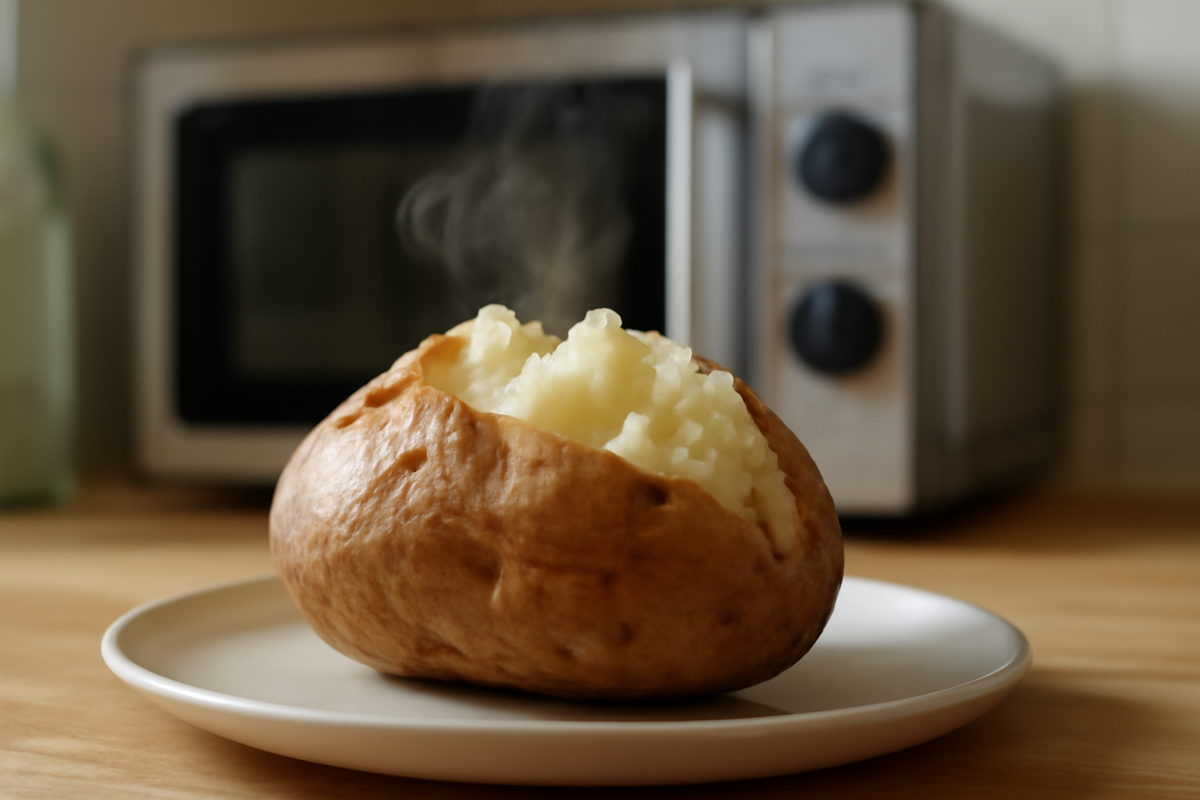
The first time I heard the hiss, I thought something was going very, very wrong. A quiet kitchen, a long day, and a single potato spinning in the microwave like a tiny planet. It was supposed to be dinner. What I expected was a sad, rubbery lump pretending to be a baked potato. What I got instead—when the timer beeped and I sliced it open—was a rush of steam, a soft, cloudlike interior, and that deep, earthy potato perfume that usually takes an oven and nearly an hour to earn. Ten minutes. No oven. No fuss. It felt like a small, delicious magic trick.
The Night the Oven Lost the Job
You probably know the scene. It’s late, you’re hungry, and the thought of preheating an oven for forty-five minutes just to cook one potato feels ridiculous. Maybe it’s summer and the air is already thick with heat. Maybe you live in a tiny apartment and the oven is half-storage, half-mysterious relic. Or maybe you’re camping in a mini RV, or perched in a college dorm with nothing but a mini-fridge and a microwave humming in the corner like an overachieving sidekick.
That was the night this little “baked potato in the microwave” hack slid into my life and quietly tossed the oven out of the equation. The potato started as something plain and unpromising, rolling around the dish with a lazy spin. It ended as something else entirely: a real baked potato experience—fluffy, steaming, ready to drink in butter and salt and maybe a scandalous amount of sour cream.
We’ve been trained to treat the oven as the only noble road to a baked potato. Anything else, we’re told, is a shortcut, and shortcuts are suspicious. But the microwave is not a villain; it’s just misunderstood. And when you learn how to treat that humble potato with a little respect—some water, a fork, and a touch of timing—the microwave becomes less a quick fix and more a quiet ally. Ten minutes later, your plate holds something that tastes like care, not compromise.
The Little Science of a Fast “Bake”
At the heart of this trick is something almost poetic: water, trapped inside the potato, turning to steam. In the oven, the heat slowly seeps in from the outside, drying the skin and gently coaxing starches inside to soften. It’s a slow conversation with heat. In the microwave, the conversation is shorter, sharper, and surprisingly efficient.
Microwaves excite the water molecules inside the potato. They start to vibrate, rubbing up against each other, building heat from the inside out. That heat turns water into steam, and the steam puffs up the starch cells, breaking them down into that familiar fluffy texture we love. If you’ve ever sliced into a great baked potato and watched it sigh and fall open, that’s starch and steam working together like a tiny hidden engine.
The catch, and the reason people think “microwaved potato” and imagine disappointment, is that the process happens fast, and fast can be unforgiving. Rush it with too much power, too little venting, or no rest time, and you get a dry shell with a dense, slightly gummy middle. Treat it thoughtfully, and you get the kind of soft, steaming potato that soaks up toppings like a sponge and tastes like something that took far more effort than it did.
The 10-Minute Potato Ritual
There’s something satisfying about having a ritual for simple food. Here’s the one that turns a plain potato into a ten-minute weeknight victory:
- Pick the right potato. Russets are the classic “baked” choice for a reason—they’re high in starch, low in moisture, and turn wonderfully fluffy. Medium size is ideal: think about the size of your fist, not a small football.
- Wash and dry. Rinse off the soil, rub the skin with your hands, and pat it dry with a clean towel. There’s a small, quiet pleasure in this simple act of care.
- Stab with intent. Take a fork and pierce the potato six to ten times all over. It’s not aggression; it’s insurance. Those tiny vents let steam escape so the potato doesn’t burst with a startling pop halfway through.
- Optional: a touch of oil and salt. If you like, rub the skin with a thin coat of oil and sprinkle with salt. In the microwave this won’t crisp like an oven, but it adds flavor and helps if you plan to finish under a broiler or in a hot pan for a minute or two.
- Microwave on high, but in stages. Place the potato on a microwave-safe plate. Cook for 4–5 minutes on high. Turn it over, then cook for another 3–5 minutes. The exact time depends on size and microwave power.
- Check for doneness. Slide a knife or skewer into the thickest part. It should slip in with almost no resistance. If it feels firm in the center, return to the microwave in 30–60 second bursts until it yields.
- Let it rest. This is the secret people skip. Let the potato sit, untouched, for 2–3 minutes. It continues to steam inside, evening out the texture from edge to center. That short pause turns “microwaved” into “actually baked.”
- Split and fluff. Slice a deep cross on top, press the ends gently toward the center, and watch it bloom open in a white cloud of steam. Rough up the inside with a fork to create space for butter to melt and salt to cling.
If you remember nothing else, remember the stages: poke, flip, rest, fluff. That’s the quiet choreography of a perfect microwave “bake.”
A Tiny Table of Timing (So You Don’t Guess)
Different microwaves have different power levels, and different potatoes carry their own particular stubbornness. This simple table gives you a starting point. You can adjust once you get to know your microwave’s personality.
| Potato Size | Weight (Approx.) | Initial Time (Side 1) | Initial Time (Side 2) | Total Time Range* |
|---|---|---|---|---|
| Small | 150–200 g | 3–4 min | 2–3 min | 5–7 min |
| Medium | 225–275 g | 4–5 min | 3–4 min | 7–9 min |
| Large | 300–350 g | 5–6 min | 4–5 min | 9–11 min |
| *Times based on a 1000W microwave. Add 1–2 minutes total for lower wattage; subtract 1–2 minutes for higher wattage. Always finish cooking in 30–60 second bursts if needed. | ||||
Think of these times as the starting point, not a law. Potatoes, like people, refuse to be perfectly predictable. That’s part of the charm.
The Sensory Test: When It’s Really Done
Ignore the clock for a moment and listen to the potato. Your senses tell you what the timer can’t:
- Touch: Pick it up with a towel and gently squeeze; it should feel soft all the way through, not rigid in the center.
- Sight: The skin may wrinkle slightly; tiny beads of steam might cling to the surface.
- Smell: A warm, earthy aroma will creep through the kitchen when it’s ready—subtle but unmistakable.
- Sound: You may even hear a faint hiss when you cut it open, as steam escapes from the fluffy interior.
Those tiny cues are the difference between “edible” and “oh, wow.”
Dress It Like It Deserves: Toppings That Tell a Story
Once you’ve mastered the 10-minute potato, the real fun begins. A naked potato is a blank page, a quiet moment before the story explodes into color. This is where your mood steps in.
Some nights, you only want the classics: a generous knob of butter that melts and vanishes, a shy scattering of salt, maybe a twist of black pepper. The fork dives in and comes back with a little bit of everything: warmth, fat, salt, smoke from the pepper. It’s basic in the way a clear night sky is basic—simple, but never truly plain.
Other nights, the potato becomes the whole meal. Pile it high and let gravity do the rest:
- The Cozy One: Sharp cheddar that folds into the heat and turns glossy, a dollop of cold sour cream, green onions like tiny emeralds, maybe some crispy bacon if you’re feeling generous with yourself.
- The Garden Evening: A spoonful of Greek yogurt, a drizzle of olive oil, chopped cherry tomatoes, cucumber, and fresh herbs—parsley, chives, dill, whatever’s lingering in a glass by the sink.
- The Pantry Saver: A scoop of leftover chili, stew, or roasted vegetables from the back of the fridge; saved, refreshed, and now the star of a second, better act.
- The Speedy Lunch: Canned beans tossed with salt, paprika, a squeeze of lemon, and a hit of hot sauce. Earthy, bright, and impossible to be bored by.
What makes this microwave hack feel special isn’t just the speed; it’s that you can go from “nothing planned” to “full, warm, satisfied” in the time it takes a playlist to get through two or three songs.
Finding Texture: When You Miss the Crispy Skin
There’s one thing the microwave won’t give you by itself: that shattering, salty skin that an oven can. But if you’re willing to spend just a couple more minutes, you can come surprisingly close.
- Skillet Finish: After microwaving, heat a dry or lightly oiled skillet over medium-high. Roll the potato in the pan for 2–3 minutes, letting the skin blister and firm up. Sprinkle with flaky salt at the end.
- Quick Broil: If you do have an oven or toaster oven, preheat the broiler while the potato is in the microwave. Once it’s cooked through, brush the skin with a bit of oil, and slide it under the broiler for 3–4 minutes, turning once, until crisp.
The inside stays tender, the outside snaps just enough to make you pay attention. It’s the best of both worlds: fast like a microwave, tactile like an oven.
Microwave Baked Potato for Real Life
That’s the quiet power of this little trick: it’s not fancy, but it fits into the rough edges of real life. The 10-minute baked potato belongs in all the in-between moments that rarely get recipes written for them.
It’s the late winter night when you come home with frozen fingers and nothing in the fridge but a single potato, a nub of butter, and some lonely salt. It’s the busy Tuesday when you’re scrolling emails and suddenly realize you haven’t eaten anything since breakfast. It’s the cramped dorm kitchen where the microwave is both blessing and curse, and you’re trying desperately to eat something that tastes like home instead of pure convenience.
It fits into lunch breaks when you need something warm and steady, into solo dinners where you want to cook for yourself without making a fuss, into quiet afternoons when you’re working from home and resisting the siren call of snacks. You wash the potato, you stab, you wait, you split, and somewhere along the way the day starts to feel less scattered and more grounded.
This isn’t just about speed. It’s about being able to feed yourself in a way that feels intentional, even when time is short and energy is thin. A potato, of all things, becomes a sort of small anchor—a pocket of comfort in the middle of the noise.
One Potato, Many Lives
Once you’ve unlocked the 10-minute microwave baked potato, you start to notice how many tiny doors it opens.
- Breakfast: Cook a potato, split it, scoop out some of the center, and crack in an egg. Microwave again in short bursts until the egg sets. Sprinkle cheese, herbs, or hot sauce over the top.
- Impromptu Potato Salad: Microwave a couple of small potatoes, cube them while still warm, and toss with mustard, olive oil, salt, pepper, and chopped pickles or onions.
- Side Dish in a Pinch: Serve half a potato alongside grilled chicken, fish, or a simple salad. It stretches a light meal into something more rooted and satisfying.
- Comfort in a Bowl: Mash the inside of your microwaved potato with butter, a splash of milk, and whatever cheese you have. Stir in peas or corn from the freezer. It’s mashed potatoes for one, no pot required.
Every time, it’s the same simple starting point: one potato, a microwave, a few minutes. What happens next is up to whatever you have, whatever you crave, and however much effort you feel like offering that day.
FAQs About Microwave Baked Potatoes
How long does it really take to bake a potato in the microwave?
For a medium russet potato in a 1000W microwave, it usually takes 7–9 minutes total, cooked in two stages (4–5 minutes on one side, 3–4 on the other), plus 2–3 minutes of resting time. Larger potatoes can take up to 10–11 minutes; smaller ones may be done in about 5–7 minutes.
Why do I need to poke holes in the potato?
Poking holes lets steam escape while the potato cooks. Without vents, pressure can build up inside the potato and cause it to split or even burst. A few firm stabs with a fork around the surface keep things safe and help it cook more evenly.
Can I cook more than one potato at once?
Yes, but you’ll need to add time. Two medium potatoes often take 10–14 minutes total. Arrange them side by side, not stacked, and halfway through the cooking time, turn each potato and swap their positions. Check each one individually for doneness.
Is the texture the same as an oven-baked potato?
The interior can be just as fluffy and tender as an oven-baked potato if you don’t rush it and you let it rest. The skin, however, will be softer in the microwave. If you want a crisp skin, you can finish the cooked potato in a hot skillet or under a broiler for a few minutes.
Should I wrap the potato in plastic or paper towels?
You don’t need plastic wrap, and it’s generally better to avoid heating plastic directly on food. A dry plate works fine. If you want a slightly softer skin and more even cooking, you can wrap the potato in a lightly damp paper towel, but it’s optional.
Can I use this method for sweet potatoes?
Yes. Sweet potatoes microwave beautifully. They often take a little longer than regular potatoes—usually 8–12 minutes for a medium sweet potato—using the same poke, flip, rest method. The interior becomes soft, caramel-scented, and perfect with butter, cinnamon, or even a drizzle of yogurt.
How do I know if the potato is fully cooked?
Slide a thin knife, skewer, or fork into the thickest part of the potato. If it goes in and comes out easily with no firm resistance, it’s done. You can also gently squeeze the potato with a towel; it should feel uniformly soft all the way through.
Is it safe to eat the skin of a microwaved potato?
Yes, as long as you washed the potato well before cooking. The skin holds fiber and nutrients, and though it won’t be as crisp as in an oven, it’s perfectly good to eat. If you want more flavor, rub it with a bit of oil and salt before cooking or crisp it briefly in a hot pan afterward.
Why does my potato sometimes turn out gummy or dense?
Dense, gummy texture usually comes from undercooking, overcooking, or not letting the potato rest. Try cooking in stages, checking doneness carefully, and giving it 2–3 minutes to sit before you cut it open. Fluffing the interior with a fork after cooking also helps create a lighter texture.
Can I store leftover microwaved baked potatoes?
Yes. Let them cool, then store in an airtight container in the refrigerator for up to 3–4 days. Reheat in the microwave until hot, or slice and crisp them in a skillet with a little oil to make quick home fries. The second life of a baked potato can be just as satisfying as the first.

Hello, I’m Mathew, and I write articles about useful Home Tricks: simple solutions, saving time and useful for every day.




