The dough feels cool and vaguely cloud-like under your fingers—a soft give, a little bounce, a quiet promise. On the stove behind you, a pot of water starts to whisper. You dust the counter with flour, roll one pale rope at a time, and start cutting. Each pillowy piece lands with the faintest tap, like rain against a windowsill. It’s not a big production. There’s no cooking marathon, no sack of potatoes, no special equipment humming in the background. Just you, a bowl, a fork, and the quiet thrill of making something that looks fancy but is secretly simple: light, potato-free gnocchi, ready to carry whatever flavors your day is asking for.
The Gentle Rebellion: Gnocchi Without the Potatoes
If you’ve ever looked at a classic gnocchi recipe and felt your energy drain a little—boil the potatoes, dry the potatoes, mash, cool, rice, knead, pray it’s not glue—you’re not alone. Traditional gnocchi can be a beautiful thing, but some days you want that softness without the ceremony. That’s where this potato-free version comes in, quietly rebellious and wonderfully forgiving.
Instead of starch-heavy potatoes, these gnocchi lean on ricotta, egg, a little grated cheese, and just enough flour to hold it all together. The result is closer to a cross between dumplings and clouds. They’re tender, slightly springy, and far less dense than some potato versions. They also come together fast—no pre-cooking, no waiting for anything to cool down, no hauling out extra tools.
You stir, you chill briefly, you roll, you cut. That’s it. And suddenly you have a tray of small, pale pillows that can go in a thousand directions—tossed with brown butter and crispy sage, tumbled into a quick tomato sauce, or strewn over a plate with wilted greens and lemon zest. It feels a little like cheating, in the best possible way.
The Base Recipe: Soft Pillows, Simple Ingredients
Think of this base recipe as your neutral canvas: mild, delicate gnocchi ready to take on whatever flavor you drape over them. The ingredients are mostly things you might already have in the fridge. The key is to keep the mixture light and just firm enough to hold together—one step past a stiff batter, one step before a heavy dough.
Core Ingredients for Potato-Free Gnocchi
Here’s what you’ll reach for:
- Whole-milk ricotta (preferably drained)
- Eggs
- All-purpose flour (plus a little extra for dusting)
- Grated hard cheese (like Parmesan or Pecorino)
- Fine salt and black pepper
- Optional: nutmeg, lemon zest, chopped herbs
The magic lies in the ricotta. It gives the gnocchi their tenderness and a slight richness that never feels heavy. If your ricotta is very wet, you’ll need more flour, which can weigh things down; draining it briefly through a fine sieve or in a cheesecloth is a tiny step that brings a big reward.
| Ingredient | Amount | Notes |
|---|---|---|
| Whole-milk ricotta | 1 cup (about 250 g) | Drain if very wet |
| Egg | 1 large | Adds structure and richness |
| All-purpose flour | About 3/4 cup (90–100 g) | Add gradually; dough should stay soft |
| Grated Parmesan | 1/3 cup (30 g) | Or Pecorino for a sharper bite |
| Salt & pepper | To taste | Go gentle; cheese is salty |
| Optional flavoring | Pinch of nutmeg, lemon zest, herbs | Adjust to your mood |
To bring this together, you whisk the ricotta, egg, cheese, and seasonings until they look smooth and unified—almost like a thick, luxurious batter. Then you sift or sprinkle in the flour, a little at a time, gently folding until everything just comes together. When you drag a spoon through the bowl, the mixture should slowly slump back, not run like cake batter and not sit like putty.
From Bowl to Board: Shaping Without Stress
The moment you tip the dough onto the counter is when it starts to feel like real cooking, that quiet, meditative kind. A little flour on the board, a tiny handful on your palms, and you’re ready. You’re not kneading this like bread—overworking the dough makes it tough. Instead, you’re giving it the gentlest nudge toward structure.
Divide the mixture into a few soft blobs. Take one, and with open hands, coax it into a long rope, about the thickness of your thumb. It might feel loose at first, but as the flour on your hands and board meets the dough, it finds its rhythm. If it sticks stubbornly, sprinkle the lightest veil of flour; too much and your gnocchi start crossing the line from cloud to eraser.
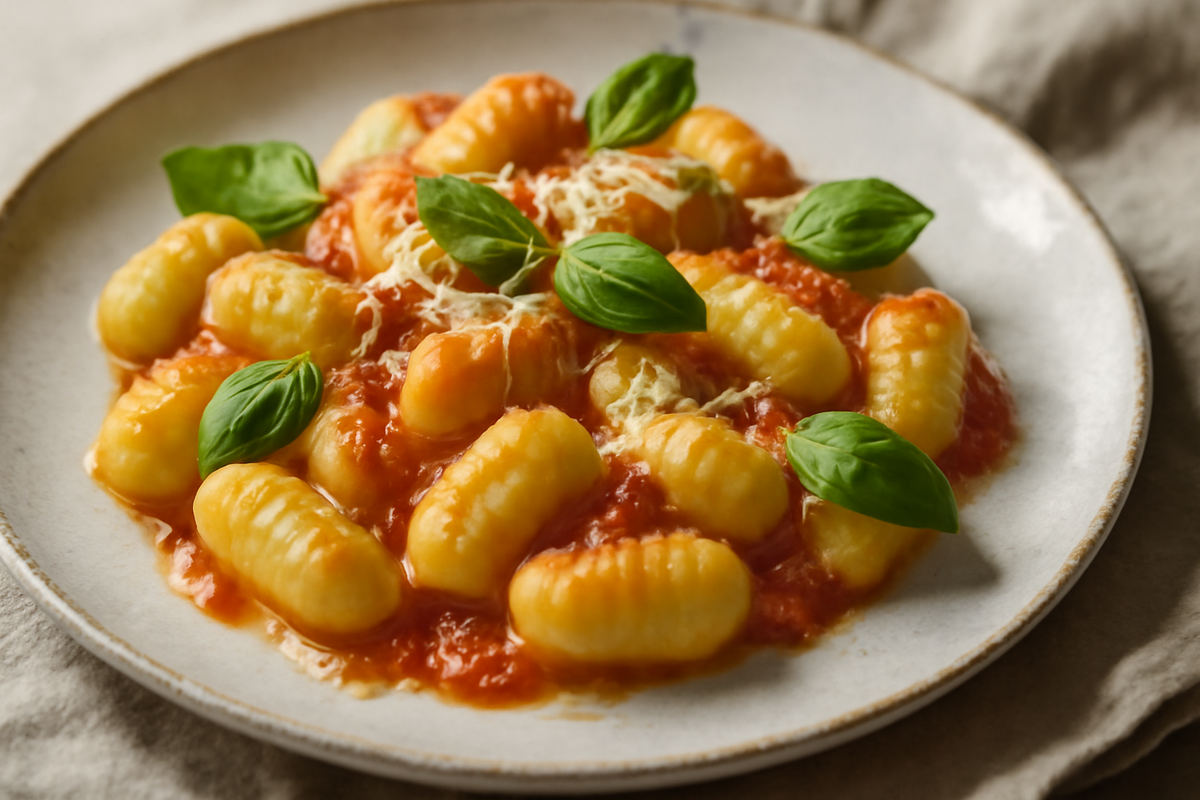
Once you have a rope, you take a knife and cut it into small pillows—little bites, about the width of a fingertip. Each slice falls away, shy and plump. You could stop there and cook them as is, pleasantly smooth and simple. Or, if you want that classic gnocchi look, you roll each one off the back of a fork or along a gnocchi board, letting your thumb press a tiny dimple as you go. The ridges and indentations are more than decoration; they’re channels to catch sauce, tiny canyons of flavor.
As the tray fills, the kitchen starts to feel different. You’ve gone from a bowl of pale mixture to rows of miniature dumplings lined up like clouds in formation. It looks like a lot more work than it felt, which is one of the quiet joys of recipes like this.
Boil, Float, Dress: Cooking Them Just Right
Cooking these gnocchi is a study in paying attention to small changes. You bring a wide pot of well-salted water to a gentle boil—too wild and they’ll tumble themselves to pieces, too lazy and they’ll cook sluggishly. You slide the gnocchi in with a soft swoosh, never crowding the pot. If they’re delicate, a small mesh strainer or slotted spoon helps you lower them without a splashy drama.
Then you watch. At first they sink, vanishing briefly into the swirl. After a minute or two, the first one wobbles upward, then another, until they’re all bobbing at the surface. That’s your cue. Give them another 30–60 seconds to firm up inside, then scoop them out, letting the water drip back to the pot. They’re extremely forgiving: as long as you don’t abandon them for ten minutes, they won’t punish you.
From here, there are two main paths. You can slide them straight into warm sauce, where they’ll drink it up like soft little sponges of flavor. Or you can take the slightly more indulgent route: pan-sear them in a bit of butter or olive oil until their edges turn golden and crisp. That contrast—the tender, steamy interior against a lightly browned exterior—is dangerously good.
Quick Dressing Ideas to Match Your Mood
Because these gnocchi are so mild and receptive, what you toss them with can completely reshape the dish. Think of sauces less as recipes and more as moods.
- Comfort, fast: Melt butter in a skillet until it foams and turns nutty, then throw in torn sage leaves. Toss the hot gnocchi in, shower with grated Parmesan, and eat right from a warm bowl.
- Bright and light: Sauté garlic in olive oil, add ribbons of lemon zest, a splash of the gnocchi cooking water, and a big handful of chopped parsley. Finish with black pepper and maybe a few chili flakes.
- Tomato hug: Warm up a simple tomato sauce—homemade or from a jar you trust—and let the gnocchi simmer gently in it for a minute. Finish with torn basil and a spoonful of ricotta on top.
- Green and earthy: Sauté spinach or kale with garlic until wilted, then add gnocchi, a squeeze of lemon, and some toasted pine nuts or walnuts for crunch.
- Decadent night in: Stir together a splash of cream, crumbled blue cheese or gorgonzola, and a bit of black pepper in a pan until smooth. Toss with gnocchi and a handful of arugula that just barely wilts from the heat.
Once you know how to make the base, deciding how to dress it becomes the fun part—a quick question you get to answer each time you open the fridge.
Make It Yours: Variations and Little Twists
One of the best things about potato-free gnocchi is how easy they are to tweak. Instead of being locked into the flavor of potatoes, you’re working with a gently flavored code that accepts edits easily. You can tune the color, the aroma, even the nutritional profile without losing the essence of the dish.
Subtle Swaps and Add-Ins
- Herb-speckled: Fold in finely chopped fresh herbs—parsley, chives, basil, or dill—right into the dough. They dot the gnocchi like confetti and add tiny bursts of green flavor.
- Spinach or greens gnocchi: Squeeze dry some cooked spinach or chard, chop very finely, and stir into the ricotta before adding flour. You’ll need a touch more flour, but the payoff is tender, pale-green gnocchi that feel as virtuous as they taste.
- Ricotta and goat cheese blend: Swap a couple tablespoons of ricotta for soft goat cheese for a tang that pairs beautifully with roasted vegetables or honey-drizzled sauces.
- Gluten-conscious: Try a fine, 1:1 gluten-free flour blend in place of regular flour. Work gently; some blends absorb more liquid, so add flour gradually until the dough is just shapeable.
- Nutmeg and lemon: A pinch of nutmeg and some lemon zest in the dough tilt the flavor toward something almost festive—perfect with brown butter or simple olive oil and herbs.
The recipe is resilient. As long as you keep an eye on texture—soft, slightly sticky, but not soup—you can wander a bit. If you go too far and end up with a stiff dough, you’ll still get gnocchi, just a bit firmer. If it’s too loose, a quick chill in the fridge can firm it up before you roll.
The Joy of “Fancy but Easy” Food
There’s a specific pleasure in serving gnocchi that has nothing to do with showing off and everything to do with the reaction. People see those little dumplings and assume there’s been some great behind-the-scenes labor: special equipment, hours of simmering and cooling, clouds of steam. When you know that it was just a little bowl, a fork, and a handful of ingredients, it feels like you’ve cracked some sort of delightful code.
But beyond the quiet satisfaction, potato-free gnocchi slot themselves easily into real, everyday life. They’re for the evenings when you want something warm and gentle without feeling heavy. They’re for the nights when you have a half-bunch of herbs, a lonely lemon, a bit of cheese, and not much else. They’re for the days when you want to put your hands in dough—not to build a complicated project, but to remind yourself that you can turn simple things into something comforting.
After you make them once or twice, the movements become familiar. You’ll find yourself eyeballing the dough, trusting your hands to tell you when it’s right. The sound of the first few gnocchi hitting the pot, the quiet bob as they rise, the way they catch the light when you toss them with a glossy sauce—it all becomes part of a small, repeatable ritual.
And maybe that’s the real magic. Not that they’re lighter or quicker or easier (although they are all those things), but that they invite you to cook in a way that feels close to the food. No fuss, no drama, just simple, adaptable comfort you can dress any way you like.
Frequently Asked Questions
Can I make the gnocchi dough ahead of time?
Yes. You can mix the dough and keep it covered in the refrigerator for up to 24 hours. It will firm slightly as it chills. Shape and cook just before serving for the best texture.
Can I freeze potato-free gnocchi?
Absolutely. Arrange shaped, uncooked gnocchi in a single layer on a floured tray and freeze until solid. Then transfer them to a freezer bag or container. Cook from frozen, adding an extra minute or so to the boiling time.
My gnocchi fell apart in the water—what went wrong?
Usually this means the dough was too soft or the water was boiling too violently. Next time, add a bit more flour until the dough holds its shape when rolled, and keep the water at a gentle boil, not a furious one.
How do I know if I’ve added too much flour?
If the dough feels stiff, dry, or hard to roll into ropes, it likely has too much flour. The cooked gnocchi will be denser and less tender. Aim for a dough that’s still slightly sticky and very soft, just manageable with a light dusting of flour.
What can I serve with gnocchi besides sauce?
They’re excellent with simply sautéed vegetables, grilled or roasted chicken, seared mushrooms, or a big green salad. You can also float them in broth as tiny dumplings for a light soup-style meal.
Can I make this recipe without cheese?
You can omit the grated Parmesan, though you’ll lose some flavor and structure. Increase the seasoning slightly and consider adding nutritional yeast or finely chopped herbs to bring in more depth.
How long do cooked gnocchi keep?
Cooked gnocchi keep well in the refrigerator for up to 2 days. Reheat them gently in a skillet with a little butter or oil, or warm them in sauce, adding a splash of water if needed.

Hello, I’m Mathew, and I write articles about useful Home Tricks: simple solutions, saving time and useful for every day.