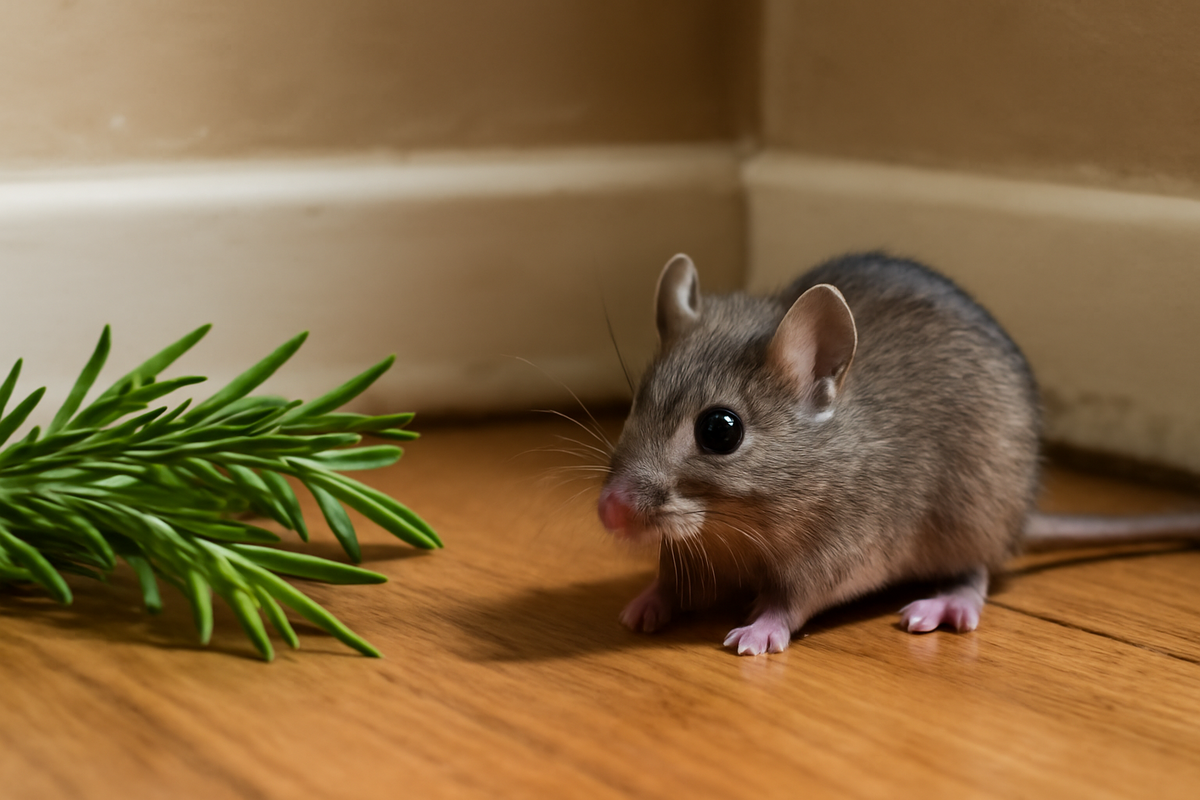
The first cold night arrived with a kind of sharp honesty. The wind slipped between the houses, the last leaves scraped across the pavement, and inside your home, the heater kicked on with a reassuring hum. You made tea, pulled a blanket over your knees, and felt that satisfyingly simple thought: it’s warm, I’m safe, I’m home. Then, sometime after midnight, as the refrigerator sighed and the house settled, you heard it. A faint, papery rustle in the wall. The almost-inaudible skitter of tiny feet across the baseboard. You held your breath. There it was again. You weren’t alone. Somewhere in the warm hollow spaces behind your drywall, a mouse was making itself comfortable in your winter sanctuary.
The Quiet Invasion You Rarely See Coming
Mice don’t burst into our lives the way other unwelcome visitors do. There’s no dramatic crash of broken glass, no snarling alarm. Their arrival is nearly always a whisper: a faint scratching, a little ticking sound from inside the pantry, something small and shadowed that flickers at the edge of your vision when you turn on the kitchen light at 2 a.m.
They come in driven by the same instincts that drive you to close the windows and stack firewood for the colder months: warmth, shelter, food, safety. Outside, the world turns harder. Seeds disappear under frost. Grasses matte down in the rain. The air thins into something sharp and unforgiving. A mouse, weighing less than a handful of coins, doesn’t stand a chance against a long winter without help.
From the mouse’s perspective, your home is a miracle. The warmth under the dishwasher. The dark, cozy runways inside the walls. Crumbs that tumble from toast and cookies and cereal boxes. It isn’t invading; it’s surviving. But that doesn’t make the droppings on your counter any less unnerving, or the idea of tiny teeth on your cereal bags any more welcome.
So your challenge becomes oddly intimate: how do you make your home feel like a haven to you and a hostile landscape to them? How do you gently but firmly say, “not here,” without filling your sanctuary with harsh chemicals or cruel contraptions?
The Smell That Turns a Mouse Right Around
For all their smallness, mice live in a world of intense sensation, especially smell. Where you might faintly notice a hint of coffee in the air, a mouse experiences a swirling, layered symphony of scents: the trail of another mouse that passed hours ago, the ghost of last night’s dinner in the trash, the distant, sharp signature of a neighborhood cat.
What you need is a smell that cuts through their scent map like a blinding light. Something that doesn’t just gently suggest “go elsewhere,” but shouts it. Fortunately, nature has already designed one of the most effective: peppermint.
To human noses, peppermint is refreshing—bright, cool, reminiscent of winter holidays and clean toothpaste and candy canes. But to a mouse, that same fragrance can be utterly overwhelming. Their noses, exquisitely tuned to detect subtle scents, are practically assaulted by strong essential oils. Peppermint doesn’t just smell strong; it disrupts the complex scent trails and cues that mice rely on to navigate.
Imagine stepping into a room where the volume has been turned up so loud it’s just static. That’s what peppermint can do to a mouse’s world. It doesn’t poison them, doesn’t harm their bodies. It simply makes the environment unlivable to their senses, pressing them to move on to friendlier terrain.
Why Peppermint Works So Well
It’s easy to assume this is just an old-fashioned tip—something a grandparent might insist on, along with mothballs in the closet and soap in the drawers. But peppermint’s power as a mouse repellent isn’t purely anecdotal. It ties into biology and behavior.
- Overwhelming intensity: Mice have far more scent receptors than we do. Concentrated peppermint oil is like a shout into their nervous system.
- Disrupted communication: Mice communicate and navigate through tiny scent trails from urine, fur, and food. Peppermint can blur or cover those trails.
- Natural avoidance: Many animals instinctively avoid strong, unfamiliar plant compounds. It’s a survival mechanism: powerful smells often signal plants that are irritating or toxic.
The best part? While mice pick up on peppermint as a threatening storm of smell, most humans experience it as cleansing and comforting. In other words, you’re curating your home’s atmosphere to say “welcome” to you and “absolutely not” to them.
Turning Your Home Into a Minty No-Go Zone
The magic isn’t in simply waving a peppermint leaf in the air; it lies in how you deliver that smell into the hidden, mouse-sized parts of your home. This is where the strategy becomes almost like setting a gentle, invisible fence—one that works nose-first.
Start with a bottle of 100% pure peppermint essential oil. Not a perfume, not a synthetic blend, but the real, concentrated oil distilled from peppermint leaves. When you twist that cap and take your first deep breath, you’ll understand what the mice are about to be up against.
Simple Ways to Use Peppermint Against Mice
- Cotton Balls Soaked in Oil: Take cotton balls and saturate them with peppermint oil—10–15 drops each. Place them at suspected entry points: behind the stove, under the sink, behind the fridge, near tiny gaps in baseboards, or around pipes. Replace every 1–2 weeks or as soon as the scent fades.
- DIY Peppermint Spray: In a small spray bottle, mix about 10–20 drops of peppermint oil with a cup of water and a splash of mild soap (to help it mix). Shake well and lightly mist baseboards, under-sink cabinets, and other target zones.
- Strategic Scent “Fences”: If you suspect mice are traveling along particular routes—like the back of the pantry or along a basement wall—create a peppermint “barrier” by lining those paths with soaked cotton or frequent spray.
You don’t need to turn your home into a candy-cane factory. In fact, too much oil can be overwhelming even for human noses. Think of it like putting up roadblocks at key corridors and doorways, not flooding the whole street.
And one more thing: peppermint is a tool, not magic. If mice are already plentiful and well-established, you may also need traps or professional help. But as a first line of defense—or as a way to say “don’t come back” once the intruders are gone—it’s remarkably effective.
The Other Smells in Nature’s Little Arsenal
Peppermint might be the star of this story, but it’s not alone. The natural world is full of strong, assertive scents that mice would rather avoid. Together, they can create a layered wall of aroma that, to a mouse, might as well be a “no vacancy” sign lit up over your front door.
Other Scents Mice Tend to Hate
- Spearmint & Wintergreen: Cousins to peppermint, with similar effects—especially in combination.
- Clove & Cinnamon: Warm, spicy, and intense. Their essential oils can also irritate sensitive noses.
- Eucalyptus: Sharp and medicinal, it can scramble the delicate scent trails mice rely on.
- Lavender: Beloved by humans for its calming properties, often disliked by small pests because of its strength.
- Vinegar: Less romantic, more practical. Its harsh tang can temporarily erase scent marks.
Used thoughtfully, you can turn your home into a sort of botanical fortress. A bit of peppermint in the pantry, some eucalyptus near the garbage bin, a trace of lavender in drawers. It doesn’t have to smell like a perfume shop; just enough so that, to a mouse, every corner whispers: there are easier places to live than here.
Of course, not all smells are created equal in how long they last or how easy they are to maintain. Here’s a simple comparison to help you decide what belongs where:
| Scent | Best Form | How Long It Lasts* | Best Places to Use |
|---|---|---|---|
| Peppermint | Essential oil on cotton balls / spray | 7–14 days | Entry points, under sinks, behind appliances |
| Clove or Cinnamon | Essential oil or whole spices in sachets | 7–10 days (oil), longer for whole spices | Pantries, drawers, food storage areas |
| Eucalyptus | Essential oil spray | 5–10 days | Basements, garages, near trash cans |
| Lavender | Essential oil or dried sachets | 7–14 days (oil), weeks for dried sachets | Closets, linen cupboards, clothing drawers |
| Vinegar | Diluted in spray bottle | 1–3 days | Cleaning surfaces, wiping baseboards, under sinks |
*Approximate, depending on ventilation and temperature.
Smells Alone Won’t Save You (But They Can Tip the Balance)
The power of scent is a little like drawing a strong boundary in a relationship: vital, but not enough if everything else is sending mixed signals. If your home smells like peppermint but offers piles of accessible food, cozy nesting material, and wide-open entry points, the mice may simply grit their tiny teeth and adjust.
To truly keep them out, you’re choreographing a larger story—one where every detail, from the crumbs under the toaster to the gap beneath the back door, sends the same clear message: this home is not for you.
Pairing Scent With Smart Prevention
- Seal the Invitations: Walk slowly around your home’s exterior. Look for cracks, gaps around pipes, openings near vents, or spaces under doors where you can see daylight. Mice can slip through holes no bigger than a marble. Use steel wool, metal mesh, and caulk to block these tiny doorways.
- Clean Like a Forager Is Watching: Sweep under appliances, rinse dishes promptly, keep counters wiped, store food in sealed containers, and don’t leave pet food out overnight.
- Declutter the “Perfect Nest” Spots: Stacks of cardboard boxes, forgotten blankets, and paper bags in garages or basements are an open invitation. Tidy up, use plastic bins, and store seldom-used fabrics in sealed containers.
- Use Traps as Needed: If you already have visitors, traps—whether snap traps or humane catch-and-release options—may be necessary. Once they’re gone, scents and sealing become your maintenance routine.
Think of peppermint and its pungent allies as the final flourish: the scent that confirms what everything else has already told the mouse—that this is not a place to settle in, but a place to pass by.
The Comfort of a Home That Smells Like It Belongs to You
There’s a quiet, underrated peace that comes from knowing your home is under your care in this way. The baseboards wiped down, the cupboards checked, the corners claimed not just by your furniture but by your intention. A few small cotton balls tucked like tiny guardians in the shadowed spaces you rarely see.
Later, when the wind rattles the windows and the world outside feels a little too dark and wide, you might walk into your kitchen and notice a faint, cool sweetness in the air. The peppermint is there, invisible yet present, like a line drawn in a language only certain creatures really understand.
Maybe the mouse that once squeezed under the back door pauses on the cold concrete step. It can feel the warmth that pours from the crack, smell the complex story of your life inside—yet over all of that, it’s hit with a piercing, unnatural clarity of mint and spice. It hesitates. Turns. The night swallows it back up. It will find a better place, somewhere softer, less defined, more forgiving to its senses.
Inside, you refill your mug, straighten the blanket over your lap, and let the heater hum. Your home is not perfect. No home is. But it is yours—its smells, its corners, its boundaries—and you’ve drawn those boundaries in a way that keeps you kind, keeps you safe, and keeps the quiet invaders outside, where they belong.
FAQ
How often should I replace peppermint-soaked cotton balls?
Replace them every 1–2 weeks, or sooner if you can no longer smell the peppermint when you get close. In warmer, draftier areas, you may need to refresh more frequently.
Can peppermint oil alone completely get rid of mice?
No. Peppermint is best as a deterrent and a support tool. For an active infestation, combine it with sealing entry points, removing food sources, and using traps or professional pest control if needed.
Is peppermint oil safe for pets and children?
Used carefully, diluted peppermint oil is generally safe. Keep concentrated oil and soaked cotton balls out of reach of children and pets, and avoid using strong oils where cats and dogs might lick or chew them. If in doubt, talk to your veterinarian or pediatrician.
Where are the most effective places to put peppermint oil in my home?
Focus on entry points and travel routes: under sinks, behind appliances, along baseboards, inside pantries, near utility line openings, and around basement or garage doors.
Do mice eventually get used to the smell?
They can become less sensitive if the scent is weak or fades over time. Keeping the smell strong and pairing it with other prevention measures (like sealing gaps and cleaning) makes it much harder for them to adapt.
Can I just use peppermint-scented cleaners or candles?
Most scented products are too weak or synthetic to strongly affect mice. They also tend to diffuse into the open air instead of concentrating in the tight corners and cracks where mice travel. Pure essential oil placed strategically works far better.
What if I already see mouse droppings even after using peppermint?
That means the deterrent isn’t enough on its own. Increase the frequency and concentration of peppermint, add other strong scents like clove or eucalyptus, set traps in active areas, and carefully inspect and seal all possible entry points.

Hello, I’m Mathew, and I write articles about useful Home Tricks: simple solutions, saving time and useful for every day.