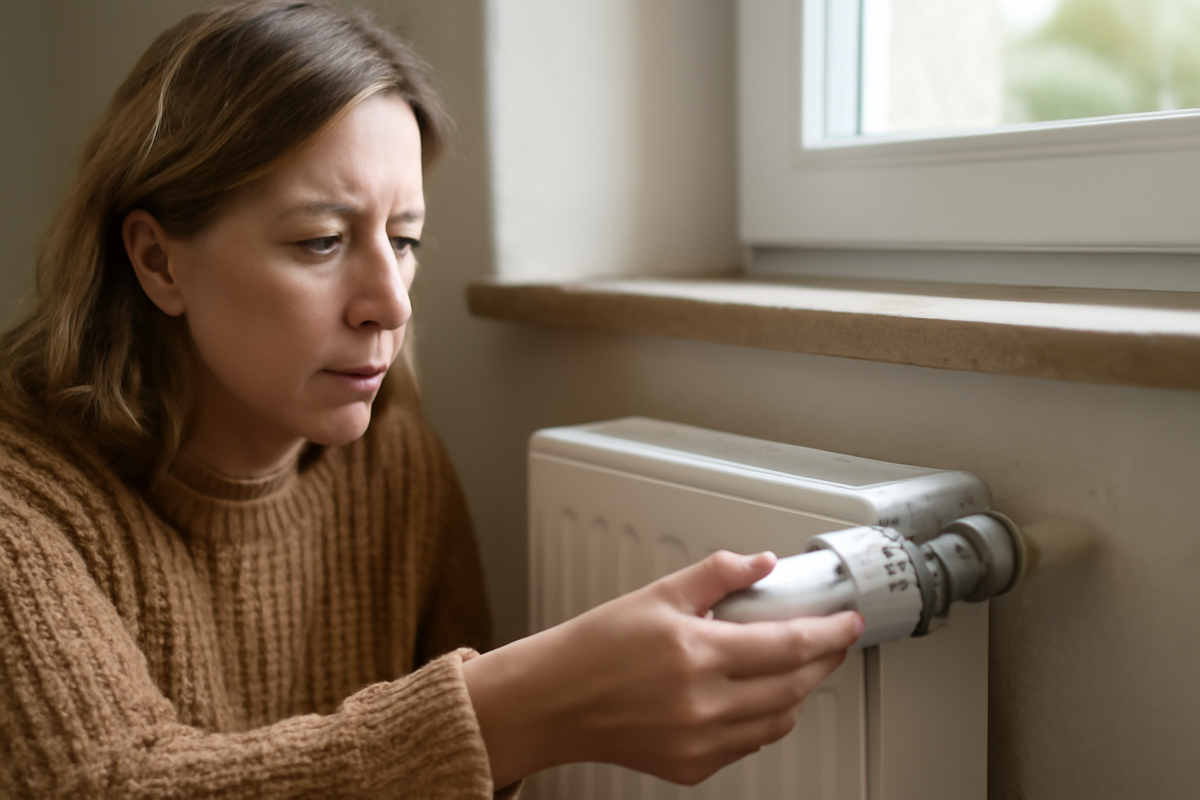
The first cold snap of the year always seems to arrive overnight. One day you’re cracking open a window for a breeze, and the next you’re standing in the hallway, shivering in your socks, staring at the thermostat like it’s a riddle carved into stone. Do you nudge the heat up for a quick blast of comfort, then turn it back down to “save money?” Or do you leave it ticking away at a low, steady level all day and night, hoping consistency is kinder to both your wallet and the planet?
Somewhere between the whir of the boiler and the soft click of radiators, this quiet domestic debate has taken on almost mythic status. Friends swear by different approaches. Your parents might tell you one thing, your neighbor another. And somewhere in the background, your gas or electricity bill waits like a verdict.
The Myth of the “Always-On” Sweet Spot
The idea that leaving the heating on low all the time is “more efficient” has a powerful, almost intuitive pull. It sounds reasonable: surely, if you let your home cool down, your system has to work harder to warm it back up—like pushing a heavy boulder up a hill again and again, instead of just keeping it balanced at the top.
But your house isn’t a boulder; it’s more like a leaky thermos. Heat is always trying to escape—through walls, windows, roofs, and floors. The bigger the difference between indoor and outdoor temperatures, the faster that precious warmth slips away into the cold.
Energy specialists put it simply: when your home is cooler, it loses heat more slowly. When it’s warmer, it loses heat more quickly. So if you keep your heating on constantly—even at a “low” level—you’re maintaining a higher temperature for more hours of the day, and that means more total heat loss. The boiler cycles on less dramatically, perhaps, but over time it may burn more fuel overall.
This is why most heating experts, building engineers, and energy agencies tend to agree on one central point: in general, it’s more efficient to heat your home only when you need it, rather than all the time. That doesn’t mean constantly fiddling with the thermostat, but it does challenge the myth of the ever-gentle background warmth being cheaper in the long run.
Comfort vs. Cost: What Your House Is Secretly Doing
Walk into a chilly living room on a January evening and your body reacts immediately. Cold nose, stiff fingers, shoulders creeping up around your ears. So it’s no surprise that many people crank the thermostat up for a quick hit of comfort. Others, weary of fluctuating bills and temperatures, resign themselves to that faintly tepid, always-on setting that never quite feels cozy.
Hidden behind these instinctive choices are two competing forces: comfort and cost. And sitting silently between them is your building itself—the brick, stone, wood, insulation, and glass that decide how quickly your space sheds its warmth once the boiler stops.
Experts like to talk about thermal mass—how much heat your home can store—and insulation—how slowly that stored heat escapes. A well-insulated home with solid walls, good windows, and minimal drafts cools down slowly. Turn the heat off for a few hours, and you may barely notice the difference, especially if the outdoor temperature isn’t brutal. In these homes, cycling the heating based on when you’re actually there can make a noticeable difference to energy use without sacrificing comfort.
In a draughty, poorly insulated house, though, warmth can seem to evaporate in minutes. Radiators go cold and the chill creeps back with disconcerting speed. It’s in homes like these that people are most tempted to keep the heating on low constantly, just to chase away that bone-deep cold. It can feel like fighting the tide with a teacup, and the frustration shows up in the monthly bill.
The uncomfortable truth? The worse the insulation, the more expensive that constant, low-grade heating habit tends to be. The leaks don’t stop just because the temperature is modest. In fact, they carry on all day, every day.
What the Physics (and the Bills) Are Really Telling You
To understand why experts almost always lean toward timed or intermittent heating over “always-on low,” it helps to zoom in on the basics of heat loss. The physics is surprisingly forgiving once you strip away the jargon.
Heat naturally flows from warm areas to cold ones. The speed of this flow depends on two things: how big the temperature difference is, and how good (or bad) your home’s envelope is at resisting that flow. Picture two scenarios:
- Your house is held at 21°C all day while it’s 5°C outside.
- Your house is 21°C only during the hours you’re home; the rest of the time, it’s allowed to drop to, say, 16°C or 17°C.
In the second scenario, the average temperature difference between inside and outside is smaller over 24 hours, so less heat escapes overall. That means your boiler (or heat pump) doesn’t have to replace as much lost energy. The notion that it somehow “works harder” to reheat the house after a dip misunderstands how these systems operate.
A modern boiler doesn’t strain like a person sprinting up a hill every time you ask for more heat. It simply runs until your thermostat’s setpoint is reached, then shuts off or modulates. The total fuel used is closely linked to how much heat the house loses, not how “fast” you ask it to catch up—especially with gas and modern condensing boilers which are actually more efficient when they can run consistently for a while rather than constantly ticking on and off at tiny loads.
Of course, your energy bill cares nothing for theories; it simply reflects how many kilowatt-hours you’ve used. And for most households, that number shrinks when heating is scheduled, responsive, and aligned with real life rather than fear of the cold.
| Heating Approach | How It Feels Day-to-Day | Typical Impact on Energy Use |
|---|---|---|
| Always on, low setting | Background warmth, rarely very cozy, constant hum in the background. | Often higher overall use, as the house is kept warm for many more hours. |
| Timed or scheduled heating | Warm when you need it, cooler when you are asleep or away. | Generally lower use when well tuned to your routine. |
| Smart thermostat with zoning | Targeted comfort in occupied rooms, others cooler. | Can significantly cut use, especially in larger homes. |
| Manual on/off “as needed” | Can feel boom-and-bust: very warm, then slowly cold again. | Mixed; can be efficient, but often leads to overheating then waste. |
When “On and Off” Works Best (and How to Avoid the Chill)
If “keep it low all the time” isn’t the winner, what does the alternative actually look like in a normal household—not a pristine, perfectly insulated eco-home, but a real place with drafty corners, odd schedules, and people who hate getting out of bed into cold air?
Most heating experts point toward a middle path: scheduled, predictable heating that focuses warmth where and when you need it most. It’s not about constantly flipping the system on and off like a light switch but creating patterns.
Imagine this: the living area warms slowly in the hour before you wake. The bathroom radiators quietly come to life, so the tiles don’t bite your bare feet. As you leave for work, the thermostat allows the temperature to drift down to a cooler setting, staying there most of the day. Then, perhaps half an hour before you usually return, the heat gently builds again, so the home feels welcoming rather than bracing. Overnight, the temperature drops a few degrees—not enough to make you shiver under the duvet, but enough to keep heat loss, and costs, in check.
With programmable or smart thermostats, this rhythm is easy to set up, and once in place, it often requires only small tweaks. If you live in a home that cools rapidly, you might want shorter gaps between heating periods or a slightly higher overnight setting. If your place holds heat like a stone barn in summer, you may be able to let the temperatures drift down further between heating episodes without noticing a thing.
For people who worry about that notorious “morning shock,” one trick is using a slightly lower maximum temperature but starting the heating a bit earlier, so the warm-up is gradual. Your body often adjusts better to “not-cold” than to “instantly toasty,” and the energy footprint can be gentler, too.
Why Experts Rarely Recommend “Set and Forget Low”
When you talk to building scientists, the phrase “leave it on low all the time” elicits a familiar wince. It’s not that it never works; in some specific, well-insulated, very stable homes, the difference between that and a well-tuned schedule might be small. But across millions of varied houses and apartments, it’s a blunt instrument—simple, but often costly.
They also point out a hidden flaw: living in a home that never quite warms up fully can lead to persistent, low-level damp and condensation in colder corners, especially if ventilation is poor. That can invite mold, particularly on outside walls and window reveals. Ironically, people sometimes end up turning the heat up even more to fight that damp, and the cycle continues.
By contrast, periods of more decisive heating, combined with good ventilation and occasional airing out, can dry the space and keep those clammy, shadowed spots in check. Intermittent heating doesn’t automatically fix damp, but it can be part of a more active approach to indoor climate rather than a passive, lukewarm truce.
Real-World Nuance: Old Radiators, Heat Pumps, and Everything In Between
Not all heating systems behave the same way, and this is where the story gets more nuanced. A traditional gas boiler with radiators has a different personality from a modern air-source heat pump, and your strategy might shift accordingly.
Boilers and Radiators
Most conventional boilers are quite content with intermittent use. They heat water, push it through radiators, and then rest. Turning them down or off for long stretches rarely hurts, provided the building doesn’t get dangerously cold (which can risk frozen pipes in extreme conditions). In these setups, timed heating that matches occupancy typically wins on efficiency.
Heat Pumps and Gentle Operation
Heat pumps, however, are happiest when they’re not asked to swing temperatures wildly. They work most efficiently when they run steadily at a relatively low output, maintaining a moderate indoor temperature rather than racing up from a deep chill. For homes heated by heat pumps and underfloor systems, experts often recommend smaller temperature setbacks—perhaps just a degree or two at night or when away—instead of dramatic on/off swings.
Even then, the core principle remains: avoiding unnecessarily high temperatures for long hours is still key. You may keep things “on” more consistently with a heat pump, but you’ll often still benefit from small, thoughtful reductions rather than a stubbornly fixed setting.
Designing Your Own Heating Story
Think of your home’s heating pattern as a kind of seasonal script you can edit, rather than a law handed down by the thermostat gods. The most successful setups tend to emerge from three simple questions:
- When are you actually home and awake? Focus your warmest periods there.
- How quickly does your home cool? Adjust the length and depth of setbacks accordingly.
- What’s your comfort threshold? Be honest about what temperatures feel fine once you’re moving, dressed, or under blankets.
Start with modest changes. If you’ve been on the “always-on low” team, try introducing just two distinct comfort periods: morning and evening, with a clear, slightly cooler gap in between. Give it a week or two; your body and your walls both need time to adjust to new patterns.
If you already use a timer but the house feels like it’s constantly yo-yoing between too hot and too cold, resist the urge to crank. Instead, bring the peaks down a little and start heating earlier, so the rise is slow and manageable. Often, this smooths the experience without sacrificing that feeling of stepping into a comforting space after a long day.
Layered clothing, draft excluders, thick curtains, and small insulation fixes all amplify the impact of any heating strategy. A simple roll of foam around a leaky window can make your new schedule feel suddenly much more generous. The less your home leaks, the more freedom you have to cycle the heating without discomfort.
So, Which Is Better—On and Off, or Low All the Time?
If you’re hoping for a single, triumphant verdict, here it is, drawn from the quiet consensus of engineers, energy consultants, and building scientists:
For most homes with conventional boilers and average insulation, it is usually better to heat your home when you need it—using timers or smart controls—than to keep the heating on low all the time.
Doing so generally reduces overall heat loss, uses less energy, and lowers bills, while still allowing plenty of comfort if the schedule is thoughtfully set. The “always-on low” method may feel convenient, but in many properties it quietly bleeds warmth and money into the outdoors hour after hour.
There are exceptions: very well-insulated homes, buildings with high thermal mass, and systems like some heat pumps may benefit from gentler, more continuous operation with only small temperature setbacks. But even there, the principle isn’t “blast it constantly”; it’s “avoid big swings while still avoiding needless overheating.”
In the end, that little plastic box on the wall isn’t asking you to pick a side in an abstract debate. It’s offering a chance to align your home’s warmth with the rhythms of your life and the realities of your building. Beyond the folklore and half-remembered advice lies something simpler and more empowering: paying attention, experimenting, and letting your own comfort and bills reflect back what works.
On the next cold morning, as you pass the thermostat in your thick socks, you might pause just a moment longer. Not to argue with it, but to consider it as a kind of quiet conversation—between physics, habit, and the life you live inside your walls.
FAQ: Heating On and Off vs. Low All the Time
Does turning the heating on and off damage the boiler?
Normal on/off cycling does not damage a modern boiler. They are designed to start and stop many times a day. Extremely rapid cycling caused by poor controls or an oversized boiler can reduce efficiency over time, but using a timer or thermostat as intended is perfectly safe.
Will reheating a cold house use more energy than keeping it warm?
No, in most cases it will not. While it takes energy to heat a cool house back up, you save energy during the hours it was cooler and losing heat more slowly. Over a full day, that reduction in heat loss usually outweighs the cost of reheating.
What temperature should I set at night?
Many experts suggest a night-time setback of about 2–4°C below your daytime temperature, as long as your home doesn’t get uncomfortably cold or risk damp issues. For example, 20–21°C by day and 16–18°C at night works well for many households.
Is keeping the heating low all the time ever a good idea?
It can make sense in very well-insulated homes with stable indoor temperatures, or in specific cases where health needs require constant warmth. Even then, slight reductions at night or when away can still save energy without sacrificing comfort.
How can I tell if my home is better suited to cycling or constant low heating?
Observe how fast it cools when the heating is off. If it stays reasonably comfortable for several hours, cycling with timers will likely work well. If it feels cold again within an hour, your home is losing heat quickly—improving insulation and drafts is the first step, and then using gentler, well-planned schedules can still help reduce waste.

Hello, I’m Mathew, and I write articles about useful Home Tricks: simple solutions, saving time and useful for every day.




