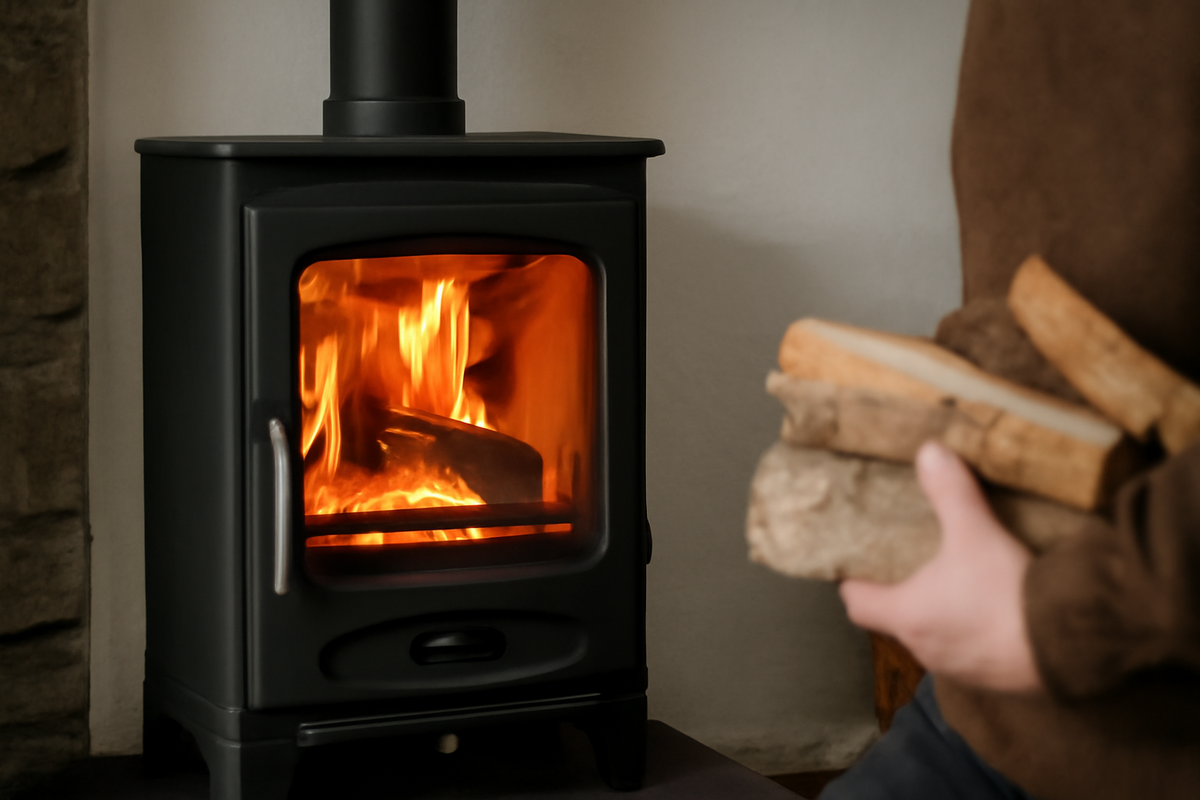
The first time you stand in front of a glowing wood stove on a bitter evening, there’s a moment when the world seems to shrink down to the radius of that warm, breathing box. Outside, the dark is pressed against the windows; inside, there’s a soft ticking from metal as it warms, the gentle crackle of logs settling, and that deep, ancient comfort of heat that smells faintly of forest and winter. It feels simple, almost primitive. But choosing the right wood stove in our hyper‑modern world is anything but simple—and getting it wrong can mean too much smoke, too little heat, and a lot of regret.
Why the “feel” of a stove can fool you
Walk into any showroom and you’ll notice something: most wood stoves are beautiful. Heavy doors, big glass windows, elegant enamel finishes, iron that looks as if it could outlast the house itself. You can fall in love with a stove in about three seconds—and that’s the danger.
Because under that cast iron skin, efficiency is mostly invisible. You can’t see how cleanly it burns, or how much heat it will actually deliver to your living room versus sending it straight up the chimney. You can’t tell by touch whether it’s the right size for your space, or whether it will keep you cozy through January instead of blasting you into a sweaty fog and then dying out at 3 a.m.
So before you get seduced by the glow and the glass, there are five quiet, practical checks that matter far more than the color of the enamel or how pretty the fire will look in your holiday photos. Think of them as the backstage crew of your future winter comfort: invisible, but absolutely running the show.
1. Match the stove to the space: heat output and room size
Picture your home in mid‑winter: the cold pushing in at the corners, the air a little sharper near the windows. Now imagine your stove as a steady sun in the middle of that universe. Too small, and you’ll be huddled next to it in a wool hat. Too large, and you’ll be cracking windows in January because it’s turned your house into a sauna.
Wood stoves are usually sized by their heat output, measured in kW or BTU. Sellers often talk about “heats up to X square meters,” but those numbers are based on ideal conditions: good insulation, decent windows, moderate climate. Real life is messier.
Here’s where a little honesty goes a long way. How drafty is your house, really? Do you have high ceilings that gulp heat like a chimney? Is this stove meant to be your main heat source or just a deep‑winter companion to an existing system?
An efficient wood stove should almost never run constantly on its lowest setting. If you have to choke it down all the time because it’s too powerful, the fire burns cooler, dirtier, and less efficiently. That means more creosote in the chimney, more smoke in the neighborhood, and more wood wasted. Counter‑intuitively, a slightly smaller stove that you can run confidently at a lively burn is usually more efficient in practice than an oversized monster running half‑asleep.
As a rough guide, many households do better aiming a bit below the “maximum” figure promoted in the brochure, especially in smaller or well‑insulated homes. A good dealer can help calculate heat needs, but it’s worth coming armed with your own sense of your house: floor plan, insulation, and how you actually live. Do you close doors, or keep things open‑plan? Do you want the whole home warm, or just a core living area?
2. Peek behind the flames: efficiency rating and emissions
You can’t see efficiency—but you can read it. Modern wood stoves list a tested efficiency percentage and, increasingly, emissions data. These numbers are your best clue to how clean, economical, and neighbor‑friendly that pretty fire will be.
A higher efficiency rating simply means more of the wood’s energy ends up as heat in your room instead of as smoke, soot, or lost heat up the flue. For a primary heat source, you’ll usually want something in the upper range of modern stoves, not a nostalgic box that mostly heats the sky. Over the life of the stove, even a small percentage difference can translate to a startling amount of wood saved—and fewer hours spent stacking, splitting, and hauling it.
Emissions numbers, usually given in grams of particulates per hour, tell another part of the story. An efficient stove with low emissions burns its fuel almost completely. Less unburned material means less smoke, fewer particulates in the air, and less creosote lining your chimney. In cold, still winter air where smoke tends to hang in the valley, this is about more than personal comfort; it’s about the air everyone is breathing.
If you want a quick mental picture, imagine two fires. One is lively, bright, and clean, the flames rolling actively over the wood; the smoke from the chimney is faint and almost transparent. The other fire smolders, dull orange with lazy flames; outside, the smoke pours out thick and grey. The difference between those two isn’t just how much wood is being burned—it’s how well. Efficiency and emissions ratings are simply the lab‑tested version of that visible difference.
3. Learn the language of clean burn and airwash
Once you start shopping, you’ll hear certain phrases over and over: “secondary burn,” “clean burn,” “airwash system.” They can sound like marketing fluff, but they describe real mechanisms that separate an old‑fashioned smoke‑box from a modern, efficient heater.
A well‑designed clean‑burn stove doesn’t just light the wood and hope for the best. It carefully feeds air to different parts of the firebox: primary air to get the logs burning, secondary air to ignite the gases and smoke released from the wood, and sometimes even tertiary air to polish off the last bits of burnable material.
This is where the magic happens. Wood is not just the solid log you see; it also releases gases as it heats. In a basic stove, a lot of those gases simply turn into smoke and escape up the chimney. In a clean‑burn stove, those gases ignite in the firebox itself, creating that beautiful pattern of dancing flames suspended above the logs—like northern lights in a small iron sky.
Airwash is another quiet hero. It’s a flow of air directed across the inner surface of the glass window, helping keep soot and smoke from settling there. The result, if you burn seasoned wood correctly, is a clear view of the fire instead of a murky, baked‑on film you’re always scrubbing. That clean glass isn’t only aesthetic; it’s also a sign that the stove is burning its fuel more completely.
When you’re standing in a showroom, ask the salesperson to open the door and show you where the air inlets are. How is the secondary burn achieved? Is the baffle easily accessible for cleaning? Can you see deflectors or channels that guide air across the glass? The more intentional the airflow looks, the more likely this stove is a carefully‑designed burner rather than a simple metal box with a pretty face.
4. Don’t ignore the chimney: installation, draft, and placement
The most efficient stove in the world can turn into a disappointment if it’s paired with a lazy, poorly designed chimney. In a sense, your chimney is the stove’s invisible partner—a vertical engine that pulls air through the firebox and clears the combustion gases.
Draft is what drives this system. Good draft means the fire lights easily, burns steadily, and responds when you adjust the air controls. Poor draft means smoky starts, fickle flames, and frustration. The trick is that draft is affected by many things: chimney height, diameter, insulation, bends in the pipe, the house’s overall air pressure, even nearby roofs or trees.
When choosing a stove, think in terms of a whole system: stove, chimney, and room working together. This is one reason most experts recommend involving a qualified installer or chimney professional early, even at the planning stage. A clean, straight, properly sized, insulated flue is not glamorous, but it is the backbone of efficient wood heat.
Placement matters, too. A centrally located stove often spreads heat more evenly, especially in open‑plan homes. Install the stove in a far corner, and you might get one toasty room while the rest of the house sulks in the cold. Consider how air moves in your home: stairwells, open doorways, and long hallways all affect how that heat wanders.
And then there’s safety clearances and hearth protection. An efficient stove often runs with a hotter, cleaner fire, which is wonderful for your chimney but demands respect around nearby walls, floors, and furniture. Read those clearance numbers; imagine not just the stove, but the safe bubble it needs. This is the invisible circle that will keep your cozy evenings from turning into an emergency call.
Typical wood stove sizing and use overview
Here’s a simple overview to help you think about size, burn rate, and how efficiency plays out in everyday use. These are broad examples, not strict rules, but they give a sense of how “more” is not always “better”.
| Stove Size / Output | Typical Space & Use | How It Often Performs |
|---|---|---|
| Small, lower output | Cabins, tiny homes, one main room | Runs lively and clean when sized right; may need more frequent reloading on very cold nights. |
| Medium output | Average homes, open living/dining areas | Good balance of burn time and comfort; usually the sweet spot for efficiency in many households. |
| Large, high output | Poorly insulated houses, large open plans | Great for big, cold spaces; often run too low in smaller homes, which hurts efficiency and cleanliness. |
5. Think beyond the fire: usability, wood, and your daily life
There’s the stove you see in the shop, and then there’s the stove you live with on a Tuesday in February at 6 a.m., half awake, coaxing embers back to life with cold hands. Efficiency isn’t just a number; it’s also how easily you can use the stove the way it was designed to be used.
Open the door. Is it heavy, solid, and well‑sealed, but still comfortable to operate? Imagine doing that motion hundreds of times a winter. Look at the handles and controls: are they intuitive, or will you be fumbling in the dark? Are the air controls clearly marked, with enough range that you can fine‑tune the burn instead of just “on or off”?
Then, imagine your wood. Efficient stoves are fussy in one crucial way: they truly need dry, seasoned fuel. If you’re serious about efficient burning, you’re also committing to serious wood storage and timing. Are you ready to stack a year ahead, or at least six months? Do you have a spot where sun and wind can kiss those split logs until they ring dry when knocked together?
Look at the firebox shape and size. Will your typical log length fit easily, or will you be re‑cutting pieces in the snow? Can you load front‑to‑back or side‑to‑side in a way that makes sense with your wood pile? A well‑designed firebox encourages good loading patterns that help the stove burn cleanly without you having to fight it.
Lastly, think about maintenance. Even the best stove needs ashes removed, seals checked, baffles inspected, and the chimney swept. Some designs make this a quick, almost meditative task; others turn it into a contortionist act. An efficient stove is one you’ll actually keep clean and tuned, because it doesn’t make you dread the chores that go with it.
The quiet satisfaction of getting it right
Years from now, if you choose well, your relationship with your wood stove will fade into something simple and steady. There will be winter evenings when you lay a few splits on a bed of coals, close the door, nudge the air control, and then walk away without a second thought. The stove will take over with a kind of quiet competence: flames waking up, heat spreading out in slow, invisible waves, the glass staying clear enough that you can read the story written in the shapes of the fire.
What you won’t see in those moments are all the decisions that made them possible: choosing a size that matches your space and habits, insisting on good efficiency and low emissions, understanding the difference between a clean burn and a smoky one, pairing the stove with a proper chimney, and choosing a design that fits not just your aesthetic taste, but your daily life.
In a world of push‑button heat, a wood stove is an intentional choice. It asks something of you: time, attention, a certain respect for moisture content and airflow and ash levels. But in return, it gives a kind of warmth that is not only physical but emotional—a reminder that comfort can be active, participatory, and deeply satisfying.
Choose well, and those five checks become invisible threads running through your winters. You’ll notice them in what doesn’t happen: the smoke that doesn’t hang in the yard, the chimney that doesn’t clog, the woodpile that lasts a little longer than you thought, the mornings when there are still live embers waiting for you. That quiet reliability is its own kind of luxury.
And on some future night, when the power is out and the world is a tangle of wind and snow, you’ll stand in front of that stove and feel, somewhere in your bones, that you didn’t just buy a heater. You chose a companion for your winters—efficient, clean, and steady as the heartbeat of your home.
Frequently Asked Questions
How efficient should a modern wood stove be?
Most modern, well‑designed wood stoves reach efficiency figures in the upper ranges of what’s currently available, and it’s worth aiming for that. Over years of use, even a small percentage improvement can save significant wood and reduce chimney maintenance.
Can a wood stove really heat an entire house?
It depends on the house layout, insulation, and stove placement. In smaller or open‑plan homes, a correctly sized stove can do most of the heating. In larger, compartmentalized houses, a stove often works best as a main source for a core living area, with other heating filling in the rest.
Why is seasoned wood so important for efficiency?
Wet or poorly seasoned wood wastes energy boiling off moisture before it can really burn. That leads to cooler fires, more smoke, and more creosote. Dry wood burns hotter and cleaner, which lets an efficient stove actually perform as designed.
How often should the chimney be swept?
Most households benefit from at least one professional sweep per year, often at the end of the heating season. If you burn a lot of wood, or you’re still learning how to run your stove efficiently, mid‑season checks can be a smart precaution.
Is a bigger stove always better in cold climates?
Not necessarily. Oversized stoves are often run at very low settings, which hurts efficiency and increases soot and creosote. In cold climates, the goal is a stove that can run with a strong, clean burn for long periods, matched to the real heat loss of your home—not simply the biggest firebox you can find.

Hello, I’m Mathew, and I write articles about useful Home Tricks: simple solutions, saving time and useful for every day.