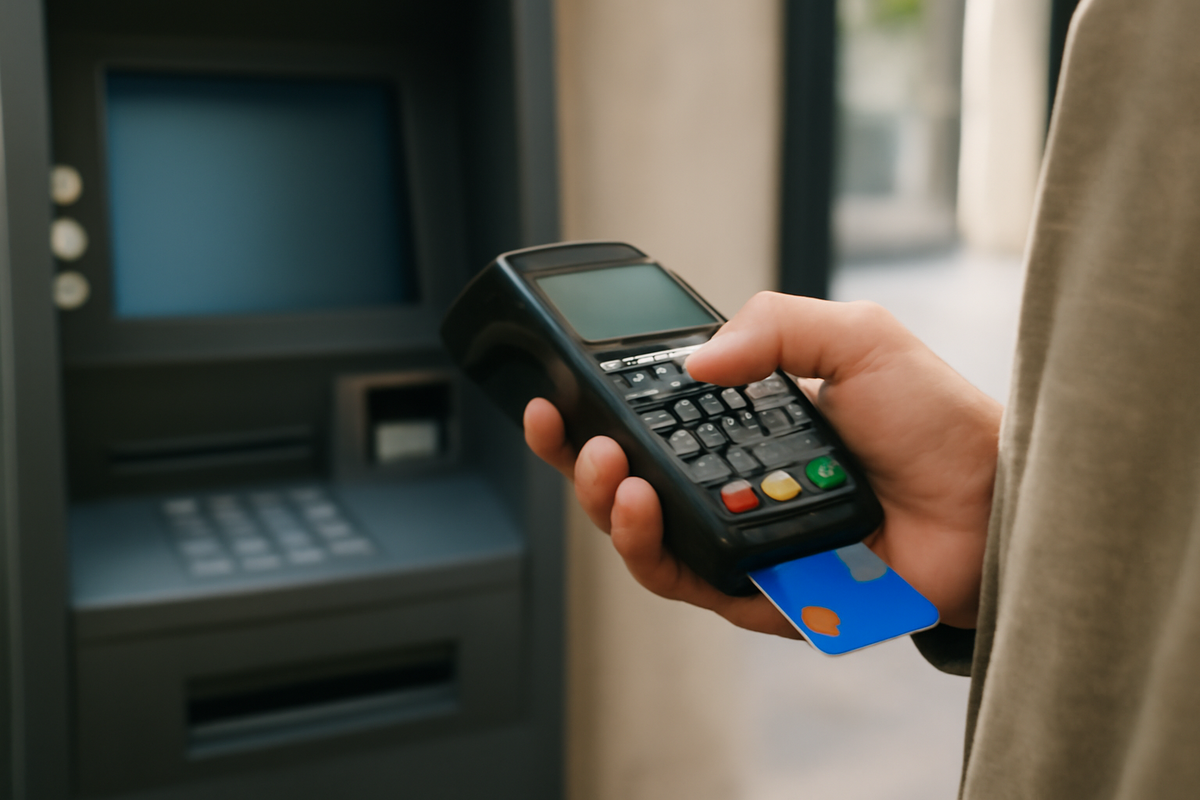
The cash machine beside the corner shop is fading into the grey of a drizzly afternoon. Its screen is dark, the plastic fascia taped over with a notice: “This ATM is no longer in service.” Someone has scrawled a question mark next to the printed explanation about “changing customer habits.” You can almost hear the ghosts of queuing Saturday mornings here—kids swinging on their parents’ arms, the clatter of receipts, the soft shuffle of notes as people prepped for the weekend. Now, the hum of a convenience store fridge is louder than ever, and the only glow comes from the phones in people’s hands.
The Sound of Silence Where the Machines Used to Hum
For decades, ATMs were a kind of urban wildlife: always there, blinking patiently in the background, dispensing money and a little quiet reassurance. You knew where they lived. The one near the bus stop, the double row outside the bank where the queue sometimes ran down the street, the solitary machine clinging to the wall of a rural petrol station.
Today, many of those familiar green and blue halos have gone dark. In some towns, they’ve vanished like old payphones, leaving only a faint discoloration on the wall and a tangle of screw holes. In others, the machines still stand but have turned unreliable: “Out of Cash,” “Temporarily Out of Service,” or that vague and oddly personal: “This terminal is not currently available.”
Yet people are still paying for groceries, still splitting café bills, still tipping, still buying second-hand bikes from strangers. The money is moving; it’s just less likely to pass through our fingers. As you watch a teenager tap a phone against a card reader and stroll away with a takeaway coffee, you can sense the line that’s quietly been crossed. Withdrawals aren’t always about cash anymore. They’re about access to money—how quickly, how safely, and by what device.
Invisible Money, Visible Shift
Walk down any high street and the new life is easy to spot. Where queues once formed in front of ATMs, now you’ll see people tapping contactless cards, smartwatches, and phones on terminals so small you could miss them, clamped to counters or resting in a palm. Delivery drivers wave devices that chirp happily every time a card kisses the screen. Market traders use tiny white card readers powered by mobile apps instead of rustling around in aprons heavy with coins.
The noise has changed too: fewer zips opening wallets, more little digital chimes. Instead of people counting notes at the edge of a pavement, they’re checking balances in banking apps while crossing the road, thumb scrolling, eyes flicking up briefly at traffic. The friction of cash—the deliberate moment of taking it out, feeling what’s left, deciding whether you can afford something—is dissolving into taps and swipes that happen almost without thought.
The machines that once spat out twenty-pound notes are thinning out. But withdrawals are not really disappearing. They’re slipping sideways, merging into our shopping, our travel, our chats with a driver dropping us home at midnight. To understand what’s replacing cash machines, you have to stand in that quiet where the old ATM used to hum, and listen to what the rest of the street is doing.
The New Ways We “Withdraw” Without Calling It That
If you’ve noticed yourself using a cashpoint less often, you’re not alone. A growing share of what used to be “ATM withdrawals” has been smuggled into other habits—convenient little rituals that don’t look like getting cash, but quietly do the same job.
Cashback at the Till: The Supermarket as Mini‑ATM
Picture a sleepy Sunday afternoon supermarket. A family in front of you is buying a roast chicken, salad, ice cream, and toilet roll. As they pay, the cashier asks the quiet question: “Any cashback?” The parent pauses, glances at the kids, then nods. “Yeah, twenty, please.” No neon sign, no security camera bubble, just a smooth, almost intimate transaction.
In many places, cashback at the till has become the most low-key replacement for a vanishing ATM. You pay for your groceries with a card, ask for a bit extra, and walk out with notes tucked beside the receipt. The money comes out of your bank account just like an ATM withdrawal, only it’s blended into the cost of your shopping—and the supermarket gets to move some of its cash stock without a security van turning up.
It’s not perfect. Cashback depends on the shop having enough notes in the till, and limits can be tight. In rural areas where the last proper bank branch disappeared years ago, a small store might be both lifeline and bottleneck for cash. But for many people, the supermarket checkout has quietly taken over as their main cash point, no PIN pad in the wall required.
Banking Without Banks: Post Offices, Shops and Shared Branches
There’s another kind of replacement that doesn’t look like an ATM at all. Step into a local post office, and you might see an older man at the counter, card in hand, asking to “take a bit out.” No branded bank logo, no leather chairs or hushed carpeting—just a clerk sliding notes under a glass screen.
Post offices and partner retailers have increasingly become stand‑ins for disappearing branches and ATMs. They offer over‑the‑counter withdrawals for different banks, often with longer opening hours than traditional high street branches. In some regions, several banks now share a single “community banking hub,” where staff rotate and customers of different banks can still get cash and basic services.
It’s a strange halfway world: the physical experience of withdrawing cash is still there—the weight of notes, the brief chat, the familiar smell of paper and printer ink—but the old, solid idea of “my bank branch” is loosening. Instead, you get shared spaces, shared counters, and a wider web of places where your money can become tangible again.
When the Screen in Your Pocket Becomes the Actual Bank
Even more dramatic than the shift from ATMs to shops and post offices is the quiet revolution in your pocket. Somewhere between your bus tickets, messages, and photos sits an icon that has eaten most of what ATMs used to do.
Apps, Cards and the Vanishing Need for Notes
Open a banking app and you can move money between accounts, send it to friends, split a dinner bill, freeze your card, or set spending limits—all from a chair at your kitchen table or while in bed, the dark lit only by a rectangle of light. For many people, checking the app has replaced checking the balance at the cash machine. You don’t need to stand in the wind, shielding the screen with your hand while a printed slip curls out. You see it live, every second, anywhere.
And then there are the cards and phones themselves. Contactless payments, once a novelty, are now instinctive. You pick up a sandwich and your hand reaches for your card almost before you’ve seen the price. In some places, public transport barely accepts cash anymore, nudging you towards digital travel passes and mobile wallets.
Digital “withdrawals” were once just online transfers into a savings account. Now, tapping your card at a café is, in a sense, a withdrawal you never hold. The money leaves your account at the same astonishing speed as an ATM payout, but remains weightless. This is both freedom and danger: it’s incredibly convenient, and just as easy to overdo without the physical friction of notes leaving your hand.
New Forms of “Taking Money Out”
Then there are the subtler kinds of withdrawals that barely existed a decade ago. Using a ride‑hailing app’s “cash out” feature to move earnings into your account at the end of a long shift. Connecting a digital wallet to a freelance platform and watching your balance update once a client pays. Requesting money from a friend through a banking app and seeing it arrive minutes later.
These transfers, instant and invisible, are becoming the new cash moments. You still feel that heartbeat of relief—“The money’s in”—but nothing physical changes in your hand. Just numbers shifting on a glowing screen.
What We Lose When the Notes Stay in the Vault
Walk into a small café that prides itself on being “card‑only” and you’ll feel a certain sleekness. No cash drawer slamming, no coins miscounted, no staff dashing to a neighbouring shop to get change. But there is a story unfolding beneath that effortless surface, and not everyone is written into its happy ending.
The People Left Reaching for a Vanished Slot
Think of an older woman who has never quite made peace with banking apps, who trusts paper statements and notes she can feel. Her local branch has closed, the ATM outside the pharmacy is gone, and suddenly what used to be a two‑minute walk to get money is a bus ride, if the bus is running at all. Each errand requires more planning, more cost, more dependence on others.
Or imagine a street musician, their guitar case open, now watching more people pass by with apologies: “Sorry, I don’t have any cash.” A charity volunteer rattling a nearly empty bucket, while donors take a photo of a QR code instead. A teenager doing odd jobs for neighbours who now prefer to “bank it over to you,” bypassing that proud handful of first wages.
The disappearance of cash machines is not just a technology upgrade. It’s a social rearrangement. Those who are comfortable with digital tools barely notice the change. Those who aren’t suddenly find their world shrunk, choice chipped away one machine at a time.
The Quiet Safety Net of Cash
There’s also the delicate matter of resilience. When a storm knocks out mobile networks, when card systems fail for a few tense hours, cash quietly becomes king again. Lights flicker in shops, card terminals sulk, and suddenly the people with notes in their wallets move through the day with a little more ease.
ATMs used to be part of that safety net: a last resort if a card reader glitched or a payment app crashed. Fewer machines mean fewer places to turn when systems go down. As withdrawals move further into the digital world, the whole web of our money depends more tightly on electricity, data centres, cables under the sea, and servers in places we’ll never see.
What’s Emerging in the Space Between Cash and Code
Yet the story isn’t simply about loss. As ATMs fade, new ideas are sprouting in the cracks—hybrids of digital and physical, experiments in how money can be both intangible and still feel local, human and real.
“Cash by Delivery” and Other Workarounds
In some cities, a different kind of cash machine now rings your doorbell. Drivers for certain services effectively act as mobile ATMs: you pay digitally, and they hand over cash you requested in the app, or they accept your notes and deposit them into your account. It’s a strange inversion of the classic model. The machine doesn’t sit in a wall; it sits behind a steering wheel.
Elsewhere, fintech companies are partnering with corner shops to turn them into micro‑branches—places where you can top up digital wallets with notes, or withdraw small amounts during normal shopping. The shopkeeper becomes both merchant and mini banker, the clink of coins and the flash of QR codes blending in a small, humming space.
Digital Cold Hard Cash: Stored Value and Offline Options
There’s also a growing interest in preserving some of cash’s best qualities—privacy, offline usefulness, a sense of limit—inside digital tools. Prepaid cards and stored‑value wallets let people load a fixed amount and spend it without exposing their main accounts. Some newer systems experiment with “offline” digital payments that can work even with no signal, imitating the resilience of cash when the network goes dark.
None of these fully replace the simple, universal power of an ATM: any card, any time, notes in hand within seconds. But they sketch an evolving landscape where access to money becomes more scattered, more mixed, and more woven into the routines of daily life rather than anchored to a single glowing box in a wall.
Comparing the Old Guardians and the New Replacements
To see this shift more clearly, it helps to set the vanishing machines beside the newer ways we’re getting at our money.
| Method | What It Feels Like | Main Strength | Main Weakness |
|---|---|---|---|
| Traditional ATM | Standalone, slightly ritualistic stop | Instant cash, familiar to almost everyone | Machines are expensive to run and are disappearing |
| Shop/Supermarket Cashback | Folded into everyday shopping | Convenient, especially if no ATM nearby | Depends on shop hours and till cash levels |
| Post Office/Banking Hubs | Face‑to‑face, human interaction | Helps those less comfortable with digital tools | Limited locations, queues at busy times |
| Mobile Banking & Cards | Light, seamless, often invisible | Fast, flexible, works almost everywhere | Excludes those without tech or signal; easy to overspend |
| Fintech/Partner Stores | Blended with local, everyday life | Brings services into small, community spaces | Coverage is patchy, rules vary by provider |
Viewed like this, the story of disappearing cash machines stops looking like a simple tale of old versus new. It becomes a map of trade‑offs. We gain speed, flexibility, and convenience. We risk losing universality, resilience, and the easy, tangible reality of counting out a week’s spending in notes and tucking it into an envelope.
Standing at the Wall, Listening for What Comes Next
So what does the future of withdrawals really look like, in the quiet shadow of that boarded‑up cash machine near the corner shop?
Most likely, it looks messy and mixed. Some people will barely touch cash again, living entirely inside apps and cards and digital wallets that speak to one another in an instant, day and night. Others will cling to notes and coins as long as they can, using cashback at supermarkets and visits to post offices as lifelines while the number of ATMs continues to shrink.
In between, there will be hybrids: local schemes to keep at least one free cash machine in a town; shared banking hubs on high streets; partnerships with shops and community centres; new digital systems designed to work better for people with patchy internet or older devices. Technology will keep sprinting ahead, but if we’re paying attention, policy and community pressure can tug it back towards inclusion.
When you pass a dead ATM now, it’s tempting to see only an ending. Yet every time someone taps a card, requests cashback, or opens an app to slide money quietly from one place to another, they’re participating in the next chapter. The way we “withdraw” is changing fast—but behind every beep, tap, and silent confirmation message is the same human instinct that once drove us to stand in line at a humming box in a cold wall: the need to feel in control of our money, to turn distant digits into something we can rely on.
Whether that something is a handful of notes, a reassuring app notification, or the soft chime of a card terminal is still being decided—not by any single bank or government, but by millions of small choices, every day, on every street where an old machine grows quiet and the new sound of money begins to take over.
FAQ
Why are cash machines disappearing?
ATM use has fallen as more people pay by card, phone, or online. Running ATMs is expensive—machines need maintenance, security, and regular cash refills—so banks and operators are removing those that aren’t used enough to justify the cost.
What is replacing ATMs?
A mix of options: cashback at supermarkets and shops, cash withdrawals at post offices and shared banking hubs, mobile banking apps, contactless cards, and digital wallets. In some places, partner stores and fintech services also allow cash in and out over the counter.
Will cash disappear completely?
Unlikely in the near future. Cash use is falling, but many people still depend on it, and governments and regulators in several countries are under pressure to protect “access to cash,” especially for older people and rural communities.
How can I get cash if there are no ATMs nearby?
Check whether local supermarkets, convenience stores, or post offices offer cashback or over‑the‑counter withdrawals. Your bank’s website or app may list places where you can withdraw cash without using an ATM.
Is going cashless more secure?
Digital payments can be safer in some ways—no notes to lose or steal, and fraud detection is often strong—but they introduce new risks like scams, phishing, and account hacking. Cash avoids digital tracking and system outages but is vulnerable to loss and theft. The safest approach often mixes both, depending on the situation.
What about people who don’t use smartphones or the internet?
They are the most at risk from disappearing ATMs and branches. Post offices, shared hubs, and in‑person banking services are crucial for them. Many advocacy groups are pushing for legal protections to keep basic cash services within reasonable reach of everyone.
How can I stay in control when most of my spending is digital?
Use your banking app or statements to track spending regularly, set budgets or alerts, and consider keeping a small amount of physical cash for emergencies. Some people still withdraw a weekly “allowance” in notes to give their spending a tangible limit, even in an increasingly cashless world.

Hello, I’m Mathew, and I write articles about useful Home Tricks: simple solutions, saving time and useful for every day.