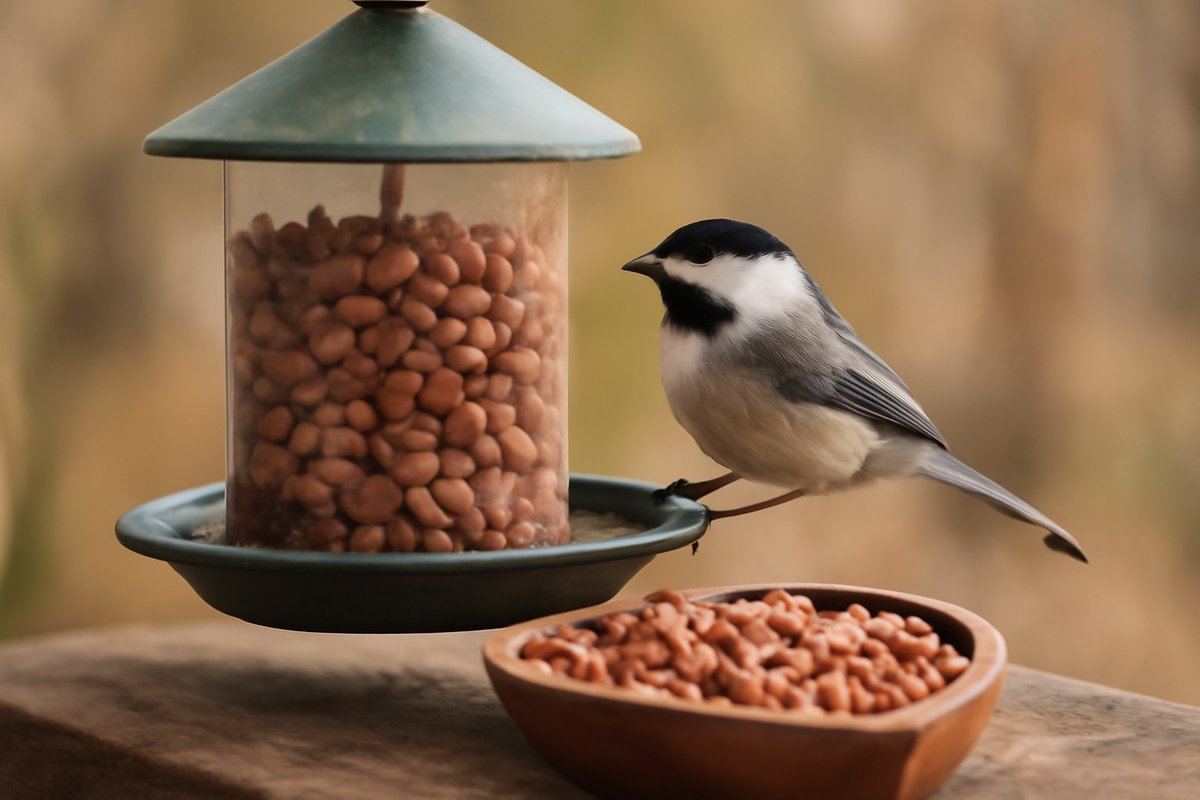
The first time you hear a winter dawn, really hear it, you realize how much work goes into each tiny note. The sky is the color of old pewter, breath hangs in the air, and everything looks like it has been dusted with sleep. Then somewhere in the cold tangle of branches by your porch, a chickadee calls. Another answers. A cardinal chips sharply from the hedgerow. You stand at the window, coffee in hand, watching small, feathered bodies ignite the morning. And you notice the other constant in this ritual: the feeder you filled yesterday—nearly empty again. Winter birds don’t sing on good vibes alone. They sing on calories. Lots of them.
The December Secret in the Paper Sack
By the time December settles in, bird lovers learn a simple truth: a full feeder is a promise. Once birds discover your yard, they fold it into their winter survival plan. They remember. They return. And if the feeder goes empty for a day or two, they drift elsewhere, following the quiet map of dependable food.
That’s why, tucked in garages and back porches all over the country, you’ll find the same unassuming thing: a cheap, crinkly paper or plastic sack of black oil sunflower seeds. Not the fancy, glossy mixes with cheerful labels. Not the expensive “gourmet” blends that look like granola for birds. Just a simple, dark pile of seeds that seems almost too plain to be special.
But this is the workhorse of winter bird feeding—the December treat backyard bird lovers absolutely rely on to keep feeders full every morning without draining their wallets. If you’ve ever poured a scoop of black oil sunflower into a feeder on a freezing dawn, you’ve seen what happens next. The yard wakes up faster than your coffee does.
Chickadees arrive first, like tiny inspectors. One grab, one gone. A nuthatch spirals down a tree trunk, snatches a seed, and disappears back to its secret cache. Cardinals appear like sparks against the snow, cautious but determined. Finches flutter in like bits of wind-tossed confetti. Even the shy woodpecker sidles in, pretending not to care too much, and then stays longer than planned.
All of this because of a seed that, pound for pound, might be the best winter bargain a bird lover can buy.
The Seed That Punches Above Its Weight
There’s a reason black oil sunflower is the resident hero of the December seed shelf. Unlike some decorative or “filler” seeds that bulk up commercial mixes without offering much fuel, black oil sunflower is almost indecently rich. Inside each thin, easy-to-crack shell is a soft, dark kernel packed with fat, protein, and energy dense enough to keep a bird’s internal furnace firing in subfreezing air.
Stand close to a feeder on a cold morning and you can actually hear the economy of it. The quick tap-tap-tap of a chickadee cracking the thin shell. The satisfied flutter of wings as a finch gulps down another seed. For them, every kernel is heat, flight, survival. For you, it’s a small scoop from a cheap bag that somehow makes you feel like you’ve participated in some ancient, shared contract between species.
Birds choose this seed with conviction. Set out a feeder of mixed seed and a feeder of straight black oil sunflower side by side, and the verdict is immediate and loud. Birds arrive, inspect, then crowd the black oil like it’s the only open diner on a snowy highway. They know. When the nights stretch long and the temperatures dip hard, high-fat food is not a luxury. It’s currency.
And yet, for all this power, black oil sunflower stays modestly priced, especially when you buy in larger bags during winter promotions at farm stores, garden centers, and even some supermarkets. You don’t need a deluxe setup or boutique blends to be someone’s favorite house on the block. Just a basic feeder, a place to hang it, and that sack in the corner that you promise yourself you’ll never run out of again.
The Under-$1 Morning Symphony
If you’ve ever worried that feeding birds all winter is going to silently destroy your budget, you’re not alone. Many backyard birders start eagerly in November, then flinch when they realize how quickly a few small bags of seed can disappear. That’s where the real magic of this “cheap December treat” shows up—especially when you think about it in terms of mornings.
A medium backyard feeder might hold about one to two pounds of seed. A 20-pound bag of black oil sunflower—often priced far lower per pound than any fancy blend—can last many days, even with a bustling little breakfast crowd. Stretch it wisely, and you can convert that single bag into weeks of morning visitors.
It helps to picture it not as “I’m going through bags too fast,” but as “I just paid less than a dollar for another glowing, fluttering dawn show right outside my kitchen window.” Feeding becomes less about obligation and more about exchange: you provide the fuel, the birds provide the color and motion that December otherwise tends to steal.
Below is a simple way to understand how one inexpensive bag turns into a string of winter mornings filled with wings and chatter.
| Bag Size | Approx. Price* | Fills a Medium Feeder | Winter Mornings of Full Feeders | Cost Per Morning |
|---|---|---|---|---|
| 10 lb (4.5 kg) | Low | About 8–10 times | 8–12 mornings | Very low, often under a dollar |
| 20 lb (9 kg) | Moderate, bulk value | About 18–20 times | 2–3 weeks or more | Often well under a dollar |
| 40 lb (18 kg) | Higher upfront, lowest per pound | About 38–40 times | A month or more | Lowest cost per morning |
| *Prices vary by region and store, but cost per morning stays surprisingly low compared with many hobbies. | ||||
What you’re really doing is buying time: time with your own thoughts at the window, time for a child or neighbor to point and say, “Look, the red one is back,” time for life to feel a little bigger than the headlines and the ticking of the thermostat. And in the middle of winter, that’s worth more than it looks like on a receipt.
Morning Routines, Feather by Feather
December has a particular kind of quiet. Not the relaxed hush of autumn, but a stern, thin quiet that comes with cold. Step outside at first light with a scoop of black oil sunflower cradled in your palm and you’ll feel it—a stillness that’s almost listening.
The feeder hangs stiff on its hook, maybe rimmed in frost. You can smell wood smoke from somewhere nearby, sharp and distant. As you pour the seeds, they click and hiss against the plastic or metal, a small, homely sound that somehow feels like a promise, like turning on a porch light in the dark.
Within minutes—or sometimes, within seconds, once the regulars know your schedule—the first customers arrive. A chickadee materializes from nowhere, fluffing its feathers so it looks twice its size, landing with fearless precision on the perch. It grabs a sunflower seed and vanishes into a shrubby thicket, where you can just barely hear the crisp crack of the shell being opened.
Then the cardinals appear, bright red and soft brown, usually in pairs. They approach from below or the side, hopping cautiously through low branches before daring the open air in front of the kitchen window. They sit for a heartbeat, selecting a seed with unusual care, as if they know exactly how much energy each one will cost them to crack compared with how much it will give back.
Soon the finches arrive in a wave, bickering gently, scattering shells like tiny boats on fresh snow. If you’re lucky, a downy woodpecker will cling to the side of the feeder like a stubborn ornament, chipping away at the seeds with quiet intensity. Each species has its own rhythm, its own way of saying, “We’re here. We’re counting on this.”
Inside, the house is still. The kettle whistles, the radiator ticks, someone upstairs hits snooze again. But at the window, the world outside is wide awake, and you realize that your inexpensive December seed is not just filling small bellies—it’s filling a space in your own day that you didn’t quite realize was empty.
Why Black Oil Beats the Fancy Mixes
Walk down any birdseed aisle and you’ll be dazzled by choice. There are bags with glossy photos of songbirds, alluring “winter blend” labels, and mixes that sparkle with cracked corn, milo, striped sunflower, and mystery grains in shades of tan and gold. They look generous. Abundant. Almost festive.
Then you watch what actually happens in your feeder. The birds sort. They toss. They dig. Seeds they don’t favor end up scattered on the ground, where only a few opportunistic species bother with them. A good portion of what you paid for becomes decoration under the feeder, darkening and molding under the snow.
Black oil sunflower, in contrast, is direct. Most common backyard winter birds love it: chickadees, titmice, nuthatches, cardinals, finches, grosbeaks, sparrows, jays, woodpeckers, and more. Instead of paying for variety that goes uneaten, you pay for exactly what they want—high-energy kernels in shells thin enough for even small birds to crack.
In December, simplicity wins. You’re not trying to run a buffet; you’re trying to run a reliable, affordable diner that stays open through snow squalls and sleet. A single, well-chosen staple does the job beautifully. The birds don’t need it to be fancy. They just need it to be there.
How Bird Lovers Stretch Every Seed
People who feed birds through winter aren’t always the ones with deep pockets. Often they’re the ones with deep habits. They’ve learned a quiet set of tricks that turn a plain bag of black oil sunflower into weeks of busy feeders, without wasting a handful.
They hang feeders where seeds are sheltered from driving wind and heavy snow, so less gets blown or soaked away. They choose designs that minimize spillage—tube feeders with small ports, hopper feeders with trays just wide enough for birds but not so wide that seeds tumble out in a gust.
They top off rather than overfill, especially on calmer days, watching how fast the birds actually eat. On bitterly cold mornings, they might add a little extra, knowing demand will spike as small bodies race to keep warm. On milder days, they let the level drop, trusting the birds to supplement with natural food.
Some pair their sunflower feeder with a simple suet cake feeder—a cheap block of rendered fat mixed with seeds or peanuts. Between the two, they create a compact, powerful winter fueling station for a surprising variety of species, still for just a few coins a day when spread over the season.
More than anything, though, they treat feeding as a habit instead of a splurge. A little space in the budget every month. A line item that sits quietly below streaming services and snack foods, but delivers color, movement, and meaning in a way those things rarely do. A bag of sunflower seed is easy to justify when you think of it as part groceries, part therapy.
What the Birds Give Back
It’s tempting to frame winter bird feeding as charity. You are helping them survive. You are the kind human, filling the feeder, while the wild world presses in cold and indifferent. But if you stand at that same window long enough, you start to see the exchange differently.
The birds become part of your own seasonal rhythm. Their visits mark the day: first chickadee as the coffee brews, the midday lull when the sun feels briefly forgiving, the flurry just before dusk when everyone takes a last gulp of energy before the long cold night. You start to recognize individuals by their habits, their missing tail feather, their bolder or shyer approaches.
Their constancy tugs you back to the present the way few things can. You might be mentally drafting emails, worrying over bills, or scrolling through the latest unsettling news, when a flash of red at the corner of your vision pulls you up short. A cardinal at the feeder, framed against snow. A downy woodpecker, meticulous and patient. A clutch of goldfinches, winter-plumaged and subtle, still somehow luminous.
Your cheap bag of December seed is not just a kindness to them. It’s a quiet anchor for you. A reason to look up. A daily invitation to notice that the world, for all its complexity, is still full of small, understandable needs and equally small, doable acts of meeting them.
FAQ
Is black oil sunflower really better than mixed birdseed in winter?
For most backyard bird lovers, yes. Black oil sunflower offers higher fat and energy, thin shells that are easy for small birds to crack, and very little waste. Many mixed seeds include fillers that birds reject, which end up on the ground or in the trash.
Will I still get a variety of birds if I only use black oil sunflower?
Absolutely. Chickadees, titmice, nuthatches, cardinals, finches, sparrows, jays, grosbeaks, and several woodpecker species all readily eat black oil sunflower. In many yards, it attracts more species than complicated blends do.
How often should I refill my feeder in December?
Check it daily in cold weather. Many people refill each morning so birds can refuel after the night. If the feeder is still half full at the end of the day, you can reduce how much you’re adding, but try not to let it sit empty for long stretches.
Is it expensive to keep feeders full all winter?
It can be affordable if you focus on staples like black oil sunflower and buy in larger bags when you can. When spread over weeks of use, the cost per morning is often surprisingly low—often less than many everyday treats or small luxuries.
Do birds become dependent on my feeder?
Birds use your feeder as one of several food sources. They still forage naturally in trees, shrubs, and grasses. In harsh weather, a reliable feeder can make survival easier, but it won’t erase their wild instincts or skills.
Where should I place my feeder in winter?
Place it where birds have quick escape cover, such as near shrubs or small trees, but not so close that predators can easily hide. Shelter from strong winds and a spot you can easily reach for refilling are both important.
Can I feed birds year-round with black oil sunflower?
Yes. Black oil sunflower is excellent in every season. In winter it provides critical energy, and in other seasons many birds still prefer it over other seeds. Just keep feeders clean and fresh, and adjust quantities based on how quickly the birds are eating.

Hello, I’m Mathew, and I write articles about useful Home Tricks: simple solutions, saving time and useful for every day.