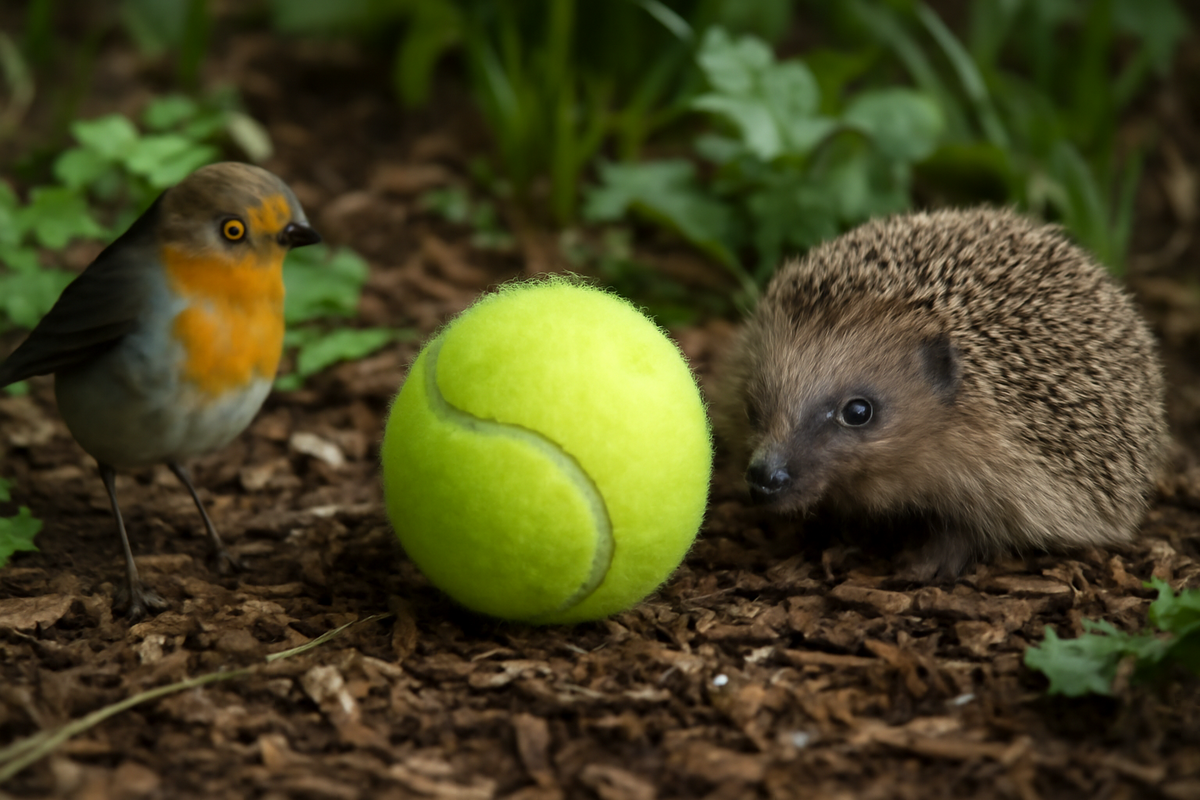
The first frost arrived quietly, settling itself over the lawn like a held breath. The flowerbeds stiffened into delicate sculptures of ice, and somewhere under the brambles at the end of the garden, a hedgehog curled tighter into a ball, trying to hold on to the last scraps of warmth. A blackbird hopped along the fence line, cocking its head as if listening to winter itself approaching. You might have looked out of the kitchen window, hands wrapped around a mug, and thought there was little you could do about the cold creeping in. Yet, surprisingly, the answer to helping these small, secret garden guests might be rolling around in the back of your cupboard or forgotten at the bottom of a sports bag: an old tennis ball.
The Quiet Dangers Lurking in a Winter Garden
Winter doesn’t just arrive with cold weather; it changes the rules of survival. For birds and hedgehogs, the season turns the garden into a puzzle full of hidden traps. What looks harmless to us can be a life-or-death problem for them.
Imagine a hedgehog, small and determined, shuffling through your garden on a cold November night. It’s hungry, still trying to build the fat reserves it needs for hibernation. Your garden, with its shrubs, compost heaps, and leaf piles, is a tempting route. But in the shadows, a different kind of structure waits—open drains, wide-mouthed pipes, steep-sided ponds, and plastic tubs half-filled with water from last night’s rain.
Birds face a similar maze. A robin might swoop down for a drink from a low bucket where rainwater has collected, or a blackbird may explore a half-buried plant pot. The icy edges are slippery, the sides too smooth to escape. A quick sip of water can turn into a trap they can’t climb out of, especially when their wings or feathers get waterlogged and heavy with chill.
Wildlife rescuers and local rehab centres will quietly tell you the same sad story: every year, they receive countless calls about hedgehogs and birds found drowned or exhausted in small, man-made hazards—things never intended to harm them. Garden ponds without shallow edges, cattle grids in rural lanes, open drainage pipes, buckets, water butts with no lids, steep-sided troughs: all become winter pitfalls, especially when animals are more desperate for food and water.
But this is where those unassuming, lime-green tennis balls enter the story. Used thoughtfully, they can turn dangerous traps into safe, harmless garden features, and even act as tiny beacons of safety bobbing in the winter light.
The Curious Magic of a Floating Tennis Ball
At first, it sounds almost silly—tennis balls in the garden as a form of wildlife protection. Yet this simple idea is rooted in practical physics and quiet observation of animal behaviour. The charm of it lies in its ordinariness: something familiar, almost playful, suddenly revealed as an elegant solution.
Picture a small water butt at the corner of a shed. The lid is off because you were topping it up, or maybe the lid never quite fit properly. To a hedgehog, seeking a drink, it looks like a blessing. It leans over the edge, misjudges, and slips in. The sides are smooth, like a well, impossible to scale with tiny claws. Without help, it tires, chills, and eventually slips under.
Drop a tennis ball into that same water butt, and you change the story completely. The ball, floating steadfastly on the surface, becomes a ready-made life raft—a buoyant, grippy island for small animals. A hedgehog that has fallen in can cling to its fuzzy surface, rest, and regain enough strength to keep its head above water. More importantly, it now has something to scramble onto instead of being forced to paddle desperately against the sides.
Birds, too, benefit. In a deep trough or water barrel, a single tennis ball can provide a resting spot if they misjudge their landing or slip. A fatigued bird that lands on the ball can stay afloat instead of drowning in frigid water. Some people even notice small birds perching on the edge of floating balls as if they’re miniature islands.
In larger ponds, several tennis balls scattered across the surface help in another way: they reduce the amount of exposed, icy water. When temperatures plummet, tennis balls can create tiny pockets of movement on the surface, helping stop complete icing over, or at least leaving small gaps where birds can still drink. They’re not a miracle cure for frozen ponds, but they often buy just enough time and space for thirsty wildlife on the coldest mornings.
And then there’s the soundless alarm they raise. A floating tennis ball that’s always in sight becomes a sort of tell-tale sign; if you glance out and notice one pressed oddly against the side of a tub or moving strangely, it can prompt you to check more closely. Now and then, that quick look out of the window is all it takes to spot a struggling hedgehog or bird in time to rescue it.
Where to Place Tennis Balls for Maximum Protection
This is where a little scouting mission around your own garden comes in handy. Walk slowly, not as the person who lives there, but as a hedgehog might, at nose-height to the ground, or as a sparrow might, swooping in for a drink or a bite.
Look for any spot that holds water, even by accident:
- Open water butts and barrels
- Buckets, trugs, and deep plant pots
- Steep-sided ponds with little or no shallow shelf
- Animal troughs, dipping tanks, or water containers in allotments
- Old sinks, baths, or tubs used as planters but still catching rain
If water can sit there, a hedgehog or bird might visit. And where wildlife visits, missteps happen. So, in each of these, a tennis ball—or several—is a simple adjustment with big consequences.
Here’s a simple guide to help you decide how many balls to use and where they’re most helpful in an average garden:
| Garden Feature | Risk Level for Wildlife | Suggested Tennis Ball Use |
|---|---|---|
| Open water butt or barrel | High – deep, smooth-sided, hard to escape | Add 1–2 balls to float permanently |
| Buckets and trugs left outdoors | Medium – risky when filled with rainwater | Add 1 ball, or store bucket upside down |
| Small, steep-sided pond | High – wildlife can fall in while drinking | Add 2–4 balls near edges; also provide ramp |
| Troughs or livestock water containers | High – hedgehogs and birds often visit | Add 2–3 balls along the surface |
| Old sinks, baths, or tubs with water | Medium – especially risky if overgrown and hidden | Add 1–2 balls; check regularly or drain fully |
In larger ponds, tennis balls work best as part of a wider safety plan. A few balls bobbing on the surface can help wildlife stay afloat, but adding a simple ramp or a gently sloped area of pebbles is equally important. Consider placing a flat plank of wood, partly submerged at one end and resting on the bank at the other, to act as an escape route. The tennis balls then become floating markers, drawing your eye to that part of the pond and offering an extra option for any creature unlucky enough to fall in.
Even if you don’t have ponds or barrels, think about decorative features: small fountains, bird baths with steep sides, or ornamental containers. While tennis balls won’t suit every aesthetic, a discreetly placed ball—perhaps muted in colour if you have one—can turn a risky spot into a much safer one for visiting wildlife.
The Secret Lives of Hedgehogs and Birds in Your Garden
To understand why such tiny changes matter, it helps to imagine a winter night from a hedgehog’s point of view. As the world cools, food becomes scarcer. The plump earthworms retreat deeper into the soil, beetles hide under stones, and slugs vanish into cracks. Hedgehogs, already pressed for time to build fat reserves, push their luck. They roam farther, stay out longer, and investigate places they might otherwise ignore.
Your garden becomes part of a much bigger nightly journey. A hedgehog might travel through several gardens in a single night, slipping under fences where gaps allow, tracing scent trails along the edges of sheds and compost heaps. It doesn’t know—and can’t possibly guess—that the rainwater collected in your forgotten tub is fatally deep, or that the cold glaze on your pond makes the surface more treacherous than it looks.
Birds face their own winter challenges. With daylight hours shortened, they are in a constant rush to find enough food and water. Cold air dehydrates them faster than you might think, and frozen puddles steal away the easiest drinking spots. A starling or house sparrow may turn to whatever is available: your water feature, a plant saucer, even that bucket you meant to empty. A moment’s miscalculation on an icy rim is all it takes to send them flailing into deep water they can’t clamber out of.
These aren’t rare, freak accidents. They’re quiet, everyday risks in a human-shaped landscape that hasn’t quite remembered to include escape routes for its smaller inhabitants. The beauty of tennis balls is that they slip easily into this world without demanding much fuss. They don’t need special installation, electricity, or tools. They simply float, quietly offering support where none existed before.
And strangely, there’s something deeply heartening about that: the idea that our leftover sports equipment, scuffed from games on summer courts, could find a second life as winter guardians for animals that will never know your name.
Turning a Simple Trick into a Winter Wildlife Routine
Once you place your tennis balls, the next step is simply to weave them into your ordinary garden habits. Think of them as a seasonal ritual, as much a part of preparing for winter as bringing in tender plants or covering outdoor taps.
Start by gathering any old tennis balls you no longer use. They don’t have to be pristine or perfectly bouncy; as long as they float and their surface isn’t peeling apart, they’re good enough. Give them a quick rinse if they’re particularly muddy. Then, during a dry afternoon, take a slow wander around your outdoor space and drop them where they can do the most good.
Once they’re in position, a few small habits help them work at their best:
- Check them after storms: Heavy winds or downpours might dislodge balls or move them into corners. A quick glance and gentle repositioning is usually all that’s needed.
- Clear debris: In ponds or barrels, remove thick layers of fallen leaves that can tangle around animals or weigh down the balls.
- Combine with other aids: Add wooden ramps, bricks, or sloping stones in ponds and troughs to give extra escape routes alongside the floating balls.
- Refresh when needed: If a ball becomes waterlogged or splits, replace it with another. Most will last for many seasons outdoors.
Winged visitors will show their appreciation in quieter ways. You may spot a blackbird drinking more confidently at the pond edge, or a robin using the rim of your water butt, steadied by the gentle bob of a tennis ball below. Hedgehogs will remain mostly unseen, but the absence of tragedies—the empty stillness of water, undisturbed and unmarked—is sometimes the clearest sign that your efforts are working.
Over time, it can become a shared family ritual: the first cold snap of the year, a box of scruffy tennis balls, and a gentle tour of the garden to tuck them into place. Children in particular often love this tiny act of guardianship, the knowledge that something so simple can mean the difference between danger and safety for the creatures sharing their patch of the world.
Beyond Tennis Balls: Building a Truly Wildlife-Friendly Winter Garden
Tennis balls may be the most disarmingly simple part of the story, but once you’ve laid them out, it’s hard not to keep going. Protecting birds and hedgehogs from winter harm is partly about individual tricks and partly about the overall atmosphere of your garden—a place that either welcomes or shrugs off wild visitors.
Think of your garden as a small, living neighbourhood. Are there safe routes for hedgehogs to pass through? A small gap at the base of a fence or gate can turn your plot into part of a larger hedgehog highway. Are there leaves and logs left in a quiet corner? These can become nesting sites or daytime shelters for both insects and mammals, rich with the invertebrate food hedgehogs rely on.
For birds, feeders are only part of the picture. They also need cover from predators, places to perch, and clean, unfrozen water. A shallow bird bath with gently sloping sides, topped up regularly, makes a huge difference in cold spells. If ice forms, a small, floating tennis ball can help keep a drinking hole open—move it around gently with your hand to break the ice without cracking the dish.
Lighting is another silent player. Bright security lights can confuse nocturnal animals and disturb their natural patterns. If you can, use motion sensors sparingly or choose softer, downward-facing lights that leave most of the garden in gentle darkness. Hedgehogs and other night wanderers will navigate far more safely.
And then there’s the question of chemicals. Slug pellets, strong pesticides, and herbicides all echo through the food chain. A slug poisoned in one bed may harm the hedgehog that eats it later. By choosing wildlife-friendly alternatives—beer traps for slugs, hand weeding instead of harsh sprays—you extend the kindness of your tennis balls into the soil itself.
Every small change compounds. The floating tennis ball is just one piece of a wider philosophy: that our gardens are not just ours, but shared landscapes, stitched together into green corridors where countless, fragile lives unfold.
A Small, Bright Gesture in a Season of Grey
On a dull December afternoon, when the sky hangs low and the air smells faintly of smoke and damp earth, you might look out across the garden and see them: little shocks of green-yellow, bobbing patiently on steel-grey water. They look almost cheerful, those tennis balls, like stubborn reminders of summer refusing to sink.
You may never see the blackbird that misjudged the edge of the tub but clung to that fuzzed surface long enough to flutter free. You may never meet the hedgehog that, instead of becoming another sad statistic in a rescue diary, hauled itself onto a floating ball, shivered, and lived to curl up under your shrubs for one more winter’s sleep.
But they will have been there. Quiet stories, never told, playing out in the dark corners of your own backyard.
Helping wildlife through winter doesn’t always look like grand gestures or expensive equipment. Sometimes, it looks like noticing. Like taking ten spare minutes to walk your garden with a different set of eyes. Like dropping a few battered tennis balls into forgotten pools and barrels and feeling, just for a moment, that the boundary between your life and the wild lives around you has grown softer, kinder.
In a season when so much pulls inward—days shortening, plants retreating underground, animals curling into dens—this small outward gesture matters. The next time frost begins to silver the rooftops, and you pull your coat tighter around you, know that out there, a handful of quiet, floating guardians are doing their steady work. And all it took was the decision not to leave your garden to winter’s indifference, but to turn it, tennis ball by tennis ball, into a safer place for birds, hedgehogs, and all the secret lives woven into the cold.
Frequently Asked Questions
Do the tennis balls have to be new?
No. Old, scuffed tennis balls work perfectly as long as they still float and their outer layer isn’t crumbling apart. Reusing old balls is an excellent way to reduce waste and help wildlife at the same time.
Can I use other types of balls instead?
Yes, as long as they float reliably, are large enough not to be swallowed, and have a slightly grippy surface. However, tennis balls are ideal because they’re buoyant, easy to find, and their fuzzy coating helps animals cling on.
Will tennis balls stop my pond from freezing completely?
They may help reduce solid ice coverage, especially on smaller ponds, by allowing some movement and creating weak points in the ice. However, they won’t always prevent freezing entirely. You may still need to gently break surface ice or use other methods to keep a small area open for drinking.
Are tennis balls safe for all wildlife?
For typical garden wildlife—hedgehogs, small mammals, and birds—tennis balls are considered safe. Just avoid balls with loose, peeling rubber or foam. Check them occasionally and replace any that are badly degraded.
Where should I focus first if I only have a few tennis balls?
Start with the highest-risk spots: open water butts, deep buckets, livestock troughs, and any steep-sided ponds without shallow edges or ramps. These are the places where animals are most likely to become trapped and where a single ball can make a big difference.
How often should I check the balls and water sources?
In winter, try to look in on them every few days, and especially after heavy rain, strong winds, or a hard frost. It only takes a moment from a window or during a quick walk around the garden to make sure everything is still safe and in place.
What else can I do alongside using tennis balls to help hedgehogs and birds?
Provide shallow, accessible water, add ramps or sloping edges to ponds and troughs, leave leaf piles and log piles for shelter, create small gaps in fences for hedgehog passage, avoid harmful chemicals, and keep some areas of your garden a little wild. Together with tennis balls, these steps turn your space into a far safer winter refuge for wildlife.

Hello, I’m Mathew, and I write articles about useful Home Tricks: simple solutions, saving time and useful for every day.