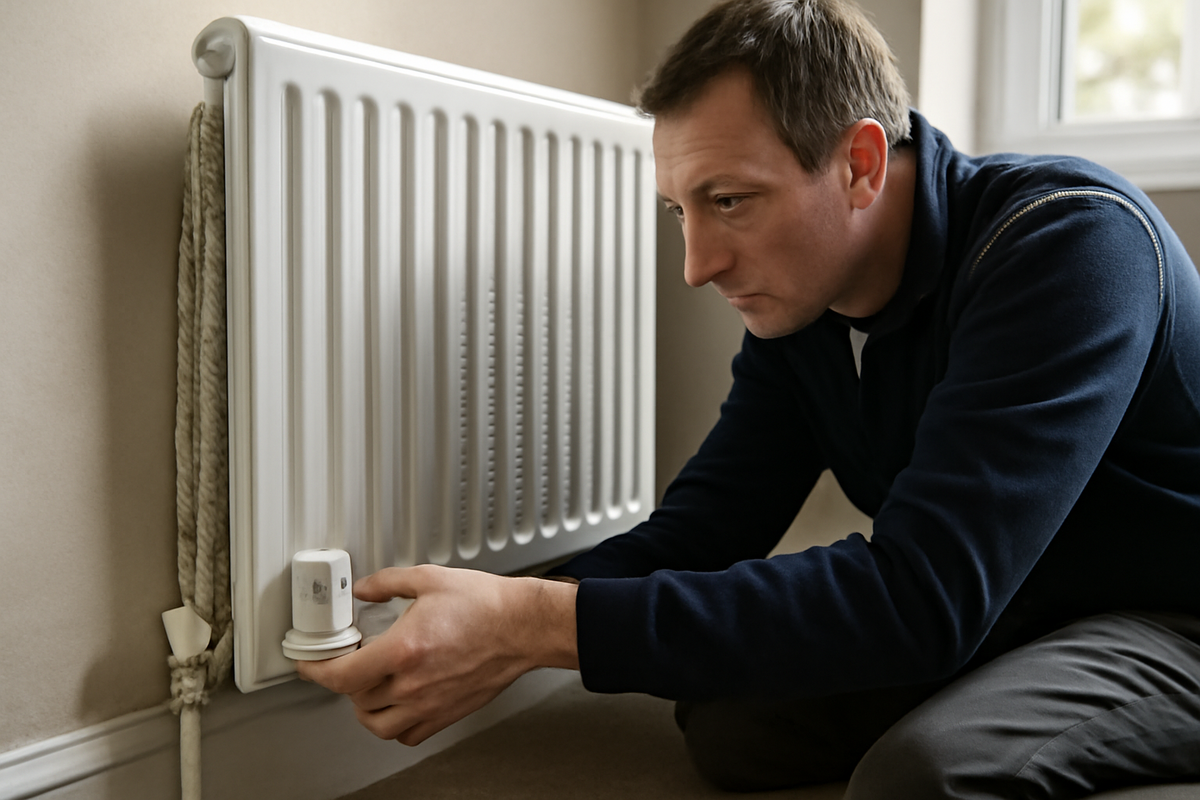
The first cold weekend of the year arrived the way it always seems to: overnight and without an invitation. Rain needles against the window, the sky goes the color of wet wool, and somewhere in the walls your heating system coughs awake after months of lazy summer silence. You pad across the floor, turn up the thermostat, wait for that familiar wave of warmth to curl around your ankles…and instead you get a lukewarm shrug of air that disappears before it reaches the middle of the room.
So you do what thousands of people do every year: you start searching for “how to warm a room faster.” Soon enough, you’ll bump into an old favorite—foil behind radiators. Shiny kitchen foil, taped to cardboard, leaned against the wall. It’s a hack that feels thrifty and clever, like something your grandad might have done in a draughty terrace house. But when energy specialists talk about what actually makes a room warm up quickly and stay comfortable, they sound almost weary about the foil obsession.
“Honestly,” one energy adviser said in a recent interview, “if foil is your big heating strategy, you’re missing the main game.” And that’s where our story really begins: not with shivering in a room waiting for the radiators to “kick in,” but with a different, quieter trick that changes how fast your home actually feels warm.
The Myth of the Miracle Foil
The idea behind radiator foil is simple enough. Radiators, especially those mounted on external walls, can lose some heat into the wall instead of into the room. Put a reflective surface behind them, the theory goes, and you bounce that heat back where you want it: into your living space, into your bones, into that comfortable sense of “ahh.”
And to be fair, in very specific situations—an old, uninsulated solid wall, a single-panel radiator, a room that lives in a permanent state of mild chill—properly installed reflective panels can help reduce heat loss. But that’s only one narrow piece of a much bigger story. The reality is that most modern heating systems don’t lose a dramatic amount of energy through the back of the radiator. The losses are there, yes, but they’re often dwarfed by something else entirely: how badly the room itself is hanging on to the warmth you’re paying for.
Think of it like making tea in a cracked mug. You could pour hotter and hotter water, but if the cup’s leaking from the bottom, you’re fighting the wrong battle. When experts are asked how to warm up a room faster, they almost never start with radiators at all. They start with the room. The shell. The envelope. The quiet places where your precious warm air is sneaking away without you noticing.
The Smarter Trick Experts Swear By
The smarter trick isn’t shiny, doesn’t come in a packet, and doesn’t look very clever on social media. In most homes, the simplest and most effective way to make rooms warm up faster is to deal with what energy specialists loosely call “the draught-and-loss problem” before you tinker with the radiator itself.
That means three main actions that work together, like a band playing in time: sealing, insulating, and directing heat. Done right, they change the feeling of a room not just by nudging the thermometer up, but by making your body register warmth more quickly and more deeply.
Seal First: The War Against Invisible Wind
Stand in front of a window on a cold day and really feel. That tiny brush of cool across your fingertips? The whisper under the door? Those are micro-draughts, and they quietly sabotage everything your heating is trying to do. Your boiler or heat pump might be working hard, your radiators might be pleasantly hot to the touch, but the room feels stubbornly chilly because cold air keeps slipping in and warm air keeps escaping.
Sealing doesn’t mean turning your home into an airtight plastic box. It means carefully softening the sharp edges where warmth bleeds out the fastest: around window frames, under doors, through keyholes, letterboxes, gaps in floorboards, uninsulated loft hatches. A roll of self-adhesive draught tape, a simple brush strip for the front door, a thick curtain drawn over a bare window—these are unglamorous heroes.
When you block draughts in the right places, something almost magical happens. Not only does the room warm up faster, it feels warmer at a lower temperature because your skin isn’t constantly being cooled by sneaky little streams of moving air. That sensation of “I just can’t get warm” often isn’t about the thermostat number at all. It’s about movement. Stop the movement, and your heating suddenly seems more powerful—even though it’s doing exactly what it always did.
Then Insulate: Keeping Heat Where It Belongs
Once you’ve calmed the draughts, the next step in the smarter trick is insulation. This is where the big gains live. Wall insulation, loft insulation, floor insulation: it all sounds heavy, technical, maybe expensive. But the principle is simple enough to feel in your body. Put on a coat and stand in the wind—you’ll be warmer, not because you created heat, but because you trapped your own.
Your home needs the same kind of coat. A bare loft above a warm room is like going out in winter with no hat. Heat rises, meets thin material, and disappears into the cold. An uninsulated external wall behind a radiator is like sitting at a café with your back pressed to a glass window in January: heat slips out of you into the cold world outside.
Insulation thickens the barrier. It makes heat slower, lazier. Instead of racing out, it lingers. And that lingering is exactly what helps a room warm more quickly: the first burst of warmth from the radiators isn’t immediately diluted by losses through the shell of the house. The temperature climbs and stays climbed.
Redirecting Heat: Let Radiators Breathe
There’s another, often-overlooked piece of the puzzle: the way heat actually moves from your radiators into the room. Radiators don’t just radiate; they also move air. Cool air sinks, gets warmed as it passes the radiator, rises, cools near windows and walls, and sinks again. This looping movement—convection—is what turns a static box of air into a living, warming flow.
Now imagine you’ve pushed a heavy sofa right up against the radiator. Or you’ve hung long curtains that drape over it like a blanket. Or you’ve used a chunky decorative radiator cover with a tiny grille at the top. What you’ve done, in effect, is throw a towel over a breathing creature and asked it to run a race.
Energy advisers often say that freeing your radiators is one of the cheapest, fastest ways to feel more heat, more quickly. Move furniture a little way out. Shorten curtains or tuck them behind the radiator. Keep shelves from sitting immediately above them, which can trap rising warm air in a pocket instead of letting it roll out into the space.
When radiators are allowed to move air freely, you get that pleasant sensation of warmth reaching you—your hands, your feet, your face—far sooner. The heat isn’t pooling behind a sofa or lost up the back of a curtain; it’s flowing around the room as it was designed to do.
Why Foil Feels Clever but Often Disappoints
So where does that leave the shiny foil trick? For most people, in the “nice but low-impact” corner.
Foil behind radiators can slightly reduce heat lost into very cold, very conductive outside walls. But its effect is often limited by the real-world messiness of actual homes: radiators not perfectly flush to the wall, foil not properly fixed, walls that already have some insulation, or rooms where draughts and bare glass are doing far more damage than the wall behind the radiator ever could.
Many experts now gently steer homeowners away from obsessing about foil and toward strategies that shape the entire thermal behavior of the room. They’ll tell you: if you have an hour to improve comfort, spend it plugging the gaps, not taping shiny plastic behind radiators. If you have a little more time and a budget, spend it on insulation rather than novelty hacks.
To help you see the trade-off clearly, imagine standing in a room where the only improvement you’ve made is foil behind the heaters. Now imagine another room where someone has sealed the draughty floorboards, added thick curtains, fitted a door brush, and moved the sofa away from the radiator. Walk into each room on a cold day and your body will tell you, within seconds, where the real magic happened.
A Quick Comparison at a Glance
Here’s how the old foil trick stacks up against the smarter, room-focused approach:
| Approach | What It Does | Impact on How Fast Room Feels Warm | Typical Effort/Cost |
|---|---|---|---|
| Foil behind radiators | Reflects some heat back into the room from external walls. | Small, often barely noticeable unless walls are very cold and uninsulated. | Low cost, low effort. |
| Draught sealing | Reduces cold air leaks around doors, windows, floors. | High—room feels warmer at lower thermostat settings and warms faster. | Low to medium cost, DIY-friendly. |
| Improved insulation | Slows heat loss through loft, walls, sometimes floors. | High—heat builds and stays, so rooms reach comfort faster. | Medium to higher cost, long-term payoff. |
| Unblocking radiators | Lets warm air circulate freely into the room. | Medium to high—noticeable boost in warmth where you actually sit. | Usually free, just rearranging or tweaking layout. |
The Subtle Art of Comfort, Not Just Temperature
There’s another layer to this conversation that many heating guides ignore: the difference between “room temperature” and “how your body feels.” Your comfort is shaped by four dancing partners—air temperature, radiant temperature (what the surfaces around you feel like), air movement, and humidity. Foil behind a radiator tinkers with one narrow corner of radiant behavior. The smarter trick—sealing, insulating, and freeing heat flow—touches all four.
When walls and windows are less cold, you feel less chilled even if the air temperature is exactly the same. When draughts are calmed, your skin doesn’t feel that tiny constant cooling breeze. When radiators can move air properly, your extremities warm faster. Suddenly 19°C feels like 21°C used to. The thermostat hasn’t learned a new trick; your environment has.
This is why experts often sound almost poetic when they talk about “warmth you can’t see.” A quiet house on a winter evening, with the radiators humming gently and the curtains drawn across a well-sealed window, carries a different mood. There’s a softness to it. You can sit by the wall with a book and not feel that creeping cold in your spine. You can cross the room barefoot without wincing. You aren’t just heating air; you’re shaping a whole microclimate that holds you kindly.
Putting the Smarter Trick into Practice Tonight
You don’t need a renovation budget or a team of contractors to start bending your home toward this kind of comfort. You can begin, quietly, this very evening.
- Walk slowly around your room and feel for draughts with the back of your hand—around windows, doors, floor edges.
- Check what’s in front of every radiator. Could you pull the furniture away even by a few centimeters?
- Look at your curtains at night: do they cover radiators, trapping heat, or fall neatly above them?
- Notice cold surfaces. Would a rug, a throw, or a heavier curtain make a small but meaningful difference?
Each tiny change might feel insignificant on its own, but together they alter how quickly the room becomes that place you want to linger in, rather than rush through. Over time, bigger steps—loft insulation, better windows, upgrading ageing radiators or controls—can deepen that transformation.
The glossy promise of foil is that there’s a shortcut: a gleaming rectangle that will turn your old system into something clever. The reality is quieter and more satisfying: a set of simple, grounded actions that tune your home so that every click of the thermostat does more good.
FAQ
Does foil behind radiators work at all?
It can help a little in certain situations—especially with old, single-panel radiators on uninsulated external walls—but its effect on how quickly a room feels warm is usually modest. It’s rarely the best first step.
What should I do before thinking about foil?
Focus first on sealing obvious draughts around doors, windows, floors and loft hatches, improving insulation where possible, and making sure radiators are not blocked by furniture, curtains or heavy covers.
How can I tell if draughts are a big problem in my room?
On a cold, windy day, slowly move your hand around window frames, under doors, and across floor edges. If you feel noticeable cool air movement, draughts are likely a major source of discomfort and heat loss.
Will rearranging furniture really make a difference?
Yes. Moving sofas, sideboards or beds even a short distance away from radiators often improves air circulation enough to make the room feel warmer and more evenly heated.
Is insulation worth the cost if I just want rooms to warm up faster?
In most cases, yes. Good loft and wall insulation help rooms reach a comfortable temperature more quickly and stay there longer, reducing the need for constant high heating and lowering energy use over time.

Hello, I’m Mathew, and I write articles about useful Home Tricks: simple solutions, saving time and useful for every day.