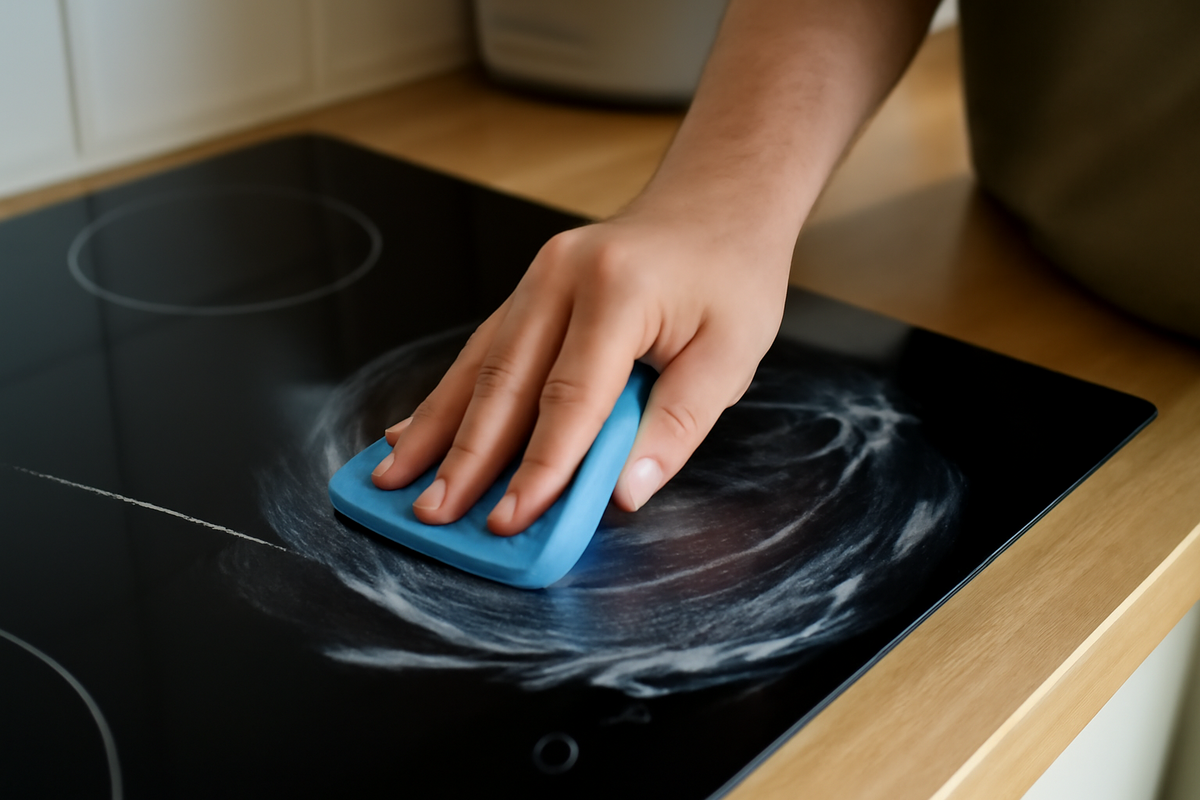
The first time you see it, your stomach drops a little. There, cutting across the smooth black surface of your glass-ceramic cooktop, is a pale, stubborn scratch that seems to glow under the kitchen light. You run a fingertip over it, hoping it’s just a smear, a streak of something that will wipe away with a bit of effort. But it doesn’t. It stays. A tiny, jagged reminder of a moment you don’t even remember—maybe a pot dragged an inch too far, a grain of salt caught under a pan, a forgotten sugar spill that baked and hardened like glass.
For a lot of people, that mark is the beginning of the end of how they feel about their stove. What was once a sleek, dark pool of shine starts to feel fragile, imperfect. You learn to angle your body so the light doesn’t hit it quite as harshly. You clean carefully, but the scratch seems to grow each time you really look at it. Some owners shrug and say, “Well, that’s what happens.” Others quietly resent their own kitchen.
But that glossy surface isn’t as helpless—or as unforgiving—as it looks. Glass-ceramic cooktops are tougher than they appear, and while deep gouges may be part of the stove’s long story, many of those fine, hairline marks and hazy swirls can be softened, disguised, and sometimes made nearly invisible. The trick is knowing what to reach for, what to avoid, and which slow, almost meditative steps most people overlook in their rush to scrub and move on.
The Story Hidden in Every Scratch
If you lean down close to a scratched glass-ceramic cooktop, it suddenly stops being just a kitchen appliance. Under the kitchen light, the surface becomes a sort of dark sky where each scratch catches and scatters brightness like a thin white meteor trail.
Every mark has a story. There’s the crescent-shaped scuff where someone twisted a heavy cast-iron skillet instead of lifting it. The faint circle where sugar boiled over and fused with the radiant heat, then got scraped off with something too hard, too sharp. The fine swirl lines from well-meaning cleaning with the wrong sponge—tiny arcs etched again and again in the same pattern.
Glass-ceramic isn’t ordinary glass. It’s engineered to handle intense, repeated heat, sudden changes in temperature, and the weight of your heaviest pots. But what it doesn’t like—what almost no glossy surface likes—is hard particles dragged across it. The grit under a pan, the coarse grain in a powdered cleaner, the sugar crystals that melt, re-harden, and abrade. The very tools we think of as “deep cleaning” often become the quiet culprits behind the scratches that slowly collect over time.
Before you can coax your cooktop back toward its reflective, pool-like calm, you need to understand a small truth: you’re not going to erase deep damage like sanding wood. The goal is different. It’s about softening the way light hits those scars, blending edges, and gently polishing the surrounding surface so the eye no longer trips on that one bright line every time you walk into the room.
The Quiet Power of a Deep, Gentle Clean
Most people jump straight to “repair” when they see a scratch. They reach for pastes and creams and magic formulas. But the step that’s most often rushed—or skipped entirely—is the deep, gentle clean that comes first. Think of it like washing a cut before dressing it. If you don’t remove the grit, you’ll only make things worse.
Start by letting the cooktop cool completely. This sounds obvious, but there’s a certain impatience that comes with noticing a mark. You want it gone now. Resist the urge. A warm surface isn’t just unsafe; it also softens some residues in a way that tricks you into thinking you’ve removed them. Letting the glass fully cool gives you the real picture—no heat haze, no shifting smears.
Then comes the part that feels almost ceremonial. Dampen a soft, lint-free cloth or sponge with warm water and a few drops of mild dish soap. Avoid anything labeled “abrasive,” no matter how gentle the marketing promises sound. Glide the cloth over the surface, not with the frantic scrubbing energy most of us bring to kitchen cleanups, but with a slow, deliberate motion. Pay attention to the way the cloth feels as it moves. A gritty drag means there’s something still there—burnt-on residue, tiny grains of food, or mineral deposits.
This is where a razor scraper, held nearly flat and guided slowly, can work wonders on cooked-on bits that look like scratches but aren’t. The key word is “flat.” You’re not chiseling. You’re coaxing. You gently slide the blade under the residue, never digging, never tilting. People often skip this because it feels counterintuitive—who uses a blade to protect a delicate surface? Yet used correctly, this is one of the safest ways to remove stubborn deposits without grinding them into the glass.
Once everything loose is gone and the surface feels uniformly slick under your fingertips, wipe it dry with a clean microfiber cloth. Only then, with the stage truly cleared, can you see which marks are real scratches and which were just shadows cast by old, invisible grime.
The Overlooked Allies: Everyday Items That Soften Scratches
The next part feels almost like a small experiment at your kitchen counter. You don’t need special tools that arrive in a velvet-lined box. Some of your most helpful allies are probably already hiding in a nearby drawer or cabinet. Owners often overlook these simple items because they seem too ordinary to matter, or they’re used in the wrong way.
| Item | What It Does | Key Tip |
|---|---|---|
| Baking soda + water | Creates a silky, mild polishing paste for light haze and micro-scratches. | Keep the paste very soft; never rub aggressively. |
| Non-gel white toothpaste | Offers very fine, gentle abrasion to reduce visibility of faint lines. | Use sparingly, test on a small corner first. |
| Microfiber cloth | Buffs and distributes pressure evenly without scratching. | Use clean, folded sections; switch as they collect residue. |
| Ceramic cooktop cream | Commercial blend that cleans, polishes, and lightly fills micro-defects. | Apply a thin film, buff patiently instead of scrubbing. |
The Soft Paste Ritual
Baking soda is the quiet hero of many kitchens, always saving the day in a dozen invisible ways— deodorizing the fridge, rescuing cookies, brushing teeth in a pinch. But on a glass-ceramic cooktop, it has to be handled with a certain tenderness.
In a small dish, mix baking soda with just enough water to create a smooth, almost lotion-like paste. Not gritty, not dry. When you dip a fingertip into it, it should feel silky, not sandy. This texture matters more than most people realize; a dry or clumpy paste behaves like a scouring powder, which is exactly what you’re trying to avoid.
Using a soft microfiber cloth, scoop up a little of the paste and gently circle it over the scratched area. Picture yourself polishing, not scrubbing. Light, repeated motions, like you’re buffing a delicate stone. The goal is to gently blur the hardest edges of the scratch and blend the surrounding gloss so the contrast isn’t as sharp to the eye.
After a minute or two, wipe away the paste with a clean damp cloth. Dry the area, then lean down and look again. Often, the scratch is still there—but softer, less insistent. Sometimes it hides altogether at certain angles. If the glass still feels perfectly smooth and you see no new haze, you can repeat this once or twice. The trick is to work slowly, checking often, rather than attacking the surface as if you were sanding a piece of wood.
The Art of Polishing Without Punishing
This is where a lot of well-intentioned owners cross a quiet line. In the eagerness to “make it like new,” they overdo it. They scrub too hard with something almost, but not quite, safe. They forget that with glass-ceramic, excess force is not power—it’s damage.
Why “More Elbow Grease” Backfires
Glass-ceramic cooktops carry their shine in a uniform, factory-finished surface. When you create new, random micro-scratches by rubbing too hard or using a cloth contaminated with grit, you aren’t just attacking the one scratch you can see—you’re clouding the area around it. Under bright light, that haze looks like a dull patch, forever catching fingerprints and streaks.
The secret is to think more like a jeweler than a housecleaner. Pressure should be low, time should be longer, and movements should be controlled. If your arm is getting tired, you’re probably pressing too hard. Many people overlook the simple power of repetition: two or three short, gentle passes often beat one fierce attack.
Using Cooktop Cream as a Finishing Touch
If you have a ceramic cooktop cream designed specifically for these surfaces, this is the moment it truly shines. After your gentle baking soda or toothpaste session (or even instead of them, if your scratches are very faint), apply a small amount of the cream to a cool, dry cooktop.
Spread it with a soft cloth in slow circles, covering not just the scratch, but a wider area around it. You’re not trying to spot-treat a stain; you’re trying to blend a whole region so the reflection appears continuous again. Let it sit briefly if the directions recommend it, then buff with a fresh, dry microfiber cloth until the surface goes from milky to mirror-like.
What’s happening isn’t magic. The cream cleans, polishes, and sometimes leaves behind a barely-there protective layer that fills tiny, shallow defects. The scratch doesn’t vanish; the eye simply stops catching on its bright, raw edges. What was once a sharp line becomes part of the soft, reflective pattern of the cooktop itself.
The Subtle Habits That Prevent New Scratches
Removing—or at least disguising—scratches feels wonderfully satisfying. But the quieter victory lies in changing the small, daily habits that gave them to you in the first place. These habits are simple, almost unremarkable, which is why they’re so easy to skip. Yet they’re the difference between a cooktop that ages gracefully and one that seems to collect scars by the month.
The Lift, Don’t Drag Rule
Glass-ceramic cooktops don’t mind heavy pots as much as they mind sliding heavy pots across invisible grit. A single grain of sand, a bit of burnt rice, a crystal of salt under a cast-iron skillet can become a tiny cutting blade. The easiest habit you can build is this: whenever you move a pot, lift it. Even just an inch. Set it down again gently. The surface will thank you every year you own it.
The Sugar and Spill Watch
Few things are as cruel to a glass-ceramic surface as sugar that boils over, then caramelizes, then burns. When that cooled sugar hardness meets a rushed, frustrated hand with a rough sponge, scratches are almost guaranteed. The overlooked move? When you know something sweet is simmering—jam, caramel, sugary sauces—keep a close eye out. If it spills, turn off the heat as soon as it’s safe, let the glass cool, then remove the residue with your razor scraper and a soft cloth before you ever reach for anything abrasive.
The Right Cloth, Every Time
It’s tempting to grab whatever cleaning rag is closest. But that cloth that “still has some life in it” from scrubbing a pan might be carrying grains of dried food or scouring residue. On a glass-ceramic cooktop, that’s like wiping with sandpaper. Reserve a couple of microfiber cloths strictly for the cooktop. Wash them separately from heavily soiled items, and retire them if they start to feel rough, stiff, or heavily stained.
Living With Imperfection While Caring for Beauty
After you’ve cleaned, polished, buffed, and examined your cooktop from every imaginable angle, you may still see it—the faint outline of a deeper scratch that simply won’t be persuaded to fade. There’s a question that often hangs quietly in that moment: Is it ruined?
The truth is, most of the time, it’s not. A scratch that you can feel with a fingernail is less likely to disappear, but it usually doesn’t affect how the stove works. The heat still travels, the burners still glow, the pans still simmer and sear. What’s changed is not the function, but your relationship with the idea of perfection in a place that is meant for use, for mess, for life.
There’s a certain dignity in a well-cared-for surface that shows a little history. A softened scratch that no longer screams under the light becomes less of a flaw and more of a faint memory. You’ll still notice it sometimes, but not every day, and not with the same jolt of irritation. Instead, you’ll remember the quiet hour you spent restoring shine, learning to move more gently in your own kitchen.
With the right steps—patient cleaning, gentle polishing, smart prevention—you can keep that dark glass-ceramic plane as close as possible to its original mirror calm, even as it goes on faithfully supporting pots of soup, late-night pasta, and weekend breakfasts. The surface, like the kitchen itself, becomes a living thing: not untouched, but lovingly maintained.
Frequently Asked Questions
Can deep scratches on a glass-ceramic cooktop be completely removed?
Deep scratches—especially those you can easily feel with a fingernail—are rarely removable. You can soften their appearance with gentle polishing and cooktop cream, but fully erasing them usually isn’t realistic. The focus should be on reducing their visibility, not grinding them away.
Is it safe to use a razor blade on my cooktop?
Yes, if done correctly and your manufacturer doesn’t explicitly forbid it. Always use a clean, sharp blade held almost flat against the surface, and only on a completely cool cooktop. Slide gently under residue—never dig or stab. The target is burnt-on material, not the glass itself.
Will baking soda scratch my glass-ceramic cooktop?
Baking soda can be safe if it’s fully dissolved into a soft, smooth paste and used with very light pressure on a clean surface. If it’s too dry or clumpy, or if you scrub aggressively, it can contribute to haze or fine scratching. Texture and gentleness are crucial.
Is toothpaste a good idea for polishing scratches?
Only certain types. A plain, non-gel white toothpaste with no added “micro-scrubbers” can offer very mild polishing power. Use a tiny amount on a microfiber cloth, test in a discreet area first, and rub gently. Rinse and dry thoroughly afterward.
When should I consider replacing the cooktop instead of trying to repair it?
If you see cracks, chips at the edges, deep radiating lines, or damage that seems to grow over time, it’s time to consult a professional or consider replacement. Cosmetic scratches alone usually don’t affect performance, but structural damage can be a safety issue.
How often should I use ceramic cooktop cream?
For everyday cooking, once a week is enough for most kitchens, with simple wiping in between. If you cook heavily or notice more frequent residue buildup, you might use it every few days. Overuse with harsh scrubbing isn’t helpful; patient, regular polishing is.
What’s the single best way to prevent new scratches?
Keep the surface clean and avoid dragging anything across it. Wipe up grit, salt, sugar, and crumbs as soon as the cooktop cools, and always lift pots and pans instead of sliding them. That one simple habit dramatically reduces new scratches over time.

Hello, I’m Mathew, and I write articles about useful Home Tricks: simple solutions, saving time and useful for every day.