The pharmacist paused, pen hovering above the white prescription bag, and lowered her voice just a little, as if the statin tablets inside could overhear us.
“By the way,” she said, “don’t take this with that vitamin your neighbor recommended. The ‘heart health’ one. It can cancel this out.”
Outside, the parking lot hummed with late-afternoon heat and the sharp smell of car exhaust. Inside, the fluorescent lights buzzed, the receipt printer chattered, and everything felt suddenly louder, sharper, more urgent. Cancel it out? A vitamin? Something you could buy beside the gummy bears and shampoo?
If you’ve ever stood there with a new prescription in your hand—maybe for a statin to nudge your cholesterol down—while also clutching a bottle of “natural” supplements you picked up in good faith, you probably know that quiet, creeping doubt. Is this safe? Do these things get along, or are they secretly fighting each other the moment they hit your stomach?
This is the story of one particular pairing: a widely prescribed statin and one vitamin that, in the right dose and form, can all but erase its painstaking work. It’s a story that lives in blood vessels and liver cells, in tiny molecular traffic jams, and in the quiet spaces where doctors sometimes forget—or don’t have time—to warn you.
The Nighttime Pill and the Daytime Vitamin
If you’ve been handed a statin prescription, there’s a good chance it’s for simvastatin—an older, widely used member of the statin family. Statins, in broad strokes, work by persuading your liver to make less cholesterol. Over weeks and months, those numbers on your lab report—LDL, total cholesterol—start to slide downward, like a slow tide leaving a rocky shoreline.
Many people take simvastatin at night. There’s something almost ritualistic about it: the click of the pill bottle, the small tablet on the tongue, a sip of water, and the faint sense that while you sleep, an invisible crew will be patching up your arteries. It’s quiet, it’s unseen, and for most, it’s safe.
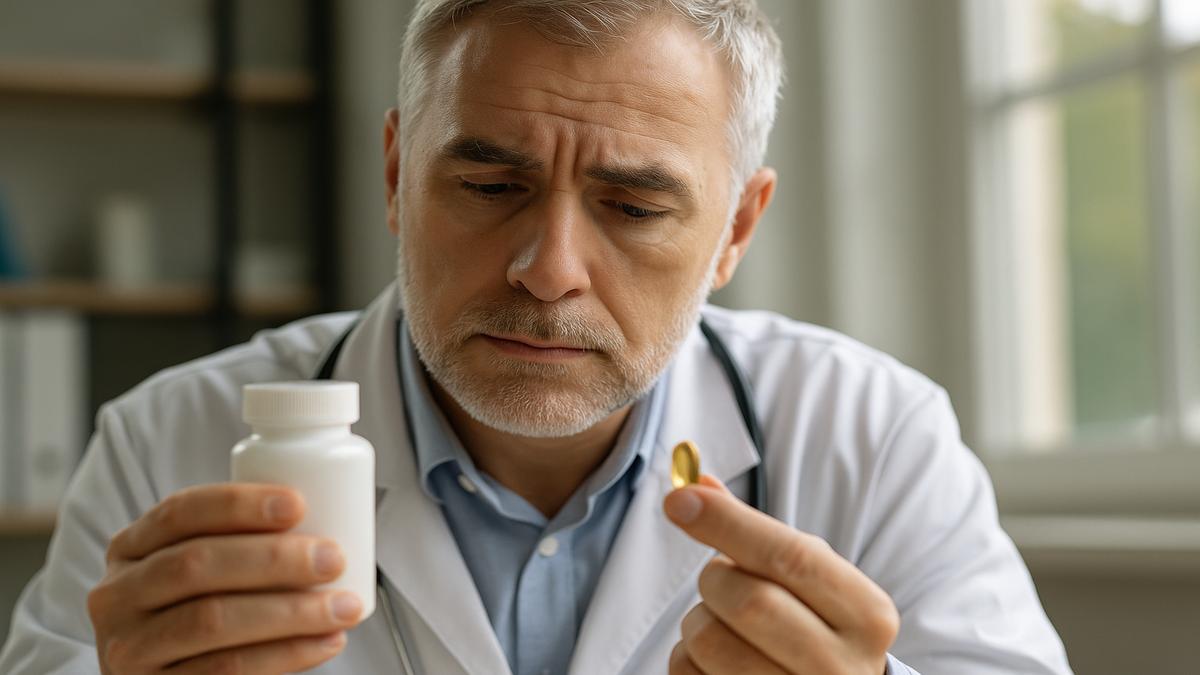
Now add another ritual: in the bright light of morning, you reach into your kitchen cabinet for a softgel glistening golden in the sun—vitamin E. Maybe it’s part of a “heart health” combo, or a “complete antioxidant” formula. Maybe the label says 400 IU, or even 800. You read, somewhere, that vitamin E protects your cells from oxidative damage; that it’s good for your heart, your skin, your immune system. Natural. Gentle.
Two separate rituals. Two separate intentions. One quiet collision.
The Vitamin That Steps Quietly Between You and Your Statin
Vitamin E doesn’t look like much of a saboteur. Slide open the capsule and you’d find an almost scentless oil, thick and clear, like slow-moving amber. Most of us have been trained to think of vitamins as inherently helpful, like seat belts or umbrellas or winter coats. The idea that one of them might undermine a carefully calibrated prescription feels almost like a betrayal.
But inside you, simvastatin’s journey is delicate. After you swallow that small tablet, it moves through your stomach, into your small intestine, and finally to the liver. There, a complex series of enzymes—most famously one called CYP3A4—goes to work, shaping and activating the drug, controlling how long it lingers in your blood, how strongly it acts on the machinery that produces cholesterol.
Vitamin E, especially in high doses, is not a silent passenger in this process. It’s fat-soluble, meaning it’s carried and handled by some of the same transport systems that ferry fats, cholesterol, and fat-loving drugs around your body. In certain conditions and doses, it can:
- Alter the way liver enzymes behave, nudging them to break down some drugs faster.
- Interact with the same lipoproteins (the “vehicles” for fats and cholesterol) that statins are quietly trying to influence.
- Shift the balance of oxidative signals that statins rely on to help stabilize artery walls.
Individually, each of these shifts might be subtle. Together, they can blunt the cholesterol-lowering magic you thought you were buying with every statin pill.
In some studies, people taking simvastatin along with high-dose vitamin E ended up with smaller improvements in their cholesterol numbers compared to those who took the statin alone. It’s like paying for a personal trainer, then quietly wearing ankle weights filled with sand to your sessions—not enough to collapse, but enough to make progress slow and discouraging.
Why Many Doctors Don’t Talk About It
This part isn’t glamorous. It doesn’t involve corporate conspiracy or dramatic whistleblowers. It’s more mundane, and in some ways, more unsettling: time.
Most primary care visits are 15–20 minutes. In that surreal, compressed space, your doctor might need to:
- Review your history and lab work.
- Check your blood pressure, your weight, your medications.
- Discuss your chest pain, your fatigue, your insomnia.
- Enter notes, click boxes, send referrals, order tests.
In that bustle, talking through every single possible supplement interaction can feel like trying to describe every fish in the ocean to someone standing on a dock. So the conversation often lands on the big, obvious warnings: “Don’t take this with grapefruit juice,” or “Let me know if you get muscle pain.”
Vitamin E rarely makes the cut—especially when the interaction isn’t catastrophic, just quietly erosive. It doesn’t make your heart stop. It doesn’t knock you out. It just makes the statin’s job harder, softer, sometimes barely effective.
So, unless you press the point, or your pharmacist is especially vigilant, you might never hear it spoken aloud: “That high-dose vitamin E? It may be canceling out the statin we’re depending on to keep your arteries clear.”
Inside the Bloodstream: A Slow Unraveling
Imagine your bloodstream as a wide, slow river, carrying barges loaded with fats, proteins, hormones, and medicines. Statins, like simvastatin, are the quiet negotiators on that river. They slip back to the main port—the liver—and gently convince it to send out fewer LDL “bad cholesterol” barges. Over time, the river clears. The banks—your blood vessel walls—begin to look less crowded, less vulnerable.
Now bring in vitamin E, especially the kind sold in glossy bottles at 400, 800, even 1000 IU. It, too, wants to ride those fat-laden barges, to anchor itself in the same lipoproteins that statins are trying to remodel. It doesn’t march in swinging fists. Instead, it changes the conversations in the liver and in the vessel walls:
- Some of the oxidative signals statins depend on—tiny red flags that say “this area needs repair”—begin to dim.
- Enzyme systems, already juggling cholesterol, triglycerides, and medications, have one more fat-soluble passenger demanding attention.
- The neat choreography of “less LDL out, more LDL cleared” becomes a bit clumsier.
In blood test form, this might look like weeks or months of “Well, your cholesterol is a little better, but not as much as we’d like.” Maybe the dose of simvastatin gets bumped higher. Maybe another medication is added. Rarely does the conversation turn to that quiet golden capsule you swallow every morning.
For some people, the effect is modest. For others—especially those on higher vitamin E doses, or taking multiple supplements with hidden E inside—the impact can be enough to substantially blunt the statin’s effect. And because this happens slowly, without drama, it’s easy to miss.
A Quick Look at How They Stack Up
To make this more concrete, here’s a simplified snapshot of how simvastatin and high-dose vitamin E can tug in opposite directions. These are general patterns, not precise predictions for any individual body.
| Feature | Simvastatin (Statin) | High-Dose Vitamin E |
|---|---|---|
| Primary goal | Lower LDL (“bad”) cholesterol and reduce heart risk | Antioxidant protection of cell membranes |
| How it’s handled | Processed heavily by liver enzymes (like CYP3A4) | Fat-soluble; uses the same fat and lipoprotein “highways” |
| Potential interaction | Needs predictable liver handling to work well | In high doses, can alter enzyme behavior and lipoprotein dynamics |
| Effect on statin efficacy | Best when taken without competing high-dose fat-soluble supplements | May blunt LDL-lowering benefit in some people, especially with simvastatin |
The “Natural” Halo and the Quiet Risk
There’s a particular kind of comfort in the word “vitamin.” It conjures childhood chewables shaped like cartoon characters, sunlit citrus groves, the soft clink of glass bottles in health-food stores. It does not conjure enzyme interference, reduced medication efficacy, or the slow, steady return of plaque to the walls of your arteries.
Vitamin E, especially when taken in food-level amounts—what you’d get from nuts, seeds, and vegetable oils—isn’t the villain here. The trouble lives primarily in high-dose supplements, often far above what’s needed to avoid deficiency. Somewhere along the line, we turned “enough” into “more must be better,” and the market answered with towering numbers on labels: 400, 800, 1000 IU.
For someone not on prescription medications, those doses may still carry risks—particularly of bleeding—but the interaction with statins adds another layer. You’re not just swallowing a vitamin; you’re altering the terrain on which a powerful, evidence-backed drug is trying to work.
What makes this especially slippery is that vitamin E often hides in plain sight. It’s in:
- “Heart health” blends that bundle E with omega‑3s and other antioxidants.
- Multivitamins marketed for “men over 50” or “women’s complete wellness.”
- Skin and hair formulas promising radiance and elasticity.
Turn the bottle around, squint at the fine print, and you may see “d-alpha-tocopherol,” “dl-alpha-tocopherol acetate,” or just “Vitamin E 400 IU.” Stack two or three of those products in a day, and you can easily wander into high-dose territory without meaning to.
What You Can Do Without Panic
You don’t need to empty your cabinets into the trash tonight. But you do deserve to know what’s in those bottles and how they’re dancing—or colliding—with your prescriptions. Here’s a calm, practical way to navigate the vitamin E–statin tangle:
- Gather everything you take. Every bottle, every jar, every sachet. Prescriptions, over-the-counter meds, herbal blends, multis, “natural” capsules.
- Hunt for vitamin E. Check each label for “Vitamin E,” “tocopherol,” or “tocotrienol.” Note the dose, especially anything at or above 200–400 IU.
- Make a one-page list. Write down each product, its dose, and how often you take it.
- Bring that list to your next appointment. Hand it to your doctor or pharmacist and specifically ask: “Do any of these interfere with my statin—especially simvastatin?”
- Ask if you really need high-dose vitamin E. In many cases, food sources are more than enough unless you have a specific deficiency or condition.
The goal isn’t to purge your life of supplements. It’s to stop them from quietly undermining the very medications meant to protect you.
A Walk Through the Grocery Store, Differently
Next time you wander past the supplement aisle—those tall, glowing shelves between the cereal and the pharmacy—try a small experiment. Slow down. Let your eyes move past the bold claims and find the fine print.
On one bottle, you might see: “Supports cardiovascular health.” On the back, 400 IU of vitamin E. A few rows over, a multivitamin: 200 IU. A skin formula: 150 IU. These numbers add up, quietly, invisibly.
Further down the store, in the produce section, walnuts wait in their crinkly bags. Sunflower seeds glint in bulk bins. Avocados sit, matte and green, on their neat little stands. There’s vitamin E here too—but braided into fiber, healthy fats, and plant compounds your body has been in conversation with for millennia.
You can almost feel the difference: one path built on isolated, concentrated molecules; the other on whole, unruly foods that don’t need a Supplement Facts panel to prove themselves.
For most people on statins, especially simvastatin, the safer, quieter choice is this second path: vitamin E from food, not from high-dose pills that compete with your medication. The statin can then do its river-cleaning work with fewer molecular interruptions.
The Conversation That Changes the Story
Picture another clinic room, another day. You sit down, your list of medications and supplements in hand. The paper crackles a little as you unfold it. Your doctor glances at it, and their eyebrows lift, just slightly.
“I didn’t realize you were taking 800 IU of vitamin E,” they say. “With simvastatin, that might be getting in the way. How would you feel about cutting that back, and focusing more on food sources instead?”
This isn’t a dramatic moment. No alarms. No emergency. But it’s the kind of micro-decision that bends the curve of your health over years. Maybe, six months later, your numbers look better than they have in a decade. Maybe the statin dose doesn’t have to go up. Maybe you feel a little more ownership over the chemistry quietly unfolding inside you.
Because in the end, this story isn’t really about a single villainous vitamin. It’s about the gap between what we assume about “natural” products and what they’re actually doing once they cross the threshold of our mouths. It’s about slowing down enough, and asking clearly enough, that the quiet warnings—the ones that don’t make headlines or dramatic pamphlets—have a chance to reach us.
The pharmacist was right to lower her voice that afternoon. Not because the truth was scandalous, but because it was fragile. A single overlooked capsule can, in some people, soften the edge of a life-saving drug. Once you know that, the sound of a pill bottle rattling in your hand changes, just a little. It becomes not just a habit, but a decision.
Frequently Asked Questions
Does vitamin E completely cancel out my statin?
Not usually. In most people, high-dose vitamin E doesn’t shut a statin off like a light switch, but it can reduce how effective the statin is at lowering LDL cholesterol—especially with drugs like simvastatin. The result may be smaller improvements in your cholesterol numbers than expected. That’s why it’s worth reviewing your supplement doses with your clinician.
Is all vitamin E a problem if I’m on a statin?
No. The concern is mainly with high-dose vitamin E supplements, often 200–400 IU or more per day. The amount of vitamin E you get from food—nuts, seeds, vegetable oils, leafy greens—is generally safe and not known to meaningfully blunt statin benefits for most people.
Which statins are most affected by vitamin E?
Simvastatin is the classic example discussed with vitamin E interactions, because of how it’s processed in the liver and carried in the blood. Other statins may be less affected, but any fat-soluble supplement has at least the potential to interact. Always ask specifically about your particular statin (such as atorvastatin, rosuvastatin, pravastatin, or simvastatin).
Can I just take vitamin E at a different time of day than my statin?
Spacing doses apart may help a little, but it doesn’t fully solve the issue. Vitamin E is stored in your body’s fat tissues and circulates over time, so its effects aren’t limited to the hour after you take it. The more important question is whether you need a high-dose supplement at all, rather than simply adjusting timing.
How can I safely get enough vitamin E if I stop the supplement?
Most people can meet their vitamin E needs through food. Good sources include sunflower seeds, almonds, hazelnuts, peanuts, spinach, Swiss chard, and vegetable oils like sunflower or safflower oil, used in moderation. If you have a medical condition that affects absorption or have been told you’re deficient, discuss a tailored plan with your clinician before stopping any prescribed supplement.
Should I be worried if I’ve been taking vitamin E with my statin for years?
Worried, no—aware, yes. The most useful step now is to:
- Make a written list of everything you take, including vitamin E doses.
- Share it with your doctor or pharmacist.
- Ask whether your vitamin E dose might be reducing your statin’s benefit, and whether it makes sense to taper or stop it.
Your clinician can also look at your past cholesterol results to see whether your response to the statin has been weaker than expected.
Who should I talk to first—my doctor or my pharmacist?
Either is a good starting point. Pharmacists are often very skilled at spotting supplement–drug interactions and can give you quick, practical advice. Your prescribing doctor or cardiologist can then help decide on any changes to your medication or supplement plan, based on your overall health and risk factors.

Hello, I’m Mathew, and I write articles about useful Home Tricks: simple solutions, saving time and useful for every day.