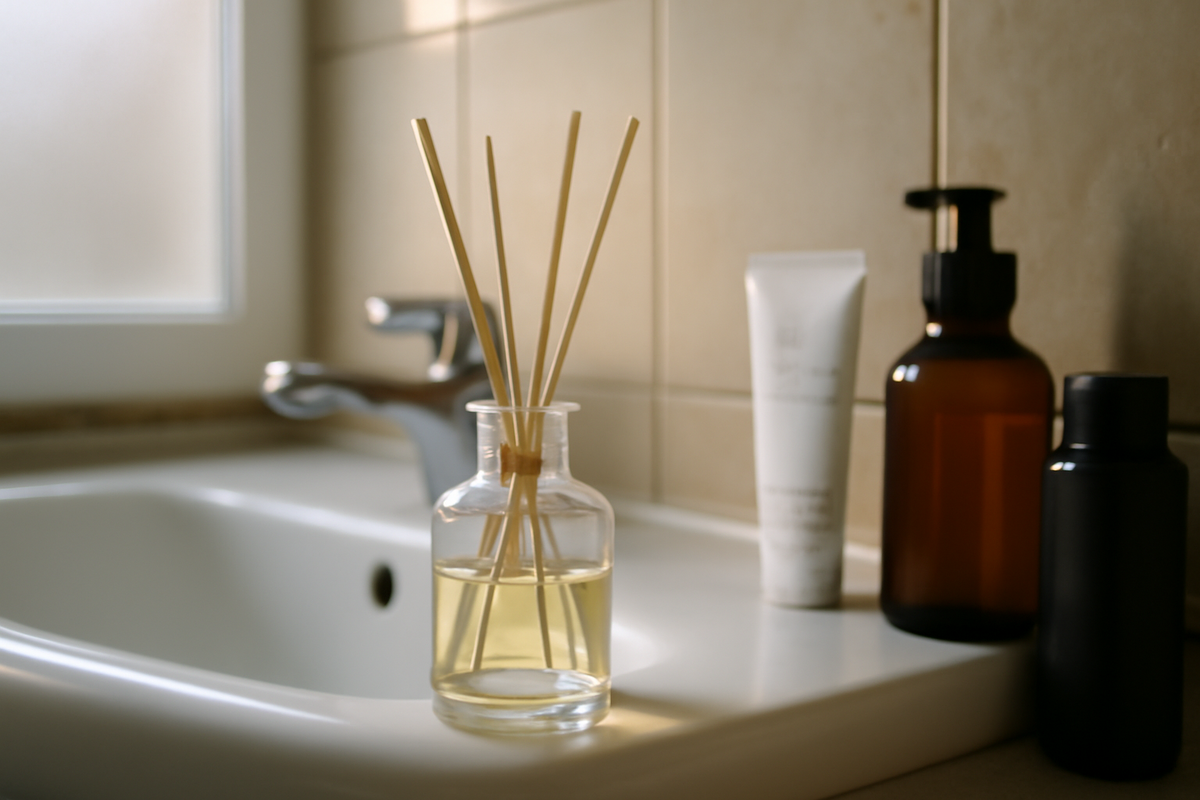
The first time I tried the glass trick, my bathroom smelled like rain-soaked jasmine within fifteen minutes. Not the usual sharp, synthetic blast from an aerosol can, but something softer, rounder, like walking through a flower shop at closing time when the air is heavy with petals and stories. I remember standing there, toothbrush still in hand, and laughing out loud at how absurdly easy it had been—and how long I’d been falling for the overpriced, overpromised products lining glossy bathroom shelves.
The Tiny Glass That Started a Quiet Rebellion
It began with a small, heavy-bottomed tumbler. The kind meant for whiskey or an evening pour of something contemplative. Mine had a faint amber tint and the slightest ripple in the glass, as if it remembered the heat of the kiln. I washed it, dried it, and carried it into the bathroom like it was a secret weapon.
The bathroom, at that point, smelled like… real life. A little damp from the morning shower, a faint trace of last night’s shampoo, the ghost of cleaning products that had tried too hard and failed. I opened the cupboard under the sink and stared at my usual arsenal: a pastel-colored aerosol can promising “Ocean Breeze,” a gel-based “odor neutralizer” with a faux-linen label, and a reed diffuser that, after an enthusiastic first week, had gone silently mute.
Every one of them had been bought with the same hope: that my small, windowless bathroom might smell like a boutique hotel near the sea or a forest spa where someone speaks in whispers and pours cucumber water. Instead, they all faded into one generic, sharp, vaguely chemical fog that never matched the picture on the label.
So I set them aside. Just for a week, I told myself. An experiment. A tiny rebellion against the clutter of half-empty promises.
The glass went on the sink ledge, cool and solid. I filled it halfway with water from the tap. Then I reached for a bottle of essential oils—nothing rare or expensive, just a simple blend of lavender and citrus I kept for my diffuser. Three drops, then four, then five slipped from the bottle into the water, blooming into shimmering circles that swirled and vanished.
The air shifted almost immediately, like someone had cracked open a window into another place. There was no hiss, no artificial “freshness,” no perfumed punch in the nose. Just a slow, gentle unfolding of scent, intimately tied to the surface of the water and the quiet patience of evaporation.
The Simple Science Behind the Magic
You could call it a trick, but really it’s a tiny act of chemistry and common sense—a reminder that fragrance was never meant to be as complicated as we’ve made it. Water and oil, in a glass, in a small room. That’s it. No electricity, no fan, no fiber sticks protesting gravity from an ornate bottle.
In a bathroom, everything is constantly in motion: steam rising from showers, temperature shifting, doors opening and closing, air being pushed around by fans and footsteps. A small open glass takes advantage of that constant movement. The surface of the water acts like a stage where the essential oils perform in slow motion, rising and dispersing with the natural currents of the room.
The magic is in the pace. There’s no overwhelming blast like you get from a spray, and no stressful countdown like a plug-in set to “maximum.” The scent just… appears. Softly at first, then more confidently, curling around towels, brushing over the edge of the bathtub, catching you off guard when you step in to wash your hands. It doesn’t feel like an intrusion. It feels like the room finally found its own voice.
And because you know exactly what went into that glass—water, a few drops of oil, maybe a pinch of something from your own kitchen—there’s a subtle sense of relief. No sprawling ingredient lists, no mystery chemicals dressed up with botanical illustrations, no needless plastic packaging trying to justify its existence.
The Moment You Realize You’ve Been Overpaying
The real shock doesn’t arrive with the fragrance. It arrives when you do the math.
Take a typical “luxury” bathroom fragrance: a stylish bottle, a poetic name, some slender reeds, and a price tag that hurts just a little. Or those plug-in diffusers that mysteriously need a refill the moment you finally memorize where the refill aisle is.
Compare that with a single bottle of essential oil and a glass you already own. A 10 ml bottle holds about 200 drops of oil. If you use 5–8 drops at a time, that’s between 25 and 40 full glasses of scented water. Each one can last several days, sometimes even a week in a smaller room, depending on how often you refresh it.
Here’s where the numbers start telling a different story:
| Option | Typical Cost | Active Lifespan | Approx. Cost per Week |
|---|---|---|---|
| Aerosol Bathroom Spray | Medium-priced can | 3–5 weeks with daily use | Higher than it seems (short bursts, frequent repurchase) |
| Plug‑in Fragrance | Device + refills | 4–6 weeks per refill | Adds up over the year, plus electricity |
| Reed Diffuser | Premium brand | 1–3 months | Noticeable cost for passive scent |
| Simple Glass + Essential Oil | One bottle of oil + any glass | 25–40 refills per bottle | Very low, especially if you refresh weekly |
The table doesn’t show you the softest part of the truth: that you’ve probably been paying not just for fragrance, but for story, status, and packaging. For the illusion that scent has to arrive pre-scripted, in a bottle that matches your tiles and your social media feed.
The glass trick shatters that without a sound.
How to Turn a Plain Glass into a Perfumery
There’s something almost ritualistic about it, in the best way—simple, sensory, unhurried. You don’t need a manual, but a few gentle guidelines can help your bathroom smell like a place you’d voluntarily linger.
1. Choose your glass. A short, stable, wide-mouthed glass works best. Think sturdy, not delicate. If it has a bit of weight at the bottom, even better—less chance of tipping over in a small or busy space. Clear glass lets you see the tiny movements of oil on the surface, which somehow makes the whole process feel more intentional.
2. Add water, not all the way. Fill it about halfway or two‑thirds with clean water. Leaving some space at the top makes the glass easier to move and safer around sinks and shelves.
3. Choose your scent. This is where the fun begins. You can use a single essential oil or blend a few based on your mood and the vibe you want.
Some ideas:
- Spa-like calm: lavender + eucalyptus
- Bright and clean: lemon + peppermint
- Soft and cozy: vanilla (or benzoin) + orange
- Forest retreat: cedarwood + a hint of rosemary
Start with 4–8 drops total. In a small, closed bathroom, less can be more. You can always add another drop or two later, but you can’t un-drop once it’s in there.
4. Let it sit, then visit. Don’t expect fireworks in the first 30 seconds. Step away. Wash dishes, answer a message, fold a towel. Then come back in after five to ten minutes. The difference in the air often feels like someone quietly changed the season.
5. Refresh as needed. When the scent fades, simply tip the glass out (preferably into a drain), rinse, and start again. You’re not stuck with one fragrance for months. You can change it with the week, the weather, your mood, or the soundtrack playing in the next room.
Upgrading the Trick with Ordinary Things
If you want to lean in a little further, your kitchen and bathroom already have extra tools waiting.
- Sea salt or rock salt: A spoonful at the bottom of the glass gives the oils something to cling to and can gently slow evaporation, deepening the scent.
- Dried herbs or citrus peel: A strip of orange peel, a sprig of rosemary, or a few dried lavender buds turn the glass into a tiny still life. They’re not just pretty—they add a faint, natural note of their own.
- Warm water: If it’s a chilly day and you want the scent to bloom a little faster, use warm (not boiling) water. The extra warmth nudges the fragrance into the room.
None of this is required. The simplest version—a glass, water, a few drops of oil—is more than enough. But there’s a quiet joy in customizing your own “signature” bathroom scent with things you already own, instead of chasing someone else’s idea of luxury in a box.
How a Glass Trick Exposes Overpriced Products
Once you’ve lived with the glass trick for a while, walking down a cleaning aisle feels different. You start noticing how loud everything is. Bold fonts. Neon bursts of “MAX FRESH.” Promises of 30‑day power, 60‑day power, “odor-lock technology,” “intelligent scent release.” All to do what your little glass is doing in the corner of your bathroom right now, quietly and without fanfare.
You begin to see how much of the cost is wrapped up in packaging: thick plastic shells, colored bottles, glossy boxes within boxes. You see the language of scarcity—limited edition, special blend, seasonal drop—deployed to nudge you into believing that fragrance is something rare and complicated, instead of something you can shape yourself in three minutes at home.
That’s the real exposed secret: you’re not under-scented; you’re over-sold.
Most store-bought products are designed first to catch the eye, second to smell respectable, and only third to live quietly in your home. The glass trick flips the order. It starts with how you want the room to feel. It treats scent as part of daily life, not a performance staged by a brand.
You might still choose to keep a store-bought spray around for emergencies, or a favorite candle for evenings. The goal isn’t purity. It’s awareness. The glass trick doesn’t demand you throw everything away. It just makes those purchases feel optional instead of inevitable.
The Subtle Shift in How You Experience Your Bathroom
The first change is simple: you start noticing the air. Not just whether it smells “good” or “bad,” but how it feels. Is it heavy or light? Does it have edges or curves? Does it remind you of anywhere you’ve actually been, or just of a laboratory approximation of a word like “mountain” or “linen”?
The second change is more personal. The act of walking in with a bottle of oil, adding a few drops, and watching them spread across the surface becomes a small ritual of care—for the room, but also for yourself. It’s a moment where you decide how you want your surroundings to meet you when you step out of the shower or brush your teeth before bed.
And because it’s so easy to swap scents, your bathroom stops being stuck in one olfactory mood. Summer can smell like citrus and mint, winter like cedar and vanilla, late nights like lavender with the faintest trace of sweet orange. You’re not at the mercy of whatever fragrance a brand thought you’d tolerate for sixty straight days.
Keeping It Safe, Gentle, and Truly Yours
Because this trick feels so simple, it’s easy to get carried away and start dripping oils into every container of water in sight. A little awareness goes a long way in keeping things safe and pleasant.
- Keep out of reach of children and pets. Essential oils, while natural, are still potent. A small, high shelf or inner corner of the sink area is ideal.
- Ventilation matters. If your bathroom is tiny and has no window, stay on the lighter side with the drops. You’re aiming for a gentle veil of scent, not a fog.
- Respect sensitivities. If anyone in your home is sensitive to fragrance, start with very mild oils (like lavender or chamomile) and minimal amounts. See how the space feels before adding more.
- Quality over quantity. Even mid-range essential oils can be surprisingly long-lasting in this setup, but look for simple ingredient lists and avoid anything labeled “fragrance oil” if you’re trying to keep things more natural.
It’s in these small choices that the true genius of the glass trick shows up: you decide the intensity, the ingredients, the cost, and the story. The scent doesn’t arrive pre-written. It emerges, slowly, in your own space, under your own hand.
From Background Odor to Daily Pleasure
After a few weeks of living with that little glass, you stop thinking of “bathroom smell” as something to battle and start thinking of it as another sensory layer you get to design. The room where you rush in and out a dozen times a day becomes, almost invisibly, a place of tiny luxuries: a soft towel, warm light, and air that smells exactly the way you chose.
You may still, from time to time, walk past an expensive boutique diffuser or candle and feel a tug of temptation. But somewhere in the back of your mind, there’s now a memory: the quiet bloom of scent from a simple glass of water, the way it transformed your bathroom with almost nothing at all, the satisfaction of discovering you needed far less than you’d been told.
And when you remember, you may find yourself smiling, heading home, and reaching once again for that familiar glass. Filling it halfway. Tipping in just a few drops. Letting the room, and your nose, take it from there.
FAQ
How long does the scent from the glass trick usually last?
In a small to medium bathroom, one glass with 4–8 drops of essential oil can gently scent the space for several days. Humidity, temperature, and how often the door is opened will affect how long it lasts. You can refresh it any time by adding a drop or two or replacing the water and oils entirely.
Can I use perfume instead of essential oils?
You can, but it’s less ideal. Many perfumes contain alcohol and other ingredients that can evaporate too quickly or smell harsh in a confined space. Essential oils or simple fragrance oils designed for home use tend to work better and are easier to control.
Is this safe for homes with pets?
It can be, with care. Some essential oils are not recommended around certain animals, especially cats and birds. If you have pets, keep the glass out of their reach and choose milder oils in small amounts. Always ensure the space is ventilated and avoid heavy, continuous use of strong oils.
Will the oil damage my sink or surfaces if it spills?
A small amount of diluted oil in water is unlikely to cause damage if wiped up quickly. However, undiluted essential oils can sometimes affect finishes on certain materials. Place the glass on a stable, flat surface, and wipe any spills promptly with soapy water.
Do I need special or expensive essential oils for this to work?
No. Even simple, affordable single-note oils like lavender, lemon, or eucalyptus work beautifully. The trick is less about luxury ingredients and more about using them thoughtfully: small amounts, fresh water, and a bit of patience while the scent unfolds.

Hello, I’m Mathew, and I write articles about useful Home Tricks: simple solutions, saving time and useful for every day.