The first time I noticed it, the evening light had slipped low across the kitchen tiles, turning every streak, smudge, and dull patch into a tiny confession. I had just mopped. The floor should have gleamed like a lake at sunrise. Instead, it looked like a sky of thin clouds—hazy, tired, almost clean but not quite. The smell of artificial lemon hung in the air, sharp and hollow, pretending to be fresh. I remember standing there barefoot, feeling that faint tackiness under my toes, and thinking: this can’t be the best we can do.
The quiet science hiding in your mop bucket
Most of us learn to mop the way we learn to tie our shoes—by watching someone older do it, then repeating the ritual exactly. A splash of whatever cleaner is under the sink, a bucket of hot water, a mop that’s seen better days. We swish, we swirl, we bend our backs and chase the dirt until the water turns an opaque gray, then we dump it. Job done.
But beneath that simple routine, there’s a quiet chemistry unfolding. Your floor is a landscape: textured wood grain, microscopic pores in tile grout, invisible ridges in vinyl. Dirt doesn’t just sit on top of it; it clings. Oils from bare feet form thin films. Dust binds with moisture to make grimy paste. Soap tries to break it all apart, but if the balance is off—even slightly—you end up with a familiar villain: residue.
Residue is where streaks are born. It’s that barely-there film your socks can feel before your eyes can see it, the faint squeak underfoot, the way light scatters instead of reflecting in clean, clear lines. Too much detergent, the wrong kind, or water that leaves mineral traces—and your shining effort sinks into dullness.
Hidden in that bucket of murky water is a simple truth: the magic isn’t just in how you mop. It’s in what’s floating, dissolving, and swirling inside that bucket. One small change in that mix can transform your floor from “almost clean” to the kind of clean that feels like a breath of fresh air every time you walk through the room.
A small splash, a big shift
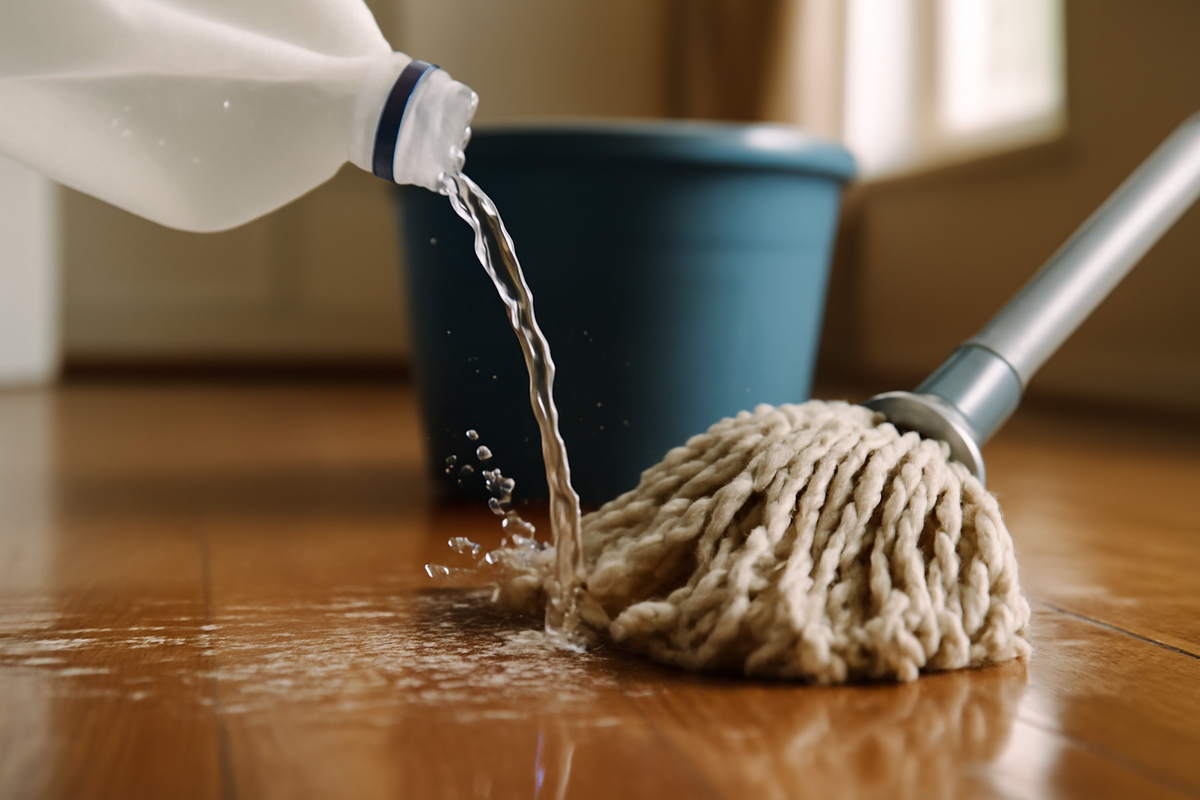
There’s a quiet revolution happening in mop buckets everywhere, and it starts with a single, unassuming ingredient: a pH-balanced, low-residue surfactant. It doesn’t foam like crazy. It doesn’t smell like a perfume counter. It doesn’t promise the moon on the label. But it does something far more meaningful: it lets the floor be itself—clean, uncoated, shining on its own.
Imagine you’re washing a window. Too much soap leaves streaks. Too little leaves smudges. The magic point is where the water glides, lifts the dirt, and leaves nothing behind. The same balance applies to floors. A well-designed floor cleaner doesn’t simply “add more cleaning power”; it understands the surface it touches. It’s tuned to slip between dirt and floor without clinging to either for too long.
That “small splash” isn’t some mysterious potion. It’s usually a thoughtfully formulated blend of:
- Mild surfactants that loosen oils and grime without leaving a sticky soap film.
- pH-balanced components that respect the floor’s material—whether wood, tile, or laminate—so no etching, swelling, or dulling.
- Softening or chelating agents that tame hard water so minerals don’t dry in pale streaks across your hard work.
Together, they turn your bucket into more than just water with a smell. They create a temporary, invisible “team” that sweeps in, gathers dirt, and walks out with it—without overstaying its welcome on your floor.
The sensory difference: how true clean feels
Real freshness is not a scent. It’s a sensation.
When you use a cleaner that leaves residue, it often tries to distract you with fragrance. Citrus, pine, floral—layers of “clean-smelling” notes. But step barefoot onto that floor and you’ll notice what your nose doesn’t tell you: a faint drag under your heel, the feeling of something sitting between you and the surface you’re standing on.
Now picture a floor washed with that small splash of the right kind of cleaner. The room smells light and almost neutral, maybe just a whisper of something crisp. The floor, once dry, feels… quiet. No tackiness. No squeak. Just a smooth, natural slip where your socks glide but don’t slide. Your feet sense the cool hardness of tile or the gentle texture of wood grain without a gummy film.
In the late afternoon, the sun edges across the floor and you see it clearly: reflective, but not greasy. Highlights, not haze. Your own reflection in the tile, faint but there. The grout looks defined, not blurred by a thin mask of leftover soap.
There’s an emotional element to it too. A truly clean floor changes the way sound moves in a room. Footsteps are softer, less sticky. The air feels less weighed down by artificial fragrances. It’s not that your home smells like “lemon meadow breeze”; it simply smells like itself—open, breathable, quietly cared for.
The streak-free secret: less is more, if it’s the right “less”
If you’ve ever watched someone pour cleaning solution into a bucket like they’re topping off a gas tank, you’ve seen one of the great streak-causing habits in action. Our instincts tell us more cleaner equals more clean. But floors tell a different story—one written in streaks, swirls, and cloudy patches.
The secret to a streak-free floor often lies in three intertwined choices: how much you use, what you use, and how you use it.
1. The “tiny splash” ratio
Most streak-free formulas are designed for very small amounts per bucket—often just a capful or two for several liters of water. That’s not stinginess; it’s precision. A cleaner that’s engineered to rinse virtually residue-free only works its magic at the proper dilution. Too concentrated, and you’re back to sticky films and ghostly streaks.
2. The right mop, the right motion
Even the best formula fails if the mop simply pushes dirty water around. A well-wrung, absorbent mop—microfiber head, sponge, or a flat mop with washable pads—acts like a traveling filter, picking dirt up and lifting it away from the floor. When paired with a low-residue solution, each pass is an act of removal, not relocation.
Think of it as painting in reverse. Instead of applying something to the surface, you’re steadily taking things away—old footprints, cooking oils, invisible dust from open windows. The bucket becomes a story of “what used to live on this floor.” The mop becomes your pen.
3. The clean-rinse moment
The right ingredient stack makes rinsing nearly effortless. Sometimes you don’t even need a separate rinse, because the solution is designed to evaporate cleanly, without leaving soap behind. The water does the carrying; the surfactant does the loosening. Then both bow out, leaving behind only the floor, and the faint smell of now-empty space.
It’s a quieter approach to cleaning—not about domination, not about scrubbing the world into submission, but about cooperation with the materials underfoot.
Different floors, same small splash
Walk through your home in your mind. You probably don’t have just one type of floor. Cool ceramic in the bathroom. Resilient vinyl in the laundry room. Faintly creaking hardwood planks in the hallway, softly reflecting the morning light. Each of these surfaces has its own needs—but one guiding principle still holds: avoid buildup, honor the material, leave no trace behind.
Here’s how that small, streak-free splash meets each surface halfway:
Wood and laminate: gentle respect
Wood is a living memory, even when cut and finished. It reacts to moisture, swells with excess water, and cringes at harsh chemicals. A neutral or slightly gentle pH cleaner helps preserve its finish, meeting the surface like a handshake instead of a shove.
Laminates, while more forgiving, also dislike heavy residues. They show streaks easily and can start to look tired long before their time if soap film builds up. Here, that low-residue ingredient shines—lifting everyday oils and footprints without adding a plastic-like sheen.
Tile and stone: clarity over coating
Tile can be brutally honest. Every streak shows. Every dried drip of solution, every splash of too-concentrated cleaner, every misjudged mixture. Stone adds another layer of complexity—sensitive to harsh acids or alkalines, often sealed, sometimes porous.
A pH-balanced formula, used at the right dilution, offers something rare: cleaning that respects both glaze and grout. Minerals from hard water are tamed so they don’t dry as chalky lines, and the surface is left bare enough that the natural finish does the talking, not the product.
Vinyl and hybrid floors: flexibility without film
Vinyl and modern hybrids are the chameleons of the flooring world. They imitate wood, stone, or tile, and they’re built to survive busy lives—dogs, kids, spilled juice, late-night cooking experiments.
What they don’t need is a slowly thickening layer of cleaner that dulls their printed patterns and turns textures vague. The right mop mixture cleans them the way rain cleans a leaf: it arrives, loosens what doesn’t belong, and disappears, leaving color and detail sharper, not smothered.
| Floor Type | What It Needs | How the “Small Splash” Helps |
|---|---|---|
| Sealed wood & laminate | Low moisture, gentle pH, no buildup | Cleans with minimal water and dries clear, protecting the finish. |
| Tile & grout | Streak-free clarity, mineral control | Reduces soap film and helps prevent white streaks from hard water. |
| Vinyl & hybrid planks | No waxy layer, color-safe formula | Lifts dirt without leaving a cloudy or plastic-like coating. |
| Stone (sealed) | Balanced pH, delicate handling of sealant | Respects the seal, avoids etching, and leaves a natural-looking finish. |
From chore to ritual: the mood of a freshly mopped room
There’s a certain hour—often in the late evening or early morning—when mopping can feel less like a chore and more like a quiet ritual. The house softens: fewer voices, no TV, just the gentle swish of fibers through water and the faint tap of the mop head against the bucket’s rim.
With the right cleaner, the whole mood shifts. Instead of wrestling with streaks and recalcitrant patches of dullness, you move with a simple confidence: this pass will be enough. You know that as the floor dries, it won’t surprise you with chalky lines or milky swirls. The room will simply come into focus, like a window cleared of fog.
You start to notice more than just the absence of dirt. You notice how the light behaves. How each room feels a little more spacious when the floors quietly shine. How that crisp underfoot sensation lends a subtle sense of order, even when life itself is anything but orderly.
And over time, the ritual becomes smaller, easier, lighter. When you use the right ingredient at the right strength, you don’t have to scrub away weeks of built-up film every time. Every mop is just a gentle reset, not a battle. The bucket water turns cloudy faster because it’s actually taking the dirt with it, instead of trading one kind of film for another.
The chore you used to postpone becomes something you almost look forward to—not for the act itself, but for the feeling that comes after: the hush of a room where the floor doesn’t shout for attention, it simply supports everything you do, quietly, cleanly.
Letting the floor be the hero
The real beauty of a good floor cleaner is that you never quite notice it. You notice the absence of its mistakes. You notice what it allows you to see: the pattern of the grain, the crisp edges of tiles, the unbroken reflection of morning light slipping across the room.
We tend to imagine cleaning as a story of adding—more fragrance, more shine, more foam, more promises. But the deepest kind of clean is subtractive. It’s what happens when the right small splash lets your mop take away everything that doesn’t belong, and then quietly disappears too.
In that quiet disappearance, something lovely happens: your home becomes more itself. Your floors tell the truth of their materials—wood that looks like wood, stone that looks like stone, vinyl that proudly wears its patterns without a dulling veil.
One evening, you’ll catch the light skimming low over the floor again, just like that first time you saw the streaks. Only now, there’s nothing there to confess. Just calm, clear surfaces. Footsteps that sound soft and sure. Air that smells like nothing more complicated than “here.”
All because of a small splash in the bucket—the kind of ingredient that doesn’t try to take center stage, but instead slips into the background and lets the floor, the room, and your everyday life shine instead.
FAQ
Why do my floors still look streaky even after I mop carefully?
Streaks usually come from residue—too much cleaner in the bucket, a formula that isn’t low-residue, or minerals in your water drying on the surface. Even perfect technique can’t fully fix the wrong product or dilution. Using a pH-balanced, low-residue cleaner at the recommended strength makes a big difference.
Is using more cleaner ever a good idea for extra dirty floors?
Usually no. More cleaner often means more residue, not more cleaning power. For extra-dirty floors, change the water more often, pre-sweep or vacuum well, and focus on mop technique instead of boosting the concentration.
Do I need to rinse the floor after mopping with a special floor cleaner?
Many modern, streak-free formulas are designed to be no-rinse when properly diluted. If the floor feels tacky or looks cloudy after it dries, you may be using too much product—or a cleaner that isn’t truly low-residue.
Can the same mop ingredient work on all floor types?
One well-formulated, pH-balanced cleaner can safely work on many sealed surfaces like tile, vinyl, laminate, and sealed wood. Very delicate or specialty surfaces (like unsealed stone) may need a specific product, but for most everyday floors, one “small splash” formula can cover the whole home.
How often should I mop to keep floors fresh without damaging them?
For most homes, a light mop once a week in high-traffic areas, plus spot-cleaning as needed, maintains freshness without over-wetting or wearing down finishes. With a gentle, low-residue cleaner, regular mopping is more protective than harmful—it removes grit that can scratch and dull surfaces over time.

Hello, I’m Mathew, and I write articles about useful Home Tricks: simple solutions, saving time and useful for every day.