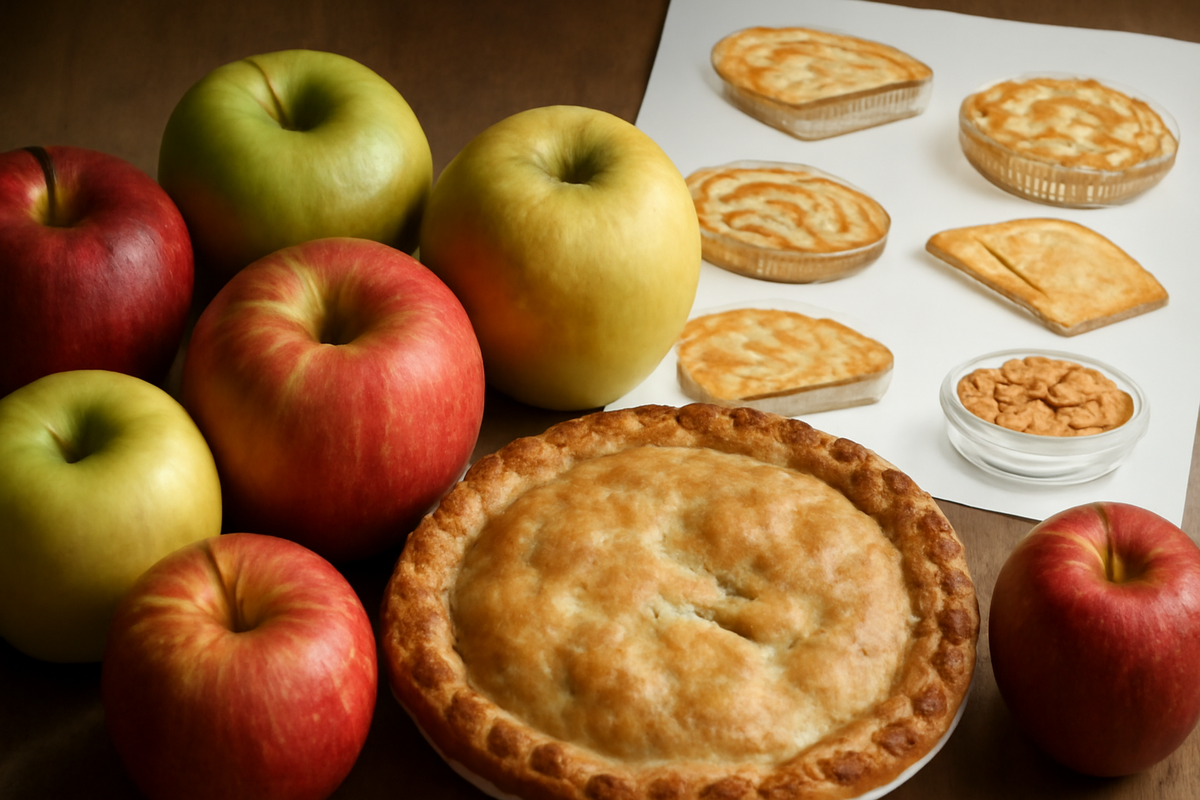
On a damp October afternoon, you stand in the produce aisle under harsh supermarket lights, holding two apples in your hands like they’re small, fragrant planets. One is glossy and crimson, the kind that shows up in fairy tales and children’s picture books. The other is mottled green and russeted, more like something you’d discover in a wild hedgerow than in a neatly stacked display. You came here with a mission: to bake an apple dessert that tastes like autumn itself. But suddenly, the question feels strangely weighty—what if you choose the wrong apple?
The Secret Life of Apples: Why Variety Matters
Every apple carries its own personality. Bite into a Honeycrisp and it shatters under your teeth, sending a spray of juice and sweetness across your tongue. Try a Granny Smith, and it snaps back at you—sharp, tart, alive, almost electric. A McIntosh bruises if you look at it the wrong way but melts into perfumed softness as soon as it meets heat. These aren’t just minor quirks; they’re the difference between a pie that holds its proud, layered slices and one that slumps into applesauce under its own steam.
Most of us grow up with a vague sense that “green apples are for baking” and “red apples are for snacking.” But that broad rule loses its footing when you begin to notice details: which apples turn mushy in the oven, which stay firm, which bring bright acidity, and which dissolve into subtle sweetness. Desserts ask for precision and personality. The star of a rustic galette is not always the right hero for a glossy, upside-down tart. A crumble loves contrast. A cider donut wants aromatics more than structure. Knowing your apples is like casting a play—every variety has a role it’s born to perform.
Think of your dessert as a little ecosystem of tastes and textures. The right apple can balance sugar, butter, spice, and crunch with the kind of grace that makes a dish unforgettable. The wrong apple doesn’t necessarily ruin anything, but it can dull the edges of flavor, flatten the drama. Once you understand what each apple brings to the party—its level of sweetness, acidity, juiciness, and how it behaves in heat—you start to choose not just an apple, but a precise effect.
Sweet, Tart, or In-Between? Tuning Flavor for Your Dessert
Before you even reach for a variety, pause and picture the dessert you’re dreaming up. Is it a deeply spiced, molasses-dark apple crisp that could comfort you on the coldest night of the year? Or a barely-sweet tart that lets the fruit’s own character shine through? Maybe an airy apple cake that’s more about fragrance and tenderness than bold flavor.
At the core of that decision (pun only slightly intended) is balance. Apples bring two main axes of personality: sweetness and acidity. Some are sugar-forward, almost candy-like, while others pack a citrusy punch that cuts through buttery richness. The best desserts often pair those traits like musical notes.
Sweet apples—think Fuji, Gala, or Golden Delicious—are mellow and friendly. They can make a dessert feel approachable and gentle, almost nostalgic. Too many sweet apples, though, and your pie or cake can end up tasting flat, like turning the treble way down on a song. Tart apples—Granny Smith, Bramley, or some heirloom varieties—bring the high notes. They taste alive in your mouth, their acidity keeping sweetness honest. On their own, they can be bracing. Blended with sweeter apples, they turn a simple dessert into something with depth and dimension.
Then there are the aromatic apples, the ones that taste like they already have cinnamon baked into them: Jonagold, Braeburn, Pink Lady, and certain heritage types. These apples carry a complex perfume, sometimes floral, sometimes spicy, sometimes reminiscent of pear or honey. In custards, galettes, and sautéed apples spooned over pancakes or ice cream, these aromatic varieties sing.
Ask yourself: do you want your dessert to lean bright and tangy, or warm and sweet? Intense and bold, or whisper-soft and subtle? Once you know the mood, you’re halfway to knowing which apple belongs in your mixing bowl.
Texture in the Oven: Firm-Bakers vs. Melters
Heat transforms apples in ways you can smell long before you can see. Steam escapes, sugars concentrate, aromas bloom. But not all apples travel through the oven the same way. Some hold themselves together almost stubbornly, maintaining neat slices and distinct pieces. Others collapse into lush softness, surrendering their structure to become an almost spoonable pudding.
If you’re making a pie—especially a tall, showy one where you cut a clean wedge and want to see rows of tender, distinct slices—you need firm-baking apples. Granny Smith, Honeycrisp, Pink Lady, Jonagold, Braeburn, and Northern Spy (where you can find it) are celebrated for this. They soften, yes, but they don’t disappear. A fork meets just enough resistance to be satisfying.
For crisps and crumbles, you can be more flexible. Here, some cooks actually love blending textures: a proportion of firm apples for bite, plus a few softer ones like McIntosh or Cortland that break down into a saucy underlayer. The crumble topping then floats on a kind of apple-scented cloud, with pockets of firmer fruit to keep things interesting.
Now imagine applesauce, butter-soft apple compote, or the fruit base for a bread pudding. In these desserts, you’re inviting the apple to relax completely. McIntosh, Cortland, Empire, and some older heirlooms excel here. They are the melters: quick to soften, easy to mash, welcoming of spice. A firm baking apple in applesauce can feel a bit resistant, as though it never got the memo that it was supposed to surrender.
And then there’s caramelization—those edges where apple slices meet heat and fat and turn golden and sticky. In tarts Tatin, skillet cakes, and roasted apples, you want fruit that not only holds shape but also browns beautifully. Braeburn, Pink Lady, and Golden Delicious often shine here, their sugar levels and texture working in your favor when the pan gets hot and the butter starts to sputter.
The Right Apple for the Right Dessert: A Handy Pairing Guide
By now, you may be picturing your kitchen counter scattered with apples of every shade, each one destined for a particular treat. To make your choices easier, here’s a compact pairing guide you can keep in mind the next time you wander into the orchard—or the grocery aisle—looking for dessert inspiration.
| Dessert Type | Best Apple Varieties | Why They Work |
|---|---|---|
| Classic apple pie | Granny Smith, Honeycrisp, Braeburn, Pink Lady, Northern Spy | Firm texture holds shape; bright acidity balances sweet filling. |
| Rustic galette | Jonagold, Braeburn, Golden Delicious, Pink Lady | Aromatic, gently sweet, tender without turning to mush. |
| Crisps & crumbles | Mix of Granny Smith + McIntosh or Cortland | Blend of tart/firm and soft/melting for saucy base and texture contrast. |
| Tarts Tatin & upside‑down cakes | Golden Delicious, Pink Lady, Braeburn | Caramelize well, keep slices defined, soak up butter and sugar. |
| Cakes & muffins | Gala, Fuji, Honeycrisp, Jonagold | Sweet and juicy; small pieces stay tender in batter. |
| Applesauce & apple butter | McIntosh, Cortland, Empire | Quick to break down into smooth, velvety puree. |
| Fried or sautéed apples | Pink Lady, Braeburn, Granny Smith, Golden Delicious | Hold their shape in the pan, caramelize and absorb spices. |
Think of this table not as a rulebook but as a map. It points you in a direction, but once you know your landmarks, you can wander. Have a basket of Fuji apples and a craving for pie? Mix them with a few Granny Smiths to add brightness. Found some heirloom russets at the farmers market? Try them in a galette with a drizzle of honey and see how their subtle nuttiness plays with flaky pastry.
Blending apples is one of the great secrets of memorable desserts. A pie made only with Granny Smith is sharp and tidy; one made only with McIntosh is soft and mellow. Combine the two, and something happens—complexity, conversation, a kind of textural duet. In a single bite, you move from soft to firm, tart to sweet, like shifting light through leaves.
How to Taste an Apple Like a Baker
Choosing apples isn’t just about memorizing names; it’s about developing a sense for fruit the way a winemaker tastes grapes off the vine. The next time you bring home a new variety, do a little quiet experiment before you bake.
First, pay attention to its feel. Is the apple heavy for its size? That usually signals juiciness. Is the skin taut and smooth, or slightly waxy, or faintly rough? A very hard, dense apple often bakes up firm, while one that yields quickly to pressure might soften more readily in the oven.
Now slice it open. Listen to the sound of the knife—does it crack, or glide? Look at the flesh. Some apples are almost neon-white; others have a warm, buttery hue. Take a bite and notice not just “sweet” or “sour,” but the sequence—does it start sharp, then mellow? Does it taste floral, like pear or melon, or spicy, like cider? Close your eyes for a second and see what it reminds you of.
If you’re planning to bake with it, cut a few slices and quickly sauté them in a small pan with a dab of butter and a pinch of sugar. Within minutes, you’ll know how it behaves under heat. Does it hold its shape after five, then ten minutes? Does the flavor intensify or fade? Does it release a lot of liquid? This tiny test can save you from a soggy pie or a dry crisp.
Over time, as you repeat this little ritual with different varieties, you build an intuitive vocabulary. “Ah, this one is a bit like a firm Golden Delicious but more tart,” you’ll think. Or, “This reminds me of McIntosh, so it might be great in applesauce.” Suddenly, the fruit aisle becomes less of a puzzle and more of a painter’s palette.
Season, Storage, and a Few Gentle Tricks
A final detail that matters more than people realize: when and how the apple was grown, picked, and stored. A Granny Smith in mid-winter might not taste quite like the zippy green spheres of early autumn. Some late-season varieties, like Pink Lady or certain heirlooms, actually improve in storage, their flavors deepening and their sweetness concentrating.
Freshness doesn’t always mean “just picked.” It means “well kept.” Look for apples without soft spots or deep bruises. A little surface russeting (that rough, brownish netting you sometimes see) isn’t a flaw; it can come with complex, old-world flavor. But mealy flesh is a disappointment in most desserts, no matter how skillfully you bake.
At home, keep apples cool and, ideally, a bit apart from other produce. They release ethylene gas, which can speed ripening in neighbors. For baking, bring apples to room temperature before you start—cold fruit can affect how your crust or batter cooks around it.
You can also make small, deliberate tweaks to tune your dessert. If you ended up with very sweet apples and you’re yearning for brightness, add a squeeze of lemon or a spoonful of cider vinegar to your filling. If your apples are extremely tart, gently increase the sugar or add a drizzle of maple syrup or honey, which carry their own deep, warm flavors. A pinch of salt—just a pinch—sharpens everything, the way it does in chocolate or caramel.
Spices, too, can complement or compensate. Cinnamon is classic, but nutmeg, cardamom, allspice, ginger, and even black pepper can play beautifully with certain apples. A mellow, sweet apple might enjoy the company of warm, assertive spices. A complex, aromatic apple might need only a whisper of vanilla or a single cinnamon stick to feel complete.
Let the Apple Lead the Way
In the end, choosing the right apple for every dessert is less about memorizing strict rules and more about learning to listen. Apples speak in texture, in acidity, in the way their perfume fills your kitchen when you slice into them. The more attention you pay, the more they’ll tell you what they want to become.
Maybe today that means a firm, tart Granny Smith pie that slices like a dream, its juices just barely thickened, its edges bronzed and flaky. Tomorrow, it might be a soft, rosy McIntosh applesauce simmered slowly on the stove, the kind you eat warm with a spoon straight from the pot. On another chilly night, you might toss a handful of Pink Lady slices into a hot pan with butter, brown sugar, and a shake of cinnamon, then spoon them sizzling over vanilla ice cream.
All of these desserts begin in the same place: your hand closing around an apple in a bin, in a basket, on a farm stand table. Once you know how to read that apple—its weight, its scent, its promise—you’re no longer guessing. You’re choosing, with intention and a little bit of quiet reverence, the right fruit for the story you’re about to bake.
Frequently Asked Questions
Can I use any apple I have on hand for baking?
You can, but the results will vary. Firm, slightly tart apples usually work best for pies and tarts. Softer apples are better for sauces and compotes. If you only have one kind, consider adjusting sugar and baking time to suit its texture and flavor.
Why do some apples turn mushy in pies?
Certain varieties, like McIntosh or Cortland, have a softer structure that breaks down quickly with heat. They’re excellent for applesauce but can make a pie filling too loose or mushy if used alone. Mixing them with firmer apples balances the texture.
Do I have to peel apples for desserts?
Not always. For rustic crisps, crumbles, and some galettes, leaving the skin on adds color, fiber, and a bit of texture. For classic pies, tarts, and sauces, peeling gives a smoother, more traditional result. It’s largely a matter of preference and the dessert’s style.
How many apple varieties should I mix in one dessert?
Two to three varieties are usually ideal. Aim for a mix of one firm-tart apple (like Granny Smith or Pink Lady) and one sweeter, aromatic apple (like Jonagold or Honeycrisp). More than three can muddle the flavors rather than deepen them.
What if I don’t recognize the apple variety name?
Ask the grower or produce clerk about its basic traits: is it sweet or tart, firm or soft, good for baking or better for snacking? If you’re unsure, test a slice raw and, if possible, quickly sauté a few pieces. Let its taste and texture guide how you’ll use it.

Hello, I’m Mathew, and I write articles about useful Home Tricks: simple solutions, saving time and useful for every day.