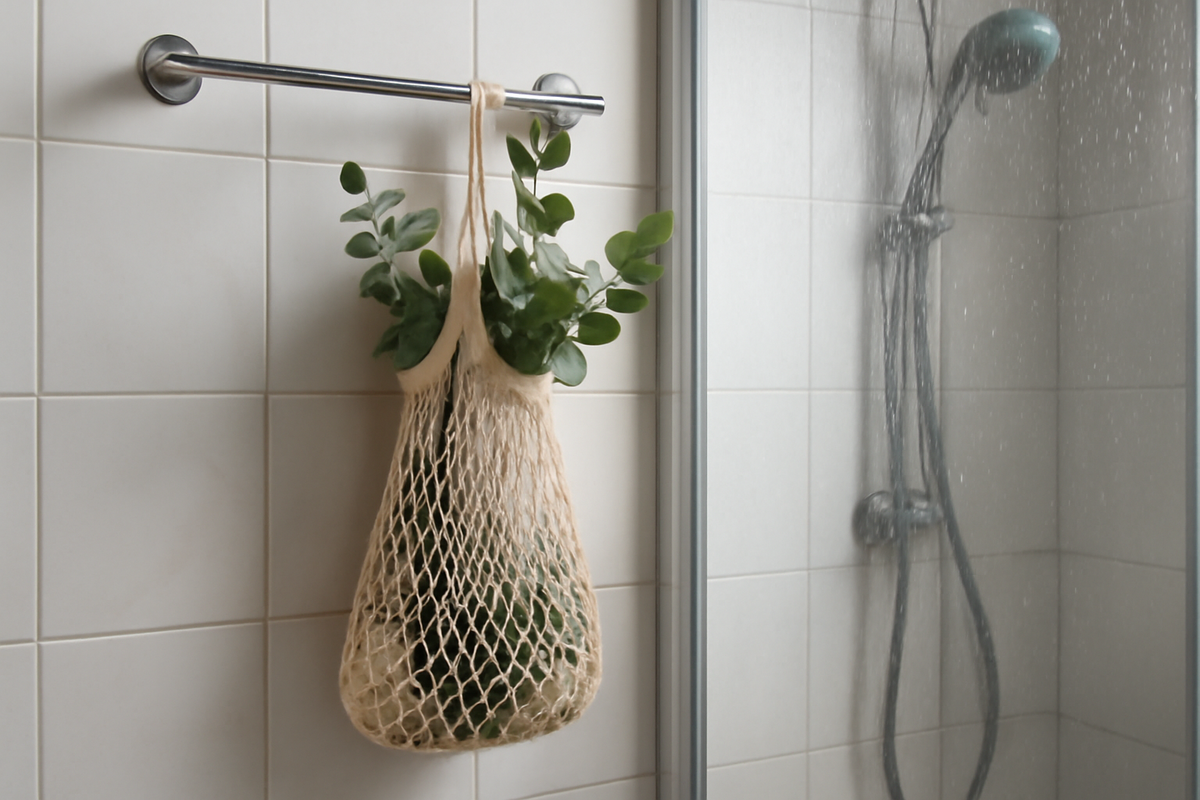
The first time I hung a little fabric pouch by my shower, I didn’t expect it to change the way my bathroom felt. It was a rainy Tuesday, the kind of day when the world smells like wet pavement and every window fogs over. I’d just stepped out of a long, hot shower, and the mirror was a hazy, ghostly blur. The ceiling was sweating. The corners near the tiles looked suspiciously like they wanted to grow something. I cracked the window, turned on the fan, and still, the air felt heavy. That’s when I looked at the simple bundle I’d tied to the curtain rod—no fancy gadget, just an old cotton sock filled with grains that felt cool and dry in my hand. I hooked it back in place, more out of curiosity than conviction. By the end of the week, the bathroom felt like a different room entirely: lighter, drier, fresher. It was like discovering a secret passage in a house I thought I knew by heart.
Why Bathrooms Feel Like Tropical Rainforests
Most bathrooms are tiny echo chambers of steam. Turn the shower on, and the air thickens in minutes—warm mist curling against walls, droplets clinging to glass, a soft hiss rising from the water. It feels cozy for a while, but as soon as the tap turns off, that same invisible mist becomes a problem.
Moisture tucks itself into quiet corners: around window frames, under sinks, behind the toilet tank. It seeps into grout lines and lingers in towels that never quite dry. If you’ve ever stepped onto a slightly damp bath mat two days in a row, you know that unsettling clammy feeling. Over time, that lingering dampness invites mold, musty odors, peeling paint, and those mysterious dark spots that seem to bloom overnight.
Bathrooms are perfect for this: small space, frequent steam, often poor ventilation. Maybe you have a fan that sounds like a jet engine but doesn’t actually seem to do much. Maybe your window opens onto a busy street, and you don’t always feel like letting in traffic noise and cold air just to dry the room. It’s easy to shrug and think, “It’s just a bathroom; it’s supposed to be damp.” But it doesn’t actually have to be.
What if, instead of just pushing the steam around with fans and open windows, you quietly removed the moisture from the air right where it forms—every time you turn on the shower?
Hang It by the Shower: The Surprisingly Simple Fix
The hack feels almost too simple: you hang a moisture-absorbing pouch right by the shower. That’s it. No installation, no drilling, no humming appliances. Just a small, unassuming bag catching the dampness you can’t see.
Imagine a little sachet swinging gently from the shower rod, or a neat bundle hooked on a wall near the tiles. Inside: ingredients that act like tiny, patient sponges. As the steam rises, they quietly pull water from the air. Less moisture clings to your ceiling, less condensation streaks your mirror, and your towels dry faster on their hooks. Your bathroom starts to smell less like “yesterday’s shower” and more like “open window after a rainstorm.”
The beauty of hanging it high is simple physics: warm, moist air rises. Up there, just above eye level, is where the dampness gathers like a ghostly halo after every shower. That’s exactly where your little pouch waits.
The Secret Inside the Pouch
What goes inside that bag is where the magic really happens. There are a few tried-and-true moisture magnets you can use, each with its own personality and perks:
- Rock salt or coarse sea salt – A classic dehumidifier. Salt pulls water from the air and clumps as it absorbs moisture. It’s cheap, natural, and easy to find.
- Baking soda – A gentle absorber and a champion at neutralizing odors. Great for small bathrooms and for people sensitive to strong scents.
- Silica gel beads – The same kind you find in little “Do Not Eat” packets in shoe boxes. Extremely effective at absorbing water vapor and can often be re-dried and reused.
- Activated charcoal – Less about raw moisture and more about smell. Perfect if your bathroom’s main problem is that lingering “wet dog” atmosphere after long showers.
Slip any of these into a breathable pouch—an old cotton sock, a scrap of muslin, a small linen bag—and you’ve just made a low-tech moisture trap that works around the clock. No batteries, no wires, no whirring fan to compete with your morning thoughts.
Where Exactly to Hang It
The spot matters. Think of airflow and steam paths:
- On the shower curtain rod, near the center, where steam gathers and circulates.
- On a hook above or next to the showerhead, high enough to stay dry but close enough to the action.
- Near the top of a tiled wall, especially if you have a corner that always fogs.
You want it high and out of splash range, like a tiny guardian of dry air keeping watch over your daily rituals.
Scent, Texture, Atmosphere: Turning a Hack into a Ritual
For all its practicality, this hack can also feel oddly luxurious. There’s something satisfying about making a tool for your home that’s as tactile and beautiful as it is functional. It’s a quiet way to say, “This space matters. I live here, not just pass through.”
Picture this: you choose a soft, natural fabric for the pouch, something with a gentle texture you don’t mind brushing against as you slide the shower curtain closed. Maybe you toss in a few dried lavender buds or rosemary leaves, not enough to overpower, just enough to release a whisper of scent when the steam rises and brushes past. Every shower becomes its own small ritual of atmosphere—the hiss of water, the warmth of the room, and that faint, grounded smell of herbs and clean air.
If you’re more minimal, you can skip the botanicals and go for a simple, clean look—a small white bag, discreet and modern, almost invisible against tile. The effect is still there: fewer fogged mirrors, lighter air, a space that feels like it breathes between showers instead of sighing with humidity.
| Filler Material | Best For | Pros | Considerations |
|---|---|---|---|
| Rock salt / coarse sea salt | High humidity, frequent showers | Strong moisture absorption, inexpensive | Can clump and slowly dissolve; replace periodically |
| Baking soda | Small bathrooms, odor control | Neutralizes smells, easy to find | Milder moisture absorption; needs regular changes |
| Silica gel beads | Very damp spaces, long-term use | Highly efficient; often reusable after drying | Keep away from children and pets; needs a breathable but secure pouch |
| Activated charcoal | Musty or stale-smelling bathrooms | Excellent for odors, subtle and natural | Black dust can stain if the bag tears; combine with another absorber for heavy moisture |
Beyond the Bathroom: Little Pouches, Big Impact
Once you’ve seen what a hanging pouch can do by the shower, it’s hard not to start wandering around the house, looking for other damp, forgotten corners. The same principle works in all those small, closed-in spaces where air tends to stall and stale.
Open a wardrobe in a humid climate and you’ll sometimes smell it immediately: that faint, sweet mustiness of fabric that never dries completely. The cotton shirt you love, the jacket you only wear twice a year—slowly absorbing moisture, slowly losing their freshness. A hanging pouch disappears neatly among hangers, quietly pulling dampness out of the air before it can settle into fabric and leather.
Think of under-sink cupboards, where pipes sweat in the summer and cold mornings leave condensation on metal. A little hanging bag clipped under the shelf turns that dark, forgotten space into something that doesn’t ambush you with a whiff of “old water” every time you reach for the dish soap.
Even shoe closets, laundry rooms, RV interiors, and tiny home bathrooms all benefit from the same humble trick: something small, absorbent, and persistent, hanging where the air tends to grow heavy.
Turning Maintenance into a Gentle Habit
The only real work involved is checking in every now and then—just enough to make it feel like a small act of care rather than a chore. Once every few weeks, touch the pouch. Does it feel overly damp or hard and clumpy? That’s a sign it’s doing its job.
- Salt or baking soda pouches can be emptied and refilled. The old contents can often be discarded in the trash.
- Silica gel can be spread on a baking tray and gently dried in a low oven if the manufacturer indicates it can be recharged.
- Charcoal usually has a lifespan of a couple of months in a very damp space, after which it can be replaced.
For many, this becomes as routine as washing the bathmat or wiping the mirror: a small, cyclical gesture that adds up to a noticeably fresher home.
Designing a Bathroom That Actually Breathes
Hanging a pouch by the shower isn’t meant to replace every other strategy; it joins them, adding a quiet extra layer of protection. Think of it as part of a subtle ecosystem of habits that keep your bathroom from turning into a miniature rainforest.
Yes, keep using the fan if you have one. Yes, crack the window when weather and location allow. Yes, hang towels so they can actually dry instead of folding them into dense, eternally damp bundles on hooks. But the pouch does something different: it keeps working when the fan is off and the window is closed, when it’s midnight and you’ve forgotten all about the shower you took four hours ago.
Over time, you notice small changes: the ceiling paint holds up better, the corners stay clear, that one tile line near the shower floor doesn’t darken with mysterious spots. The mirror clears faster. Even chrome surfaces seem to haze less. Your bathroom feels less like a place where moisture rules and more like a place you’ve gently, quietly tamed.
And there’s something deeply satisfying in that: a silent object, doing quiet work in the background, in service of your daily comfort.
A Tiny Anchor in a Daily Storm
We underestimate how much our spaces shape our moods. The bathroom is where the day often begins and ends—in the half-awake stumble toward the shower, in the quiet ritual of washing the day off your face. When that little room feels heavy and clammy, like it’s still holding on to every shower you’ve taken in the last week, something in you registers it, even if you don’t have words for it.
A single pouch hanging by the shower won’t change your life. But it can change the way your home holds you—the way it smells when you step into it, the way it feels when you draw the curtain closed and listen to the water drum against tile. It can turn a steamy, suffocating space into one that feels cleaner, lighter, calmer.
It’s such a small thing, swinging gently from a hook, filled with grains or beads or powder. But sometimes, the cleverest hacks are exactly that: small, quiet, unassuming. The ones that don’t shout for attention, yet quietly keep your world a little fresher, a little drier, a little kinder every day.
Frequently Asked Questions
How close to the shower should I hang the pouch?
Hang it as close as you can to where steam collects—on the shower rod or a high wall hook—while keeping it out of direct spray so it doesn’t get soaked. Aim for the upper third of the room where warm air rises.
How often should I replace or refresh the filling?
In a busy bathroom, plan to refresh simple fillers like salt or baking soda every 3–6 weeks. Silica gel and charcoal may last longer, but check monthly by feeling for excessive dampness or loss of effectiveness.
Can I use this hack if I already have a bathroom fan?
Yes. The pouch doesn’t replace ventilation; it supports it. The fan moves moist air out, while the pouch absorbs some of what lingers, especially in corners or during cooler, still days.
Is it safe around kids and pets?
Keep the pouch securely closed and hung out of reach. Avoid loose silica gel or charcoal where children or animals could access it. Fabric should be tightly tied or sewn to prevent spills.
Will one pouch be enough for my bathroom?
For a small bathroom, one well-placed pouch is often enough. In larger or very humid spaces, consider two: one near the shower and another near persistent damp spots like windows or under-sink areas.
Can I add essential oils or dried herbs inside?
Yes, but use them sparingly. Dried herbs like lavender or eucalyptus work well without making the fabric wet. If using essential oils, add just a few drops to the outer fabric and let it dry fully before hanging.
What fabric works best for the pouch?
Choose a breathable, natural fabric like cotton, linen, or muslin. Avoid plastic or tightly woven synthetics; they trap the filler and stop it from interacting with the air effectively.

Hello, I’m Mathew, and I write articles about useful Home Tricks: simple solutions, saving time and useful for every day.