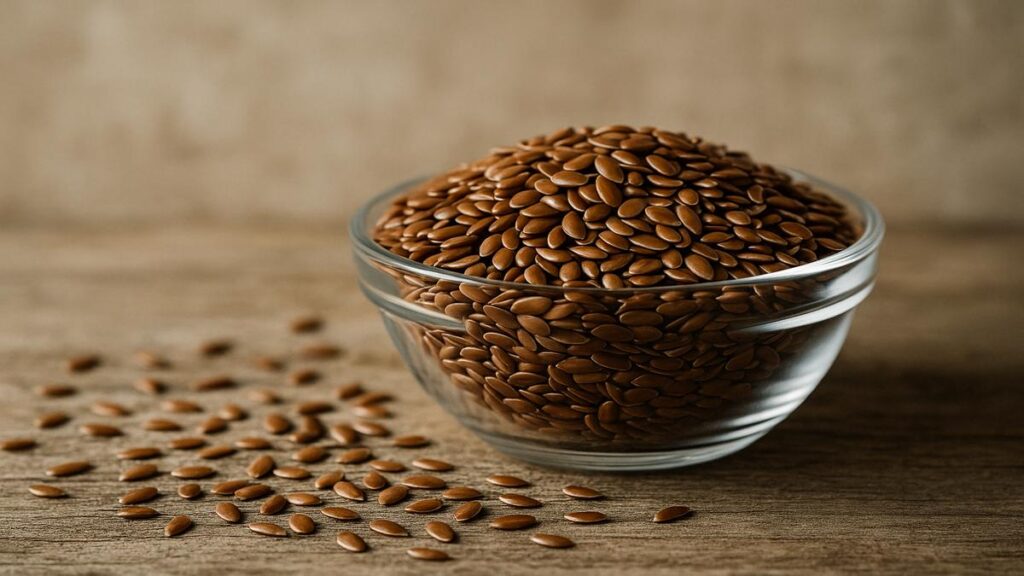
The first time I saw the trick, the afternoon light was already slanting low across the garage, turning dust motes into slow-falling snow. A beat-up silver hatchback sat in the middle bay, its plastic bumpers and mirror housings chalky and gray, like someone had rubbed them with ash. The smell of warm rubber, cold metal, and old coffee hung in the air as the mechanic—hands scarred, shirt smudged with years of engines—reached not for a fancy detailing product, but for a small mason jar from a shelf above his workbench. The label was smudged from fingerprints, but I could still read it: “Cornstarch.”
The secret lives of faded plastics
Walk through any parking lot in midday sun and the story is written into every faded bumper and grayed-out wiper cowl. Modern cars lean heavily on plastic: bumpers, mirror caps, door trims, fender flares. When new, they’re deep black, satin or matte, the kind of texture you notice only because it looks quietly perfect. Then time, sun, and weather step in.
Ultraviolet light gnaws away at the plastic’s surface, oxidizing it, lifting the color like a photograph left in a window. Heat from summer pavements, road salt in winter, acidic rain, road grime — they all conspire, layer by layer. Eventually, what was once a rich, factory-fresh black becomes tired gray, streaked, blotchy, and rough to the touch. Touch a neglected bumper on a hot day and it feels almost dusty, as if it’s slowly turning back into powder.
Most drivers sigh and look away. Some resign themselves to it as “just age.” Others buy bottles of plastic restorer promising miracles: “Back to Black,” “Trim Resurrection,” “Forever Shine.” They work, sometimes brilliantly, but there’s always the cost, the reapplication, the sense that you’re smearing on something cosmetic rather than reviving what’s already there.
Yet in little garages and home driveways, a quieter revolution has been gathering. It doesn’t come in glossy packaging. It lives just above the flour and sugar, buried in the pantry.
What the mechanics whispered: pantry powder and a rag
The mechanic with the cornstarch jar grinned when he saw my raised eyebrow. “Detailers pay good money for what this little guy does,” he said, tapping the glass. “Almost everyone has it at home.” He didn’t say what it was right away. Instead, he opened the jar carefully, a tiny puff of white dust lifting into the air, faintly sweet, faintly earthy — that familiar pantry scent of dry goods and quiet afternoons.
He scooped out a small amount of the powder into a plastic cup, then reached for a bottle of plain mineral oil. Not a professional-grade trim product, not a synthetic polymer coating. Just clear, food-safe, supermarket mineral oil. He poured a thin thread into the powder and stirred with a clean stick. The mixture thickened into a silky, pale paste, the consistency of a lotion you’d trust near your hands, not a harsh chemical you’d fear around your paint.
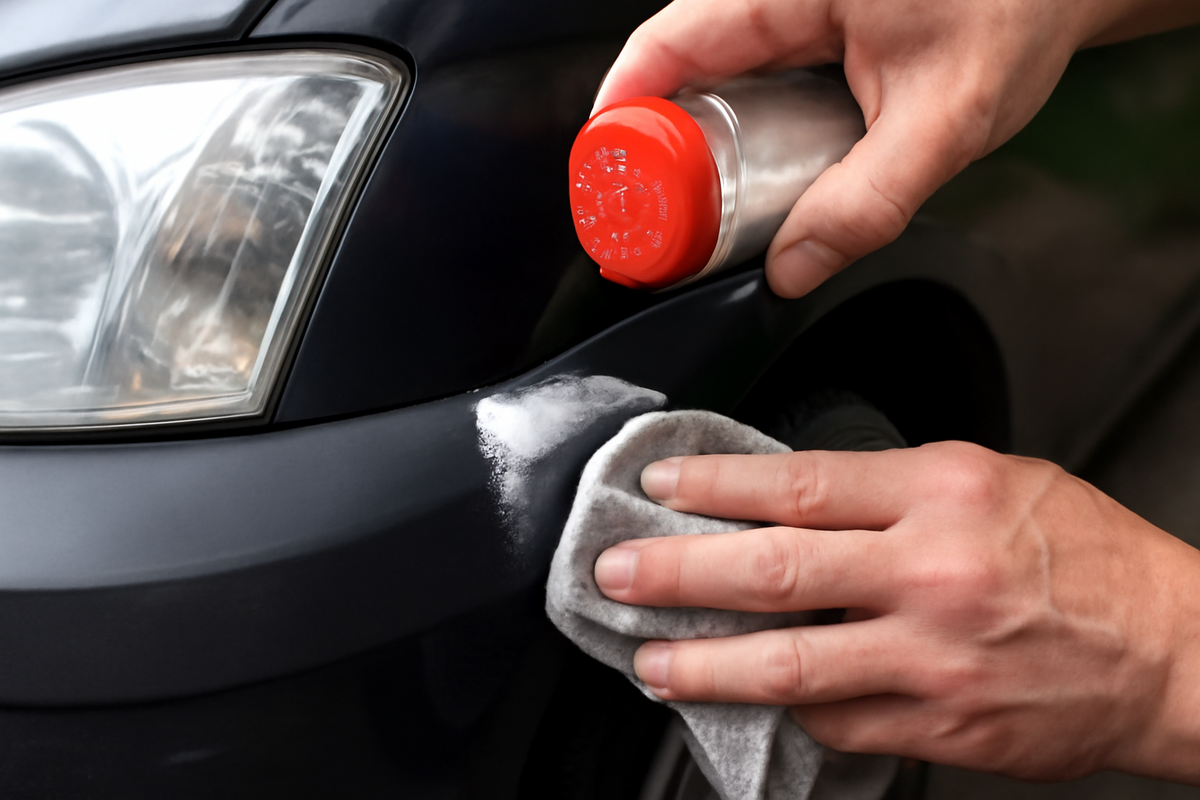
“We use this on older plastics that have gone patchy,” he said, dipping a soft microfiber cloth into the paste. “Cornstarch lets the oil spread even, keeps it from streaking or going too slick. Helps it bite into the texture without leaving greasy lines.” He stepped toward the car’s front bumper.
I watched as he worked in small, slow circles. You could hear the faint rasp of fabric over dry plastic, like brushing over sanded wood. At first, nothing seemed to happen. The bumper stayed stubbornly gray. But within seconds, as the paste thinned out and disappeared into the surface, a different color woke up. Deep charcoal. Then near-black. It didn’t look wet or oiled; it looked… alive. As if someone rolled the plastic years backward.
The science hiding in plain sight
Chemically, the magic isn’t magic at all. Most unpainted car plastics are textured and slightly porous, with microscopic pits and ridges that trap dirt and oxidized material. When plastic fades, it’s not just the color disappearing — the very surface changes, growing rough and chalky. That roughness scatters light, making the plastic look lighter and dull.
Oil, by nature, wants to slip into cracks and crevices. Wiped onto weathered trim, it seeps into those micro-ridges, darkening the surface and changing the way it reflects light. It’s a bit like adding water to a dried river stone — the stone suddenly looks richer because the surface is more unified and less chalky.
Cornstarch plays the supporting role. As a fine, absorbent powder, it keeps the oil from running, helps suspend it evenly, and gently polishes the outermost layer as you rub. Too much oil alone can leave shiny streaks, attract dust, or drip where you don’t want it. Too much powder alone just makes dust. Together, they become a soft, workable paste that behaves like an ultra-simple restoring cream.
The real surprise is not that it works, but that it works this well — enough that some mechanics quietly reach for the pantry when professional bottles run out, or when a customer drops by with a car in desperate need and a budget stretched too thin for boutique products.
How drivers are actually mixing and using it
Ask three mechanics about the recipe and you’ll get four variations, each delivered with the mild stubbornness of someone who’s tested it on many a bumper. But a simple pattern emerges, repeated in small-town shops and weekend driveway experiments.
| Component | Typical Choice | Role |
|---|---|---|
| Powder | Cornstarch (pantry staple) | Thickens oil, evens application, mild polishing |
| Oil | Mineral oil or light vegetable oil | Darkens plastic, fills micro-cracks, restores sheen |
| Cloth | Soft microfiber or cotton rag | Applies and buffs the mixture, avoids scratches |
| Prep | Soap, water, and a brush | Removes grime so the mixture reaches the plastic |
Before anything touches the trim, the surface is washed: a bucket of warm water, a drop or two of dish soap, a soft brush to scrub away the thin film of road life that clings to car exteriors — diesel haze, pollen, tire dust, the faint greasy mist from city air. Once the plastic is bone-dry, the mechanic mixes powder and oil in small batches, no measuring spoons, just an eye for texture: not runny, not stiff. Like a good hand cream.
Working in the shade, never direct sun, they dab the paste on in small sections, massaging it into the grain. On older trims, the cloth snags faintly on the roughness, the sound turning softer as the surface begins to smooth under repetitive motion. There’s something oddly intimate about it — bringing your attention down from the bold sweep of the car’s paint to the humble, unnoticed edges that frame it.
After a few minutes of dwell time, another clean cloth comes out for buffing. Excess powder lifts away, and what’s left behind is a gentle, factory-like satin. Not mirror-glossy, not wet-looking. Just new. Or close enough to new that anyone walking by would pause and wonder how a decade-old bumper looks this fresh.
“Factory-new” in the real world
“Look,” one mechanic told me, leaning against a lift and nodding at a freshly treated SUV, “I’m not saying it reverses time. Plastic that’s already cracked or deeply pitted still has scars. But if the trim is just faded and chalky—man, this brings it right back. Had customers swear I replaced the parts.”
That “factory-new sheen” isn’t about a blinding shine. Think back to the first time you picked up your car from the dealer: the trim would have been a deep, even tone with a soft, low glow. You didn’t see reflections, you saw richness. No streaks, no blotches, no surprising patch of tired gray catching the sun along the mirror base.
Pantry powder and oil don’t install a new surface; they persuade the old one to show its depth again. On black or dark-gray plastics, the effect can be dramatic enough to shock you the first time. Side-by-side, untreated and treated trim can look like two different model years of the same car parked nose-to-nose.
And yet, the charm lies just as much in the simplicity as in the result: no solvents hissing in your nose, no complicated multi-step cure schedules, no intimidating labels warning against bare-skin contact. Just the soft drag of a cloth, the faint squeak as powder and oil work their way into forgotten texture.
When pantry magic makes the most sense
This humble method doesn’t pretend to be perfect for every situation. Ask the mechanics who swear by it, and they’ll lay out its sweet spots with the calm clarity of people who have seen both miracles and disappointments.
It shines — sometimes literally — in these moments:
- On older daily drivers whose trim has gone pale but isn’t cracked.
- On budget-conscious refreshes before selling a car or returning a lease.
- On work vehicles where appearance matters, but every dollar counts.
- As a stopgap when professional products run out at the worst time.
The pantry mixture gives you control. You can go subtle by using less oil, focusing only on the most faded sections, or go bolder by treating every inch of exterior plastic: cowl panels, bumper inserts, mud guards, mirror caps, even the dull plastic around windshield wiper bases that most people ignore until it turns nearly white.
It is, in a very literal sense, hands-on. You see your car up close in a way we often don’t, tracing lines where bodywork meets weather stripping, rediscovering all the small decisions made by some faraway designer—how the fender trim curves around the wheel arch, how a short black strip at the base of the windshield anchors the whole front view.
The caveats in the glow
No seasoned mechanic will tell you pantry powder is a magic shield. Unlike some synthetic trim restorers with UV inhibitors, this homebrew doesn’t promise months and months of protection. Sun and rain will slowly reclaim their territory, and the sheen you admired in the driveway will mellow over weeks.
There’s also the simple truth that not all plastics are equal. Glossy, painted, or clear plastics are not candidates for this method. Nor are interiors, where greasy residues and heat can turn a clever hack into a dust magnet. On exterior unpainted trim, though—with that factory-textured, slightly grainy feel—the mixture tends to behave best.
Mechanics also caution about overdoing the oil, especially near rubber weather seals or on surfaces that shouldn’t become slippery, like running boards or step-in edges on SUVs and trucks. Less is better. The goal isn’t to glaze everything in shine; it’s to restore color and depth without announcing that anything has been applied.
And yet, when the balance is right, when the mixture is massaged in and buffed back, the effect is hard to argue with—especially when you step back, let your eyes sweep across the body, and realize how much of a car’s “age” is read not from the paint, but from the plastic trim that outlines it.
Why this small ritual feels oddly satisfying
There’s another layer to this story that has nothing to do with chemistry or durability and everything to do with the quiet pleasure of bringing something back from the edge of neglect. We live surrounded by things that seem designed for disposability: bumpers swapped instead of repaired, trim replaced when it starts to look tired, entire cars traded in because they no longer sparkle.
Pantry powder and oil nudge in the opposite direction. They invite you to see value in the scuffed and faded, to lean close with a cloth instead of backing away with a credit card. The transformation happens in real time under your hands: gray to black, tired to presentable, overlooked to appreciated.
There’s a small but real environmental gentleness here too. Fewer harsh chemicals, fewer plastic bottles, fewer parts condemned as “too old-looking” when they are structurally sound. If a jar of cornstarch and a bottle of mineral oil can grant another chapter to plastic trim, maybe the car itself feels a little less like an aging appliance and more like a long-term companion.
When I left that garage the first day I saw the trick, the silver hatchback sat outside in the late sun. The faded bumper I’d seen on arrival was gone, replaced by a calm, deep black band of plastic that made the paint look suddenly brighter, the whole car somehow younger. The owner, who’d dropped it off with the shrug of someone who expected “just another oil change,” stepped around the back and stopped. Hands on hips. Quiet smile.
“You replace this?” she asked.
“Nope,” the mechanic said, wiping his hands on a rag. “Just showed it a little pantry love.”
FAQs
Does cornstarch really restore car plastics, or is it just a myth?
Cornstarch by itself doesn’t restore color, but when mixed with a light oil and applied correctly, it helps even out application, gently polishes the surface, and allows the oil to darken and refresh faded plastics. Mechanics who use it regularly report results that can look remarkably close to factory-new on unpainted exterior trim.
Is this method safe for all types of car plastic?
It is best suited for unpainted, textured exterior plastics such as bumpers, mirror housings, fender trims, and cowl panels. It is not recommended for painted plastics, glossy trims, clear plastics like headlight lenses, or interior surfaces where residue can attract dust or become slippery.
How long will the restored sheen last?
Longevity varies with climate, sun exposure, and how often the car is washed. In mild conditions, the effect may last several weeks to a couple of months. Under strong sun and frequent washing, you may notice fading returning sooner and need to reapply periodically.
Can I use vegetable oil instead of mineral oil?
Some people do use light vegetable oils, but mineral oil is generally preferred because it is more stable, less prone to going rancid, and has a neutral smell. If you experiment with vegetable oil, apply sparingly and monitor the surface over time for any odor or stickiness.
Will this make my car dangerously slippery in some areas?
It can if applied in the wrong places or in excess. Avoid using the mixture on step surfaces, running boards, pedal areas, or anything that might be stepped on or gripped. On regular trim, buff thoroughly after application to remove any excess and leave only a soft, dry-feeling sheen.
Does this replace professional trim restorers?
Not entirely. High-quality commercial products may offer better UV protection and longer-lasting results. The pantry method is a practical, low-cost option that can look very good, especially for older daily drivers, but it doesn’t claim the same durability or engineered protection as specialized products.
Will it damage my car’s paint if it gets on it?
In normal, small amounts, a cornstarch-and-oil mixture is unlikely to harm intact automotive paint. Wipe off any excess promptly with a clean cloth, and wash the area if needed. Avoid letting heavy, oily residue sit on paint or rubber seals for long periods.
How often can I reapply the mixture?
You can reapply whenever the trim starts to look dull again. As with any treatment, it’s wise not to build up heavy layers. Clean the surface first, use moderate amounts, and buff well so the plastic looks refreshed rather than coated.

Hello, I’m Mathew, and I write articles about useful Home Tricks: simple solutions, saving time and useful for every day.