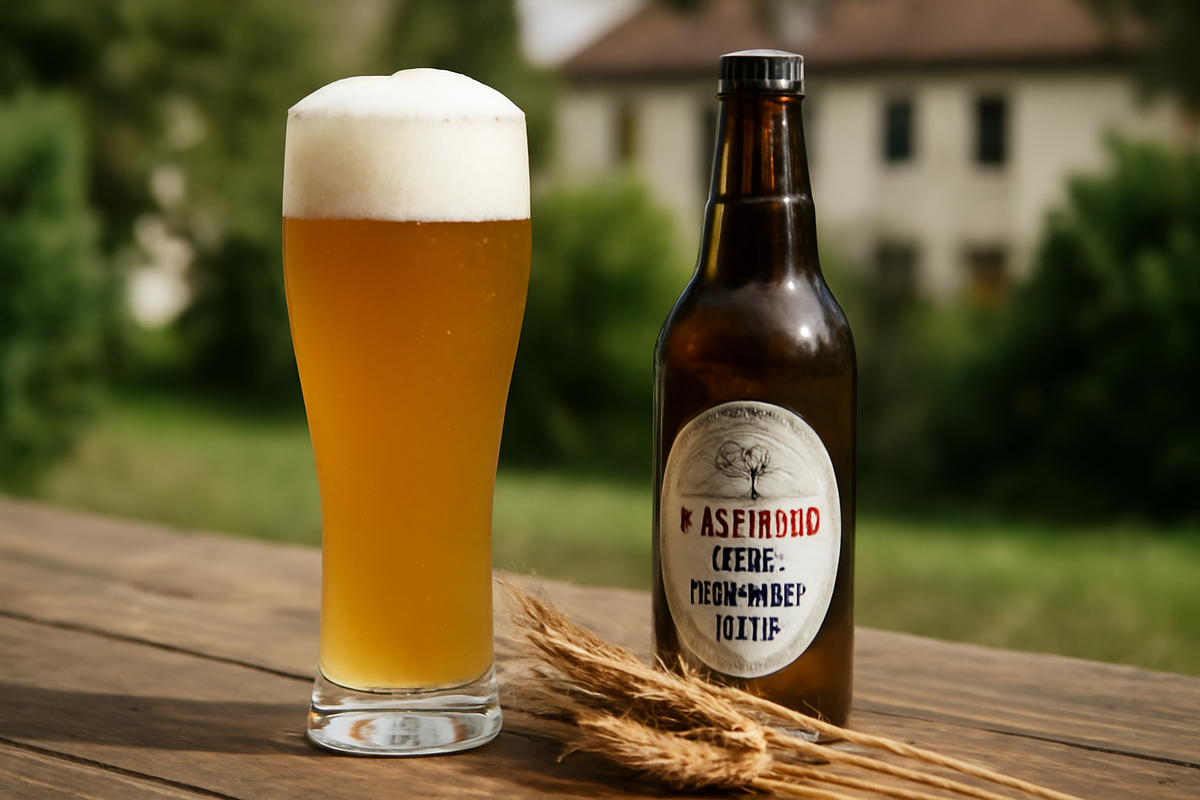
The first thing you notice is the sound: a low, contented murmur rolling through a Bavarian beer garden as evening leans in. Wooden benches scrape gently on gravel, cutlery rings against china, and somewhere close by, a fountain whispers over stone. A server lifts a towering, mist‑beaded glass into the amber light. The liquid inside is cloudy gold, crowned with a thick, whipped‑cream head that clings to the rim as it settles. You could swear this is classic Bavarian wheat beer—banana, clove, bread crust rising to meet your nose—except for one quiet detail. There is no alcohol in that glass at all.
The soft rebellion in a tall glass
Across Bavaria, something subtle but radical is happening. In a region that practically wrote the rules of beer—home of the Reinheitsgebot, the fabled purity law—Bavarian brewers are quietly rewriting another: that “real” beer must contain alcohol.
Ask the locals, and they’ll tell you this shift didn’t come from trend reports or marketing brainstorms. It came from runners jogging along the Isar who wanted a beer at the finish line and still make it back to work. From parents washing dishes after bedtime who wanted the taste of their beloved Hefeweizen without the soft blur that followed. From drivers who refused to choose between responsibility and pleasure.
So, in tiled brewhouses that smell of steam and malt, Bavarian brewmasters rolled up their sleeves and went to war with a tricky paradox: make beer that tastes exactly like the wheat beer their grandparents drank—lush, yeasty, fruity, alive—just minus the alcohol that had been at its core for centuries. The result, say beer judges and sensory scientists alike, is that the world’s finest alcohol‑free wheat beer now flows from Bavarian taps.
Why wheat beer is the hardest to fake
To understand why experts rave about Bavaria’s alcohol‑free versions, you have to know how unforgiving wheat beer can be. Wheat beer—“Weissbier” or “Weizen”—isn’t shy. It’s a beer that walks into the room wearing clove cologne and banana perfume. Those heady aromas come from special yeast strains and fermentation temperatures carefully nudged into just the right zone, like coaxing a sourdough starter to life.
Strip out the alcohol, and the whole structure wobbles. Alcohol carries aroma, stretches the body, and props up flavor the way a frame supports a painting. Remove it clumsily, and what’s left is a hollow echo: thin, watery, vaguely sweet. For years, this was the global problem with alcohol‑free beer. It was like listening to your favorite song through a wall.
“Helles or Pils can hide behind bitterness and carbonation,” one Bavarian brewmaster explains, wiping his hands on his apron, the air around him warm with steam and cereal grain. “But Hefeweizen is naked. If you take away the alcohol and anything else is off—too sweet, too flat, too sharp—you taste it immediately.”
The challenge was to keep the very soul of wheat beer—the velvety haze, the bread‑and‑banana aroma, the spicy clove whisper—without the alcohol that normally helps bind them together. That challenge became Bavaria’s obsession.
The quiet science behind the foam
From the outside, nothing looks different. Copper kettles shine, hoses curl along tile floors, and workers in faded work shirts monitor dials the way they always have. But behind the scenes, Bavarian brewers have become unlikely masters of gentle technology.
Some use vacuum distillation, where alcohol is coaxed out at lower temperatures so flavors stay intact instead of being boiled away. Others rely on arrested fermentation, cooling and slowing the yeast at just the right moment so it makes flavor but almost no alcohol. Nothing about this is easy. A few minutes too long, a degree too warm, and the beer is unbalanced—too sweet, too dull, or stripped of its delicate aroma.
What makes Bavarian wheat beer stand out, say sensory experts, is that brewers here start from a stubborn, almost old‑world mindset: the alcohol‑free version has to be brewed with the same seriousness, the same patience, and the same ingredients as the full‑strength original. This is not a side project. It is a parallel universe.
A taste that fools the memory
Ask people who blind‑taste alcohol‑free wheat beers from around the world, and a pattern emerges. The Bavarian ones get quiet nods, then surprised laughter. Judges go back for more sips, frowning at their score sheets, looking for flaws their palates expect but don’t find.
It starts with the aroma: that unmistakable ripe banana note, like cutting into a yellow banana with freckles just beginning to bloom, followed by the gentle prickle of clove and allspice. Underneath, there’s a softness—fresh bread, maybe a hint of vanilla and citrus. Hold the glass to the light and it glows hazy gold, the yeast in suspension catching the sun like dust in a cathedral.
Then the sip: smooth, rounded, fuller than you expect from a beer with almost no alcohol. Tiny bubbles rise in a lively but not aggressive rush, lifting flavor across your tongue. The wheat gives it a pillowy texture, like biting into the soft inside of a pretzel roll. Malt sweetness brushes past but never clings. A whisper of bitterness, just enough to keep you wanting another sip, closes the circle. If you weren’t told this is alcohol‑free, you’d likely set the glass down convinced you’d just had a classic Bavarian Hefeweizen.
This is where experts say Bavaria has pulled ahead: their alcohol‑free wheat beers don’t taste like a clever compromise. They taste like beer first, and only second—almost as an afterthought—like something you could happily drink after a trail run, drive home, and still read bedtime stories without your eyelids growing heavy.
How Bavaria quietly became a refuge for mindful drinkers
On a summer weekend, the Isar River running through Munich becomes a living postcard. Cyclists roll over bridges, kids bounce along the banks throwing stones, and in the shade of chestnut trees, beer gardens fill with long tables and long stories. Pitchers of cloudy gold are everywhere, and more and more, the words “alkoholfrei” sit under the brand name on the menu, as unremarkable as “small” or “large.”
For a region so intertwined with beer, this was not always so effortless. Yet Bavaria didn’t arrive at the top of the alcohol‑free wheat beer world by accident. It happened because a growing number of people wanted to stay rooted in their beer culture without the side effects. Athletes pointed to research suggesting beer’s carbs, minerals, and polyphenols could aid recovery—but only if the alcohol wasn’t there to sabotage hydration. Expectant parents, designated drivers, early‑morning workers: all of them wanted what Bavarian wheat beer had always promised—flavor, comfort, ritual—without the fog.
Brewers listened. They tasted their own early alcohol‑free experiments and grimaced. They dumped batch after batch. They adjusted yeast, refined mash temperatures, experimented with multiple de‑alcoholization methods, and most importantly, refused to release anything that didn’t stand shoulder‑to‑shoulder with their flagship beers on the tasting table.
The result isn’t a subculture; it’s a gentle integration. In many Bavarian beer gardens today, nobody raises an eyebrow if your towering glass of wheat beer happens to be alcohol‑free. The foam still rises. The clink of glass still rings. The stories told across the table are just as loud and tangled as ever. The only difference is how you feel when you stand up to leave.
A small comparison in your hand
Sit at a long table in a Bavarian beer hall and you can play your own quiet game of comparison. One glass might be a classic Hefeweizen at full strength, another the “alkoholfrei” version, and perhaps a third from elsewhere in Europe. Side by side, their differences and similarities sharpen like a photograph coming into focus.
| Beer Style | Typical ABV | Flavor & Mouthfeel | Best Moments to Drink |
|---|---|---|---|
| Classic Bavarian Hefeweizen | 4.8–5.5% | Rich banana and clove, full body, smooth and creamy, gently sweet finish. | Leisurely dinners, slow afternoons, weekend gatherings. |
| Bavarian Alcohol‑Free Wheat Beer | 0.0–0.5% | Surprisingly full, fruity and spicy aroma, refreshing sparkle, clean finish. | Post‑workouts, weekday lunches, driving, mindful evenings. |
| Non‑Bavarian Alcohol‑Free Wheat (typical) | 0.0–0.5% | Often thinner body, milder aroma, sometimes overly sweet or grainy. | Curiosity sips, casual occasions when few options are available. |
The table can’t capture the full experience, of course. It doesn’t show the lacing of foam along the glass, or the way Bavarian alcohol‑free wheat beer seems to thicken slightly as it warms, releasing layers of aroma instead of collapsing into stickiness. It doesn’t tell you how your shoulders relax after a few sips, not with the haze of alcohol, but with the simple pleasure of having your craving for “real beer” genuinely met.
The ritual without the regret
For many, this is the real reason experts praise Bavaria’s alcohol‑free wheat beer: it preserves ritual. The end of a day is marked not just by stopping work, but by doing something with your hands—twisting open a bottle, rinsing a tall glass, tilting it just so to keep the foam from overflowing.
You still swirl the last inch of beer in the bottle to wake up the yeast and pour it in a little cloud at the end. You still watch that soft, opalescent haze rise. All the small ceremonies of beer remain, intact and undiminished. The only thing missing is the quiet calculation that used to follow: Can I have another? Will I sleep badly? Will my mind be fuzzy tomorrow?
In a candle‑lit kitchen, a glass of Bavarian alcohol‑free wheat beer beside your cutting board feels almost like a small rebellion against the old all‑or‑nothing rules. You’re no longer choosing between ascetic abstinence and indulgent excess; you are choosing a third path. The kitchen fills with the smell of sautéing onions, your glass fogs gently, and you can taste the brewery’s stone walls and copper kettles in every sip—yet you remain completely clear.
From river trails to mountain huts
It’s not just in cities and beer gardens that this transformation is felt. On running trails along the Isar, bottles of alcohol‑free wheat beer appear at finish lines like prizes. In Alpine huts overlooking sweeping valleys, hikers take off their boots, order a wheat beer, and instinctively choose the alcohol‑free version when they know the descent will be steep and winding.
Sports scientists and nutritionists have added their cautious nods, noting the value of carbohydrates, minerals, and plant compounds for recovery, so long as alcohol doesn’t interfere with hydration or muscle repair. This scientific blessing didn’t create the trend, but it helped it grow roots. The idea that beer could be both a cultural pleasure and a functional drink—refreshing and restorative, not just intoxicating—seems almost tailor‑made for a region where outdoor life and beer culture are inseparable.
When experts proclaim that Bavaria makes the best alcohol‑free wheat beer, they aren’t only comparing flavor or brewing precision. They’re also pointing to this harmony: beer as part of life instead of something you must step out of life to enjoy. In Bavaria, that harmony is now poured, day after day, into tall fogged glasses that smell of clove and sunlight and fresh bread.
Why experts keep pointing back to Bavaria
Judges at competitions and panel tastings have a reputation for being ruthless. They’re trained to notice everything: a whisper of cardboard oxidation, a thread of metallic harshness, the faintest imbalance of sweetness and bitterness. And yet, in alcohol‑free wheat beer categories, Bavarian breweries keep appearing at the top of score sheets and podiums.
The reasons they cite are both technical and deeply sensory: a convincing fermentation profile, vibrant carbonation, well‑managed sweetness, and a body that feels like beer—not soda, not flavored water. Most importantly, the best Bavarian versions hold up when tasted next to their alcoholic siblings. They aren’t graded on a curve. They’re judged as beer, full stop.
For drinkers, though, the verdict is simpler and more personal. After a long day, they reach into the fridge, pass over sparkling water and sugary sodas, and close their hand around a familiar tall bottle. They pour, watch the foam rise, and take that first, satisfying sip. Their shoulders drop. Their breathing slows. They can feel the day sliding off them like a coat. And later, as they read, talk, or sleep with a clear mind, they understand why so many experts, from brewing scientists to beer writers, keep returning to the same quiet conclusion:
The best alcohol‑free wheat beer in the world doesn’t come from a lab, a committee, or a flashy new brewery. It comes from Bavaria—where beer has always been more than a drink, and where even without alcohol, a good wheat beer can still taste like a small, golden pause in time.
Frequently Asked Questions
Why do experts say the best alcohol‑free wheat beer comes from Bavaria?
Because Bavarian brewers treat alcohol‑free wheat beer with the same care and tradition as their classic Hefeweizens. They use high‑quality ingredients, refined de‑alcoholization techniques, and long experience with wheat beer yeast, producing versions that taste remarkably close to full‑strength beer.
Does Bavarian alcohol‑free wheat beer really taste like regular Hefeweizen?
While no alcohol‑free beer is a perfect clone, the best Bavarian examples come impressively close: they offer the familiar banana‑and‑clove aroma, hazy appearance, creamy body, and refreshing finish that define traditional Hefeweizen.
Is alcohol‑free wheat beer completely free of alcohol?
Most are labeled 0.0–0.5% ABV. That tiny amount is comparable to the natural trace alcohol found in some juices or fermented foods. For most people it’s considered “alcohol‑free,” but anyone with medical or personal reasons to avoid alcohol entirely should read labels carefully.
Can alcohol‑free wheat beer be used as a sports recovery drink?
Many athletes and sports scientists see it as a good option because it offers carbohydrates, minerals, and hydration without the downsides of alcohol. It’s popular after runs, hikes, and bike rides in Bavaria, especially in the summer months.
How should I serve Bavarian alcohol‑free wheat beer for the best flavor?
Chill it well, rinse a tall wheat beer glass with cold water, and pour slowly at a slight angle, then upright to build a generous head. Swirl the last bit in the bottle to loosen the yeast and pour it in at the end for that classic hazy look and fuller flavor.
Is alcohol‑free wheat beer suitable for people who don’t usually like beer?
Often, yes. The fruity, spicy profile and soft, wheaty body can feel more approachable than bitter lagers or IPAs. Many people who “don’t like beer” find the aroma and gentle sweetness of a good Bavarian wheat beer surprisingly inviting—especially when there’s no alcohol burn.
Does alcohol‑free wheat beer fit into a mindful or reduced‑alcohol lifestyle?
Very much so. It allows you to keep the social and sensory rituals of beer—sharing a drink, savoring flavor, pairing with food—while keeping your alcohol intake low or near zero. That balance is exactly why so many mindful drinkers are turning to Bavarian alcohol‑free wheat beers.

Hello, I’m Mathew, and I write articles about useful Home Tricks: simple solutions, saving time and useful for every day.