The cardboard tube sat on the kitchen counter, the last pale scrap of toilet paper fluttering like a flag of surrender. Most people would have tossed it into the recycling bin without a second thought. But that morning, as sunlight spilled across the windowsill and lit up the muddy fingernails of a gardener halfway through spring planting, something clicked. That empty roll—so ordinary, so destined for the trash—was about to get a promotion. By dusk, it would be standing guard in the vegetable beds, a tiny cardboard fortress protecting the future of the garden.
The Morning the Seedlings Started Disappearing
It began, as many garden mysteries do, with a quiet sense of dread.
One morning, the radish seedlings were gone. Not all of them—just enough to make it unsettling. A neat row of green nubs the day before had become a jagged teeth-marked line. The baby lettuce was clipped, the stems barely visible, chewed down at soil level. You could almost hear the offender burping.
The soil was still damp from last night’s watering, the air cool and heavy with that early spring scent—part hope, part mud, part compost. Kneeling down, fingers pressing into the earth, you start looking for clues: slug trails, tiny holes, tracks in the soft patch by the hose. The garden feels suddenly less like a sanctuary and more like a crime scene.
You might blame slugs, cutworms, or the stealthy night crew of pill bugs and earwigs. Whatever it was, it was winning. You replant, you mutter, you resolve to “do better” this season. But in the back of your mind lurks that familiar gardener’s frustration: How do I protect tender seedlings without resorting to harsh chemicals or elaborate, expensive barriers?
Back in the kitchen, you pull a new roll of toilet paper from the cabinet. The empty tube from the last roll rolls lazily toward you. You stop it with your hand, pick it up, feel how light and flimsy it is.
And suddenly, you have an idea.
A Tube, a Seedling, and a Tiny Wall of Protection
There’s a certain joy in discovering that the solution to a stubborn problem was sitting in your trash can all along. The humble toilet paper tube is one of those quiet, nearly invisible objects that pass through our lives in a relentless, uncelebrated stream. But in the garden, this unassuming cylinder becomes something else entirely: a seedling shield, a root guide, a microclimate maker.
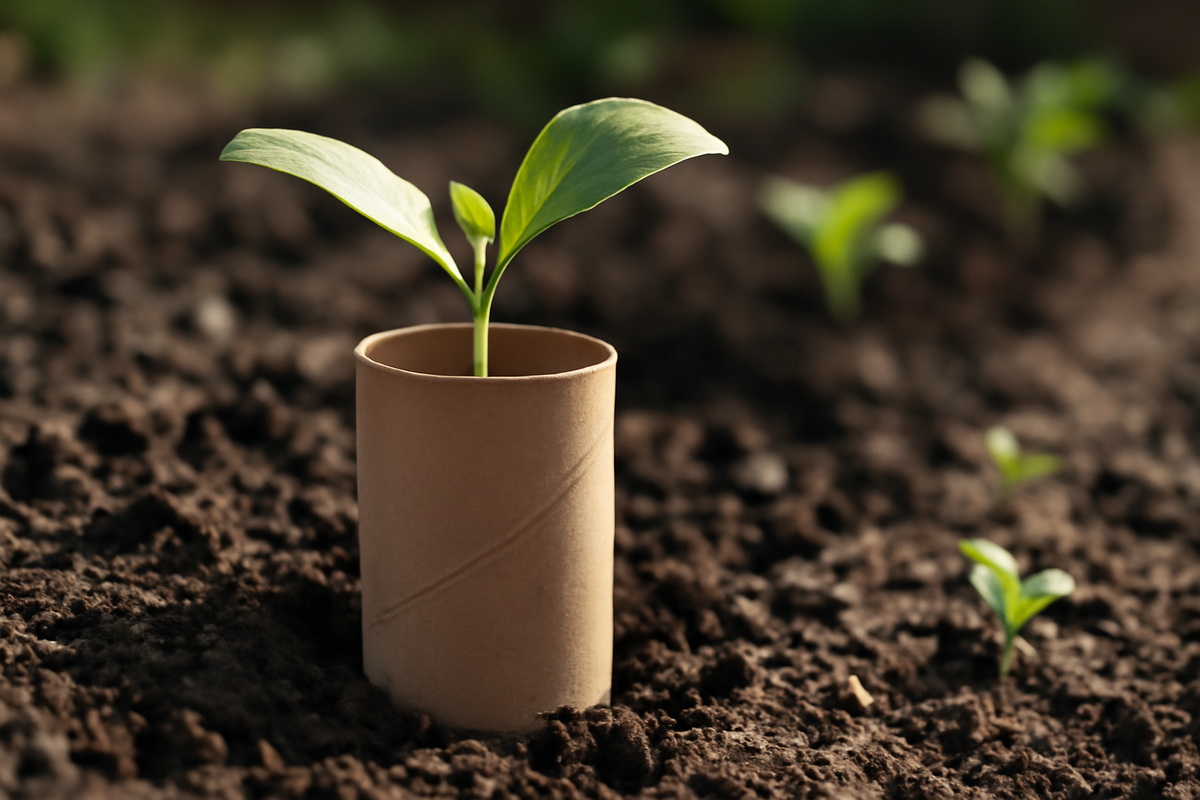
The basic hack is simple: you turn the cardboard tube into a protective collar around your seedling. That’s it. No gadgets, no fancy gear, no trips to the garden center. Just a piece of cardboard, a pair of scissors, and a plant in need of a guardian.
You cut the tube in half for shorter collars, or leave it full height for extra protection. You press it an inch or two into the soil around the plant, forming a ring that blocks cutworms, deters slugs, and keeps certain soil-dwelling pests from getting easy access to tender stems.
The first time you do it, it feels almost too easy—like a gardening myth that surely can’t be that effective. But then you walk out at dawn the next few mornings, coffee in hand, and you notice it: the seedlings inside the cardboard circles are untouched. Outside the collars, the damage continues. Inside them, the plants look calm, almost smug.
Just like that, the toilet paper tube becomes underrated no more.
The Science of a Simple Barrier
At its core, the toilet-paper-tube hack works because it exploits something very basic: most small garden pests are opportunists. Cutworms like to wrap themselves around stems at soil level; slugs and pill bugs prefer easy, level access; some beetles just crawl straight across the surface. By interrupting that simple path with a physical barrier, you’re not killing anything—you’re simply making your precious seedlings the least convenient option on the menu.
The cardboard doesn’t have to be strong, sharp, or intimidating. It just has to be there. For a cutworm wriggling through the soil, the tube is like a palisade—too tall to simply wrap around, too solid to ignore. For slugs, especially when the top rim is kept dry, it’s a frustrating detour. For your seedlings, it’s a moment of peace during their most vulnerable stage.
How to Turn a Toilet Paper Tube into a Garden Guardian
Once you start saving tubes—paper towel rolls, toilet paper rolls, even sturdy cardboard cylinders from other household goods—you’ll realize how many potential plant protectors you’ve been discarding all along. The transformation from trash to tool takes only a few minutes.
Step-by-Step: The Seedling Collar
Here’s a straightforward way to use the tube as a protective collar for young plants:
- Collect tubes: Save toilet paper and paper towel tubes. Avoid ones with heavy dyes or plastic coatings.
- Cut to size: For most seedlings, cut each toilet paper tube into 2 shorter rings, about 2–3 inches (5–7 cm) tall. For taller seedlings or serious slug problems, leave them full height.
- Prepare the soil: Plant your seedling as usual, firming the soil gently around its base.
- Place the collar: Slide the tube carefully over the top of the plant, or set it around the plant before you transplant and then backfill around it.
- Press into the ground: Push the tube about 1–2 inches into the soil. This is crucial—it keeps cutworms and other soil crawlers from slipping under.
- Mulch thoughtfully: You can add mulch around the outside of the tube, but keep the inside clear so stems stay dry and well-aerated.
Now you have a seedling in a tiny cardboard fortress. It looks almost comical, like a plant with a personal privacy fence. But over the days and nights that follow, that ring makes the difference between replanting for the third time and finally watching those leaves unfurl without interference.
Beyond Protection: A Microclimate Maker
The tube does more than block pests. It subtly changes the environment around the stem and roots:
- Wind buffering: For spindly seedlings, the cardboard acts as a windbreak, preventing them from being bent or snapped in gusty spring weather.
- Moisture management: The soil inside the ring tends to stay a bit more evenly moist, without crusting over as quickly in the sun.
- Temperature moderation: In cooler climates, that little collar can slightly warm the soil around the stem by trapping a bit of heat.
It’s like giving your plant its own tiny room while it figures out how to be a grown-up in the big wide world of your garden.
Hidden Perks: Seed Starters, Root Trainers, and More
Once you get hooked on the simple seedling collar, it’s hard not to see other possibilities in that plain cardboard cylinder. Gardeners, by nature, are inveterate tinkerers. You try one thing, then another. Before long, your once-humble toilet paper tube has a résumé.
Biodegradable Seed Pots
One of the most satisfying uses for these tubes is as starter pots you can plant directly into the garden. No transplant shock, no plastic trays, no root systems disturbed.
- Cut the tube to the height you want (often full height is fine).
- Make four short cuts at one end, evenly spaced, to create flaps.
- Fold the flaps inward, overlapping them to form a base.
- Fill with potting mix, firm gently, and sow your seeds.
When it’s time to plant out, you simply dig a hole and bury the tube. The cardboard will soften and break down over time, letting roots escape while still offering that initial collar of protection. It feels good to press something into the earth that you know will return to it.
Root Directors for Deep-Rooted Plants
Carrots, parsnips, and some flowers can be picky about their roots being disturbed. A tube can act as a mini root guide, especially in heavier soil. By placing a tube vertically in a loosened patch of soil and filling it with a lighter mix, you encourage fine roots to grow straight down instead of forking and twisting.
It’s not a perfect system—and you’ll want to ensure your soil stays loose beyond the bottom of the tube—but as a temporary framework, it helps train roots just where you want them. As the cardboard breaks down, those roots quietly take over the surrounding soil.
A Quick Comparison of Uses
| Use | How It Helps | Best For |
|---|---|---|
| Seedling collars | Blocks cutworms, slugs, and soil pests at stem level | Lettuce, brassicas, radishes, herbs, flowers |
| Biodegradable pots | Reduces transplant shock; roots grow through cardboard | Tomatoes, peppers, zinnias, marigolds, beans (pre-started) |
| Root trainers | Encourages straighter, deeper roots | Carrots, parsnips, sunflowers, hollyhocks |
| Mini windbreaks | Protects fragile stems from strong spring winds | Leggy seedlings, newly transplanted starts |
When Cardboard Meets Rain, Slugs, and Real Life
Of course, no hack is magic. The toilet paper tube isn’t a bulletproof shield, and it has quirks.
In a long stretch of wet weather, the cardboard softens, darkens, and slumps. It starts smelling faintly like a wet paper bag left in the grass. You’ll notice slugs occasionally testing the edges, especially if the top of the tube is pressed tight against leaves and stays damp.
But even as the tube ages and frays, it remains useful. By the time it has mostly broken down, your seedlings are often sturdy enough to handle a bit of nibbling. What you care about is that vulnerable window—the first few weeks after sprouting or transplanting—when losing a plant feels like losing a whole season’s dream for that tiny square of soil.
You can extend the tube’s usefulness by:
- Keeping leaves from draping over the rim (to avoid making a slug bridge).
- Letting the top edge stay as dry as possible.
- Replacing completely collapsed tubes around very slow-growing plants.
In drier climates, the tubes may last longer than you expect, turning a pale straw color as they slowly melt back into the soil. In wetter gardens, they’re more ephemeral—but that’s part of the beauty. They don’t linger like plastic. They do their job and then bow out gracefully.
A Gentler Kind of Pest Control
There’s something quietly ethical about this kind of protection. You’re not sprinkling poisons or laying traps. You’re just asking the pests to go somewhere else, to chew on the clover by the fence or the leaf litter under the shrubs. You’re saying: not here, not this one.
Standing in the dim light of evening, you look across the bed and see those little cardboard rings catching the last of the sun. Inside them, small leaves glow translucent green. A slug glistens near one collar, probing the rim, and then turns away. You feel oddly triumphant—and maybe a little amused that a toilet paper tube just won a standoff.
The Underrated Beauty of Low-Tech Solutions
We live in a world that loves complex answers: smart sensors for irrigation, specialty tools for every niche problem, glossy packaging promising miracle results. But gardens have always thrived on improvisation—sticks as stakes, old windows as cold frames, broken pots as drainage and habitat.
The toilet-paper-tube hack fits perfectly into that lineage. It asks you to look again at what you already have and see potential where you once saw waste. It also nudges you into a more cyclical relationship with your home: cardboard that once protected something in your bathroom now guards something in your soil, before eventually becoming part of that soil.
Underrated and effective doesn’t mean flashy. It means it just works, season after season, mostly unnoticed—except by the person who kneels in the dirt, presses that cardboard ring into place, and watches a tiny plant get the chance it deserves.
Next time you finish a roll of toilet paper, pause before tossing the tube. Turn it in your hands. Imagine it standing like a little tower around a basil seedling, or forming a neat row of sentinels protecting your lettuce patch. In the quiet economy of a garden, this is the kind of small, clever, deeply satisfying trick that adds up.
Sometimes, saving your garden starts with something as ordinary as remembering not to throw away the tube.
Frequently Asked Questions
Do toilet paper tubes really make a noticeable difference?
Yes. While they won’t stop every single pest, gardeners often notice a clear difference between protected and unprotected seedlings. Plants inside the tubes are much less likely to be clipped at soil level by cutworms or casually grazed by crawling pests.
Will the cardboard hurt my soil or plants as it breaks down?
Plain, undyed cardboard without glossy coatings is generally safe. It breaks down into organic matter, adding a small amount of carbon to the soil. Avoid tubes with heavy inks, strong perfumes, or plastic-like finishes.
How long do the tubes last in the garden?
In dry conditions, they may last several weeks to a couple of months. In wetter climates, they can soften and begin to decompose within a few weeks. Usually, they protect seedlings long enough for the plants to outgrow their most vulnerable stage.
Can I use paper towel rolls the same way?
Absolutely. Cut paper towel rolls into several shorter sections and use them just like toilet paper tubes. The slightly thicker cardboard can even provide a bit more durability.
Do I need to remove the tubes later in the season?
Most of the time, no. You can leave them in place to decompose naturally. If a tube is still fairly intact and you want a cleaner look, you can gently pull it away once the plant is sturdy and well-established.
Will this work for larger plants like tomatoes or peppers?
Yes, but mainly during their early weeks. You can slide a tube around the base of a small transplant to protect the stem from cutworms and similar pests. As the plant thickens and grows, the collar becomes less necessary.
Is this enough on its own to control slugs?
Not always. Tubes make access more difficult, but determined slugs may still climb over, especially in very wet conditions. Pairing tubes with other methods—like hand-picking, copper tape around beds, or encouraging slug predators—works best.
Can I start seeds indoors using these tubes?
Yes. They make excellent biodegradable seed pots. Just be sure to place them in a tray so water doesn’t leak everywhere, and water gently to avoid collapsing the sides while the cardboard is still dry and stiff.

Hello, I’m Mathew, and I write articles about useful Home Tricks: simple solutions, saving time and useful for every day.