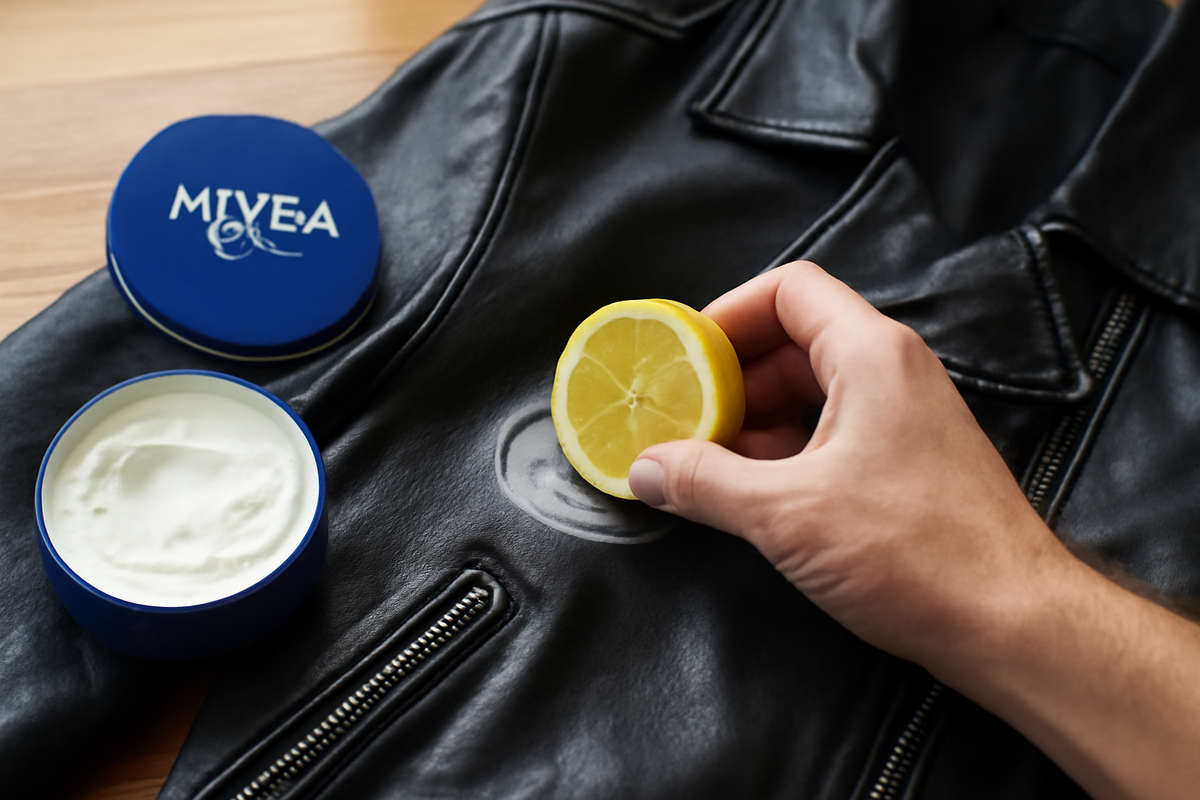
The jacket was almost gone. It lay across the back of a kitchen chair like a tired animal, its once-glossy black surface now dulled to a weary gray. Cracks scrawled along the sleeves, the collar felt like cardboard, and faint white scars bloom where rain had dried years before. It smelled faintly of old perfume and winter air, that familiar mix of memories and neglect. Most people, staring at a jacket like this, would sigh and open a browser tab to look for a replacement. But not today. Today, on the edge of the kitchen table, next to a chipped mug of tea, there is a single lemon and a metal tin of Nivea cream—the regular, thick, blue-tin kind your grandmother probably kept in her handbag. It looks like the start of a bad joke, or maybe a new kind of salad. Instead, it’s the beginning of a small, quiet rescue.
The strange little ritual in your kitchen
If you’ve ever watched someone bring a leather jacket back from the brink with nothing more than a lemon and a tin of Nivea, it feels a bit like low-key magic. There’s a rhythm to it: slice, squeeze, wipe, wait, massage. The smell of citrus oils rises into the room, sharp and clean, followed by that unmistakable creamy scent that belongs in every European bathroom cabinet in the 90s. It’s bizarrely intimate—like giving the jacket a facial rather than a cleaning.
You run a cloth, damp with lemon juice, over the stiff leather. At first, it squeaks faintly. As you go, dirt you didn’t even know was there lifts away in slow, gray smears. The leather darkens slightly, drinks in the light. Then comes the Nivea: a fingertip at a time, warmed between your palms until it softens, then smoothed into the jacket in small, patient circles. The leather begins to change under your hands—less like an old boot, more like skin that’s been given water after a long drought.
This is the lemon-and-Nivea hack—a domestic folk remedy whispered in forums, passed on by vintage sellers, and tested in quiet living rooms. It sounds improbable. It works often enough that people keep trying it. But why?
What leather really is (and why it dries out)
To understand why this odd pairing can rescue a jacket, you have to remember what leather actually is. Beneath the fashion, beneath the idea of “rockstar jacket” or “heirloom coat,” leather is skin—animal skin, carefully preserved so it won’t decay. It’s made of collagen fibers woven into a dense, flexible mesh. When it’s tanned, dyed, and finished, that skin is transformed, but it doesn’t stop being skin. It still reacts to the world the way any organic material does: it loves moisture in the right amount, hates extremes of dryness, and responds to temperature, sunlight, and oils.
Over time, though, life gets in the way. Jackets are left on the back of bar stools, in cars, near radiators. They sit in closets where the air is too dry, or under windows where sunlight fades and dehydrates them. The natural oils that once kept the fibers supple evaporate or get stripped away by harsh cleaners or rain that was never properly dried off. When that happens, the collagen network inside the leather stiffens. Like a dried-out sponge, it becomes brittle. Creases turn into cracks, and that’s when people start calling jackets “ruined.”
But dried-out doesn’t always mean dead. Sometimes it just means thirsty. And that’s where our humble kitchen-and-bathroom duo comes in.
So why lemon and Nivea, of all things?
On the face of it, lemon and Nivea sound like a dare. One is acidic and sharp, the other thick and milky. But taken together, in tiny amounts and with patience, they can give tired leather a second wind.
Lemon: the wake-up call
Lemon juice is mostly water and citric acid, with a delicate load of natural oils lurking in the peel. Used sparingly and diluted, it acts like a very mild exfoliant and cleaner for the jacket’s surface. The light acidity can:
- Lift grimy residues and built-up body oils
- Help loosen old polish or waxy films
- Slightly “open up” the surface so conditioners can sink in more effectively
The key here is restraint. No soaking. No raw lemon assault. Think of it as dabbing toner on your own skin: a light pass, not a scrub. You’re not etching the leather; you’re simply waking it up, clearing the pores, making space for what comes next.
Nivea: the cheap, blue-tin conditioner
Classic Nivea cream, the kind in the sturdy blue tin, is like a time capsule of old-fashioned skincare. It was designed for human skin, not jackets—but leather and skin share more in common than marketers would like you to remember. Inside that unassuming tin is a heavy, oil-in-water emulsion loaded with:
- Fats and waxes that mimic skin’s natural barrier
- Humectants that help hold onto moisture
- Occlusive ingredients that slow down water loss over time
When worked carefully into clean, thirsty leather, Nivea can:
- Replenish lost surface oils
- Soften stiff patches, especially on sleeves and collars
- Give a mild, satiny sheen without the plasticky gloss of some leather sprays
Is it a professional, lab-tested leather conditioner? No. Does it sometimes work astonishingly well as a stopgap or budget rescue tool, particularly on older, genuine leather jackets that have dried out but not cracked beyond repair? Yes—provided you respect its limits.
How the hack actually works on your jacket
Imagine the leather fibers in your jacket as a dry forest floor after a long summer. Dust lives between every twig, and the soil is parched. Lemon helps clear the dust; Nivea brings the rain.
First, that diluted lemon juice wipes away the invisible life-prints of years: sweat salts at the collar, city grime in the creases of the cuffs, faint ghostly rings where water dried unevenly. It also cuts through some of the oily residues that block the way for any new conditioning product. The leather, momentarily cleared and a tiny bit more porous at the surface, is ready to drink.
Then the Nivea arrives, not as a flood, but as a slow drizzle. Warmed between your palms, it spreads more easily and sinks more gently. Massaged into the leather in small areas at a time—shoulder panel, sleeve, pocket—its fats and emollients slip into the spaces between the collagen fibers. The humectants help hold onto the little bit of moisture already there; the waxy components sit closer to the surface, forming a light barrier that keeps that moisture from escaping too fast.
The result, over an hour or so and sometimes over repeated sessions, is a jacket that feels less like cardboard and more like itself again: pliable, with a bit of weighty drape. The grain shows more clearly. Scuffs soften in appearance. You don’t erase history—you simply turn down its volume.
Doing it right: a slow rescue, not a miracle stunt
This hack is gentle enough to be useful but powerful enough to cause trouble if rushed. Leather, like skin, does not appreciate shock treatment. To keep your rescue mission from turning into a regret, it helps to move slowly and deliberately.
| Step | What to Do | Why It Matters |
|---|---|---|
| 1. Inspect & test | Choose an inconspicuous spot (inside hem, inner cuff) and test lemon and Nivea separately on tiny areas. | Checks for color change, dark patches, or weird textures before you touch the visible parts. |
| 2. Light clean with lemon | Mix a small amount of lemon juice with water, dampen a soft cloth, and gently wipe the surface—no soaking. | Lifts grime and old residues so conditioner can actually penetrate instead of sitting on top. |
| 3. Let it dry | Allow the jacket to air-dry fully at room temperature, away from sun or heaters. | Prevents water spots and avoids sudden temperature shifts that can stiffen leather. |
| 4. Massage in Nivea | Warm a pea-sized amount between your fingers, then work into a small area of the jacket at a time. | Encourages deeper absorption and avoids greasy buildup or patchy shine. |
| 5. Rest & buff | Let the jacket sit for a few hours, then buff gently with a clean, dry cloth. | Removes excess cream, evens out the finish, and reveals the renewed softness. |
The first time you do this, you may not see a dramatic transformation. The leather might simply feel… less tense. That’s fine. Better to repeat the process lightly a few times over several days than to drown the jacket in one enthusiastic evening. Overfeeding leather with heavy creams can leave it spongy, darkened, or attract dirt. Balance lives in moderation.
When the hack shines—and when it doesn’t
The lemon-and-Nivea approach occupies a curious space between improvisation and care. It’s not a universal fix; it’s a targeted, home-brewed nudge in the right situations.
Where it works beautifully
- Old, neglected jackets that are dry, matte, and slightly stiff but not deeply cracked.
- Secondhand or vintage finds from thrift stores, where the price was low because the leather looked “tired.”
- Localized dry zones like collars, cuffs, and elbows that see the most friction and exposure.
- Heavier, full-grain leather that can handle a bit of richer conditioning without going limp.
Where you should be cautious—or avoid it entirely
- Delicate or very thin fashion leather, especially in light colors: both lemon and Nivea can darken or blotch these.
- Suede and nubuck: their texture will be ruined by heavy creams and moisture.
- Jackets with serious cracking where the surface is already split: no cream can stitch broken fibers back together.
- High-gloss, specialty finishes that rely on particular coatings—these may react unpredictably.
There’s also a quiet truth here: sometimes what a jacket needs isn’t a hack but a professional. If the lining is shredded, the zipper failing, the color badly patchy, or the leather moldy, a leather specialist or repair shop is a kinder option. The lemon-and-Nivea ritual is a great act of at-home kindness, not a substitute for skilled craft where it’s really warranted.
The emotional afterglow of saving something
By the time you finish, your kitchen smells faintly of citrus and cream. The jacket, now heavier in your hands, hangs on the back of the chair with a different posture. The sleeves fall more naturally. Your fingers, a little greasy, carry the faint scent of your work. It’s ordinary and tender, this care for an inanimate object that has been a quiet companion through years of weather and weekends.
There’s a deeper satisfaction tucked inside the fibers, too. In a world that coaxes us toward throwing things out at the first sign of age, sitting down with a lemon and a blue tin feels almost rebellious. You are choosing relationship over replacement. You’re acknowledging that objects, like people, change with time—but that change doesn’t have to mean discard. It can mean tending, listening, renegotiating how something feels and fits into your life.
The science behind the hack is simple enough: gentle acid clearing the way, thick emollients feeding what’s dry. The story it tells is less scientific and more human. It’s the story of people who look at something worn and say, “Not yet.” Of memories stitched into seams. Of the soft creak of revitalized leather when you slip your arms into sleeves that remember you.
Next time you’re tempted to write off a jacket as “done,” you might find yourself reaching, not for a shopping app, but for a lemon in the fruit bowl and an old blue tin in the bathroom cabinet. Not every rescue will be perfect. Some pieces truly do reach their end. But many will surprise you. Under the dullness, under the dryness, there is still leather waiting to be woken up—one small, citrus-scented, cream-slicked circle at a time.
Frequently Asked Questions
Is it safe to use lemon and Nivea on all leather jackets?
No. This hack is best for darker, genuine leather that’s a bit dry and matte. Avoid using it on suede, nubuck, very light-colored leather, or thin, delicate fashion leather, as they may stain, darken, or lose their texture.
Will lemon juice damage the leather?
Used sparingly and diluted with water, lemon juice can be gentle enough for surface cleaning. The danger comes from overuse or soaking the leather, which can lead to dryness or discoloration. Always spot-test first and keep the cloth only slightly damp.
Can Nivea replace proper leather conditioner?
Nivea can work as an emergency or budget-friendly conditioner, especially for older jackets, but it isn’t a perfect substitute for products formulated specifically for leather. For high-value jackets or long-term care, professional leather conditioners are a better choice.
How often should I use this hack on my jacket?
Not often. Think of it as an occasional rescue, not a weekly ritual. Once or twice a year for a very dry jacket is usually enough. Over-conditioning can make leather heavy, greasy, or prone to attracting dirt.
What if my jacket still feels stiff after one treatment?
That’s normal. It’s better to repeat a light treatment after a few days than to overload the leather in one go. Give the jacket time to absorb, rest, and “settle” between sessions. If it remains stiff after several gentle rounds, the leather may be too far gone or may need professional attention.
Will this remove scratches and cracks?
It can soften the appearance of minor scuffs and shallow surface marks by darkening and feeding the leather. Deep scratches and true cracks, however, are structural damage. No cream can fully erase those, though conditioning may make them less stark.
Can I use other creams instead of Nivea?
In theory, yes—but with caution. Heavy scented lotions, products with strong active ingredients, or very watery creams can stain or damage leather. If you experiment, always test on a hidden area first, and choose simple, thick, unscented creams over complex skincare formulas.

Hello, I’m Mathew, and I write articles about useful Home Tricks: simple solutions, saving time and useful for every day.