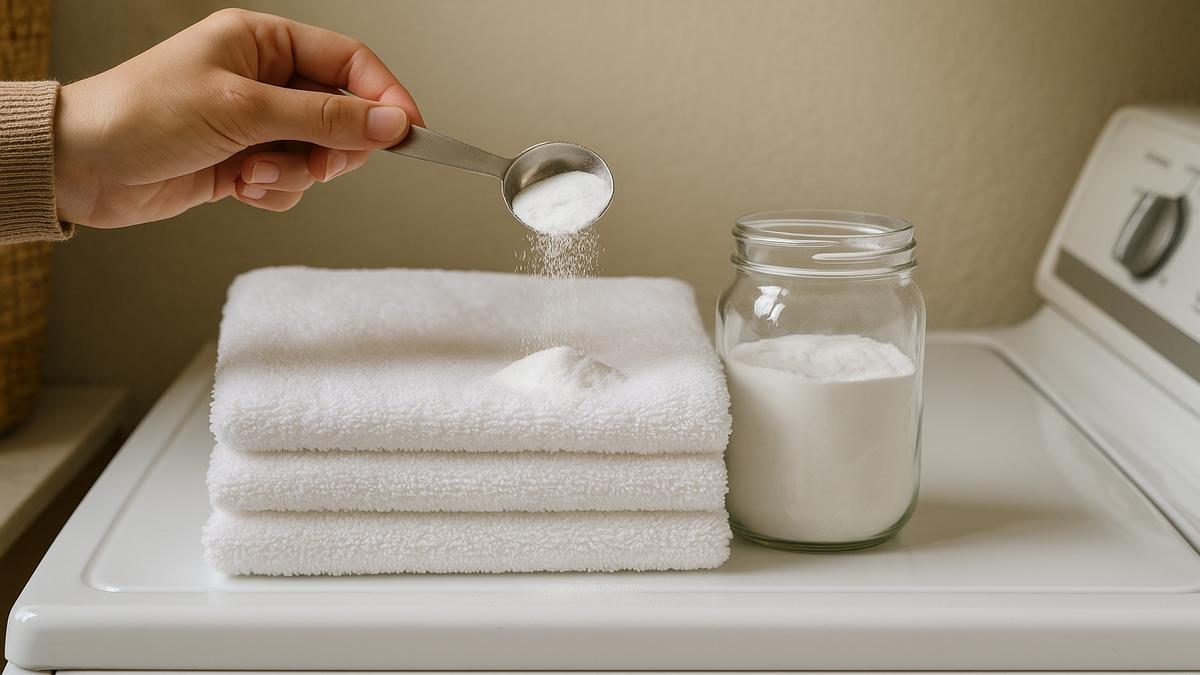
The first time I poured this humble pantry staple into the washing machine, I did it with the kind of quiet skepticism you reserve for life hacks that sound just a little too magical. The washing machine hummed, the laundry turned, and the kitcheny scent that floated up from the laundry room made me feel like I’d accidentally tried to bake a cake in there. I folded my arms, leaned against the doorframe, and waited to be underwhelmed. But when the cycle finished and I tugged open the heavy metal door, I stared down at my white T‑shirts and pillowcases and felt my eyebrows climb. They weren’t just clean. They glowed—softly, evenly—as if someone had turned up the brightness a notch.
The Secret Ingredient Hiding Beside Your Flour
You probably already own the quiet hero of this story. It sits on a pantry shelf between the sugar and the pasta, or maybe tucked behind a jar of lentils. It doesn’t come in a glamorous bottle or with promises of optic brighteners and triple-whitening technology. It’s simple, cheap, and delightfully old-fashioned: baking soda.
That tiny cardboard box that usually waits patiently for cookie day or deodorizing the fridge holds a kind of laundry magic that feels almost unfair in its simplicity. A small scoop into the wash—just a dash, really—can keep whites brighter for days without a whisper of chlorine bleach. No sharp chemical tang, no stiff fabric, none of that uneasy feeling that comes with pouring a harsh liquid into the drawer and hoping your favorite shirt survives.
Using baking soda in your wash doesn’t feel like a hack; it feels like remembering something your grandmother knew by heart but never wrote down. It’s earthy and unpretentious, like hanging clothes on a line or mending a sock. Yet the results are as satisfying as pulling a brand-new white T‑shirt from its packaging.
Why This Gentle Powder Works So Hard
To understand why a spoonful of baking soda can make whites bloom back to brightness, you have to step into the invisible world of water and soap and tiny molecules that never get an invitation to the spotlight.
Most tap water is either slightly acidic or slightly hard—loaded with minerals that cling to fabric like stubborn guests who refuse to leave. Detergent does its best to break down oils and grime, but when the water is working against it, the result is often “pretty clean” instead of “whoa, look at that.” Over time, fabric starts to dull. Whites go grayish, yellowish, or just vaguely tired.
Baking soda, or sodium bicarbonate if you want to get technical, is a mild alkaline. When you add it to the wash, it helps bring the water closer to a gentle balance where detergent can do its best work. Think of it as a tiny laundry diplomat, smoothing out the chemistry so soap can glide in and lift out stains, oils, and dinginess more effectively.
It doesn’t bleach the fabric. Instead, it helps remove the film of residues—detergent buildup, body oils, minerals—that quietly steal brightness over time. When that buildup loosens its grip, the fabric’s natural color (or, in the case of whites, that soft, clear nothingness) can shine through again.
Another bonus: baking soda is a master at neutralizing odors. Not covering them, not perfuming over them—disarming them. Sweat, mustiness, that peculiar funk that clings to dish towels and gym socks—baking soda breaks those smells down so that when you bury your face in a clean T‑shirt, you get the cool, almost silent scent of nothing at all.
How to Add Baking Soda to Your Laundry (Without Overthinking It)
There’s something comforting about how unfussy this ritual is. No charts, no delicate measuring tools—just a scoop, a habit, and a bit of curiosity. Below is a simple guide you can glance at and then probably never need again.
| Load Type | Amount of Baking Soda | How to Use |
|---|---|---|
| Regular white load | 1/4 to 1/2 cup | Sprinkle directly into the drum with clothes |
| Heavily soiled or dingy whites | 1/2 cup | Add to drum, use warm water if fabric allows |
| Smelly towels or gym clothes | 1/2 cup | Add with detergent; choose a longer cycle |
| Pre-soak for tired whites | 1/2 cup per basin | Dissolve in warm water, soak 1–2 hours before washing |
| Delicate items | 2–3 tbsp | Use in a basin hand-wash, rinse well |
The simplest method? Start your machine, toss in your whites, add your regular detergent, then sprinkle in the baking soda directly into the drum. Let the machine handle the choreography from there.
If you’re dealing with truly stubborn dullness—those socks that look like they remember every walk you’ve ever taken—create a pre-soak. In a clean sink or bucket, stir baking soda into warm water until it disappears like a quiet spell. Let your whites rest there for an hour or two, then wash as usual. There’s something oddly soothing about that little pause, as if the clothes are taking a breath between the day they’ve had and the one you’re preparing them for.
A Conversation Between Fabric and Water
Once you start paying attention, laundry feels less like a chore and more like a conversation between fabric and water—and between you and the small rituals of care that fill the corners of your days. The moment the machine clicks on, there’s a hidden choreography inside: threads flexing, water threading through cotton loops, soap molecules wrapping themselves around dirt like tiny lasso-throwers.
Adding baking soda is like stepping into that conversation and quietly offering to mediate. You’re not blasting the fabric with something aggressive; you’re helping the water and detergent speak the same language. Over time, that gentleness shows. Towels stay fluffy instead of stiff. Sheets feel smoother against your skin. Whites don’t just pop on day one—they hold onto that brightness for days, even as you wear and wash and fold them back into the rhythm of your life.
It’s a small act of respect for the things that hold you: the T‑shirt that’s seen you through breakups and job interviews, the pillowcase that cradles your dreaming head, the tablecloth that bears witness to spilled coffee and birthday cake crumbs. When they come out of the wash bright and soft, it feels like a quiet thank-you in reverse—you taking care of what has quietly taken care of you.
The Earthier Joy of Skipping Bleach
There’s another layer to this story, one that reaches beyond the laundry room. Conventional chlorine bleach has a way of making its presence known: the sharp, biting smell, the way your eyes prickle if you lean too close, the nervous check to make sure the bottle cap is on tight and far away from curious hands.
Bleach is powerful. It can rescue a tea-stained tablecloth or a coffee-blotted shirt with a single, dazzling gamble. But it’s also harsh—on fabrics, on your skin, and once it leaves your home, on waterways and fish and the unseen web of life downstream. It can weaken fibers, causing that quiet fraying at collars and cuffs, the thinning of towels long before their time. One distracted splash can spell disaster for a favorite colored piece hanging too nearby.
Choosing baking soda instead invites a different sort of energy into the routine. It’s gentle on fabrics and friendlier to the environment. It doesn’t release that acrid smell that clings to the laundry room and your hands. The box itself looks almost shy—plain, recyclable, unassuming. It doesn’t demand caution; it asks only to be remembered.
In a world crowded with specialty products—one bottle for whites, one for brights, one for sportswear, one for baby clothes—there’s something deeply grounding about a single simple ingredient doing quiet double duty in the kitchen and the laundry. It feels like a step toward living with less noise, fewer labels, fewer warnings in fine print.
And then there’s the sensory joy of it: pulling open the machine and being met not with the chemical punch of artificial freshness but with the gentle absence of odor. Clothes smell like nothing—and somehow that nothing feels crisp and clean and kind to breathe in. When the sun catches the fabric on the line or the rack, the whites don’t glare; they glow, soft as morning light through a curtain.
Little Rituals That Keep the Brightness Going
Using baking soda once is a pleasant surprise. Making it a habit turns that surprise into a quiet baseline. Whites start to hold their clarity longer; towels don’t fall into that dingy limbo between “clean” and “clean enough.” Over time, you realize you’ve bought fewer harsh additives and a lot more peace of mind.
Set up a simple rhythm. Keep a small jar or lidded container of baking soda near the washer, separate from the box in your pantry, with a dedicated scoop resting inside. That way you don’t have to think about quantities—you just reach, scoop, sprinkle, start. The fewer steps between you and the habit, the more likely it is to stick.
On days when your laundry feels especially worn-down—after a week of guests, a camping trip, or the unglamorous glory of flu season—use a pre-soak as an extra kindness. Watch the water turn faintly cloudy as the baking soda does its work, as though it’s coaxing invisible dust and oils away from the fibers.
Pair it with small upgrades: shaking clothes out before tossing them in, not overloading the machine so fabrics have room to move, choosing a slightly warmer wash when the care labels allow. None of it feels heroic. It feels like tending a garden—small acts repeated until the results stop feeling like magic and start feeling like the way things should be.
What It Feels Like to Wear “Really Clean”
You notice the difference not under the bright glare of the laundry-room light, but in the quieter corners of your day. Sliding into a white T‑shirt and catching the way it reflects the soft light from the window. Laying your head on a pillowcase that feels cool and clear against your cheek. Pulling a dish towel from the drawer and seeing it look almost as fresh as it did hanging new on its cardboard circle.
There’s a sensory honesty to it: no perfumed cloud, no artificial glow. Just cotton and light and the quiet confidence of knowing that you’ve done right by the things you use every day. The brightness lingers, not in a showy, blinding way, but in that subtle, enduring clarity that makes whites look alive, not just pale.
And there’s a certain pride in knowing this brightness didn’t come at the cost of harsh chemicals or environmental guilt. You did it with something so simple you could spoon it into cookie dough afterward. The same powder that puffs up cakes, calms acid in recipes, and settles odors in the fridge is now quietly protecting your shirts and sheets from the slow creep of dullness.
Listening to the Quiet Wisdom of Old Tricks
If you listen closely, you can almost hear echoes of older laundry days in this practice. Before color-safe formulas and neon-blue detergent pods, there were basins and bars of soap and a whole collection of small, wise tricks passed down through generations. Baking soda feels like a survivor from that era—a reminder that not every solution needs a laboratory and a marketing campaign.
It’s not about rejecting modern convenience; it’s about inviting balance. Keeping what works (the efficiency of the machine, the targeted power of a good detergent) and softening the edges with something humbler, older, and kinder. You’re not staging a revolution in the laundry room. You’re curating it.
And somewhere between the soft thud of the washer drum and the rustle of warm clothes being folded, you might notice something else: how deeply satisfying it is to know that brightness can come from gentleness. That a simple pantry staple can keep whites clear and bright for days, cycle after cycle, without bleach’s hard edge.
In the end, that small scoop of baking soda is not just about stain molecules and fabric fibers. It’s about the way we care—for our clothes, for our homes, for the water that leaves our pipes, for the skin that touches what we wear. A quiet, powdery reminder that often, the softest solutions shine the longest.
Frequently Asked Questions
Can I use baking soda with any laundry detergent?
Yes. Baking soda works alongside most liquid or powder detergents. It doesn’t replace detergent; it supports it by balancing water pH and helping detergents work more efficiently.
Will baking soda damage my washing machine?
Used in normal amounts (about 1/4 to 1/2 cup per load), baking soda is generally safe for most standard and high-efficiency machines. Avoid using very large amounts regularly, as excessive powder of any kind can contribute to buildup over time.
Is baking soda safe for colored clothes?
In typical laundry amounts, baking soda is usually safe for colors and can even help freshen them. That said, if a garment is very delicate or has unstable dyes, test on a small hidden area or use a reduced amount in the wash.
Can I use baking soda instead of bleach every time?
Baking soda is an excellent gentler alternative for everyday brightening and deodorizing. For tough, set-in stains or heavily discolored whites, bleach may sometimes work faster, but baking soda can greatly reduce how often you feel the need to reach for it.
How often should I add baking soda to keep whites bright?
You can safely use baking soda in most white loads. Making it a regular part of your laundry routine—especially for towels, sheets, and frequently worn whites—helps prevent the gradual dullness that builds up over time.

Hello, I’m Mathew, and I write articles about useful Home Tricks: simple solutions, saving time and useful for every day.