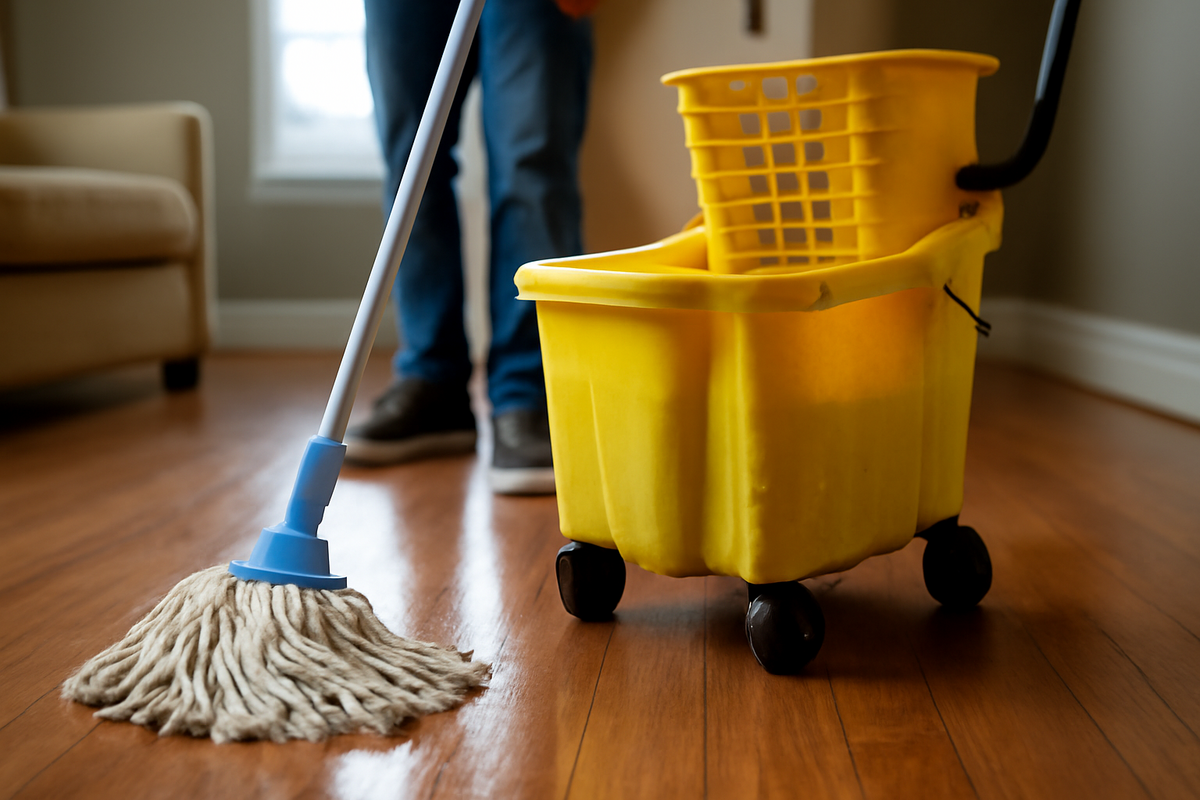
The first thing you notice is the sound. That soft slap of a damp mop against tired tiles. The faint swish as it glides, the bucket wheels complaining in tiny squeaks. Then comes the smell—a harsh stab of bleach or ammonia that sits in the back of your throat and makes your eyes prickle. For years, that scent has been our idea of “clean.” If it doesn’t burn your nose, it can’t be working… right?
The day the bucket betrayed the myth
It started, for me, with a streak. Not a bold, dramatic skid mark across the floor, but a faint, ghostlike haze that refused to leave. I had done everything “right.” Hot water. Name-brand floor cleaner. A splash of ammonia for good measure. A full-blown, nostrils-on-fire potion swirling in the mop bucket. I pushed the mop back and forth in determined strokes, stepping around chairs, angling into corners like a cleaning athlete.
When the floor dried, the truth showed up in the sunlight. Dull. Cloudy. A little sticky. If this was clean, why did my feet hesitate to go barefoot?
Maybe you’ve seen it too—the gray film that appears no matter how often you mop. The streaks that show up under certain light, mocking your effort. The stubborn patches that feel just a bit tacky when you walk over them. It’s like the floor is quietly collecting a history of every cleaner you’ve ever poured into that bucket.
I thought the answer was more. More detergent, hotter water, stronger chemicals. I kept escalating the war. Bleach one week, ammonia the next (never together, thankfully—if you’ve ever read the warnings, you know that’s a toxic disaster). Yet the result? The same tired floors, coated in a rotating cast of fragrances and residues.
Then someone told me a secret that sounded too simple, too boring to be true. A trick that didn’t involve bleach, ammonia, or anything labeled “industrial strength.” Just a quiet little shift in what goes into the bucket—and what doesn’t.
The mop-bucket secret: it’s not what you add, it’s what you stop adding
Most of us think the bucket is our magic cauldron of cleanliness. We pour in bright blue liquids, lemon-scented concentrates, maybe a capful of fabric softener (don’t laugh, people do it), a glug of bleach “for disinfection,” and perhaps even a splash of ammonia inherited from grandma’s routine. The more you add, the cleaner it must be—like layering air fresheners on top of each other.
Except floors don’t lie. Over time, that cocktail leaves behind a thin film. Every mop pass adds more residue: soap that wasn’t completely rinsed, oils from “shine boosters,” fragrances that cling. Dust sticks to that film. Pet hair clings to it. Grease loves it. You’re not just cleaning—you’re building a microscopic grimy lasagna on your own floors.
The real secret to a floor that shines like new is not a miracle detergent. It’s clearing away the film, and then refusing to rebuild it. Your mop bucket doesn’t need to be a chemical soup; it needs to be a simple, effective rinse system that lifts and carries dirt away instead of smearing it into a glossy lie.
Here’s the heart of the secret: most floors will shine best when they’re freed from residue, not coated in it. And you can do that without bleach, without ammonia, and without harsh fumes.
The simple bucket formula
Think of this as a reset button for your floors:
- Warm water (not boiling hot—just comfortably warm to the touch)
- A splash—just a splash—of a mild, low-residue cleaner or a tiny squirt of plain, unscented dish soap
- Optional for glossy hard surfaces: a small amount of white vinegar, but only if your floor type allows it (no vinegar on natural stone like marble or travertine)
That’s it. No neon blue liquids. No sharp fumes. No complex percentages. A bucket that smells like almost nothing—with maybe the faintest trace of clean, not chemical.
The rhythm of a truly clean floor
If you listen closely, mopping has its own music. The more intentionally you move, the more you can hear the change—the drag of dirt giving way to glide. But to get there, you have to break one of the most common habits: swirling the mop in dirty water and then putting that same water back on the floor, over and over.
Imagine washing your hair in a sink, then scooping the same cloudy water into your hands and scrubbing again. That’s what dirty mop buckets do to your floors.
Once you simplify what’s in your bucket, the next part of the secret is how you use it:
- Vacuum or sweep thoroughly first. Don’t trust the mop to catch crumbs and grit.
- Start with a clean mop head. If it already looks suspicious, wash or replace it.
- Mop in sections, from the farthest corner of the room toward the exit—no dancing through your own damp path.
- Rinse the mop frequently, wringing it out until it’s just damp, not dripping.
- When the bucket water turns cloudy or gray, don’t push through—change it.
Simple, almost boring. But this is where the magic happens. The less residue your mop leaves behind, and the more fresh water you use, the more the floor reveals its own natural shine.
A quick bucket guide for different floors
Here’s a glance-at-your-phone kind of table you can save in your mind for the next time you’re rolling the bucket through the house:
| Floor Type | Bucket Mix (No Bleach / No Ammonia) | Important Notes |
|---|---|---|
| Sealed hardwood | Warm water + a few drops of mild wood-safe cleaner | Mop damp, not wet. Dry quickly to protect the wood. |
| Laminate | Warm water + tiny squirt of mild, low-suds dish soap | Avoid soaking. Too much water can cause swelling. |
| Vinyl / LVT | Warm water + little bit of mild floor cleaner | Skip wax unless manufacturer says so; residue builds fast. |
| Ceramic / porcelain tile | Warm water + tiny squirt of dish soap; optional spoonful of vinegar | Rinse once with clean water if you notice streaks. |
| Natural stone (marble, travertine, etc.) | Warm water + stone-safe pH-neutral cleaner only | No vinegar, no lemon, no harsh chemicals—ever. |
Why bleach and ammonia don’t equal “better clean”
The myth of the burning nostril as proof of cleanliness runs deep. Bleach and ammonia feel powerful because they announce themselves. They cut the air, sting your lungs, and leave behind a sterile-smelling hush. But when it comes to floors—especially everyday maintenance—they’re often doing far more harm than good.
Bleach is a strong disinfectant, yes, but it isn’t a cleaner in the “lift and remove dirt” sense. It can lighten stains without actually removing the grime that caused them. On many modern floor finishes, it’s like scrubbing your phone screen with sandpaper: technically effective in some way, but ruinous in others. Ammonia is a strong degreaser, but it’s harsh on finishes and unbearable in enclosed spaces. Both can damage sealants, strip finishes, discolor grout, and irritate skin, eyes, and lungs.
And the biggest irony? For routine floor care, you rarely need that level of chemical aggression. Dirt, dust, light spills, everyday footprints—these yield to simple, repeated, gentle cleaning far more gracefully than we expect.
The quiet power of neutral cleaners
Most flooring manufacturers quietly recommend the same thing: pH-neutral, low-residue cleaners, used sparingly. These are the wallflowers at the chemical party—no loud smell, no neon color, no dramatic fizz. But they leave less behind, and that’s the whole point.
When your mop bucket isn’t hosting harsh chemicals, a few things happen almost immediately:
- The air in your home smells like your home again, not a public restroom.
- Pets stop skidding hesitantly across the floor like they’re on an oil slick.
- Your own skin thanks you—no more raw, dry hands from splashback.
- The floor finish lasts longer, because you’re not stripping or etching it.
And the best part: the real color and sheen of the floor—hidden under years of film—begins to come back.
Resetting a floor that’s already coated in residue
Sometimes, the first honest mop after years of “more chemicals” feels like a confession. You push the mop across, and the bucket water turns murky faster than you want to admit. The floor dries, and you might even see more streaks the first time or two. That’s not failure. That’s the past finally loosening its grip.
If your floors feel sticky even when they look clean, or if your socks come away gray after a day of walking around, you might need what I like to think of as a floor detox. No bleach. No ammonia. Just patience, fresh water, and a little technique.
How to gently strip away the old film
Try this simple reset routine:
- Start with a nearly bare bucket. Warm water and just a whisper of mild cleaner—less than you think you need. The goal is to loosen, not lather.
- Work in smaller sections than usual. Mop a space, then immediately go back over it with a second mop or cloth lightly dampened with clean water only. This is your rinse pass.
- Change your water often. If the bucket looks cloudy or grim, it’s retired—dump and refill. Don’t negotiate with it.
- Allow for repetition. Years of buildup won’t vanish in a single pass. With each gentle cleaning, you’re peeling away a thin layer.
- Let the floor fully dry between sessions. Natural light reveals what’s left; you’ll see the hazy patches shrinking over time.
Some people notice a subtle, almost unexpected transformation. The floor feels cooler under bare feet. Light from the window travels farther across the room. Colors in the wood grain or tile pattern look just a bit more alive. That’s not a new finish—it’s the old one, finally breathing again.
Making peace with less: a new rhythm of clean
Once you’ve met your floor’s true face, it’s hard to go back to the old chemical parade. The new routine feels almost meditative: fill the bucket with warm water, add a tiny bit of gentle cleaner, swirl until it clouds slightly, and then begin the quiet choreography of mopping.
The room fills with the sound of water, not the sting of fumes. The mop glides with a softer resistance, like you’re wiping fog off glass rather than scrubbing at something that won’t budge. The simple scent of the house—wood, soap, maybe last night’s dinner—replaces that overwhelming “hospital hallway” vibe.
In that small ritual, there’s something bigger than housekeeping going on. It’s a subtle rejection of the idea that “more chemical equals more clean.” It’s a willingness to trust in warm water, gentle ingredients, and consistency rather than chemical drama. A floor that shines like new isn’t shouting about its own sterility; it’s just quietly, solidly… right.
Next time you roll out the bucket, notice what you reach for. The neon bottle? The sharp-smelling jug? Or maybe, now, just the tap, a modest cleaner, and a promise to change the water as soon as it looks tired. The secret was never a single miracle product. The secret was what you stop adding—and how carefully you listen to what the floor has been trying to tell you all along.
Frequently Asked Questions
Can I really get my floors clean without bleach or ammonia?
Yes. For routine cleaning, warm water plus a mild, low-residue cleaner is usually enough. Bleach and ammonia are strong chemicals meant for specific disinfecting tasks, not everyday floor maintenance. Regular, gentle cleaning does a better job of keeping dirt and residue under control.
What if my floor has tough stains or sticky spots?
Spot-treat those areas instead of soaking the whole floor in harsh chemicals. Use a soft brush or non-scratch pad with a bit of mild cleaner. For greasy spots, a tiny amount of dish soap in warm water usually works. Rinse the area afterward so you don’t leave behind a slippery film.
Is vinegar safe for all floors?
No. Vinegar is acidic and can damage natural stone like marble, travertine, and limestone, and it can dull some finishes over time. It can be helpful in small amounts on ceramic or porcelain tile and some vinyl floors, but always check your floor manufacturer’s recommendations first.
How often should I change the mop water?
As soon as it starts to look cloudy, gray, or murky. Dirty water can’t clean; it just moves grime around. For heavily used spaces like kitchens, you may change water several times in one mopping session, especially during a deep clean.
Why does my floor look dull even after I mop?
Dullness is often caused by product buildup—layers of soap, polish, or “shine enhancers” left behind over time. Switching to a simple, low-residue cleaner and using less of it, along with occasional rinse passes with clean water, usually restores the natural shine gradually.
Are microfiber mops better than traditional string mops?
For many homes, yes. Microfiber mops trap dirt more effectively and release it better when rinsed. They leave less water behind, which reduces streaking and is safer for wood and laminate floors. The key is still the same: clean mop head, simple bucket mix, and frequent rinsing.
How wet should the mop be to avoid damage?
For wood, laminate, and most vinyl floors, the mop should be damp, not dripping. After wringing, it shouldn’t leave standing puddles—just a light, quickly drying sheen. Tile and sealed stone can handle a bit more moisture, but even there, less water usually means fewer streaks and faster drying.

Hello, I’m Mathew, and I write articles about useful Home Tricks: simple solutions, saving time and useful for every day.