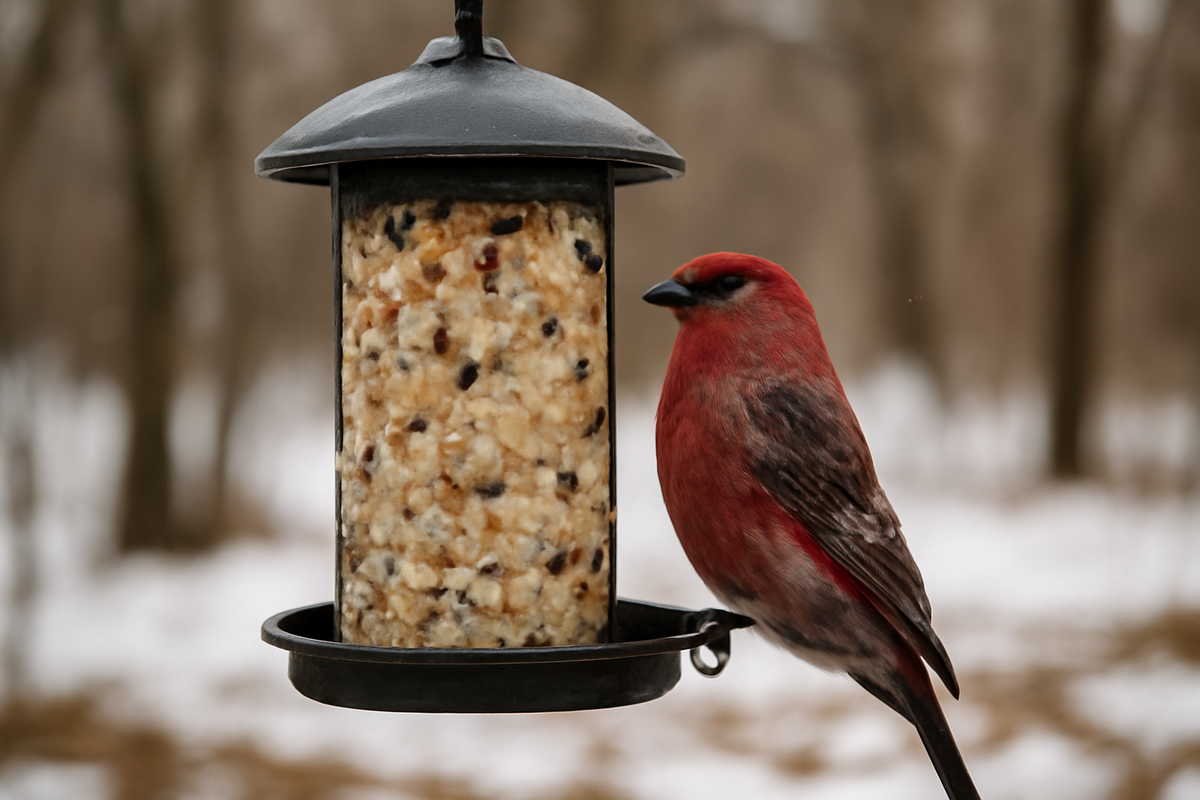
The first birds arrive before the sun does. You hear them before you see them—the soft ticking call of a chickadee, the crisp note of a titmouse, the distant croak of a crow lifting off from some cold, dark roost. Out in the yard, the world is rimmed in frost. The birdbath is frozen solid, the grass crackles under your boots, and your breath drifts like smoke in the dim December light. But there, swinging gently from a hook outside the kitchen window, is the one promise that pulls these small, feathered furnaces out of the darkness every morning: a battered, unremarkable birdfeeder, freshly filled with the cheapest food they can’t seem to resist.
The Quiet Magic of a Cheap Seed Mix
If you spend any time around serious birders, you’ll hear a lot of strong opinions about birdseed. Black-oil sunflower only. No filler, ever. Nyjer for finches, suet for woodpeckers, safflower for the picky cardinals. And to be fair, they’re not wrong—those seeds are excellent. But tucked on the lower shelf of almost any hardware or feed store is a simple, budget bag labeled something like “wild bird blend” or “economy mix,” and in December, that humble bargain can be a kind of magic.
It doesn’t look like much: a jumble of cracked corn, millet, sunflower chips, and sometimes a little wheat or milo. It pours out in a dusty clatter, loud in the cold metal scoop. It’s not glamorous. It’s not curated. It is, however, cheap enough that you can pour it generously. And generosity is exactly what winter birds are searching for.
On a December morning, a bird’s entire world is measured in calories: how to find them, how to keep them, how not to waste them. They burn through reserves like tiny furnaces, fluffing feathers to trap heat, shivering to stoke their muscles, flying constantly to escape hawks and owls. That unassuming feeder you topped off before bed? It becomes a lifeline they remember—and return to—day after day.
The Morning Rush at the Winter Feeder
By the time the sun finally spills over the horizon, the first arrivals are scouting your yard. Chickadees zip in on quick wings, scolding softly as they land on the feeder’s rim. A nuthatch comes in upside down along the trunk of the nearest tree, eyes bright and beady, surveying the scene. A pair of cardinals lingers in the cover of an evergreen, weighing risk and reward.
Then, as if an invisible bell has rung, the feeder turns into a small, feathery intersection. Mourning doves shuffle clumsily under the feeder, sweeping the ground with soft, pink feet for fallen seed. A sparrow flutters up to stake out a corner. A blue jay arrives like a burst of color and sound, announcing itself with that unmistakable call, scattering smaller birds in a whirr of wings.
It’s the same scene nearly every day once they know they can count on you. Birds are not sentimental in the way we are, but they are astonishingly good at memory. When they find a reliable source of easy calories—especially in winter—they build it into their internal map. Your cheap mix, poured into that plastic or metal feeder, becomes a daily destination, as predictable as dawn.
The Cheap Treat Birds Can’t Ignore
So what is this budget blend actually offering? It’s less about sophistication and more about sheer availability. Millet, for instance, the small cream-colored grains that look like tiny pearls, are beloved by sparrows, juncos, and doves. Cracked corn is easy food for bigger, ground-feeding birds. Any sunflower chips in the mix are like little jackpots of fat and protein—prized by chickadees, titmice, finches, and cardinals.
Is it the “perfect” diet? No. You wouldn’t feed it exclusively if you were trying to attract every species in your region or if you were writing a scientific guide to optimal bird nutrition. But for sustaining common backyard birds through the coldest month, a cheap blend with a decent proportion of millet and sunflower, served daily and in quantity, can be more valuable than a tiny, meticulously curated feeder that’s only filled once a week.
To your winter birds, the treat isn’t luxury—it’s reliability. The true indulgence is walking out into a world where food is scarce, and finding that the small pantry outside your window is, once again, open for business.
Smell of Seed, Sound of Wings: A Backyard Ritual
There’s a certain sensory pleasure to this ritual that has nothing to do with budgets or brand names. You step out on a gray December morning, bundled in a coat that smells faintly of woodsmoke or laundry soap. The sky feels low, pressing against the tops of the bare trees. Your breath hangs in clouds as you open the storage bin and that dusty, comforting scent of grain rises up—like old barns and haylofts, like dry fields in summer you can almost remember through the cold.
The seed rattles into your scoop with a hollow chorus, then pours into the feeder like a brief, noisy waterfall. The birds hear that sound. It’s subtle, but if you pay attention, you’ll notice that once you start filling the feeder at the same time each morning, movement begins to gather in the edges of your yard as you work. A dark-eyed junco flashes its white outer tail feathers as it hops closer. A downy woodpecker creeps along the nearby maple, watching. Somewhere in the hedges, a wren lets out a nervous, buzzy chatter.
By the time you’re back inside, coffee steaming and fingers tingling, the first bird has already landed. The show starts almost immediately. That is the quiet reward of sticking with this simple, cheap treat: the routine becomes as much yours as it is theirs.
A Simple Table for Winter Planning
If you want to think about your December feeder like a tiny, outdoor café, here’s a simple way to picture which birds you’re likely to serve and what they’ll be looking for in that budget seed mix:
| Bird Visitor | Favorite Bits in Cheap Mix | Where You’ll See Them |
|---|---|---|
| Black-capped Chickadee / Carolina Chickadee | Sunflower chips, small oily seeds | Quick visits to the feeder, then off to a nearby branch to eat |
| Dark-eyed Junco | Millet scattered below the feeder | Hopping on the ground in small groups |
| House Sparrow / Song Sparrow | Millet, cracked corn, mixed grains | Perched along feeder edges and nearby shrubs |
| Northern Cardinal | Sunflower pieces, larger seeds | Holding back in cover, then visiting at quieter moments |
| Mourning Dove | Millet and corn that spill onto the ground | Feeding calmly underneath the feeder |
You don’t have to memorize any of this. Just notice. Cheap seed scattered two or three times on a frosty lawn will tell you everything—you’ll see who arrives, who lingers, who flushes into the trees whenever a shadow passes overhead.
Why Consistency Beats Perfection in December
When the wind carries an edge of ice and the days are so short they feel half-finished, birds don’t care if your feeder looks like a catalog photo. They aren’t grading your seed choices. What they crave is certainty. And certainty is exactly what a cheap, always-available mix offers, especially if you’re watching your own budget along with theirs.
Every night, a tiny bird goes to sleep with a finite jar of fuel in its body. It burns some of that just staying alive through the long, subfreezing hours. It wakes up at a deficit, with an urgent need to refill. If, morning after morning, there is a pile of easy calories waiting in the same spot, those birds can start their daily hunt with an advantage. Instead of spending their first, precious minutes searching blindly, they make a quick, memorized flight to your yard.
That’s why even a “less than ideal” mix, if it’s always there, can bring them back more faithfully than a gourmet food that only appears when you remember to buy it. The birds can’t see price tags. They measure value in calories and in reliability. To them, a thrifty bag of generic “wild bird seed” you can afford to refill every day is a feast. Especially in December, when the world seems mostly stripped bare.
Making the Most of a Budget Blend
You don’t have to overhaul your entire setup to turn cheap seed into an irresistible winter treat. A few small habits amplify its value:
- Top off at roughly the same time each day. Birds quickly tune into your routine, especially if it syncs with sunrise.
- Offer a mix of feeder and ground feeding. Let some seed spill onto a tray or the bare ground for juncos and doves.
- Brush away spoiled or soggy seed. A quick clean every few days keeps the cheap mix from turning into a damp, moldy clump.
- Place your feeder near cover. A shrub, small tree, or hedge helps nervous birds feel safer darting in and out.
Those small gestures turn a bag of basic grain into a functioning winter refuge.
The Feeder as a Window into Winter
The more you watch that ordinary feeder, the more the season itself begins to speak to you through it. Early December mornings might bring just a few resident birds: chickadees, titmice, the local sparrow clan. Then, one day, there’s a new visitor—the slate-gray flash of a junco from farther north, or a flock of redpolls in particularly cold years. The cast changes as the weather does. Storm coming? You’ll see more frantic feeding beforehand, as if they’ve read a forecast you haven’t.
The cheap mix keeps this stage reliably stocked, and the birds provide the drama. You’ll notice rivalries: a pushy blue jay scattering everyone from the tray, or a sharp-eyed hawk cruising low through the yard, sending all your regulars exploding into the nearest tangle of branches. You’ll see small acts of courage too—timid cardinals testing the open, a single wren muscling past larger birds to grab one quick seed.
And somewhere in all this, you begin to feel less like a spectator and more like a quiet collaborator. You’re not taming anything; you’re not domesticating your yard. You’re simply placing a steady, simple offering where the wild can make use of it. That’s all your cheap treat really is: an invitation.
The Emotional Payoff of a Simple Habit
By late December, when the holidays have come roaring in with all their noise and demands, the feeder outside your window becomes a small, steady counterweight. In the middle of a busy morning, you can pause at the glass and watch a titmouse weigh a seed in its tiny beak before carrying it off. In the late afternoon, just as the sky begins to dull to pewter, you might catch a last flurry of feeding before the birds fade back into the evergreens to roost.
You’ll find yourself noticing things you never thought about before: how the cardinals prefer to appear at the edges of the day, how the sparrows argue constantly, how the juncos seem to wear the season on their backs, with their charcoal and white winter suits. All this because you decided to pour a cheap, unremarkable mix into a hanging plastic hopper and keep doing it, day after cold day.
It’s not a grand gesture. But winter rarely rewards grand gestures. It rewards persistence. For birds, persistence is survival. For us, it becomes something else too—a quiet, restorative ritual, a reminder that even in the coldest month, there is still life moving just beyond the glass, still hunger and satisfaction, still purpose in small, repeatable acts.
Sticking with the Simple Treat
Some mornings, the weather will test your resolve. The feeder is crusted with ice. The bin lid is frozen shut. The wind is slicing across the yard, and the sun feels a million miles away. It will feel very easy to say, “Tomorrow. I’ll fill it tomorrow.”
But when you open the door, you might see a lone chickadee already waiting in the bare branches, tilting its head, feathers puffed like a dandelion gone to seed. You might hear the scratchy call of sparrows gathered in the hedge, restless, hopeful. In those moments, the act of scooping up that cheap mix, of braving the cold for a minute or two, becomes something almost ceremonial.
You pour. The seed rattles into the feeder, clinking faintly against the frosted sides. The birds scatter at first, then return in waves. Within minutes, the air around the feeder warms with motion: a blur of wings, a tumble of calls, the soft patter of seed hulls dropping to the snow.
And there it is again—that quiet satisfaction. You didn’t buy the fanciest blend on the shelf. You didn’t order specialty seed or exotic ingredients. You stuck with the simple stuff, the cheap treat, because you knew what the birds really needed from you wasn’t perfection. It was a reason to come back each morning, a place they could count on being open, even when the rest of the world had gone hard and quiet and cold.
In December, that’s enough. More than enough, actually. For a few dollars’ worth of seed and a few minutes’ worth of effort, your yard becomes part of an invisible network of winter refuges—the scattered backyards and balconies and farm edges where human habit meets wild necessity. And every sunrise, when the first wings flutter in and the feeder swings gently in the brittle air, you get your reward: a front-row seat to the stubborn, beautiful persistence of life in the cold.
Frequently Asked Questions
Is cheap birdseed actually good for birds in winter?
Yes, as long as it contains some nutritious components like millet and sunflower pieces. It may not be as specialized as premium mixes, but for common backyard birds in December, the calories and consistency matter more than perfection.
What should I look for when buying a budget seed mix?
Check that millet and sunflower chips appear high in the ingredient list, and avoid mixes that are mostly wheat or milo, which many birds will kick aside. A simple “wild bird blend” with visible small grains usually works well.
How often should I refill the feeder in December?
Once a day is ideal, especially in the morning. Birds learn your routine quickly, and a consistent refill time helps them rely on your feeder as part of their daily foraging pattern.
Is it bad if some seed spills on the ground?
No. In fact, many winter birds—like juncos and doves—prefer feeding on the ground. Just avoid letting large amounts accumulate and mold; rake or sweep old seed away periodically.
Do I need more than one feeder if I’m using a cheap mix?
You can start with just one. If you later add a second feeder, it can help reduce crowding and aggression. But a single, well-placed feeder filled regularly with a simple mix is more than enough to support and enjoy your local winter birds.

Hello, I’m Mathew, and I write articles about useful Home Tricks: simple solutions, saving time and useful for every day.