By the time the air smells faintly of woodsmoke and the first breath of cold settles into the garden, something predictable begins to happen. The maples start to flame, the oaks bronze and rust, and suddenly the lawn is no longer green but a quilt of leaves — soft, crinkly, astonishing in color and texture. And almost on cue, across neighborhoods and small towns, the same sound rises: the roar of leaf blowers, the scrape of rakes, the shuffle of bags being dragged to the curb. Another autumn, another frantic campaign to make the leaves disappear.
It feels tidy. It feels responsible. It feels like what gardeners are “supposed” to do. Yet hidden beneath this seasonal ritual is a quiet harm — to the soil, to insects and birds, even to the health of the trees themselves. Every autumn, gardeners make the same predictable leaf-mistake: they treat fallen leaves as trash instead of treasure.
Once you start to notice it, you can’t unsee it. You look at those heaping bags waiting for pickup and think of all the small lives inside them. You think of the bare, exposed beds left behind. You think of all the work the garden will demand in spring because of what was taken away in fall. The problem isn’t that we clean up, exactly. It’s that we clean up the wrong way — and for the wrong reasons.
The Ritual of “Clean” and How It Got So Loud
On a Saturday in late October, imagine standing at the edge of a suburban block. The sky is that high autumn blue that makes every tree look etched in glass. The leaves are already ankle deep in places, a dry whisper underfoot. At first it’s peaceful — and then the machines start.
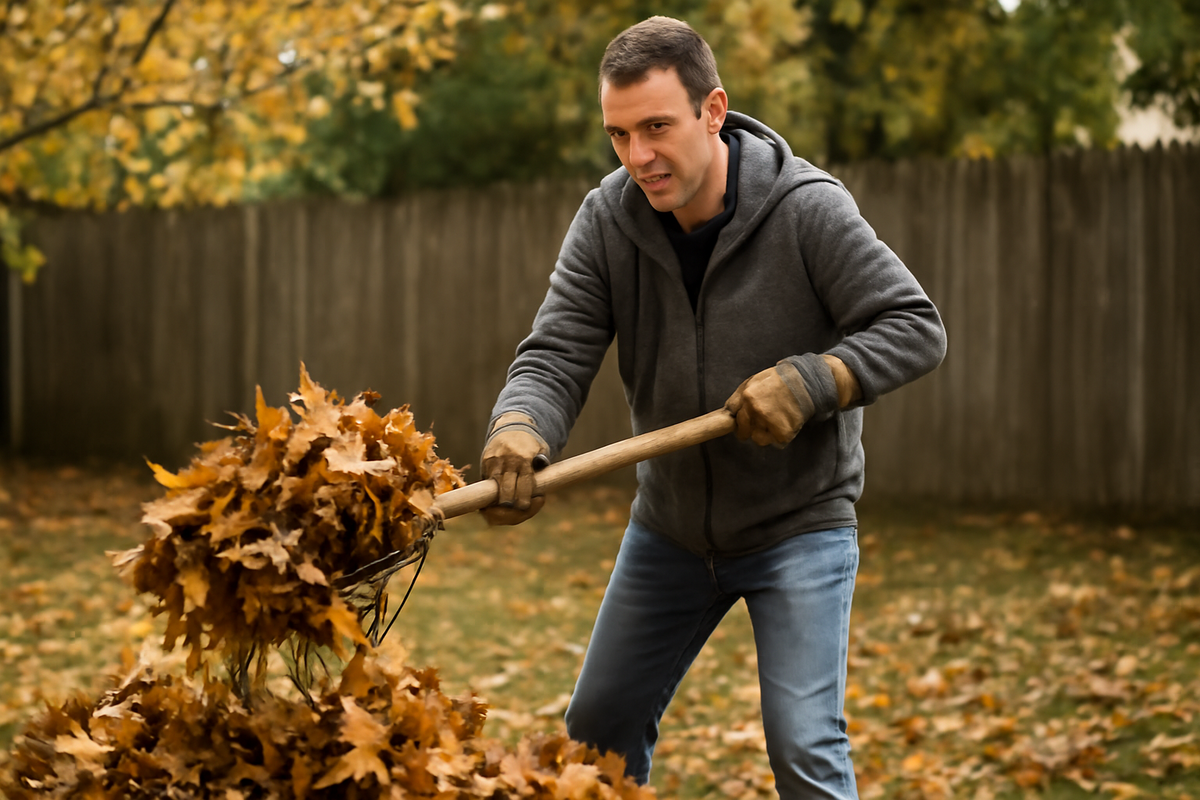
Leaf blowers, high-pitched and relentless, push waves of leaves into tidy mounds. Rakes scrape in brisk strokes, bare plastic teeth against soil. Children jump in piles that are quickly stuffed into crackling bags. The work is framed as virtue: clearing, cleaning, doing the right thing by your lawn.
This idea didn’t appear out of nowhere. For decades, lawn care manuals and neighborhood expectations have crowned the close-cropped, leaf-free yard as the gold standard. Grass should look like a green carpet, we’re told, a smooth and unbroken surface. Leaves, with their messy edges and shifting drifts, break that illusion. They make the yard look wild, unkempt, unfinished.
So every autumn, the same leaf-mistake repeats: we rush to remove every last one, right down to the soil. We don’t just make space; we strip it bare. And in the process, we erase something the garden actually depends on. The sound of the blower might drown it out, but the loss is there — quieter, slower, but insistent.
The Invisible City Under the Leaves
If you crouch down and press your fingers into a layer of fallen leaves — really press, slipping past the crisp top into the soft, damp layers beneath — you can feel another world starting to wake up. The air is cooler there. The light dims. The smell shifts from dry paper to something deeper: wet earth, mushrooms, a trace of sweetness. This is where the real autumn work is happening.
In that thin, sheltered zone, thousands of tiny decomposers are moving, chewing, tunneling. Fungi thread through the leaf veins like snow-white lace. Beetles and millipedes borrow under the soft decay. Microbes feast invisibly on what we see as “yard waste.” A leaf pile on the ground isn’t clutter; it’s a bustling city under construction.
Now picture that same spot after an afternoon of “clean up.” The leaves are gone, zipped tight into plastic bags at the curb. The soil, suddenly exposed, has lost its blanket. Moisture evaporates more quickly. The decomposers, given nothing to eat and nowhere to hide, vanish or die. The once-rich surface becomes a kind of desert — neat, yes, but empty.
This is one of the quiet harms of the annual leaf purge. When we remove leaves completely, we’re not just removing color. We’re cutting off the first link in the soil’s food chain. Come spring, we’ll ask the ground to give us lush grass, blooming perennials, vigorous shrubs — but we’ve stolen part of the system that feeds them.
Why Bagging Leaves Starves Your Soil
What we call “good soil” — that dark, crumbly, beautifully earthy stuff — is not a product you buy in a bag. It is a living process. And fallen leaves are one of its oldest, most reliable fuel sources.
When leaves are allowed to break down on or near the soil, they slowly release nutrients back into the ground: carbon, nitrogen, potassium, trace minerals gathered by the tree all year long. Year after year, this gentle recycling builds a layer of organic matter that keeps soil moist, loose, and richly alive. Roots move through it easily. Water seeps in instead of rushing off. Earthworms drag bits of decaying leaf downward, aerating as they go.
But when we rake and bag and drag those leaves away, we interrupt that loop. All of that captured nutrition — whole seasons of sun and rain stored in each leaf — leaves the property. The soil is left thinner, hungrier. To make up for it, we often end up buying fertilizer, hauling plastic bags of “organic matter” back in from somewhere else. It’s like throwing away homemade bread because the crumbs look messy, then buying crackers to stay full.
There’s another cost, too. Bare, exposed ground weathers differently than leaf-covered ground. Winter rain can hammer the surface, compacting it into a hard pan. Wind strips away fine particles. Frost heaves roots. A layer of leaves acts like armor and insulation — a natural mulch that moderates temperature and protects the delicate communities living just under the surface.
In the quiet months when the garden seems asleep, that leaf cover is your soil’s winter coat. Stripping it away to keep the yard “tidy” is like asking the earth to step out into the frost in short sleeves.
The Wildlife You Sweep Into the Trash
On a chilly afternoon, you watch a leaf pile tremble, just a little, as if breathing. A tiny moth takes off in a faint beige blur. A spider dives deeper. Somewhere in there, beneath the curled maple and oak, a bumblebee queen may have nestled herself, waiting for spring. Many of the creatures we love seeing in our summer gardens hide in leaves all winter long.
This is the part that hurts most once you understand it: those black leaf bags at the curb are often full of live animals. Caterpillars that will become next year’s butterflies. Ladybird beetles seeking shelter. Overwintering pupae that look like dry little twigs but hold a whole summer’s flutter inside. When we “tidy up” every leaf, we scoop up entire populations of helpful insects and send them away with the trash.
Birds feel this loss, too. Early in spring, when seeds are scarce and the ground is still cold, many songbirds depend on the insects and larvae hiding in leaf litter for their first meals. A bare, manicured lawn may look nice to us, but to a warbler or thrush, it’s a food desert.
The harm isn’t dramatic; it doesn’t announce itself in a single bad season. It’s gradual. Fewer insects one year means fewer birds raising chicks the next. Fewer decomposers means slower, poorer soil. Over time, gardens can become strangely quiet, strangely still — the flowers may be there, but the life around them fades.
All because, for a few weeks each autumn, we insisted that green grass mattered more than brown leaves.
But Don’t Leaves Kill My Lawn?
If the idea of leaving leaves in place makes you uneasy, you’re not alone. Many gardeners have been warned for years that leaves left on the grass will “smother” the lawn. This fear is partly true — but only partly, and only when we misunderstand what “leave the leaves” really means.
A thick, wet, matted layer of leaves can create problems for turfgrass, especially if it’s already struggling. Grass needs some light and air, especially in fall when roots are still active. If your yard sits under large shade trees that drop heavy, leathery leaves in dense layers, simply walking away and doing nothing might not yield the best result.
But the answer isn’t to strip every surface bare. It’s to redistribute. To move leaves where they can do the most good and the least harm. Instead of treating leaves as waste to be removed, you treat them as resources to be rearranged.
You might run a mower over a light layer of leaves to chop them into small pieces that sift down between the grass blades, acting as a natural, slow-release fertilizer. You might rake thicker piles off the main lawn and into beds, under shrubs, around trees — places where they won’t interfere with turf but will nourish roots and shelter insects. You might even set aside a corner for a dedicated leaf pile or cold compost heap, letting nature slowly turn them into dark, rich leaf mold.
The mistake isn’t in touching the leaves; it’s in removing them from the ecosystem altogether. The lawn doesn’t need a bare stage. It needs a better script.
Rethinking Autumn Clean-Up: A Leaf-Friendly Approach
Imagine, next autumn, stepping into your yard and doing something different. The leaves are still falling, the air still crisp, but instead of that familiar urgency — that itch to rake everything clean — there’s a curious kind of calm. You notice where the leaves drift naturally. You pay attention to which areas really need clearing, and which can become soft, rustling islands of habitat.
Maybe you start by deciding on “zones.” A front lawn you want mostly clear for walking and play. A back border where leaves can gather thickly without bothering anyone. A few key paths that must stay open. Everything else is open to reimagining.
As you rake, your movements change. Instead of scraping leaves toward the street, you pull them gently into rings around your shrubs, like little nests. You tuck armfuls into the bases of hedges. You make a low, informal berm under the big maple — not too deep at the trunk, but generous in the outer ring where the feeder roots reach. You listen to the sound of leaves sliding over each other and know they’re not going away; they’re going to work.
You may still fill a few bags. Not every property can absorb every leaf, and that’s okay. The shift isn’t about perfection. It’s about intention. It’s about leaving as many leaves as you reasonably can, where they can do the most good.
To make this more tangible, here’s a simple comparison of two autumn habits:
| Autumn Habit | What Usually Happens | A Better Leaf-Friendly Option |
|---|---|---|
| Raking all leaves to the curb | Nutrients and habitat leave your garden in plastic bags. | Keep most leaves on-site; move them into beds, under shrubs, or a leaf pile. |
| Blowing leaves into bare piles and hauling away | Soil is left exposed to winter weather and erosion. | Use light raking; leave a thin protective layer on soil where possible. |
| Leaving a thick mat on lawn | Grass can suffer from lack of light and air. | Shred light layers with a mower; move heavy layers into mulched beds. |
| Buying extra mulch every spring | You pay for what the trees already produced for free. | Let leaves act as mulch; top up only where appearance or depth demands. |
Nothing in this approach is radical. It simply treats the falling of leaves as part of a cycle instead of a seasonal crisis. You still have a say in how your garden looks. But you also give the land a say in how it lives.
Living With a Softer Kind of Neat
There is, of course, another barrier to breaking the leaf habit: other people’s eyes. Neighbors. Passersby. The unspoken rules of what a “good” garden should look like. A yard dappled with leaves, beds cushioned in a natural mulch, corners where the leaf litter runs a little deeper — this doesn’t always line up with postcard perfection.
But there’s a different kind of beauty at play here. On a frosty morning, the leaves in your beds are edged in white, each vein fine as stitching. A wren flickers in and out of the cover, flipping leaves in search of breakfast. The soil underneath remains soft, breathing. Your garden feels less like a stage set and more like a small, working forest edge.
You can ease the social friction with simple cues. Keep your paths clearly defined and clear of debris. Trim the edges clean where leaf-covered beds meet the lawn or sidewalk. Add a few intentional-looking stones, logs, or low fences to mark “wild” zones. These small gestures reassure the human eye: this is not neglect. This is care, done differently.
And over time, as spring comes and your beds wake with vigor, as birds and pollinators find their way back, your leaf-keeping will speak for itself. The garden will carry its own quiet argument against the old autumn mistake.
Autumn, Rewritten
Stand again in that October yard, that November garden. The leaves are falling — they always will. The old reflex might still tug at you: clean it up, bag it, make it disappear. But now you know what rides on those papery sails. Soil health. Insects. Birds. The quiet living web beneath your feet.
The predictable leaf-mistake isn’t simply about rakes and bags; it’s about forgetting that a garden is not a room to be vacuumed. It’s a living system that expects a blanket each fall and offers spring’s renewal in return.
This year, you can choose to do it differently. Rake a little. Rearrange a lot. Leave more than feels comfortable at first and watch what happens. Let the leaves lie where they can feed the ground, shelter the small, and soften the garden’s hard edges.
In that rustle underfoot, in that rich, earthy smell rising from a bed of slowly fading color, there’s a promise being kept — the ancient agreement between trees, soil, and all the life in between. Your only job is not to break it.
FAQ: Common Questions About Leaving Leaves in the Garden
Will leaving leaves make my yard look messy?
It can, if leaves are left randomly everywhere. The key is intentionality. Keep lawns and paths mostly clear, and pull leaves into defined areas like borders, under shrubs, and around trees. Clear edges and neat pathways make a “leafy” garden look cared for rather than neglected.
Can I really leave leaves on my lawn without killing the grass?
Yes, in moderation. A light layer of leaves can be mowed over to shred them into small pieces that feed the turf. If the layer is thick and wet, move most of it into beds and leave only a thin layer to mulch and fertilize the grass. Avoid heavy mats that block light and air.
What about pests — don’t leaves harbor them?
Leaves shelter many creatures, both beneficial and neutral. While some pests may overwinter there, so will their predators — beetles, spiders, and other natural controls. Healthy, diverse leaf litter usually supports more balance than problems. If you’ve had a serious disease issue in a specific plant, you can remove the leaves just around that plant while leaving the rest.
How long do leaves take to break down?
It depends on the type of leaf, moisture, and temperature. Thin leaves (like many maples) can soften and start breaking down significantly within a season. Thicker, waxier leaves (like oak) take longer, but you can speed the process by shredding them with a mower or piling them to make leaf mold over a year or two.
Is it okay to put leaves directly on my flower beds?
Yes, in most cases. A loose layer a few inches thick makes excellent winter mulch, protecting roots and improving soil. Keep leaves a little away from the crowns of plants that dislike staying too wet, and avoid creating dense, airless mats. Light, fluffy cover is usually ideal.
What if my city requires bagging leaves for pickup?
Even if there are local rules, you can often still keep a portion of your leaves on-site. Focus on beds, tree rings, and out-of-the-way corners. Use municipal pickup only for the excess you truly can’t use. Over time, expanding planted areas and mulched beds can give you more space to keep leaves where they belong.
Do evergreen needles count as “leaves” too?
They do, and they also make excellent mulch in many situations. Pine needles, for example, are slow to break down and create a light, airy cover. Despite common myths, they don’t drastically acidify soil when used in reasonable amounts. As with broad leaves, use them where they help — under shrubs, trees, and in beds — rather than stripping them away.

Hello, I’m Mathew, and I write articles about useful Home Tricks: simple solutions, saving time and useful for every day.