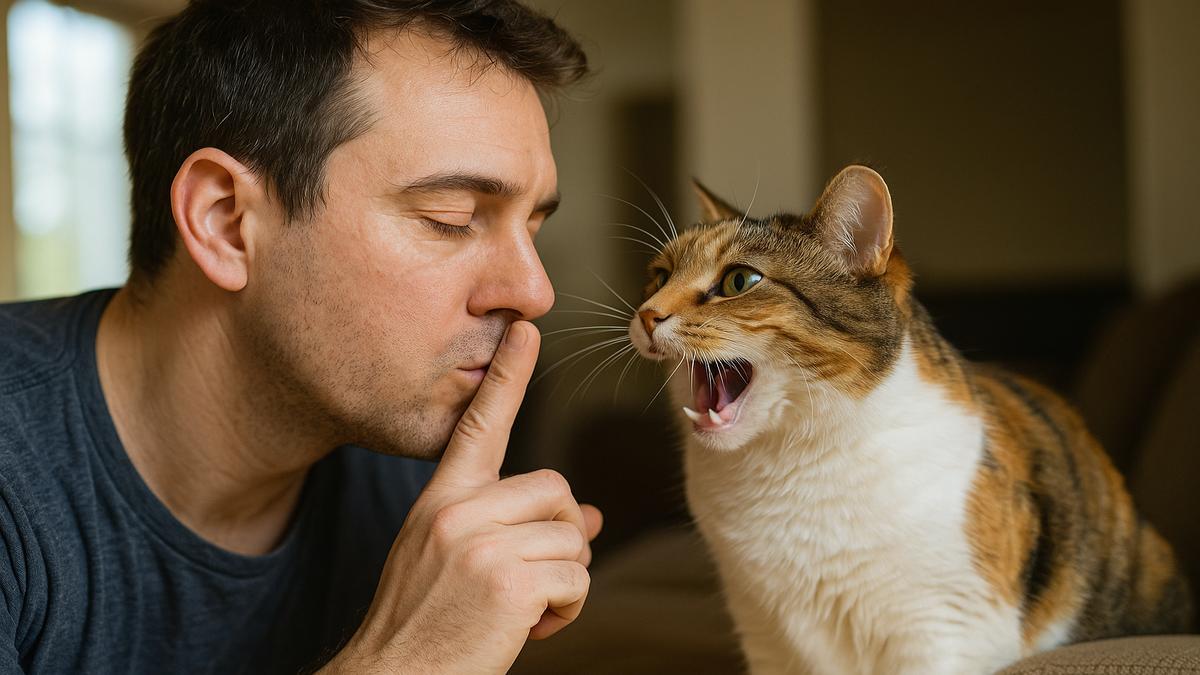
The first time I tried to “out‑quiet” a yapping cat, I failed spectacularly. Her name was Poppy, a tortoiseshell with a voice like a stuck car alarm. She’d been surrendered for “excessive vocalizing” and, as I stood in her foster kitchen with a pouch of treats, she screeched at me so loudly the window glass seemed to hum. I did what most people do: I talked back. I shushed. I pleaded. I rattled the treat bag. And Poppy, delighted by the attention, doubled down. That was the day I realized something uncomfortable: we accidentally train our cats to be louder all the time.
The Secret That Isn’t a Secret (But Feels Like One)
The “whisper method,” as I came to call it, was born out of desperation and a strange hunch. I’d watched dog trainers use silence and micro‑signals to guide reactive dogs. I’d seen horse trainers breathe their way through a skittish mare’s panic. What if, with cats, the quiet itself could be the treat?
So I began to experiment. Instead of rewarding sound, I started rewarding stillness, softness, and—above all—silence. Not with food, not at first, but with something cats crave more than most people realize: grounded, predictable presence.
This method does not mean ignoring a distressed animal. It means carefully, consistently teaching your cat that the fastest path to your attention, your touch, your voice, and yes, even their dinner, is through calm behavior—not operatic meowing that could wake your great‑grandparents.
When I walk into a new home now, where a cat is “talking” non‑stop, I don’t go straight for the treats. I go for the volume knob—mine, not theirs. I lower my movements, my voice, my breathing, as if I’m walking into a library. It looks like nothing from the outside. But to a cat, it’s a change in weather.
The Moment You Accidentally Trained a Tiny Siren
Let’s rewind to the moment your cat became a professional yapper. Picture a Tuesday morning. You’re half‑awake, hair like a tumbleweed. Sunrise is a pink smear at the window. And from somewhere near your ankle comes that familiar warning siren:
Mrrrow. MRRRROW. MRRRROOOW.
You try to hold out. Three cries. Ten cries. You roll over. Your cat jumps on the nightstand and swats something unnecessarily fragile to the floor. Finally, exasperated, you stumble to the kitchen, pour some kibble, and mumble, “Fine, here, stop yelling.”
From your cat’s point of view, this is a successful training session. Their internal notebook looks something like this:
- Yell loudly at closed bedroom door = human appears.
- Increase volume + add property damage = food appears faster.
- Conclusion: be louder, sooner.
Sound familiar? It’s not just mornings. We do it when we’re on Zoom calls and toss a treat to shut them up. We do it when they scream at the window and we scoop them up for cuddles. We do it when we’re cooking and slip them a bite because they sound like they’re lobbying the United Nations about starvation.
The whisper method starts with a difficult but liberating truth: your cat is not misbehaving. They are following the rules you’ve unintentionally taught them. And if they can learn those rules, they can learn new ones.
The Whisper Method: Training With Quiet Instead of Bribes
The whisper method flips the usual script. It asks one radical question:
What if silence, not meowing, was the magic key that opened every door your cat cares about?
We’re not talking about punishing your cat for talking. Vocalizing is natural, and some cats are naturally more chatty. The goal is to change the pattern from “yap = reward” to “calm = reward.” To do that, you become less like a vending machine and more like a rhythm your cat can harmonize with.
Step 1: Diagnose Before You “Train”
Before you apply any behavior method, pause and check for real needs. Some yapping is your cat saying, “Something is wrong.” Look for:
- Sudden increase in vocalizing, especially in a senior cat
- Crying near the litter box
- Night‑time wailing that’s new or escalating
- Restlessness, pacing, or changes in eating or grooming
These can indicate pain, hyperthyroidism, sensory decline, or anxiety. If the behavior is new or dramatically worse, a vet visit comes before any whisper playbook.
Assuming your cat is healthy, we move on to teaching with quiet.
Step 2: Turn Down Your Own Volume
Cats are connoisseurs of energy. To them, your body is a weather system they live inside. When you rush, shout, stomp, or respond quickly and loudly, you create storms. When you move like mist, you invite them to soften.
For three days, try this experiment:
- Walk slower in shared spaces.
- Lower your speaking voice by one notch.
- Keep your hands at your sides when your cat yaps—instead of flapping them, pointing, or reaching.
- Breathe from your belly when your cat is loud; count your exhales.
You’re broadcasting a new station: “Calm only.” Many cats, especially anxious or attention‑seeking ones, begin to match your energy. Not because you forced them—but because you changed the shared atmosphere.
Step 3: The 3‑Second Silence Window
Here’s the core rule of the whisper method:
No reward while the cat is vocalizing. Every reward happens in a pocket of quiet.
It sounds simple, and it is, but you have to be ruthless about it for a few weeks.
- Your cat meows for food. You stand still. No eye contact. No words. No food preparation.
- You wait for the briefest pause—they have to inhale at some point.
- The instant you hear even a one‑second hush, you quietly move toward the food, still silent and relaxed.
- If they start yapping again mid‑preparation, you freeze. If they stop, you continue.
To your cat, it starts to feel like a light switch. Noise? The world stops. Quiet? The world flows.
Step 4: Reward Layers: Attention, Touch, Food, and Fun
Treats are powerful, but they’re not the only currency you have. In fact, for chronic yappers, treats can become part of the problem. Instead, think in layers of reward:
- Attention: Eye contact, responding to their presence.
- Touch: Petting, brushing, lap time.
- Food: Meals, snacks, puzzle feeders.
- Fun: Wand toys, catnip, exploration.
Every one of those should become tightly linked to calm behavior. Not perfect monk‑like silence, just “not actively yapping.”
Your rule of thumb: If the mouth is going, the world is slowing. If the mouth is quiet, the world is generous.
The Breakfast Battle: A Real‑Life Whisper Session
Let’s walk through a morning with a cat named Milo, a tabby whose humans described him as “the 5 a.m. alarm we never set.” For months, he’d yowled at the bedroom door until his guardians surrendered and fed him early—then earlier, then earlier still.
Here’s how we rerouted Milo using the whisper method.
Day One: The Threshold of Screams
At 5:02 a.m., Milo started his usual opera. His humans, instead of rolling out of bed, stayed put. They’d set an alarm for 5:20 a.m.—the time they were willing to start their day from now on—and decided nothing food‑related would happen before that, no matter how dramatic Milo got.
Was it loud? Yes.
Did he scratch the door? Yes.
Did the humans briefly question their life choices? Absolutely.
But they held their line.
At 5:20, the alarm rang. Milo was still yammering, but here’s the crucial bit: they didn’t move until he paused. He got maybe three seconds into a breath. That was their window. One of them quietly stood, walked to the kitchen without a word, and started preparing breakfast.
As Milo resumed complaining, spoon in hand, they froze. When he paused again, even for a beat, they resumed. The whole dance took an extra 60 seconds. Confusing—for Milo. In a useful way.
Day Four: The Pattern Emerges
By the fourth day, Milo still started his campaign around 5:02. But the humans noticed something subtle: the intervals between his howls were slightly longer. Where he once went ten meows in a row, he now broke them into batches, as if instinctively testing, “Is this when it works?”
Each quiet gap earned progress: a step toward the kitchen, the rattle of kibble in a bowl, the sound of the can opening. All of that became the payment for silence.
Within two weeks, the 5 a.m. screamfest had become a few half‑hearted chirps close to 5:20, followed by watchful, almost polite waiting. Not because Milo had stopped wanting food—but because he’d learned that yapping made breakfast further away, not closer.
The Art of Whisper Cues: Talking With Your Eyes and Hands
Once your cat starts to grasp that quiet unlocks rewards, you can refine the method with what I call “whisper cues”—tiny, consistent signals that tell your cat what’s about to happen and what behavior will open the door to it.
The Soft Look
Cats read eyes like headlines. A hard stare can feel like a confrontation; a slow blink feels like a truce. The soft look is your visual whisper:
- When your cat is loud, avoid staring. Let your gaze float near them but not on them.
- When they soften—even slightly—give a slow, languid blink, followed by a calm movement toward what they want (if it’s an appropriate want).
With repetition, your slow blink becomes a mini‑contract: “Yes, I hear you. Now meet me in the quiet zone, and we’ll do this together.”
The Still Hand
Many yappy cats get revved by moving hands. We point, shoo, flap, scritch quickly. The still hand does the opposite.
- If your cat is meowing for petting, keep your hand still and low.
- Wait for them to pause, then gently offer your fingers for a sniff or a slow cheek rub.
- If they rev back up into loud demands, withdraw your hand a few inches and become neutral again.
Over time, your cat learns: quiet earns touch; yelling makes the world freeze.
The Silent Countdown
This one is for door dashers and hallway howlers. When you’re about to open a door or offer something exciting, silently count to three while watching for a quiet moment:
- Count “one” in your head when they pause.
- If they stay quiet, count “two.”
- If they’re still quiet at “three,” the door opens, or the toy appears.
- If they meow before you reach “three,” reset the count after the next quiet moment.
Your cat doesn’t know you’re counting, but they feel the pattern: three heartbeats of quiet = magic.
Designing a Whisper‑Friendly Home
Cats do not exist in a vacuum. A noisy, overstimulating, inconsistent environment will keep yapping alive no matter how elegant your training is. The whisper method extends beyond you into the architecture of their world.
Whisper Zones and Yapping Hotspots
Identify where the drama usually happens: the kitchen, the bedroom door, the window where birds taunt your cat with their audacity. Then decide where in your home you will practice the quiet contract most strictly.
| Location | Common Yapping Trigger | Whisper Strategy |
|---|---|---|
| Bedroom Door | Early‑morning food demands | No response until chosen wake time; open door only during pause in meowing |
| Kitchen | Meal‑time screaming | Freeze all movement when cat vocalizes; resume prep during silence |
| Window or Balcony Door | Demanding outside time | Open access only after brief quiet and calm body posture |
| Desk or Workspace | Attention yapping during calls | Preemptive play before calls; reward quiet with brief, calm check‑ins between tasks |
Make sure your cat has quiet escape hatches: high perches, covered beds, boxes stuffed with soft blankets. A cat with vertical space and safe dens is less likely to use their voice as a flare gun.
Timing: The Rhythm That Replaces Drama
Cats are clockwork in fur coats. They adore rhythm. When life is unpredictable—meals at random times, play when you remember, doors opening sometimes with yelling and sometimes without—that uncertainty fuels anxious vocalizing.
Where you can, anchor the day:
- Roughly consistent meal times (with a 10–15 minute window).
- Daily predictable play sessions—short but focused.
- Regular “quiet check‑ins” where you sit near them calmly, doing nothing but existing with them while they’re already relaxed.
The whisper method thrives on predictability. Your calm, consistent patterns are a language they can finally translate.
When Whispering Isn’t Enough (And What That Teaches You)
Not every yapping cat will melt into a serene statue just because you discovered your inner monk. Some will improve modestly. Some will transform. A few will remain delightfully mouthy—but with better manners and fewer 3 a.m. concerts.
And that’s an important piece of this: the whisper method is not about erasing your cat’s personality. It’s about reclaiming your shared sanity while respecting who they are.
I’ve worked with Siamese who will always narrate their lives, and seniors who “talk” to find you in the dark. For them, the win might be shorter meow bursts, fewer tantrums at doors, or the ability to wait quietly for 10 seconds before a meal instead of ricocheting off the cabinets.
If you’ve applied the method consistently for a month and the yapping is still intense, consider:
- Re‑checking medical causes, especially if your cat is older.
- Adding more environmental enrichment—puzzle feeders, climbing shelves, scent games.
- Consulting a behavior professional who understands feline body language and low‑stress handling.
Sometimes the whisper method reveals that your cat isn’t just bored—they’re lonely, under‑stimulated, or confused by a chaotic environment. The quiet training is often the doorway to deeper care.
But almost always, something else happens too. As you slow your reactions, time your rewards to silence, and watch them more closely, your relationship changes. You notice the tiny ears‑flick that says, “I’m trying.” You catch the proud little pause before they sit quietly by the bowl instead of howling. You start seeing effort where you used to see “bad behavior.”
And your cat, feeling that shift, often leans into it.
Back in that foster kitchen with Poppy, the tortie with the siren voice, the turning point wasn’t the day she stopped yapping completely—it was smaller. I was standing near the counter, her dinner ready, and she let out one last defiant trill, then paused and looked right at me. I could almost hear the question: “Is this how it works now?”
I blinked slowly. I moved. I placed her bowl down in the quiet. She ate. The next night, the pause came sooner. Within a couple of weeks, her endless wall of noise had become a few impatient warbles followed by watchful silence. She never stopped “talking” altogether; that was part of her. But the screaming that had cost her a home turned into something we could live with, even laugh about.
In the end, the whisper method isn’t magic. It’s a promise: I will listen to you. I will not reward your panic. I will reward your effort to meet me in the quiet middle ground. And in that space—between their meow and your response—something gentle and unexpectedly powerful begins to grow.
FAQ
Is it cruel to ignore my cat when they’re meowing?
Ignoring distress is never the goal. The whisper method only applies once you’ve ruled out medical issues and basic needs. You’re not ignoring your cat; you’re changing the timing of your response so you reward calm instead of chaos.
How long does it take for the whisper method to work?
Most families see small shifts within a week, with clearer changes in 2–4 weeks if they’re consistent. Heavily reinforced yapping (especially early‑morning feeding) can take a month or more to fully re‑pattern.
Will this stop my naturally vocal cat from talking?
No. The method doesn’t erase normal vocalizing. It reduces excessive, demand‑based yapping and teaches better “manners” around food, doors, and attention. Chatty cats usually remain chatty—just less relentless.
What if my cat gets louder when I stop responding?
That “extinction burst” is normal: behavior often spikes before it fades. Stay calm, stick to the rule of rewarding only the pauses, and the escalation phase usually passes within a few days to a week.
Can I still use treats with the whisper method?
Yes, as long as treats are delivered only during quiet moments. You can add tiny treats when your cat waits calmly, sits instead of yells, or pauses mid‑meow. The key is that silence, not noise, predicts the snack.

Hello, I’m Mathew, and I write articles about useful Home Tricks: simple solutions, saving time and useful for every day.