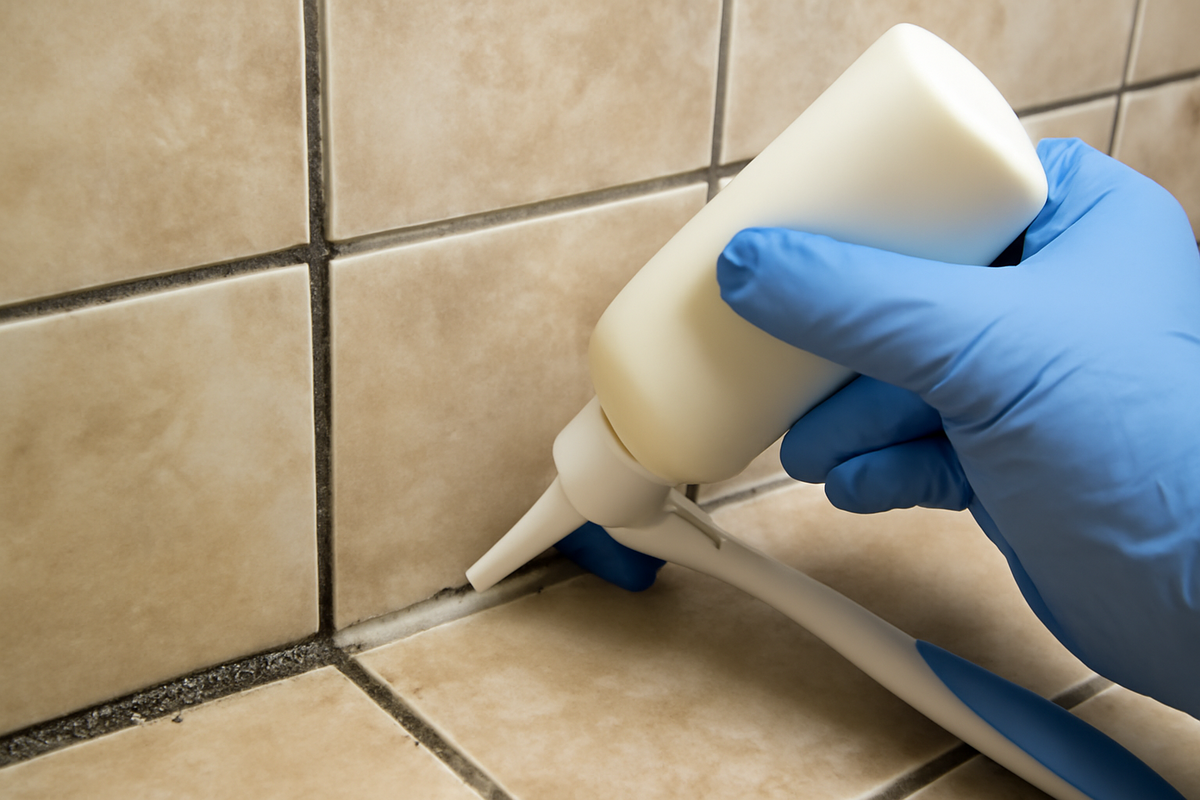
The first time I noticed it, the afternoon light was slanting just so across the kitchen floor, catching on the tiles like sun on a riverbed. The cream-colored squares looked warm and inviting—until my gaze slipped to the thin lines between them. The grout, once a soft, pale gray, had turned into a map of darkness. Blackened, grimy, as if the floor had quietly collected every barefoot step, every spilled coffee, every stormy day and baked it into its bones.
I knelt down, ran a fingertip along one of the lines, and felt that faint, almost sticky roughness that tells you: this is no simple surface stain. This is deep. Set. And, if you listen to most cleaning advice out there, the usual answer is loud and clear: bring out the vinegar, douse it in bleach, or both. Harsh smells, stinging eyes, irritated skin, and the nagging worry that you’re breathing in something your lungs would rather not meet.
But what if you could skip all that? What if you could banish that blackened grout using something gentler, quieter—no nose-stinging fumes involved? That’s the trick I stumbled into one rainy weekend, when the wind rattled the windows, the kettle hissed on the stove, and a tiny plastic tub from the back of the cabinet turned out to be the unsung hero of my floor.
The Grout That Remembers Everything
Grout is like the memory foam of your home—soft, porous, and endlessly receptive. It soaks up life, for better or worse. That Saturday, the house smelled like warm tea and roasted vegetables, but down on the tiles, the story was different. The grout held the ghost of old spills, muddy shoe prints from spring walks, and a long-forgotten incident with a dropped jar of tomato sauce.
If you look closely, grout tells on you. It darkens along the most-traveled paths: from the fridge to the stove, the door to the kitchen table, the bathroom sink to the shower. It stains where the dog pauses to shake off rain. It clings to droplets of soap scum and the invisible film of cooking oil that floats through the air and lands silently on floors.
Bleach can blast through that history, sure. Vinegar can gnaw at the buildup. But they also come with their own sharp narratives: the acrid tang, the warning labels, the “open a window” instructions that feel like an admission that maybe, just maybe, this isn’t something you want in your lungs.
So I stood there, a sponge in one hand and a bottle of vinegar in the other, and just…hesitated. The windows were already fogged from the rain. The room felt closed in. The idea of filling it with that sour, stinging smell suddenly seemed like a battle I didn’t want to fight.
The Quiet Little Tub in the Back of the Cabinet
The answer arrived not with fanfare, but with the quiet thud of a forgotten container hitting the counter. I’d been rummaging around for a cotton cloth when I found it: a small, half-used tub of oxygen-based cleaning powder. Not chlorine bleach. Not a harsh chemical cocktail. Just a powdered cleaner designed to release oxygen when mixed with warm water—gentler on surfaces, kinder on airways, powerful on stains.
Maybe you have something like it tucked away, too. It might be labeled as an oxygen stain remover, an O₂ cleaner, or something similar, often sold for laundry or general stain lifting. The magic lies in that slow fizz of tiny bubbles working their way into porous surfaces, lifting dirt out like invisible fingers.
I read the back quickly—no harsh fumes, safe on colorfast surfaces, designed for organic stains. Grout, I thought, is basically a sponge full of organic stains. Coffee, soap scum, skin oils, tracked-in soil. The match felt almost too obvious. I set the vinegar aside. No bleach. No nose-burning fog. Just warm water, a scoop of powder, and a little patience.
The Simple No-Vinegar, No-Bleach Grout Hack
Here’s exactly what I did, step by step, with the rain tapping on the windows and the kitchen clock ticking softly in the background:
- Mix a paste: I added a small scoop of oxygen-based cleaning powder to a bowl and slowly stirred in warm (not boiling) water until it formed a thick, spreadable paste. Think yogurt consistency—not runny, not crumbly.
- Pre-clean the tiles: Before touching the grout, I ran a damp microfiber cloth over the floor to lift dust and loose dirt. No fancy cleaner, just warm water. You don’t want loose grit scratching the tiles while you scrub.
- Apply to grout lines: Using an old spoon and my fingers (gloves help), I dabbed the paste directly onto the grout lines, drawing a milky trail along each seam. No need to coat the tiles, just the grooves.
- Let it sit and fizz: This part felt like letting bread dough rise. I walked away for about 10–15 minutes, long enough for the oxygen to wake up and start working its slow chemistry in the darkened lines.
- Scrub gently: I came back with a soft-bristled brush—a retired toothbrush, in this case—and began to scrub. Not aggressively, just firm little circles along the grout. The transformation was startling: the paste, once white, turned a cloudy gray as it pulled grime free.
- Wipe and rinse: I wiped the area with a clean, damp cloth, rinsing it out frequently in a bucket of warm water, then went over the tiles again to remove any residue. Under the haze of moisture, the grout already looked several shades lighter.
- Let it dry, then admire: Grout always looks a bit darker when wet, so I forced myself to wait. As it dried, the true color emerged—soft, clean, and dramatically brighter. The blackened lines had retreated into a memory.
No vinegar bottle, no bleach splash, no sharp chemical smell. Just the subtle clean scent of wet tile and a hint of fresh air from a cracked window.
Why This Works (Without the Harsh Stuff)
There’s something almost satisfying about understanding the “why” behind a quiet little miracle. Oxygen-based cleaners don’t just sit politely on the surface; they release tiny bubbles of oxygen that seep into porous materials like grout. Those bubbles help break apart the molecular bonds of stains, especially organic ones—coffee, tea, wine, soap scum, and everyday grime.
Unlike vinegar, which is acidic, or bleach, which can be harsh and irritating, this method avoids two common problems:
- No stinging fumes: You don’t get that sour or chlorine-laden air that chases you out of the room.
- No aggressive etching: Some strong cleaners can slowly eat away at grout or dull certain tiles. Oxygen-based cleaners, used correctly, are usually gentler.
There’s also a psychological shift. Cleaning becomes less of a chemical warfare scenario and more like a quiet restoration project. You’re not blasting your home with something you have to escape from; you’re coaxing it back to the way it was meant to be.
And the kicker? You don’t need much product. A small amount goes surprisingly far, especially if you work in sections rather than trying to conquer the entire floor in one heroic, back-breaking sweep.
A Quick Comparison: Old Habits vs. This New Routine
It helped me to think about what I was gaining—and losing—by skipping vinegar and bleach. Here’s a simple side-by-side snapshot of how this oxygen-based method stacks up against the usual suspects:
| Method | Pros | Cons |
|---|---|---|
| Vinegar + Scrub Brush | Cheap, widely available, decent on soap scum and light stains. | Strong smell, can be too acidic for some stone tiles or sealants. |
| Bleach Solution | Fast whitening effect, powerful disinfectant. | Harsh fumes, can discolor or weaken grout over time, not pleasant in small spaces. |
| Oxygen-Based Cleaner Paste | Low odor, gentle on most grout, effective on deep stains, no vinegar or bleach needed. | Requires short dwell time and light scrubbing, not instant “pour and done”. |
Seeing it laid out like that, the choice felt different. I wasn’t sacrificing effectiveness by going gentler; I was just trading a bit of idle waiting time for a whole lot of breathable air and peace of mind.
Turning Grout Care into a Soothing Ritual
There’s a subtle shift when grout care stops being a dreaded chore and becomes a small, practical ritual. It starts with acceptance: grout will always darken over time. Life is messy. Floors are honest. We leave trails of our days everywhere we walk.
So instead of a marathon “I hate this” cleaning day once a year, this hack fits naturally into quieter pockets of time. Maybe it’s a Sunday afternoon when the house is unusually still, or a cool evening when the kitchen window is cracked open and you can feel the air change. You tackle one patch—a stretch in front of the sink, the path to the fridge, the bathroom doorway—rather than the whole universe of tile under your roof.
Once you’ve done the heavy-lift cleanup the first time, keeping things bright becomes easier:
- Every week or two, pick a small section and refresh it with the paste.
- Notice where the grout darkens first and give those spots a little extra love.
- Wipe up spills sooner, especially coffee, tea, or anything with color.
There’s a quiet pleasure in watching a small rectangle of floor transform under your hands, the way a fogged-up mirror reveals a clear reflection. You finish, rinse your cloth, hang it to dry, and the room feels just a touch newer, more cared for, more yours.
Making Friends with the Details
In the glow of an overhead light, clean grout has a way of making the entire room feel freshly exhaled. The tiles look the same, but somehow their edges feel more defined, the space around them more intentional. It’s like framing a painting: the art hasn’t changed, but the way your eye rests on it has.
This is where the details can quietly shift the feel of your home:
- Use the right brush: A soft or medium-bristled brush is ideal. A toothbrush, a small tile brush, or a gentle scrub brush works. Too stiff, and you risk eroding the grout; too soft, and you’ll just glide over the grime.
- Test a small area: Even gentle cleaners deserve a test patch. Try your oxygen-based paste on a quiet corner and let it dry to make sure you love the result.
- Mind the water: Damp is good, soaked is not. Too much water can seep into grout and underlying layers, inviting its old friends—mold and mildew—back to the party.
If you like taking things one step further, you can seal your grout once it’s fully dry and clean. A penetrating grout sealer can help slow down future staining, like giving those pale lines a light, invisible raincoat. It doesn’t make them invincible, but it does give you a little more time before daily life leaves its marks again.
When the Floor Finally Breathes Again
Later that evening, the rain had slackened into a soft drizzle. The kitchen lights glowed warm against the night, and I padded back across the tiles in bare feet. The floor felt the same underfoot—cool, smooth, familiar—but my eyes caught the difference instantly. The grout no longer formed a jagged, dark grid. It was lighter, more uniform, as if the room had quietly exhaled a tension I didn’t know it was holding.
There was no lingering bleach tang, no sharp vinegar in the back of my throat. Just the mild, clean scent of a space that had been tended to with care rather than wrestled into submission.
It’s a small thing, grout. A narrow line between tiles, easy to ignore, easy to postpone. But when you give it attention, something subtle shifts. The whole room feels more deliberate. Your feet trace a story across surfaces that no longer look like they’ve been carrying decades of unspoken history in their pores.
And the best part? You did it without the bottle of bleach, without the vinegar fumes, without needing to crack every window and escape to another room while “the smell clears.” Just quiet, steady work, a bowl of gently fizzing paste, and a willingness to care for the spaces that quietly carry you through your days.
Your grout doesn’t have to be perfect. It will age. It will remember. But now you know how to gently talk it back from the edge of blackened and forgotten—no vinegar, no bleach, just a simple, breathable little hack that can make your home feel like it just took a fresh, deep breath.
FAQ
Can I use this oxygen-based paste on colored grout?
Yes, in most cases it’s safe for colored grout, but always test a small, hidden section first. Let it dry completely and check that the color hasn’t faded before doing a larger area.
Is this method safe for natural stone tiles?
Natural stone can be more sensitive than ceramic or porcelain. If you have marble, limestone, or other delicate stone, check the product label for compatibility and test a tiny spot first. When in doubt, use a cleaner specifically labeled as safe for your type of stone.
How often should I clean my grout this way?
For high-traffic areas, a light refresh every 3–4 weeks can keep grout looking bright. In lower-traffic rooms, every couple of months is often enough once the initial deep clean is done.
Do I still need to disinfect if I’m not using bleach?
If disinfection is important—for example, in a bathroom—use a gentle, grout-safe disinfectant after cleaning. Many non-bleach options are available; just make sure they’re labeled safe for use on grout and your particular tile type.
What if my grout is still dark after cleaning?
Deep, long-standing stains may need a second round of paste and scrubbing. If the grout remains dark or crumbly, it may be permanently stained or deteriorating, in which case re-grouting or recoloring might be the best long-term solution.
Can I use this method on vertical grout, like shower walls?
Yes. Make the paste a bit thicker so it clings to vertical surfaces, apply in sections, let it sit briefly, then scrub and rinse. Work in smaller areas to prevent the paste from drying out before you scrub.
Do I need to wear gloves?
Gloves are a good idea. Oxygen-based cleaners are generally gentler than bleach, but they can still dry out or irritate sensitive skin, especially if you’re scrubbing for a while.

Hello, I’m Mathew, and I write articles about useful Home Tricks: simple solutions, saving time and useful for every day.