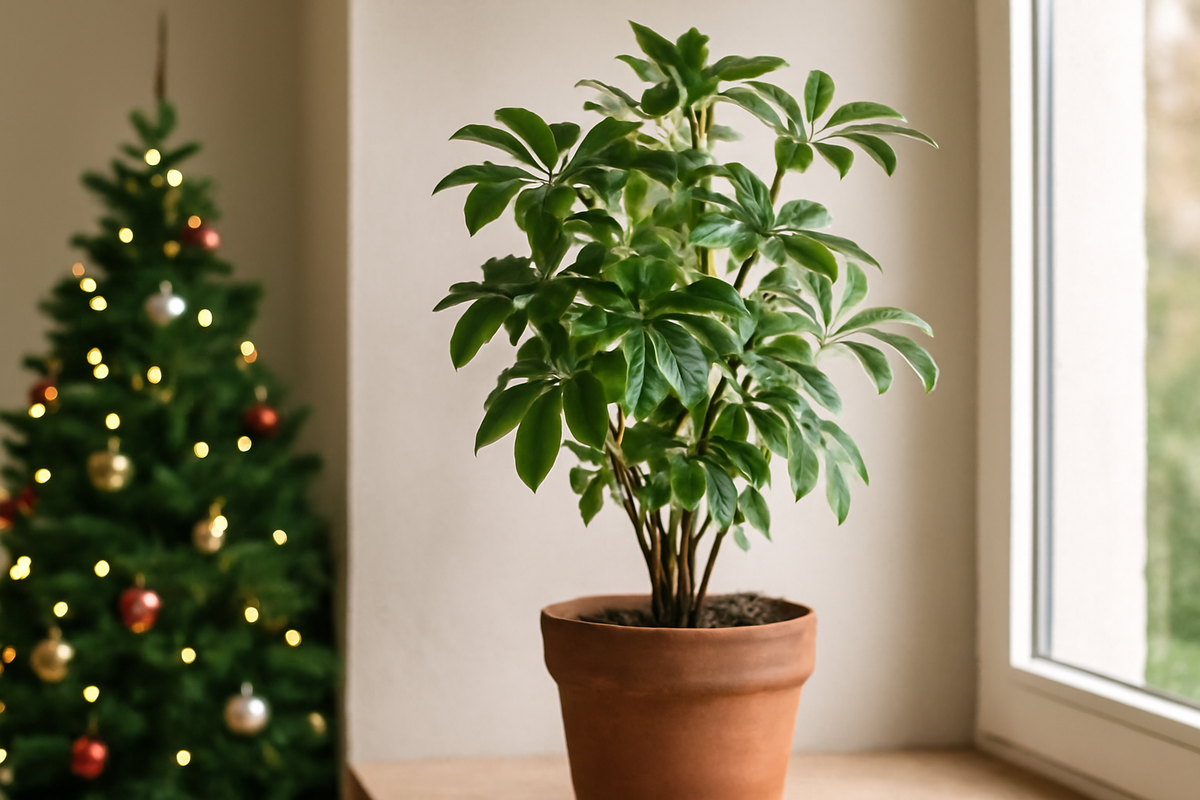
The last needles dropped on a forgotten Christmas tree are a surprisingly sad sound. You notice them when you drag the brittle skeleton out to the curb in January, trailing brown-green confetti across the floor. The tinsel snarls, the lights sag, and in the faint pine scent clinging to your fingers there’s this quiet admission: the magic is over. For decades that tree has been the unquestioned star of the season, the towering symbol of “doing the holidays right.” But 2025 is whispering a different story. In florists’ studios, in small city apartments, in sunlit cafés and carefully curated Instagram feeds, a new kind of “holiday tree” is taking root. Softer. Greener, in every sense. Less about spectacle, more about story. And florists cannot stop talking about it.
The year the Christmas tree started looking… different
Walk into a florist’s shop next November and you might do a double take. Instead of ranks of cut firs leaning against the wall outside, you’ll likely find a greenhouse glow: long tables of potted plants, ferny silhouettes against the window, leaves shining under grow lights. There’s the faint damp smell of soil instead of that sharp resinous pine bite. Somewhere, subtle holiday music trills. But the real centerpiece isn’t a seven-foot spruce. It’s a group of plants that, even two years ago, would never have been called “festive” at all.
“We used to spend half our December budget on fir,” a florist in Berlin tells me, considering a waist-high potted Araucaria heterophylla, better known as the Norfolk Island pine. “Now? People point at this one and say, ‘That’s my Christmas tree this year. But I want to keep it after.’” Her scissors snip through a strand of linen ribbon. She ties a tiny ceramic bird to one of the soft, horizontal branches. It sways gently, not prickly, not shedding.
Shots like this are everywhere: a monstera strung with fairy lights; a big rubber plant (Ficus elastica) wearing a single strand of golden glass ornaments; an olive tree in a clay pot, its silvery leaves catching candlelight on a balcony. The florist world has quietly declared: the age of the one-month, cut-and-dry Christmas tree is ending. In its place, a new favorite has emerged — not a single species, but an idea. The “forever tree.” The holiday plant that isn’t just for December.
From once-a-year spectacle to year-round companion
The emotional shift is subtle, but once you feel it, you can’t unsee it. A cut Christmas tree is like fireworks: stunning, fleeting, and destined to disappear. A trending 2025 holiday plant is more like a companion animal. It grows with you. It moves apartments with you. It leans toward your windows, sulks when you forget to water it, surprises you with a flush of new leaves in April. The relationship isn’t about a single morning of ripped wrapping paper. It’s about the whole year.
Part of this change is pure practicality. People are living smaller, especially in cities. Try maneuvering a traditional fir up four flights of narrow stairs, or fitting it in a studio with a sofa, a desk, and a bed sharing the same twelve square meters. Florists noticed the struggle years ago: customers asking for “something smaller, but still special.” That request has evolved into a whole aesthetic — the “slow evergreen” look.
Picture a modest, waist-high tree-form plant in a ceramic pot, placed on a low wooden stool. The decorations are deliberate, not overwhelming: a handful of glass baubles, a strand of micro LED lights, maybe a paper star at the top secured gently with twine. The soil is covered in soft green moss, maybe dotted with a few foraged pinecones. Underneath, instead of mountains of gifts, there’s a woven basket holding winter magazines and a folded wool blanket. It feels intimate, even if your “living room” is really just a generous corner of the kitchen.
Then January arrives and… nothing needs to go. The lights are packed away, yes. The moss stays. The plant stays. It just becomes itself again — a ferny roommate, a subtle backdrop for your life instead of a dead relic waiting to be hauled to the curb.
The florist’s new muse: living, breathing, and a little bit wild
Ask three florists what their favorite “new Christmas tree” is and you’ll get three different answers, each delivered with the kind of devotion usually reserved for pets or favorite songs.
One swears by the Norfolk Island pine: “It feels like a tree without being one. Those whorled branches are made for tiny ornaments. And people can keep them for years on a bright windowsill.” Another is obsessed with olive trees: “The silver-green leaves catch the light. It’s like decorating moonlight.” Someone else, in a tiny shop smelling of eucalyptus, is pushing potted spruce — yes, still spruce, but alive and rooted, ready to be planted out in spring or kept small in containers.
What unites them isn’t a specific species. It’s a mood: soft edges, organic shapes, an invitation to interact. The trending plants of 2025 aren’t trying to copy a traditional Christmas tree exactly. They’re asking a quieter question: what do you actually want to live with, long after the carols stop?
Here are some of the “new darlings” florists keep reaching for:
| Plant | Holiday Personality | Why Florists Love It |
|---|---|---|
| Norfolk Island pine | Mini indoor “tree” with soft, tiered branches | Takes lights and tiny ornaments beautifully; stays compact indoors |
| Olive tree (potted) | Mediterranean, understated, silvery glow | Looks sculptural year-round, perfect for balcony or bright room |
| Ficus (rubber plant, lyrata, etc.) | Bold foliage “tree” for modern spaces | Already common houseplants; easy to decorate lightly with lights |
| Potted spruce or fir | Classic evergreen, but alive and rooted | Offers familiar look with less waste; can be reused or planted out |
| Myrtle & rosemary topiaries | Fragrant mini “trees” for tables and counters | Smell like winter kitchens; fit tiny homes; culinary bonus |
In every case, florists are turning away from the single-use spectacle and toward what they sometimes call “living architecture” — plants that can be coaxed into tree-like forms, that bring shape and scent and shade, that can be dressed up in December and live quietly with you the other eleven months of the year.
The quiet revolution: sustainability wrapped in string lights
Of course, there’s an elephant in the room, or rather a forest. For years, we’ve been arguing about Christmas trees: real or artificial? Farmed or plastic, compostable or reusable? Every choice comes with a footprint. A traditional cut tree is grown, chopped, hauled, sold, displayed, then discarded or chipped. An artificial tree is manufactured, often from petroleum-based plastics, shipped across oceans, then eventually dumped.
The living plants cropping up in florists’ windows in 2025 aren’t a perfect answer to global environmental questions. But they are a gesture in a new direction: away from rituals that rely on something dying for us to feel festive, and toward rituals rooted in care and continuity.
You water a living “holiday plant.” You learn its light preferences. You notice when it’s unhappy. In small but meaningful ways, it asks you to pay attention. That attention is the real revolution — a shift from consumption to relationship.
There’s also a simple math to it. One plant, bought once, can serve as your seasonal anchor for many years. Instead of planning your December around where and when you’ll buy a tree, you’re thinking: how has my olive grown since last Christmas? Do I need a bigger pot? Should I prune it into a more tree-like shape? The holiday becomes less about acquisition and more about observing slow, patient change.
Florists are keenly aware of this. One in Copenhagen shows me a photo from three years ago: a small, somewhat scruffy potted spruce, barely knee-high. Then she flips to this past winter’s shot: the same tree, now shoulder-high, clipped into a gentle cone, dusted with paper stars. “Same family,” she says. “Same tree. The children measure themselves against it every year.” The old tradition — children standing back-to-back, notches on the door frame — meets the new one: the plant grows with you. Memories root deeper when the object of them doesn’t disappear in a week of trash pickups.
How florists are redesigning the holiday mood
Listen closely to the visual language emerging around these new favorites and you’ll hear a soft rebellion. There’s less red-and-green shouting, more moss and clay and linen. Florists are staging their living “trees” like small landscapes: a potted myrtle on a wooden tray with beeswax candles and a bowl of walnuts; a rubber plant with a single strand of copper wire lights and a stack of worn books at its base; an olive tree surrounded by woven baskets, its pot wrapped in a reclaimed linen tablecloth.
The sensory palette is changing too. Instead of the overwhelming blast of pine-scented candles trying to compensate for a fading tree, there’s the herbal breath of rosemary, the citrus-peel note of bay, the earthy calm of damp soil. Lights are dimmer, smaller, more like stars than spotlights. Decorations lean toward paper, wood, wool, ceramic — textures that feel kind to the hand.
This doesn’t mean extravagance disappears. It just moves sideways. A florist might spend an entire afternoon hand-folding paper ornaments in soft creams and smoky blues, or wiring tiny dried flowers onto linen ribbons. The abundance is in craft, not in sheer volume. One carefully chosen plant becomes the anchor, the rest is improvisation.
In a way, the new florist-favorite plants are asking us to redesign the emotional script of the holidays. Less: “How big is your tree this year?” More: “What does your corner of green feel like? What story is it telling?”
How to invite the 2025 florist favorite into your own home
You don’t need to live in a magazine spread to join this shift. You don’t even need a balcony. All you need is some light, a bit of space, and a willingness to treat a plant as more than temporary decor.
Start with your life, not with a wishlist. Do you travel a lot? Are you forgetful with watering? Is your home bright and sunny or more softly lit? Your answers will choose the plant for you.
If your place is bright and generous with light, a potted olive or a small indoor citrus tree might thrive. If you have moderate light and a tendency to forget the watering can, a rubber plant or fiddle-leaf fig might be kinder. If you love the classic conifer shape but not the toss-out ritual, a potted spruce or Norfolk Island pine can give you that tree feel without the January heartbreak.
Once you’ve found your plant, think of December as dress-up time. Gentle is the rule. Avoid heavy glass ornaments on delicate branches; choose lighter paper, wood, or fabric pieces. Instead of garlands that bite into stems, try ribbons tied loosely, or lights strung on a separate support behind the plant so the glow is there without the weight.
This is decoration as conversation. You’re asking: what does this plant like? What can it carry? How can I make it festive without compromising its health? You learn, year by year. Maybe the first winter, your Norfolk drops some branches in protest. Maybe you overwater the rosemary topiary and it sulks. These small mistakes become part of the lore, like the year the cookies burned or the lights wouldn’t untangle. Except now, the star of the story is very much alive.
Small rituals for a greener holiday future
Holiday traditions don’t vanish overnight; they molt. A cut tree might still appear in some homes, glowing in the corner, while a year-round plant waits patiently by the window. But for many, 2025 is the year the living plant steps into the spotlight.
Imagine a child growing up with a single olive tree that’s “theirs,” decorated a little differently each year. Imagine a share-house where the roommates all chip in for a Norfolk pine, then pass it along to the next set of tenants as a kind of blessing. Imagine elderly neighbors who can’t manage a full tree anymore, but treasure a tiny rosemary cone on their table, its scent carrying them back through decades of Decembers.
These are the quiet futures florists are arranging behind the scenes, one pot at a time. They see how people’s faces soften when they realize they don’t have to say goodbye to their “tree” every year. They notice the pride when customers return in spring, asking for advice because “our holiday plant survived!” It’s a small rebellion against throwaway culture, staged with moss and terracotta and twinkling light.
The goodbye to the traditional Christmas tree isn’t harsh or absolute. It’s not a slammed door, more like a hand resting on an old friend’s shoulder and saying, “Thank you for all the years. I’m trying something new now.” You can still visit pine forests, still breathe in that cold, clean fragrance, still love the imagery of evergreens in snow. But in your home, in your daily life, the green that stays might matter more than the green that goes.
So when the catalogs arrive and the first fake snow dusts the shop windows, pause a moment. Step into your local florist. Look past the cut branches and wreaths to the quieter corner where the potted things stand. Somewhere there, in a clay pot or a recycled metal bucket, is a plant that could hold your winter lights this year, and your ordinary Tuesdays in February, and the long, bright afternoons of June. Not a guest star. A year-round character in the story your home is telling.
Goodbye, Christmas tree. Not with bitterness, but with gratitude. The stage is a little smaller now, the lights a touch softer, the audience more intimate. In their place stands a ferny, leafy, gently growing presence — the florist’s new favorite, and very possibly yours.
FAQ: Goodbye Christmas tree — the new florist favorite plant trending for 2025
Why are florists moving away from traditional cut Christmas trees?
Florists are seeing a strong shift toward living, potted plants because people want something they can keep year-round, not just for a few weeks. It’s partly about sustainability and waste reduction, and partly about emotion: a living plant feels like a companion, not disposable decor.
Which plants are the most popular “new Christmas trees” for 2025?
Norfolk Island pines, potted spruces, olive trees, rubber plants (Ficus elastica), fiddle-leaf figs, and fragrant myrtle or rosemary topiaries are all trending. Each offers a different mood, from classic evergreen to minimalist Mediterranean.
Can I really decorate a normal houseplant like a Christmas tree?
Yes — gently. Use lightweight ornaments, paper decorations, and delicate string lights. Avoid weighing down branches or wrapping lights too tightly. Often, placing lights behind or around the plant creates a festive glow without stressing it.
Are living “holiday plants” actually more sustainable?
They generally have a smaller environmental impact because you keep them for years instead of throwing them away after one season. You avoid the production and disposal issues of plastic trees, and you reduce the annual demand for cut trees. Care and longevity are key to that sustainability.
What if I don’t have much light or space at home?
Consider smaller options like rosemary or myrtle topiaries, dwarf conifers, or compact ficus varieties. Many florists can guide you to plants that tolerate lower light and tight spaces, and you can still create a festive feel with a few well-placed lights and ornaments.
Do these plants need special care after the holidays?
Not special, just consistent. Remove decorations, return the plant to a spot with suitable light, and follow basic care: appropriate watering, occasional feeding, and repotting when needed. Treat it like a valued houseplant rather than seasonal decor.
Can I plant my potted spruce or fir outside later?
Often yes, if it’s a hardy variety suited to your climate and the roots haven’t been severely restricted. Acclimate it gradually to outdoor conditions when the season is right. Your florist or local garden center can advise whether your specific plant will thrive outdoors in your area.

Hello, I’m Mathew, and I write articles about useful Home Tricks: simple solutions, saving time and useful for every day.